How to Create a Divorce Care Package

divorce care package

So you just found out that your friend or family member is getting divorced. After the initial shock and disbelief fades and you’ve gathered and digested the salient facts, you’re left with a deep desire to help. To at least soothe the pain since you cannot make it all go away. And much like kids at their first sleep-away camp, teenagers during their first semester at college or soldiers on their first deployment, people in the early stages of divorce are homesick, lonely and often scared.

And a small collection of tailor-picked items can go a long way to making them feel loved and supported.

Here’s your cheat sheet for assembling a divorce care package that any newly single person would be grateful to receive:

Something to Comfort

One of the first purchases I made for myself was a super-soft extra-fuzzy blanket. I used to cocoon myself in it at night when I cried. It was essentially the adult equivalent of a teddy bear. Think about your loved one. Do they tend to seek out a certain food when upset? Or are they more tactile and would prefer something soft against the skin? Maybe they slip the headphones on and disappear into a world of music. Whatever their preferred modality, something that provides a portable on-demand hug goes a long way during divorce.

Something to Distract

Divorce has plenty of ongoing bad days. And sometimes you just want to forget about the lawyers and the negotiations and focus on another world for a time. If your friend is a reader, buy an engrossing (but not too complex – the brain isn’t functioning at peak capacity) fictional book. It’s even better if it’s the first of a series; that promises many days of distraction. Puzzles are a great tool to divert the mind and you can even play Words With Friends or Trivia Crack with them. If they are more of a watcher, buy a movie or a series for them. Even better, set up a recurring date with them to watch a favorite show.

made-570804_1280

Something From the Past

Divorce is a time of identity crisis. You are no longer your married self and, as you try to figure out who you are now, it can be comforting to connect with the person you were prior to the marriage. If you knew the person during this period of their life, find something that will remind them of that more innocent time.

Something Indulgent

It feels good to be pampered. And when you’re going through the end of life as you know it, it feels even better. Spring for a massage. Or a pedicure. Take them to a restaurant known for its amazing service. It can be as simple as some bath salts and a candle or as involved as you want to make it. I used to save those little indulgences as treats after particularly difficult days. It helped me make it through just knowing that I had something to look forward to.

Something to Ease the Routine

Life can be overwhelming. And when you’re trying to learn to do the work of two by yourself (especially if you have kids), the pressure is immense. Gift a gift of ease. Offer to take their children to school or car in for servicing. Offer to help clean their house or wash their dog. When someone is in survival mode, the little things add up. So find something you can take off their plate.

Something to Do Together

These were my favorite care package items during my divorce. Some were elaborate and some extremely simple. In every case, the time together let me know that my friend was thinking of me and it gave me much needed laughter as well as time away from the reality. Go on a hike together. Go to a concert. Watch a game. Explore a nearby town. The “what” matters less than that you plan it, invite them and take care of any barriers in their way.

Something to Feel Attractive

In any divorce, there is a fear of getting back out there. Of dating again in your older and saggier form. And if there was infidelity, their confidence has taken an even bigger hit. Include something in the care package that makes them feel attractive. Desirable. They will probably not be ready for it at the beginning, but when they are ready, it sure is nice to have that little reminder handy.

Something to Inspire

I used to tease my mom about her ever-present inspirational quotes. And then I got divorced and suddenly I surrounded myself with them as well. You don’t have to limit yourself to quotes. Give them a postcard from a trip you took together or that they dream of going on. Include a plant that is just starting to grow or bud as a reminder that they will bloom again. It can even be more symbolic, taking the form of a rising phoenix or emerging butterfly. This is the gift of hope.

All of these gifts will be appreciated and treasured. But the gift that means the most can’t be put into a box or presented in a card. It’s the gift of an empathetic ear and a supportive hug. Be there and they will never forget.
Divorce Leaves a Residue

My ex husband’s parents were smokers. Entering their house always felt like walking into a parking garage on a warm and still day, the smoke forming clouds along the ceiling and tendriled wisps climbing the walls. The rooms felt dark as the haze filtered the sunlight and the once-white ceilings felt oppressive with their tar-stained varnish.

My ex used to seal his room from the smoke, employing towels and blankets in an effort to barricade his belongings against the nicotine attack. And, while he was there, we thought it was a successful endeavor. After all, compared to the rest of the house, his room smelled clean and his furniture looked unadulterated.

Until it came time to move. We pulled his sofa, that we had intended to use in our first apartment, into the garage. Hopeful, we peeled off the sheet that had been covering the fabric. We were horrified. Not only did the couch smell like the upholstery in a pool hall, the exposed surfaces were stained brown in contrast with the untanned underbellies of the cushions.

And no matter how hard we scrubbed, the stains and the smell would not fully release. There was a residue left behind.

We left that tarnished sofa behind that day and spent money we didn’t have on an unsullied replica from Montgomery Ward, determined to start our lives together fresh unburdened from the remains of the past.


In a moment of unedited honesty the other day, Brock turned to me and said, “Sometimes I wish you would give up writing about all of this and it wouldn’t be a part of your life anymore.”

And sometimes I wish that too.

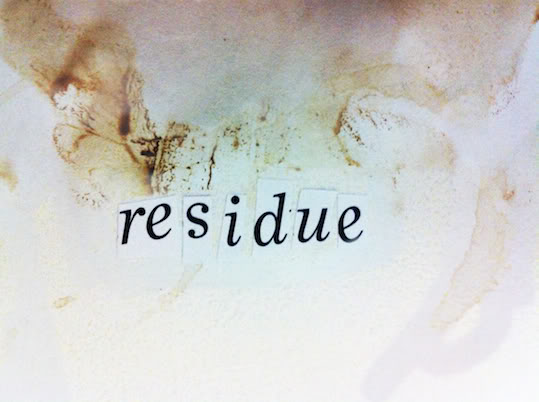
That I could have escaped from the past with no residue, as clean and unspoiled as that new sofa. Because the truth is that divorce leaves a residue. A film that no matter how hard you scrub, you can never fully remove. It’s not something that disappears just because you take yourself out of the environment. It resists fading and clings tenaciously to every roughed-over surface.

You can try to cover the damage, hiding it beneath a slipcover of smiling perfection. You can scrub at it until your hands are raw and your the very fabric of your being becomes worn and thin. You can perceive the disfigurement as terminal, and live your life as an abandoned piece of furniture cast off in an unheated garage.

Or, you can see the stains as battle scars. Signs of a life once lived and a love once loved. You can learn how to find peace with the residue, viewing it as the reminder of your past while weaving into the fabric of your future.

Divorce leaves a residue.

And what you do with it is up to you.

Detachment Styles

Much has been written about attachment styles, starting with ways that infants bond with their caregivers and then extrapolated to how people respond in their romantic relationships.

Here is a summary I made of the four primary attachment styles (information from Psychology Today):

attachment stylesIf you are not familiar with attachment theory, it’s worth a look. It’s amazing how much of how we respond in relationships can be described within this matrix.

Of course, the way we respond at the end of a relationship also depends upon our personal makeup and early experiences. I created a chart of detachment styles based upon the same criteria.

detachment stylesAs with with attachment styles, you will likely recognize yourself in more than one category or realize that you have moved from one box to another over time. These are not fixed traits; you can change your position with intention and effort.

Breaking up happens. How do you want to detach?

Finding Happiness After an Unwanted Divorce

unwanted divorce

My divorce certainly did not present itself as a gift, trussed up with a big red bow like a Lexus in a Christmas commercial. Instead, it was a big ugly box, filled to the brim with explosives. It was a present I never anticipated and one I never desired. But, as it came with a “no return” policy, I was determined to make the best of it. From Rewrapping Divorce As a Gift

When you are facing down the bullet train of a divorce you never wanted and cannot seem to halt, all you can think about is the devastation of losing your marriage. Your partner. Your best friend. The pain is unimaginable and a future without your spouse feels impossible.

I know. I’ve been there.

And I’ve also made it through.

Now, over five years out, I can say that my tsunami divorce was the worst thing to ever happen to me.

And also the best.

Sometimes you have to lose what you wanted.

To get what you need.

And sometimes you have to decide you want to feel better.

More than you want to hold onto the past.

Let Go of the Marriage You Thought You Had

You didn’t have a good marriage.

Maybe you thought you did. Maybe you still do.

But the truth is that it wasn’t the marriage you thought you had. Because if it was good, it would not be ending.

I had the hardest time accepting that truth. From my perspective, my marriage was great. And sometimes, when I think back at the wonderful moments we shared, I still do. I was happy. I had a good marriage.

But he didn’t. And it wasn’t.

In some ways, that realization was freeing. The divorce wasn’t the end of something good. It was the end of something broken. Even if I didn’t see the cracks.

You didn’t have the marriage you thought you had. It’s time to let it go.

I know his name. His face. His birthday. His social security number. His family. Yet I still do not know who he is. However, I can tell you who he was. He was my best friend. My lover. My confidant. He was the man who built a toy chest for our friend’s son’s birthday. He was the man whose scent instantly calmed me and whose arms held me like they were molded from my frame. He was a voracious reader and he devoured science fiction and fantasy novels. His favorite series was The Dark Tower, by Stephen King. He hated tomatoes and loved Sweetwater IPA. He preferred dark clothes and refused to wear V-necks. He wore his watch on his right wrist, the face to the inside of his arm. He was the man who patiently built me an office and then rebuilt it for me when I grew weary of the desk where I spent hours writing papers. He was a quick learner, but a poor student in school. He was a fan of Apple, Banana Republic, and Alice in Chains. He was never athletic due to bad knees, although he started to work out once the pounds encroached with age.  He was the man who stayed up all night for a week with our third puppy who came to us with kennel cough. He was so confident that I would win Teacher of the Year, that he ordered flowers before the votes were announced. He was the man I turned to for advice and comfort. He was my everything.

He was all of these things, yet he was also the man who left his wife of ten years with a text message. He was the man who hid debts and stole money from accounts. He was the man who wooed an innocent woman, told her nothing but lies, and married her although he was already wed. He was the man that locked the dogs in the basement and drove off, not knowing that they would survive. From Who Is He?

It’s Okay to Grieve. And It’s Okay to Move On.

An unwanted divorce is an enormous loss. You are losing the image you had of your spouse and your marriage. You are losing your present life. And you are even losing your hopes and dreams for the future. It touches every area of your life.

It’s okay to mourn the loss of what was and what would be.

I spent hours keening in my room, my pillow muffling my cries so that couldn’t be heard. I ran hundreds of miles with tears streaming down my cheeks, blurring the path in front of me. I would pick up the phone, just wanting to hear his voice, before I would remember that it wasn’t mine to hear anymore.

And I also made strides to begin my new life. I wrote and posted goals for the year. I made new friends and tried new things. I dreamed about what I wanted for my next chapter and started taking baby steps towards those aspirations.

By all means, grieve.

And also live.

I would have moments, even days, where the suffering was unseen. But its absence was always short-lived and my brain had a trigger-finger that would herald its return at the slightest provocation. My body held the memories like the discs in a juke-box, ready to play with the touch of a button. As long as I didn’t approach, I was okay. But as soon as I recounted the tale, my voice would tremble and the pain would come rushing back as though it had been lying in wait.

And so I kept telling the story. And with each retelling, the heartache faded a little more. And the suffering grew weaker. My once constant companion became like a distant friend – we may keep in touch on Facebook, but we have no real need for face to face. From The Evolution of Suffering

Don’t Sign Away Your Right to Happiness

It’s funny. In a divorce, people will fight over the house. The retirement. The cars. But they often forget to fight for what really matters.

Your own well-being.

Be too stubborn to allow your ex to control your happiness. They may have ended the marriage, but they didn’t end you.

My early inroads to happiness were initiated out of spite. I went to a party at the lake soon after the text, mentally saying, “I’ll show him that I can still laugh.” I accepted a date, thinking “I’ll show him that I’m still desirable.” I went hiking on “our” favorite trail, muttering “You can’t take this from me” with every step.

In time, my spite faded, but my tenacity did not.

I was more determined than ever to live a good life. To show that I am stronger than what happened to me.

If you can’t because of, smile in spite of.

I began to realize that by telling him that he made me happy, I was putting all of the responsibility for my own well-being on his shoulders.  That is a huge burden to carry and one that was unfair to him.  I had given him the power to make me happy.  Which means he also had the power to make me unhappy.

If I had left that power in his hands, he would have packed up my happiness with the rest of his belongings when he walked out the door.  I snatched it back from him, determined to find a way to regain ownership of my well-being. From You Make Me Happy

Just Because You Can’t Picture It, Doesn’t Mean You Can’t Create It

It’s difficult to imagine things that we have not experienced. It is one of the reasons that we fear loss more than we value gain. And when you’re trying to picture a life without your spouse after an unwanted divorce? The brain simply seizes, locking in on what is missing.

Your brain is only telling you part of the story. Yes, there is loss. And there is also possibility.

In the beginning, all I could think about was that I wanted what I had had. Then I realized I could create something even better.

It’s hard in the beginning to think about your future, unbound by the marriage you thought you would have forever. We tend to limit our thoughts and, in turn, ourselves.

The ending may have been unwanted. Now create a life you want.

Bloom where you’re planted.

Everything’s going to be okay.

That was my mantra for that first, awful post-divorce year.

Everything’s going to be okay.

I would repeat those words in my head as I lay sleepless every night.

Everything’s going to be okay.

My friends and family would offer those words as comfort, reminding me that the “now” was not the always.

Everything’s going to be okay.

I imagined some future where he would face consequences and I would be relieved of mine.

Everything’s going to be okay.

Sometimes, I railed against that platitude, uncertain how anything could ever be okay again.

Everything’s going to be okay.

But still, I held onto those words like a life raft, wanting to be pulled free from the pain.

Everything’s going to be okay.

Those words were my Xanax against the panic, the overwhelming fear of unwanted change.

Everything’s going to be okay.

One day I realized that it really was okay. Maybe it wasn’t the okay I imagined, but it was okay nonetheless. From Everything’s Going to Be Okay

Different Can Be Good. Or Even Better.

Yes, it is hard adapting to life after an unwelcome divorce. You are forced to change when you were happy with the status quo. It’s not fair. Life rarely is.

You can’t go back. But you can always move on.

And one day you just might find that you’re happy that your life didn’t go as planned.

I know I am.

So now here I am. Open and bleeding. No walls, no buried head. I need to learn to be here, to stay vulnerable, without allowing myself to panic and either hide or grasp too tightly. It’s not easy. It doesn’t feel safe.

I want reassurances. Promises. But the truth? That’s only a bandaid. I need to relax and breathe through my fear. I know I’ll be okay, I just need to do a better job of convincing myself. After all, the only true abandonment is when we abandon our true selves. And that’s one I can control. From Vulnerable

Here’s my personal message to those in acute divorce pain. In it, I give some strategies for moving on when all you want is for everything to be the way it was.

And a dose of laughter and truth:

photo 2-104So get out there and live!

How to Accept the Apology You Never Received

apology never received

In an ideal world, everyone that causes harm to another, either intentionally or unintentionally, would immediately offer up a genuine apology: accepting responsibility, acknowledging the pain, express empathy and remorse, immediately changing behavior and, if appropriate, making amends for the damage caused. But we know that rarely happens. And it never happens as quickly as we would like.

Instead, we receive a “sorry” tossed out with little thought and nothing to back it up. We hear, “I’ll do better” and better never comes. We may find that in place of an apology, we instead receive blame and misplaced anger as defensiveness leads instead of empathy. The apology may be discounted by the excuses that accompany it. We may see an utter lack of comprehension at the pain that was inflicted. Or we may just be listening to radio silence, waiting for an apology that never comes.

An apology that maybe we don’t even need.

fullsizeoutput_1699

Why do we want apologies?

Children are taught almost as soon as they can talk to say “Please” when they want something, “Thank you” when they receive something and “I’m sorry” when they hurt someone. At the most surface level, we view an apology as a basic ritual of societal order that preserves a sense of fairness and responsibility.

Apologizing has become almost a knee-jerk reaction for many. How often have you bumped into somebody or inadvertently cut someone off with your grocery cart and had the word, “Sorry” out of your mouth without thinking? Even in such a minor interaction without much empathy or remorse behind the word, the apology still carries importance. When it is uttered, it acknowledges the infraction and its impact on the other person. When nothing is said, the other person feels invisible and insignificant.

At its most basic, an apology says, “I see you.”

And a lack of an apology is a passive rejection.

CA1038EE-7DC2-4D0E-985E-0C40AA405ED7

What do we expect from apologies?

Pain wants to be heard; the need for our suffering to be acknowledged drives our need for an apology. And the greater the perceived damage, the greater the perceived need for an apology. We all have an inherent sense of fairness, a balance of how things “should” be. When someone harms us, that balance is disrupted and we presume that an apology will make strides towards correcting that imbalance and restoring a sense of fairness.

We often see an acknowledgement of the slight and remorse for the actions as the keystone in the bridge to healing. As though once that apology is received, the remainder of the recovery follows. And so we wait.

Because we want to be heard. Understood. And the pain keeps screaming until it is recognized.

fullsizeoutput_16fb

What are the limitations of apologies?

Apologies can never undo what was done. They are not a magical eraser than removes any harsh words or caustic actions. When we imbue them with these special powers, we increase our expectations to a level that can never be reached.

No apology will ever be good enough to abolish the pain and reverse the damage. Just as you cannot control somebody else’s apology, they cannot mitigate your suffering.

You can’t outsource healing. You have to do it yourself.

m3kdqp1baos21.jpg

Do we need apologies?

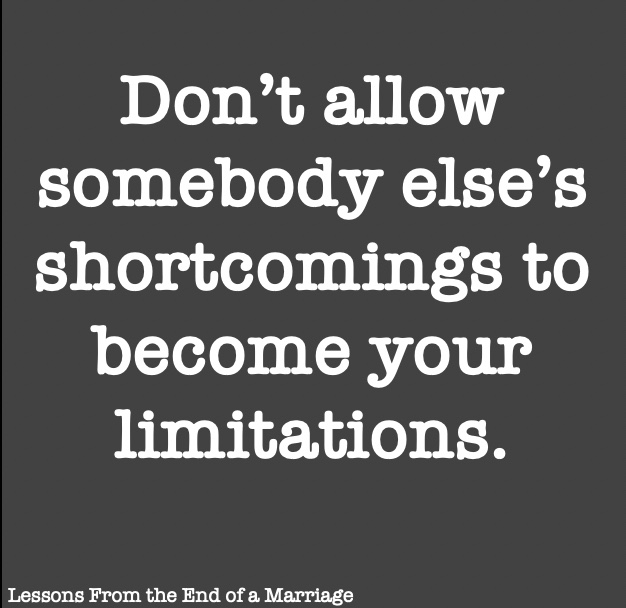
An apology or a lack thereof is a reflection of the other person’s character, not your worth.

When somebody causes harm and refuses to accept responsibility, they are telling you who they are, not who you are.

When someone is too cowardly to admit fault, they are showing you their shortcomings, not yours.

And just because somebody displays an utter lack of empathy, it does not mean your pain is not real and valid.

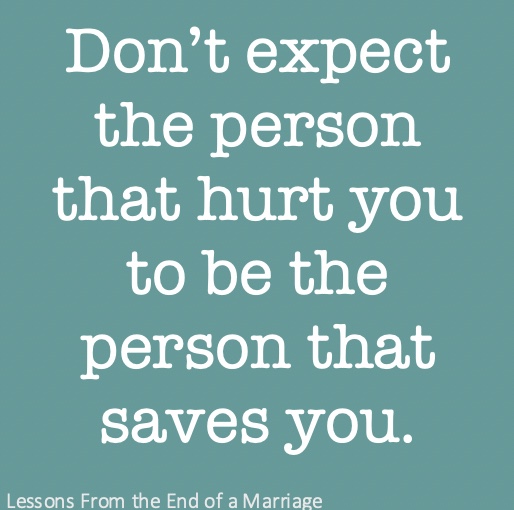
When you wait for an apology, you are allowing the person who harmed you to continue to harm you. You’re letting them decide if you get to be okay again.

And is that really a decision you want to place in the hands of someone who lacks empathy and courage?

If this person is still involved in your life and they are unable or unwilling to authentically apologize, take a good look at your boundaries. Is this someone that you want to remain in your life?

How can you accept the apology you never received?

The most critical component of accepting an apology you never received is to eliminate any magical thinking you have about apologies. They are no holy grail of healing. They do not have the power to erase what has happened. Once you realize that, it becomes easier to let go of the driving need for acknowledgement and amends. An apology is only required if you give it that power.

Your well-being should not hinge on somebody else’s shortcomings.

Their inability to accept responsibility is their problem.

Not yours.

Your healing is your responsibility.

Accept it.

If you’re having trouble accepting an apology you’ve never received, this can help.

fullsizeoutput_16ca