7 Signs That You’re Healing From Divorce or Infidelity

It can be surprisingly difficult to determine when you’re beginning to heal from relationship trauma. There’s no finish line to mark the end of a journey, no certificate to announce that you’ve completed the graduation requirements and no neat summary to tie up all the loose ends before you close the book on that chapter of your life.

So how can you tell that you’re moving on from divorce or infidelity?


1 – Your Reactivity Decreases

After even a casual mention of my ex, I could feel my scalp begin to burn as my blood pressure climbed to address the perceived threat. If a movie or book touched on the topic of cheating, I became a passionate objector, unable to separate the character’s actions from my own experience. Online, if anybody posed a challenging question to me about my former relationship or my recovery, I had to engage until I felt understood (spoiler alert – no amount of engagement can guarantee this response).

Now? It’s completely different. I can discuss even the most painful aspects of my first marriage and its demise without raising any alarm bells on a heart rate monitor. I can view other’s actions that paralleled my ex’s with curiosity and a calm disapproval. And I am able to distance myself from the responses of others, able to see their origin more clearly.

Consider the healing process from a physical wound. At first, the site is incredibly tender, prompting a flinch from even the slightest touch. You become hyperaware of the need to protect it and often overreact if somebody gets too close. As it heals and the skin knits over the exposed and tender nerves, you no longer react the same way. In fact, you get to point where you no longer notice someone inadvertently brushing up against the previously damaged skin.

Emotional recovery follows a similar path. At first, you’re in a heightened state. And from that stance, everything has to be evaluated as a legitimate threat. Over time and with enough benign experiences, you become more adept at sifting out the real threats from the ones that simply appear dangerous.


2 – You Are Able to Appreciate Nuance Without Feeling Threatened

He was bad and I was good.

He was deceptive and I was honest.

He was the perpetrator and I was the victim.

It all seemed so clear, so black and white. And I outright rejected any thoughts or outside suggestions that didn’t fit cleanly into this worldview. This mindset was born of self-protection, as I secretly ran tapes through my mind with both his words tearing me apart and my own thoughts turning against me. I needed to paint myself as the “good” one in a desperate attempt to repair the gaping hole left from the rejection.

In time, I noticed that I was starting to see shades of gray. Yes, his actions were still despicable and inexcusable, yet I began to consider what might have prompted that response. Yes, I never lied to him in the marriage, but I was starting to realize that I had lied to myself. And as these realizations began to arise, I started to understand that the nuance, instead of being a threat to my self-image, actually was a place that brought peace as it felt like truth.

It takes courage to embrace the nuance of life. We find comfort in applying clearly defined labels because then we know where we stand. Yet there is often an underlying discomfort with this simplistic view because at its core, we know that it is false. In contrast, the gray area, although uncomfortable at times, feels like living with your eyes open and your confidence in your self intact.


3 – Your Obsessions and Compulsions Fade

I replayed the moment I read the text that ended my marriage over and over again as though I could change the outcome. At my home-for-the-year, I refreshed my computer screen hundreds of time an hour looking for that email or update on his other wife’s blog that would provide the answers I was so desperately searching for. My runs became a compulsion, the miles adding up even as my body began to protest the rapid scale-up in training. Even once I started dating, there was an obsessive energy to it as I responded rapid-fire to most every message.

The period after divorce or infidelity is often like the rapids that form when two bodies of water crash into each other. Only in this case, it’s the anxiety of unwanted change colliding with the overwhelming need to do something. And as you move further away from the trauma, the intensity of these feelings begin to fade and you no longer feel driven to think or act along those lines.


4 – Your Sleep Improves

I sat up abruptly, afraid that I was going to vomit. I wasn’t sick. Instead, it was another dream about my ex. I felt violated. Hadn’t he hurt me enough? Why did he have to steal my sleep too?

In the beginning, sleep is often elusive as the mind refuses to relax. Even once you manage to go down, your mind is often invaded with unwanted dreams and nightmares. The nights become an adversary, something you have to steal yourself to meet every single day.

And then one morning, you finally feel rested. Eventually, you’re able to string multiple mornings together where you realize your sleep was uninterrupted my the memories of the trauma.


5 – You Have Increased and More Sustained Energy

In some ways, healing from relationship trauma reminded me of the time I had mono. My body felt heavy, leaden. I had to deliberately summon effort and motivation for every movement, every decision. I was exhausted. It turns out that rebuilding a heart and a life at the same time is hard work.

As you begin to heal, more and more energy reserves become available for other endeavors. I like to equate it to the body’s response to extreme cold. It pulls the blood away from the extremities and towards the critical organs. A sure sign of warming up is pink fingers as the blood is released again to its normal pathways. Likewise, a return of energy is a sign that the critical healing phase has passed and that it is now safe to allow that energy to flow elsewhere.


6 – You Are Able to Broaden Your Focus

For a time, my identity was the abandoned one. That single event became the lynchpin of my very existence. It was both the most important thing about me and also the thing that I was most powerless against.

And then over time, I added new facets to my identity. I finished a race and began to call myself a runner. I published a book and added the moniker “writer.” As I continued to live in the face of betrayal and abandonment, I realized I was a survivor. As I began to look around, I realized that there was a whole world out there separate from what I had endured.

At first, your focus has to be narrow. You need to have blinders on in order to simply survive. And then slowly, the rest of the world – and its possibilities – begins to come into focus. Until one day you realize that you are not what happened to you.


7 – You Have Hope For the Future

“I don’t think I’ll ever be able to get past this,” I said in the beginning, unable to see beyond the enormity of the pain.

“I want to get through this,” I pleaded, words not yet backed by action.

“I will move on,” false determination sounding more confident than I felt.

“I am going to be okay,” I eventually whispered to myself, realizing that I believed it to be true.

The return of hope is a beautiful thing. A sunrise after a long winter storm that promises that spring lies just ahead.

10 Strategies to Release the Anger From Financial Betrayal

Top Ten Posts of 2019

1 – 7 Reasons Your Ex Getting Married is the Worst (And 7 Reasons it’s Not)

This has been a leader for a few years now. I think people are caught off guard with the intensity of their reaction when they learn that their ex is getting married and they turn to Google to validate their feelings and reassure themselves that they’re not alone. I also created a video this year that addresses the topic.


2 – Subtle Signs You’re Being Manipulated by a Covert Abuser

Covert abuse is sneaky. Knowing the signs is the first step in protecting yourself.


3 – 5 Things You Don’t Understand About Divorce Until You’ve Lived Through It

I don’t think any of us knew what to expect before we went through divorce ourselves. This post is both validating of your experiences and helps you understand while some people in your life may struggle to “get it.”


4 – Finding Happiness After an Unwanted Divorce

When you’ve been hit by the Mack Truck of an unwanted divorce, being happy again feels impossible. This post helps to reassure you that it’s not.


5 – Is it Love? The False Dawn of a Rebound Relationship

It feels real. And you desperately want it to BE real. But there is a reason that those early post-divorce relationships don’t tend to last.


6 – Five Empowering Ways to Recover From Gaslighting

Gaslighting leaves you feeling so confused and powerless that it’s difficult to see the way out. This post gives you actionable strategies that can help you heal.


7 – How Do You Get Through Your Anniversary After Divorce?

The first one is awful. And subsequent ones can still be a bittersweet reminder of what was loved – and lost. I share ideas what what you can do before, during and after that day to help ease you through.


8 – 15 Questions to Ask Yourself If You’ve Been Cheated On

After being cheated on, your mind is a swirling mess of emotions. These 15 questions act like a guide rail to help you find your way.


9 – Ten Metaphors For Divorce

These are a mixture of eye-opening and funny as divorce is compared to everything from a favorite sweater to a visit to the eye doctor. Which do you relate to?


10 – The Importance of Feeling Safe in a Relationship

I wrote this post after I realized how little we talk about the importance of feeling emotionally safe in a relationship. Based on the views and the reaction on Facebook, it’s a conversation that needs to happen.


What One-Star Reviews Can Teach Us About Personal Rejection

I recently discovered (and have been devouring) a new-to-me author, Christian Galacar, who is often compared to Stephen King. After I finished my first download of his, I visited the Amazon page to learn more about him and what else he had published. I soon found myself going down the rabbit hole of reading some of the hundreds of posted reviews about the book.

Most were positive. The majority were fair.

And then there were the reviews that accompanied a single star.

And most of those were utter nonsense.

They were interesting reading because they had no emotional associations for me, I could scan them for generalizations and patterns. And in doing so, I realized that there is much in common with these one-star reviews and rejection in personal relationships –


One-Star Review Reason – “I haven’t used this product or service.”

I’m planning on surprising my husband with dinner at a local place that promises to serve Maryland-style crab cakes. Since I have never been there, I checked them out online to get a better sense of the establishment. I ran across a one-star review by a woman who admitted to never never eating at the restaurant and then proceeded to slam them for everything from food quality to service. Ummm…. what?

Personal Rejection Equivalent – “I was never present in the relationship.”

“We’re just not connecting,” they may say, ignoring the fact that they haven’t even looked in your direction in months. They are quick to blame you and even quicker to ignore the fact that their claims are based on assumptions.

_______

One-Star Review Reason – “I don’t like this type of thing.”

One of the poor reviews for my new author obsession mentioned that the reader doesn’t appreciate horror novels. Yet they proceeded to download – and negatively review – a book that is clearly marketed as horror. Completely confusing personal preference as being a sign of poor quality.

Personal Rejection Equivalent – “I don’t like this type of person.”

If we give them the benefit of the doubt, maybe they were not aware of their preferences in the beginning. Or maybe they thought that other qualities would somehow make this other thing not matter. Regardless, they made a poor choice for their needs or wants in the beginning and then tried to pass it off as being your fault.

_______

One-Star Review Reason – “I always give one-star reviews.”

For our recent vacation, I perused many Tripadvisor reviews. Before I gave a one-star review any credence, I checked the poster’s other reviews. And oftentimes, I noted that they were all negative. Some people are simply never happy, even when they’re on vacation.

Personal Rejection Equivalent – “I’m never satisfied in a relationship.”

And what’s the common denominator here? Hmmm. If they are never happy, that’s on them. Not you.

_______

One-Star Review Reason – “I can’t get beyond…”

Maybe the food was amazing, but the server seemed a little distracted. Or, the book was amazing but the ending didn’t meet expectations. Whatever the reasons, these reviewers allow one element to taint the entire experience.

Personal Rejection Equivalent – “I expect perfection and have trouble letting go of mistakes.”

This is the person with unrealistic expectations who also likes to hold a grudge. That one time you forgot to pick up milk at the grocery store two years ago? I bet you’re still hearing about it. No matter how much you try to please this person, it will always feel like playing Whack-a-Mole.

_______

One-Star Review Reason – “Through my lens…”

When I first started sharing publicly, the reviews and comments often gutted me. Except this style, which simply confused me at the beginning. “You never showed your husband any affection or attention. It’s no wonder he left you. What did you expect him to do? Live in a loveless marriage unhappy for the rest of his life?” Huh? This in no way described or marriage or matched what I had shared. And then it dawned on me – this man wasn’t really reviewing me. He was reviewing his ex-wife.

Personal Rejection Reason – “I feel this, therefore you feel this.”

Ah, projection. Our old friend. It’s a convenient way to avoid responsibility.


Most things in life – and that includes relationships – are neither one-star or five-star. Most things exist in the between, a mixture of both good and bad. There are things to critique and improve upon and also things to recognize and celebrate. And anyone who claims otherwise is either selling something, hiding something or trying to avoid something.


After the Affair: The Dreaded Doctor’s Appointment

It took a few days for the realization to dawn on me.

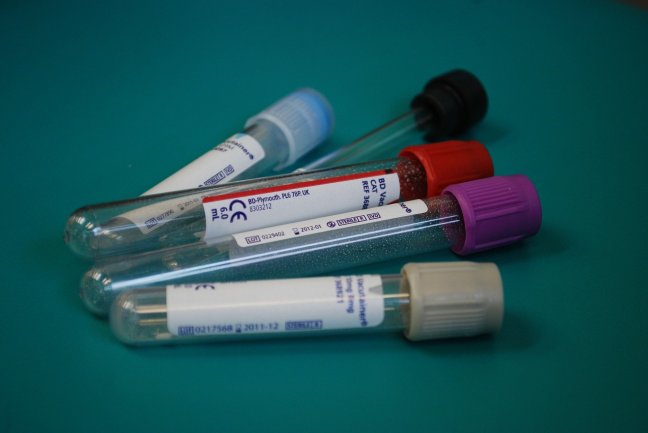
“I need to make a doctor’s appointment,” I muttered half to myself and half to my mom, who was helping me sift through the rubble of my life. “I need to make sure that on top of everything else, he didn’t infect me with anything.”

The thought was horrifying. Mortifying. Infuriating.

I had only been with one man my entire life. This was not something I ever thought I would have to face.

Yet there I was.

Two weeks after the collapse, I walked into my doctor’s office. I was lucky. My provider, technically a nurse-midwife, had taken care of my annual visits for years. She knew me and I felt comfortable with her. It helped a little to counteract the immense humiliation I was feeling at being thrown into this situation without my knowledge or permission.

When she saw my drawn face, my trembling limbs and my emaciated figure, her mothering instinct took over. “Oh Lisa,” she sighed, pulling me in for a hug. Then, mother to mother, she hugged my mom, who (by my request) had accompanied me to a pelvic exam for the first time since middle school.

While my parts were checked and my blood was drawn, my provider kept talking to me in a soothing voice and kept a comforting hand on my arm or hand the entire time.

And then the waiting game really began. And along with it, the anger. Because it was easier to feel than the fear. Finally, I got the call.

“Everything looks good,” she said.

I felt relieved. At least my body would be okay. If only my heart could be cleared so quickly.


The dreaded doctor’s appointment is one more thing in an endless list of what is unfair about being cheated on. It’s yet one more way that we are left to clean up the mess they made.

The emotions involved run the gamut from confused (after all, if you’ve been monogamous for awhile, you tend to lose touch with what diseases are out there and what the implications are) to anger (how could they act with such reckless abandon when it comes to my health?!?). In between are often shame (because for some reason, we feel humiliated by their actions even when they don’t) and fear (are they going to curse me with a lasting physical reminder on top of everything else?). I know I also felt violated. This was not something I had consented to.

It’s a lonely feeling. An isolating one.

Yet it’s familiar to everyone who has ever discovered an unfaithful spouse.

It’s not fair. But it’s a necessary step.

Even though your partner didn’t take care of you, YOU need to take care of you.

I hope that your medical providers are as compassionate as mine were.