How Being Cheated On Impacts Your Next Relationship

It’s not fair.

That instead of following the promise to have and to hold, your spouse made the decision to crumple up and throw away those vows. That your partner chose to forsake you in the pursuit of others. That your other half replaced intimacy with lies and betrayal, eroding the marriage from within.

And now you’re left dealing with the consequences of those choices.

It’s not fair.

You’re angry that you’ve been put in this position and maybe even wondering if relationships are worth the potential pain. You’re worried that you may struggle to trust again and that if you do, betrayal may find you yet again. You’re embarrassed that you were defrauded and you doubt your own perceptions and choices. You’re tired of being the responsible one, the one who cleans up the mess that is left behind.

And it’s not fair.

The unfortunate fact is that your partner’s infidelity not only impacted your marriage, it will also continue to impact you moving forward. The good news is that with awareness and intention on your part, you can limit and even learn to benefit from some of that influence.

And it all starts with recognizing the impacted that being cheated on has on your next relationship.

Trust is Replaced With Doubt

Most people confide that the realization of the ongoing deception was the most painful part of being cheated on. It’s so difficult to integrate what you now know about your partner with what you thought you knew.

At the minimum, lies of omission were carefully maintained in an attempt to conceal the truth of the affair. Half-truths were delivered and excuses offered up in order to buy opportunity for indiscretion. As a result, you now have trouble taking people at their word. Is he really staying late at the office, or is that just the story you’re being fed?

It’s easy to get carried away with truth-finding, veering into the dangerous territory of obsessive snooping and interrogation, punishing a new partner for the sins of the old. It’s natural to want to control things. To pursue lies like a cat hunting down its prey. Yet the reality is that no amount of searching will uncover everything and that operating from a place of assuming deception will ruin everything. There’s a balance that must be reached between trusting everything and believing nothing. And you reach that point, you will be miserable in every new relationship and you will make your partner miserable as well.

In the worst cases of infidelity, gaslighting tactics were used against you, causing you to have trouble trusting even the most basic of perceptions. Gaslighting is a type of emotional abuse where careful and crafty manipulations are used to make you doubt your sanity and your observations. The impact of gaslighting is more persistent and more nefarious than that of the garden-variety lie because your trust issues are less with others and more with yourself. Recovering from this type of abuse takes time, persistence and a constant awareness of its impact.

Finding the Sweet Spot Between Naiveté and Panic

Insecurity Can Run Wild 

You thought your partner had your back when instead they were cheating behind it. You expected your spouse to be there for you only to discover they were trying to free themselves of you. When the affair came to light, you felt powerless. Worthless as you concluded that somehow you weren’t enough for your spouse. Your partner made the decision to have an affair and all you can do is react as your marriage slips out of your hands.

And the natural reaction when we lose our grip is to grasp even tighter.

It’s not unusual for those that have been cheated upon to smother their new relationships. It can be an attractant at first. After all, you doesn’t like to receive attention? However, the insecurity behind those actions will eventually make itself clear and have the unintended consequence of pushing people away.

Insecurity can also lead to an uptick in perfectionist and people-pleasing qualities in an effort to be the “perfect partner” and to avoid future infidelity. Those strategies will also backfire as they have a tendency to slide into resentment or martyrdom.

The remedy for insecurity isn’t found in holding tighter or in the illusion of perfection. Security is found within, in trusting yourself, your instincts and your decisions. When you seek validation outside of yourself, you will never find it. When you find validation within yourself, you will never lose it.

Defenses Are Fortified

“I will never allow myself to be hurt like that again!”

I get it. The pain of betrayal is so piercing. So all-encompassing that all you want is for the agony to end and to never take the risk of feeling it again.

And so you build walls. Allow people in, but only so far. You rationalize your choices by claiming that they are smart. Prudent. That when you went all-in before it was out of a foolishness of youth.

You may find that when discord does strike, you have a sudden and intense impulse to cut your losses and end the relationship. You’d rather be the one leaving rather than again being the one left behind.

It’s tempting to try to build a relationship in such a way to mitigate risk. But relationships don’t work that way. Without vulnerability, there is no chance of connection. Of intimacy. Of all of the things that make love worthwhile.

Responsibility May be Shifted

Are you caught up in blaming the other woman for seducing your hapless husband? Or are you convinced that your wife’s flaws are the reason for the affair and that if you have a different partner that all of the problems will disappear?

There is a temptation to believe that if we just had the right partner, that infidelity will be held at bay. There is an instinctual reaction to lay all of the blame at the feet of the betrayer and their affair partner(s) while avoiding the difficult work of looking within.

While you are by no means responsible for your partner’s transgressions, the truth is that an affair is a wake up call that you shouldn’t sleep through. Maybe you need to work on your own courage and assertiveness so that future problems can be addressed rather than swept away. You may realize that you had been inadvertently abandoning the marriage by directing all your attention to work or to children.

At the very least, reflect on why you chose this person and/or chose to stay with this person who responded to difficulty or discontent with dishonesty. Were you afraid of being alone? Did you feel unworthy of someone better? Were you operating on fairytales and blind hope?

This is important work and work that cannot be outsourced to another. Ultimately, you and you alone are responsible for your happiness and well-being no matter your relationship status.

Taking Responsibility: How to Tell When It’s Your Stuff to Own


Confidence is Built

At first, your confidence will most likely take a hit. Especially if you feel as though you were traded in for a younger/prettier/smarter/richer model. But in time? As you begin to conquer obstacles that once seemed insurmountable and you realize that you are stronger than you ever imagined?

You start to trust that you can handle anything that crosses your path.

That newfound confidence will impact your next relationship. Those on the dating scene that are looking for malleable and controllable partners will pass you by. You will begin to see your worth and seek out those that see it too.

You are no longer afraid of being alone. You enter and maintain relationships out of desire to be paired rather than a fear of being solitary. You are less likely to stay in a toxic relationship and have more courage to address issues in a strained one.

That’s not to say that you will never flounder, never fear. You will. But following that slide will be a little whisper from the back of your mind, “You have been through so much and survived. You can handle this.” And that little voice is right.

How Conquering Divorce Gives You Confidence

Acceptance is Reached

Love is all or none.

If you try to hold it at a distance, you end up pushing it away.

If you attempt to control it, you will inevitably strangle it.

If you build walls and hang back out of a fear of being hurt, you are avoiding the very intimacy that is the foundation of a relationship.

If you punish your new partner for the sins of the old, you are wrapping the new in the cloak of the past.

If you assume that this partner will also hurt you, you are more likely to be hurt again. After all, the dog that you expect to bite often does.

Love is always a risk. Whether you’ve been hurt before or not.

It’s just that those of us who have felt the anguish of betrayal know exactly what it is we are risking.

And you may decide that it’s not for you. That you’re happier alone and don’t want the risk or the compromises again.

That’s okay. Life is not one size fits all. Tailor your life to your specifications.

But if you do decide you want to let love in, you have to be ready to embrace it. Risks and all.

10 Things People Who Thrive After Divorce DON’T Do!

We’re accustomed to hearing information and advice about what we should do after divorce. But what about those things that are better avoided if we want to eventually find or create a better life after divorce? Here are ten things that people that thrive don’tdo:

1 – People who thrive after divorce refuse to pretend they’re okay.


It’s partly a knee-jerk reaction and partly an effort to present our best selves to the world when we respond to “How are you?” with “Fine.” Sometimes, perhaps most of the time, this response is sufficient and mostly accurate. Divorce is not one of those times.

During divorce, most of us experience the extremes of emotions all tumbling within our bruised hearts at any given moment. And it’s easier to say, “Fine.” than to admit to the paralyzing fear that we will never find love again. It’s less scary to pretend to be okay than to confront the fear that we’re really not coping very well. In a time when our esteem has already taken a beating, we want to appear as confident and capable. Even if it’s just an illusion.

Pretending to be okay often feels like you’re doing others a favor. Yet you’re protecting them at the expense of yourself. The problem with pretending to be okay is that it prevents you from receiving the help you may need and the limited vulnerability promotes loneliness as you avoid true intimacy with others.

Those who thrive will admit to themselves and others when they’re not okay. They will give themselves the time and space to heal and they will accept assistance from others. Becoming okay often begins by accepting when you’re not.

Playing Make-Believe With Your Healing Progress


2 – People who thrive after divorce don’t take themselves too seriously.


Divorce is serious business. It has a significant and powerful effect on those affected, from a loss of vitality and financial security to difficulty functioning and the stress of major loss and transition. It requires consistent effort and attention and money to survive the shift from married to single.  And it’s easy to become overburdened with the responsibilities or to become consumed with the impact the split will have on the children.

Those who thrive after divorce don’t neglect their duties or minimize the consequences of the end of the marriage, yet they also manage to find the comedy within the tragedy. Whether by taking advantage of a lighthearted moment or using dark humor to poke fun at a horrific situation, they allow the smiles to shine alongside their tears.

Humor not only allows for play and respite, refraining from taking yourself too seriously also helps you to forgive yourself for your stumbles and missteps as you’re learning how to be in this new and topsy-turvy world. When you can laugh at yourself, it’s a great reminder that you have the power to interpret what happens to you.


3 – People who thrive after divorce don’t follow rigid rules.


“Don’t date for at least a year after divorce.”

“You should always try for mediation instead of going to court.”

“Never talk about your divorce at work.”

It seems the rules for how we are “supposed” to manage life after divorce are endless. There are rigid social guidelines for everything from how to leave your spouse to how (and when) to meet the next one. Some of the advice is good, some of it excellent. Much of it comes from years of experience and even research.

Yet none of that matters if the advice isn’t right for you.

Many of us seek guidance after divorce. Lost, confused and overwhelmed, we’re looking for somebody to tell us exactly what to do and what steps to take to make it through. It’s great to learn from others and gain from the shared wisdom of experience. And it’s even better when you process that advice through your own beliefs and needs and shape it into something that makes sense for you.

Those that thrive after divorce are open to counsel, yet they refuse to follow rules just for the sake of following rules. They listen, they learn, they reflect and then they do what feels right for them.


4 – People who thrive after divorce refrain from becoming bound by their revenge fantasies.


Some ex-spouses are pretty terrible people or at least they behave in some terrible ways before, during and after divorce. And when we’re hurt, it’s tempting to strike back in anger and frustration. The mind becomes a fertile playground for revenge fantasies suitable for a Hollywood script.

The mental vengeance can feel purgative and empowering, restoring a sense of balance and fairness while releasing some of the vitriol. We want the ex to suffer so that they can know the pain they inflicted on us. We want them to be miserable because it seems a fitting consequence for their malevolence. We scan their pictures with their new partner looking for signs of unhappiness or carefully dissect their words looking for cracks in the happy façade.

Those who thrive after divorce are certainly no saints. Their minds still entertain these dark and vindictive thoughts. Yet they refrain from getting too caught up in their need for revenge or their desire to see consequences fall upon their ex.

The thrivers understand that by giving too space to these negative thoughts, they are preventing themselves from moving forward. Instead of worrying about what their ex is doing, they strive to turn their energy towards creating a life that they enjoy.

How to Move Forward When You Still Want Revenge


5- People who thrive after divorce avoid leaving their divorce unframed.


When divorce happens, it often feels messy and unrestrained. It presents as the disruption of everything normal and a destroyer of lives. It may have felt inevitable like a slowly rising tide or it may have presented as a tsunami, wiping out your life in a single catastrophic event.

Regardless of the presentation, your early efforts are focused on survival. On simply making it through the one day and onto the next. It’s tempting to refrain from looking back upon the destruction of the divorce.

Yet that’s exactly what those who thrive do. After they’ve made it through the survival stage, the thrivers consider the entire divorce experience and decide what purpose it will serve in their lives. They take that catastrophe and they frame it as an experience that has allowed them to learn, to grow or to help others. They find the purpose within the pain and surround their experience with gratitude for its unexpected gifts.


6 – People who thrive after divorce refuse to turn their narrative into a reality show.


In the world of television drama, conflict is celebrated, everyone is forced into a narrow mold of “hero” or “villain” and stories follow predictable arcs towards resolution.

Life is not television.

We have become so accustomed to fictional and manipulated narratives that we often expect our lives to follow a similar path. We focus on the sordid details, welcoming the excitement and drama even as we realize that it makes us feel ill in the process. We all-too-easily cast our exes (and maybe their new partners) as narcissists or monsters. And we expect that life should be a series of events worthy of airtime.

Instead of seeking drama, those that thrive after divorce avoid the secret thrill that comes from digging into the dirt because they are well-aware of the negative aftereffects. They recognize that their ex is human and fallible and so are they. Resolution is viewed less as, “The end” and more as “The next step.” In place of stirring up drama, they strive to find a place of detached compassion.


7 – People who thrive after divorce don’t treat their children as pawns or victims.


It can be tempting to use the children as an implement of control or power when your ex is being difficult or unreasonable. Within the court system, the kids are often treated like the fake rabbits used in dog racing, so that the parents keep shoveling money into their respective attorney’s pockets. In the worst of cases, one parent badmouths the other in front of the kids in an attempt to win favor and turn the children against their parent.

On the other end of the spectrum, some families focus so much on the effect that the divorce has on the children that they unintentionally promote a feeling of victimhood in their offspring. The kids begin to feel as though they are broken and need to be protected. The parents, feeling guilty, overindulge and overprotect their kids.

In thriving families, the impact on the kids is mitigated wherever possible and it is also not magnified. The children are allowed to express their feelings and are also encouraged to not be limited by them. Those that thrive help their kids without enabling them and they accept the impact of the divorce without marinating in guilt.


8 – People who thrive after divorce abstain from catastrophizing a bad day.


During divorce, we are often living on the razor edge of a breakdown and it doesn’t take much to push us off the narrow edge of getting by and being okay-ish. Those are the bad days, when the brunt of responsibility collides with a lack of rest and the seemingly insurmountable weight of grief.

Those who thrive experience those bad days just as frequently as anyone else. They have those moments when it all feels impossible and nothing seems like it’s working in their favor. The difference is in the narrative surrounding the misery. People who are struggling often generalize their unhappiness, allowing a “bad day” to become a “bad life” like a newly-dyed burgundy sheet transferring its pigment to the rest of the laundry.

In contrast, those who thrive create boundaries around the terrible times. They may whither under the gloom of a bad day, but they also know that tomorrow may again bring the sun. They use language to communicate these walls, avoiding all-encompassing words such as “always” and “never” and clarifying that the current misery, no matter how bad, is always transitory.


9 – People who thrive after divorce refrain from making the divorce the most important thing in their life.


The stress of divorce is ranked as higher than that of imprisonment, major injury and even the loss of a family member. There is no doubt that divorce is a major event in one’s life, a dividing line between “before” and “after.”

Divorce changes you. Its tears wash away any remaining naiveté you carried into adulthood. It forces you to summon courage you never knew you had and to face fears that always seemed too big to name. It allows doubt to creep in and makes you accept the harder truths of life and its inevitable loss.

Without a doubt, divorce has a major influence on you.

Yet it does not have to define you.

Those that thrive see their divorces as one of a series of events that have shaped them, helped them grow. They acknowledge its impact. Yet they also refuse to build a shrine around it, elevating its importance.

The thrivers live with their eulogies in mind – focusing more on their life purpose and their lasting impact than on the series of milestones they have moved through.


10 – People who thrive after divorce don’t give up.


Even those that thrive don’t thrive every day.

They just refuse to give up.

Not Every Day is a Good Day. Show Up Anyway. 

Are you struggling to thrive after divorce?

Check out my comprehensive Thriving After Divorce course on Udemy. 

See what others are saying about the course:

Give yourself the gift of moving on. You’re worth it!

How Will Your Divorce Change You?

Have you ever placed a plant in a window and neglected to turn it for a period of time? If so, you’re familiar with that asymmetrical appearance that occurs as the plant resolutely grows towards the light. In plants, this behavior is called phototropism, one of many innate growth mechanisms that dictate how the plant changes in response to its environment.

We aren’t as beholden to the sun, but we have our own tropism that determines our growth:

Credotropism growth towards belief

Just like the sun directs the shape of the plant, your beliefs govern the shape your life takes. Especially after something as difficult as divorce.

In a series of studies, teachers were given false information about a class of average students. When the teachers were informed that the students were of below average intelligence, the students performed poorly. When told that the students were brilliant, the same students scored high marks.

The teacher’s belief guided the growth of their students.

Just imagine what your own beliefs are doing for you.

Do you want to find a way to feel better? Live better? Be better?

It all starts with your attitude.

Are you looking at your divorce as the worst thing to ever happen to you? Are you fixating on your ex and what they did to the family? Are you focusing on what you have lost?

I get it. I did it too. It’s all but impossible to not spend some time in that negative mental space. After all, you’re mourning the loss not only of what was but also of your imagined future. You may be dealing with limited exposure to your children, a loss of financial security or the brutal reality that you have apparently been replaced.

And you can certainly stay in that negative headspace, building your beliefs about your life’s derailment and its associated casualties.

Yet in doing so, you will most certainly continue to steer your life into that dark tunnel.

Credotropism. You grow towards your beliefs.

It’s true that your hands are somewhat tied right now. You can’t simply turn back time and restart a path where the divorce never happened. You can’t pretend that the negative effects aren’t real and live as though this never occurred.

And you can’t snap your fingers and suddenly find yourself moved on (I know, I tried).

But you can start by believing that it is possible.

You don’t need to know how you’re going to rebuild your financial security to believe that it is possible.

You don’t need to how your children are going to be okay in order to have confidence that it will transpire.

You don’t have to know how you’re going to find love again to believe that it can happen.

You don’t need to know how you’re going to be happy and fulfilled to trust that it can occur.

It all starts with your attitude. Your conviction that you can.

Because you will grow towards whatever you believe.

Make it worthwhile.

The Mistake You May Be Making With Your Divorce Pain

“Why am I still hurting so badly?” the email implores of me, the writer speaking of her ten-year-old divorce.

As I read her message that details her divorce and her continued and prolonged sadness, I found myself thinking about how the modern western world handles death.

Before the rise of the modern medical and funeral industries, death was truly a family affair. Most people died at home, where there bodies were then washed and dressed by their loved ones. This intimate experience provided an opportunity for the survivors to come to terms with the loss and to grieve together. Denial or avoidance of the reality was simply not an option; there was too much to do.

Death has now become sanitized. Distanced. We have the ability to turn away when it becomes too much. We can keep the discomfort at arm’s length while we fill our minds with no shortage of distractions. By avoiding the grief, we prolong the grief.

And we’ve gotten quite adept at avoiding pain.

Not only when it comes to death, but also when it comes to divorce.

At first, it seems ideal to try to give the pain a wide berth. After all, we’re often advised, “If it hurts, don’t do it.” But sometimes that detour around the discomfort is an endless path and the only way out is through the thick of the heartbreak. Here, let me guide you.

How to Deal With the Pain From Divorce


When you continually avoid the pain, every time you feel the agony, it’s as raw as the first time.


Whenever I have an open day off work, I like to go to a Korean sauna across town. The wet area of the facility has a variety of pools ranging from hot to cold. Verycold. When I first lower my body into the frigid water, I gasp and then stop breathing as my body is shocked into silence. The cold slices through my skin and my panicking brain begs for me to leave.

Sometimes I listen to the alarm in my mind and I quickly exit the pool, where I immediately warm up again. Of course then, if I decide to reenter the pool, I have to start from scratch, beginning with the initial pain of the icy waters.

Other times, I am able to stay in the water. I focus on my breathing – slow deep inhale, pause, slow full exhale – until the screaming in my brain finally quiets. And as I hold my body still, a strange thing begins to happen. The shock and discomfort of the cold begins to recede and is instead replaced by a sense of calm surrender.

Emotional pain is no different. If you strive to avoid the discomfort, you inadvertently expose yourself to the initial trauma time and time again. However, with prolonged exposure, you begin to acclimate to the grief. You begin to trust that even though it is terrible, it is not fatal. You learn how to focus on loosening the bindings around your heart so that you can allow your breath in and in doing so, begin to calm the mind.

If you’re struggling to stay with emotional pain, start by training yourself to tolerate physical discomfort. Try hot yoga, distance running or even an ice cold bath. Let the body begin to teach the mind.

Recognize the power that you’re giving the pain when you constantly strive to avoid it.  We seek to turn away from pain because we fear it, yet maybe what we should really fear is the denial of a natural and ultimately, illuminating, emotion.

When you repeatedly tell your story, you move from character to narrator.


When trauma first happens, people are often compelled to tell their story, with all its gory details, to anyone who will listen (or at least pretend to listen). This early telling is emotional. A re-experiencing where the body punctuates each word with its visceral memories of the pain.

And in time, this drive to recite the story fades. And often at this point, people pack up their memories and lock them away in some dark recess of the mind. Yet in doing so, they’re missing a powerful healing opportunity.

Researchhas revealed that the power of EMDR, a type of therapy that uses eye movements to help neutralize trauma, is not in the specialized actions, but in the continual recounting of the difficult experience in a safe and supportive environment. With repeated exposure, the person gains a little more distance from the pain and even begins to feel some power over it as they begin to shape the narrative structure around their memories.

Another way to practice retelling your story until you gain some space is through the use of journaling. Write your experience. Take a slightly different viewpoint and write it again. Try expressing it in third person. As you expose yourself to the pain repeatedly, it loses its power over you.

Healing from intense pain is like suturing a deep wound.


I remember being so raw. Emotionally guuted and bleeding tears. Yet life continued and I was needed. So I managed to tuck the pain inside for most of the days so that I could function in the world. And to many, I probably appeared fine. But the wound was only closed on the surface. The real healing was happening beneath.

The care for an emotional wound is not unlike a physical one. Let it breath. You may need to keep it covered while you’re at work or when you have to put on a brave face for the kids. But when it’s safe, take off the bandage and let the fresh air in.

Keep the wound clean to avoid festering. Sometimes you have to remove debris that is impeding healing. And it will sting. But that pain is necessary to keep you healthy.

Don’t poke at it. Differentiate between pain that is helpful (exploring your response to a trigger) and unneeded agony (checking your ex’s Facebook every day).

And like a physical wound, once the injury has already occurred, the offending object that caused the damage is no longer of consequence. Only the healing matters.

Don’t wait until you are healed to begin living. There are smiles to be found amongst the tears.


Part of dealing with the pain is being with the pain. But that’s not the whole story. Because even though you hurt right now, you are not only the hurt. Pain does not restrict you to a waiting room while life passes you by. It’s okay to keep living even while you still ache. After all, smiles and tears can often be found together.


The Importance of Choosing Your Tribe

Even in the best of times, the need to belong is a powerful force. And in the worst of times? There is nothing more important than finding your tribe.

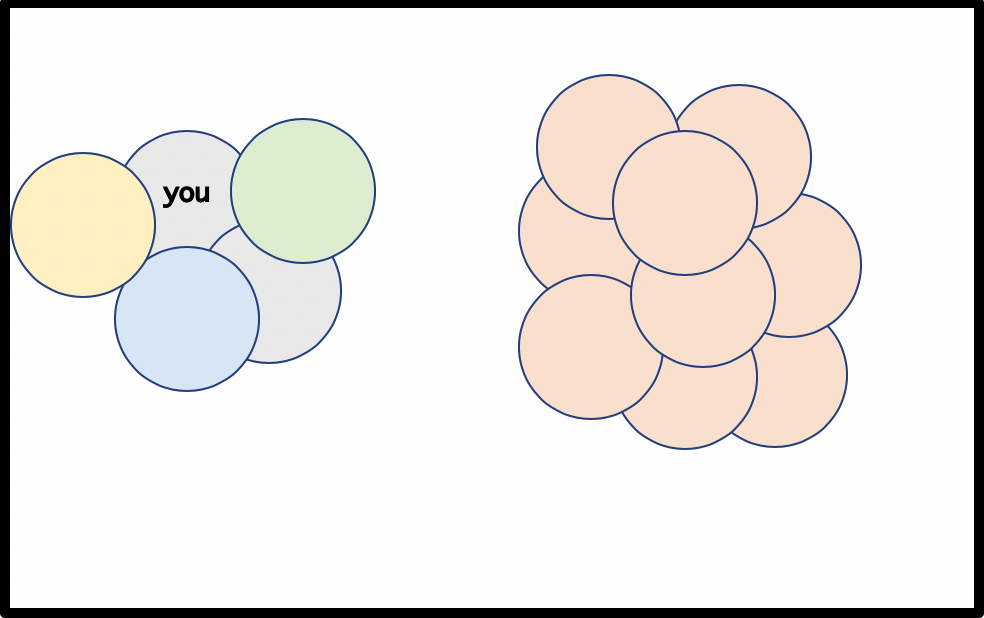
When something tragic happens, it often leaves us feeling like this –

We feel isolated. Alone. It’s as though pain has its own language and nobody else speaks that tongue.

And then one day, either by chance or from actively searching, you find this –

And it feels amazing. You’re not alone after all. Somebody else knows the words that pain whispers through the long nights.

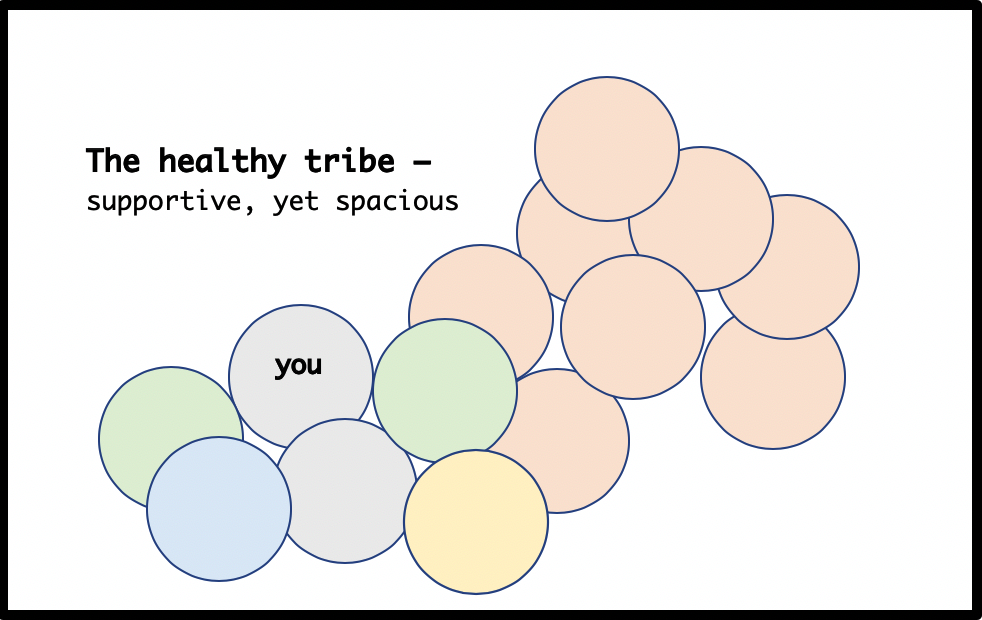
Over time, you meet more. “I’ve found my people. My tribe,” you think to yourself, enjoying the much-needed connection and solidarity. Some are further along in their journey. Others, like you, are still taking their first shaky steps.

You feel supported. Accepted. Instead of your pain making you an outcast, it is now your admission ticket to the new club. “You’re one of us,” it says.

tribe

In a healthy tribe, the members offer up both encouragement and tough truths. They come together out of shared pain, but more importantly, they grow together out of a desire to move through the hard times. The connections strengthen the individuals while at the same time, allowing each person the space and freedom to explore their own path, accepting the idea that life is not one-size-fits-all.

tribe

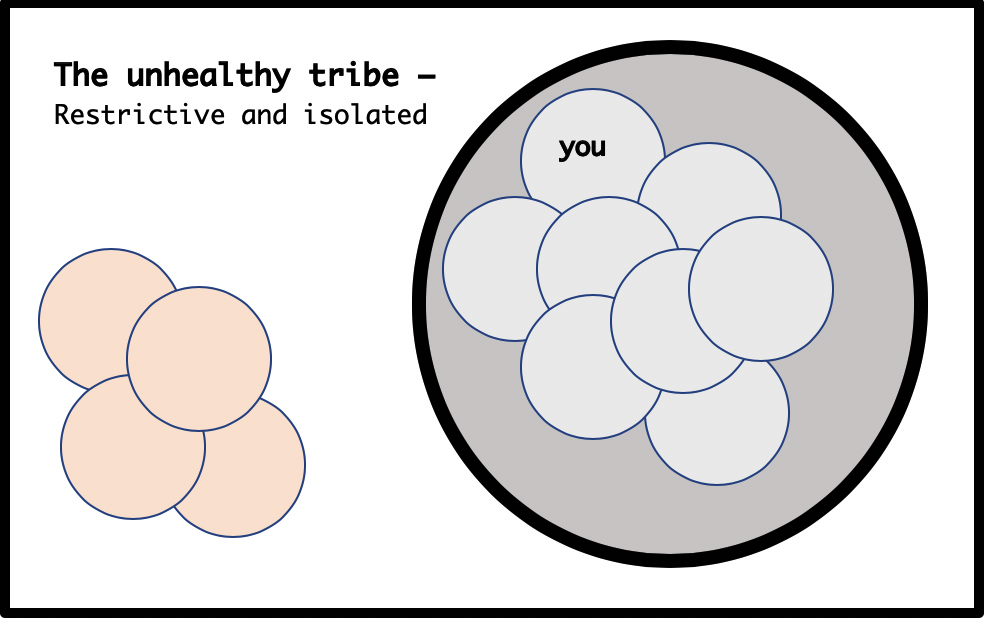
Yet sometimes, a poorly-chosen tribe can hold us back. Misery loves company, so when we’re in pain, we have a tendency to attract more pain. So it’s easy for a tribe to become focused on what brought the members together and amplify each other’s cries within the closed-off space. Furthermore, an unhealthy tribe feels threatened by progress so the group works to create an “us vs. them” culture to keeps its members contained.

tribe

There are few decisions more important in life than choosing your tribe. Since we become the people we spend the most time with, your tribe becomes your identity.

Before you choose your tribe, ask yourself these questions:

  • Are they focused on destruction or creation? In other words, are their energies directed towards tearing other people down or building each other up?
  • What is their goal – progress or commiseration? The latter has its place, but it’s generally not a space you want to occupy for the long run.
  • How do they view dissent or individual growth? Are you encouraged to speak your truth and explore your path or are you expected to toe the line?
  • When you spend time with your tribe, do you feel encouraged or defeated? Do they provide you with hope and promise or fill you with dread?

One of the best feelings in the world is the joy and connection that comes from finding your tribe. Choose wisely, and your tribe will be your greatest champion.