When Will My Divorce Be Over?

When will my divorce be over?

It seems like such a clear-cut question, doesn’t it? Obviously, the divorce is over when the legal process is finalized and you receive a decree embossed with your local court’s seal.

But that’s only a piece of the puzzle; that’s when the state sees you as divorced. Not necessarily when you do.

Because a divorce, like a marriage, is so much more than a piece of paper.

There are certain benchmarks that you have to meet before you can relax and truly see your divorce as over. These are in no particular order because they may occur at a different point for each person. And the timeline for healing will be different for everyone.

Release of Hope

Before you can view your divorce as final, you have to first accept that your marriage is over. Maybe you’re a fixer and you are still desperately trying to patch things together. Maybe you are still in disbelief and you keep hoping that your soon-to-be-ex will change his or her mind. Or maybe you have weathered many ups and downs over the course of your marriage and you are holding on to the idea that this down will again be followed by an up. It makes sense to hold on to hope as long as possible. After all, you don’t want to discard a marriage that is still salvageable. However, it’s also important to accept that you cannot control your partner’s choices and you cannot save a marriage on your own.

Acceptance of Circumstances

Divorce changes every aspect of your life – from living situation to lifestyle. Maybe you lost money in the deal or were ordered to pay alimony. Or the judge ordered joint custody when you were hoping for full. Perhaps you were made to move out of the marital home and your suburban spread has been replaced with a run down apartment. You may feel like your current situation is not fair, that you are being made to pay for situations beyond your control. And you may be right. Divorce isn’t about fair. It’s about getting through and moving forward. And that begins with accepting where you are.

Completion of Legal Matters

Divorce may be more than a piece of paper, but the acquisition of that paper sure can be a drawn-out and expensive process. And it’s difficult (if not impossible) to feel like the divorce is over while you’re still producing documents and cutting checks to lawyers. I have such empathy for those involved (either by circumstance or state law) in a year+ process (although I didn’t always feel that way). It’s difficult living in that limbo of separation where you’re neither married nor divorced.

Construction of Framework for New Life

It’s difficult to feel a sense of completion when the old chapter may be finished but the next is still a dark void. It’s much easier to feel like the divorce is fully behind you when you have at least the basics for the next steps in your life sketched out. You don’t have to know everything about the life you want to create post-divorce as much will unfold over time, but aim for some insight. Put the energy into laying out the framework for your new life; scaffolding makes moving forward more manageable.

Tempering of Bitterness

Are you still holding on to anger towards your ex or carrying a sense of derision for relationships in general? Even if you aren’t ready to date again (or even ever want to date again), this negativity makes it difficult to put the divorce behind you. Sometimes the residual acrid emotions are our attempt to avoid facing the sadness and loss hidden beneath. Other times, the anger is our shield because we are afraid of being seen as vulnerable and weak. Much of the time anger is simply pain screaming to be heard. So listen and answer.

Easing of Fear

Much like anger, fear can serve as a tether, holding you to your divorce. It’s scary facing the world alone when you’re used to having your spouse by your side. It’s terrifying to start over when you don’t even trust that you can stand. It’s daunting to think about dating again and starting a new relationship from scratch. And it may be even scarier to imagine being alone forever. The only way to lessen fear is to face it. Once you conquer those first few “I can’ts,” you’re confidence will build until you know you can.

Restoration of Balance

There is nothing balanced about life while you’re going through a divorce. Your emotions are running the show and are frequently as well behaved as a toddler on a sugar crash. You may be eating too much or too little or just too much of the wrong stuff. Perhaps you’ve become adept at avoiding reality through alcohol or distractions. Part of regaining your life after divorce is establishing healthy habits and a balanced environment. Re-evaluate what occupies your life and remove what no longer serves you.

Ultimately, your divorce is over when you see it as something that is a part of your story, your past. It no longer defines you or limits you. It speaks of where you’ve been, not where you are going. It’s an ending, yes. But one that allows a new beginning.


Related: Happiness is Divorce in the Rearview Mirror

At Some Point, It’s No Longer About the Nail

hurt divorce

In the beginning, I made it all about him.

What he did.

Why he did it.

How he did it.

Where he was.

Who he was.


It was an escape of a sort. A distraction. If I stayed focused on him, I didn’t have to think about me.


What I was going to do now that my life was washed away.

Why this happened to me.

How I was going to survive and rebuild.

Where I was going to live.

And who I was without him.


But at some point, I had to decide to make it all about me. To turn my energies towards what I could change rather than curse what I could not.

Because no matter how much attention I turned towards him, it wasn’t going to help me feel any better.


When you first step upon a nail, the sharp steel tearing through tender flesh, it is prudent to focus on the nail. First by removing the offending stake and then by examining it for any signs of rust or fragments left behind.

And then at some point, the nail no longer matters.

Only the wound is of consequence. And your attentions must turn to the ministrations of puncture care, ensuring that it heals fully without infection to poison the blood.


A difficult divorce is much the same. Once the distressing person has been removed, focus on them only leaves your wounds unattended.

Because at some point, the nail no longer matters.

Only you do.


Learn more.


I Feel Stuck

“Why can’t I be healed already!” I cried in frustration as I (over)reacted to yet another trigger.

We often expect healing to occur on our timeline. We seek to control the process and provide a deadline for the outcome.

But healing doesn’t work that way.

It’s two steps forward. One step back. And then a cha-cha slide detour to the left.

With the occasional fall off a cliff.

One of the biggest tricks our brains play on us is the idea that the way we feel right now is the way we will always feel.

It’s not.

photo 5-52

If you are feeling stuck after your divorce, these posts will help move your journey along:

Often we have made more progress than we give ourselves credit for. Try looking back to see how far you’ve come.

photo 5-4

Just because it happened to you, doesn’t mean it happened because of you. Sometimes you’re just collateral damage.

I assigned my divorce decree magical powers; I thought it was the ticket to healing. It wasn’t.

photo 4-65

Sometimes we are our own worst enemies. Are you sabotaging yourself? You may be surprised.

All infidelity is not created equal. Understanding that can help stop you from comparing your situation to others.

photo 4-62

Healing is not about giant leaps. It’s about baby steps. One step at a time.

photo 2-83

Dating again cannot stop heartbreak. All it can do is delay it for awhile.

photo 3-69

Are you convinced that you need to understand why it happened in order to move on? Careful. It’s a trap.

Does healing after divorce ever make you feel like you’re playing Chutes and Ladders? Yeah, me too.

photo 4-60

You know the five love languages, but do you know the five voices of divorce? You should, because they’re speaking to you.

Just because divorce is something you can’t simply “get over,” it doesn’t mean it has to hold you back.

photo 3-73

Are you engaging in a pissing contest of pain? It’s common and it’s a winless game.

Sometimes we allow our divorce to become our identity. Learn to let it go and find yourself again.

photo 4-59

Endings come in stages. Do you know what comes next?

Are you struggling with your negative emotions? It’s okay to show them the door.

photo 3-74

Do you know the difference between quitting and letting go? It’s an important distinction.

Wondering what happens to the one who leave? Your happiness doesn’t depend upon their unhappiness.

photo 3-3

The Why Trap (And How to Get Out)

why

There are so many traps post-divorce that can grab hold and keep you stuck –

The anger trap that convinces you that you won’t be okay until he or she pays for his or her misdeeds.

The fairness trap that insists that all of life’s situations should be equitable and balanced.

The sadness trap that keeps you locked in a mental theater replaying the movies of your relationship.

And the why trap that charges that you will be able to move on as soon as you understand why it all happened.


The why trap looks for the reasoning behind your ex’s actions. It seeks to discover a greater purpose for the pain. The why trap attempts to mitigate blinding emotion with the application of rational thought and deliberate thinking. It convinces you that understanding will lead to peace and prompts determined, often frantic, searching for “the truth.”

But it’s a trap for a reason.

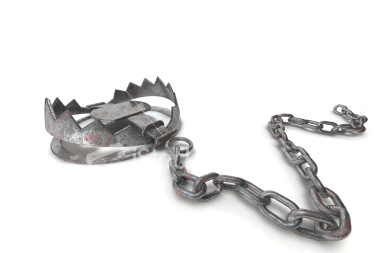
The why trap is a sneaky snare. It lures you in with promises of information that will lend sense to the nonsensical. It helps to take you out of the state of overwhelming emotion as you focus on facts rather than feelings. The problem is that there is often no defined end and trying to answer why leads through an endless serpentine labyrinth. And holds you prisoner of your past.


I fell into this trap within the first few days. Since he left me with no information, I obsessively gathered all of the evidence I could, uncovering the planned trip to Uganda, the stolen funds and maxed credit and eventually, the bigamy. It did answer some questions. After all, I could see why he was too cowardly to face me. Can you picture it?

Lisa, we need to talk. You know how I said we were on track financially for what we planned? Well, I sort of spent all of that and more on another life. It was an accident. Oh, and you know how just last night I told you how much I loved you and how I was looking forward to the rest of our lives together? Well, I changed my mind. In fact, I just got married to this awesome girl. Would you like the registry information? We really need a mosquito net since we’re going to Uganda in a couple weeks. Why do you look upset?

Yeah, not exactly. So, the early sleuthing uncovered some answers, but it didn’t provide any peace. So I switched gears towards trying to understand why he would do these things. That’s when I devoured books and websites about personality disorders and entertained the labels of sociopath and narcissist.  Here’s my full description of the results of that search.

And it did help some. Even though I decided to ultimately leave him labelless, I gained understanding of the fact that I had been gaslighted and I realized that he had some major issues.

But all that reading and research started to hold me back. I realized I was expending more energy on trying to understand him then on trying to understand and heal myself. And, as I always caution, whatever you nurture, grows.

If I wanted to heal and move forward, that was where I needed to focus.

So I did.

I still don’t know why it all happened. And I doubt I ever will.

But you don’t need to know why to walk away.


If you are having trouble with the why trap, here are some ideas to help you get out without having to gnaw off your leg:

Enter your search with intention. Decide what you want to discover and make a pact that once you find that information, you stop.

Set a limit – a timer, a number of books or a number of website searches.

Journal. Often we hold understanding within us and writing helps to release it.

When you feel the urge to dig deeper, try exercising first. Often, the need for information is really just restless and anxious energy.

Complete the sentence, “Once I know …, I will feel…” You may be surprised at how little knowledge really impacts emotion.

If your ex was particularly bad, do you really want to understand them? Maybe not understanding says something good about you.

Pray or meditate to find acceptance. There is much in this world we do not understand. And it’s okay to not always have all of the answers.

Maybe it didn’t happen for a reason, but it happened. Now you can create the reason. You can decide how you want this to fit within your bigger story. Create your own why.

The Words I Hate to Hear

There are two words that I hate to hear more than anything else:

“I can’t.”

I hear them in the classroom. I read them on Facebook or on my Twitter feed. I hear them from coaching clients.

And I even hear them from myself.

And every time I hear those words, I see someone limiting themselves.

Defeating themselves.


“I can’t” doesn’t keep you safe.

It means means you’re afraid to try.

“I can’t” doesn’t mean you are not able.

It means you are uncomfortable.

“I can’t” doesn’t make you happy.

It keeps you from happy.


“I can’t” is often a knee jerk reaction. A plea to keep the status quo and resist change.

We become adept at shoring up our “I can’ts” with excuses disguised as reasons.

It’s a shield.

A security blanket.

A delaying tactic.

That only serves to hold us back.


The biggest lie we tell ourselves is “I can’t.”

Stop lying.

You can.