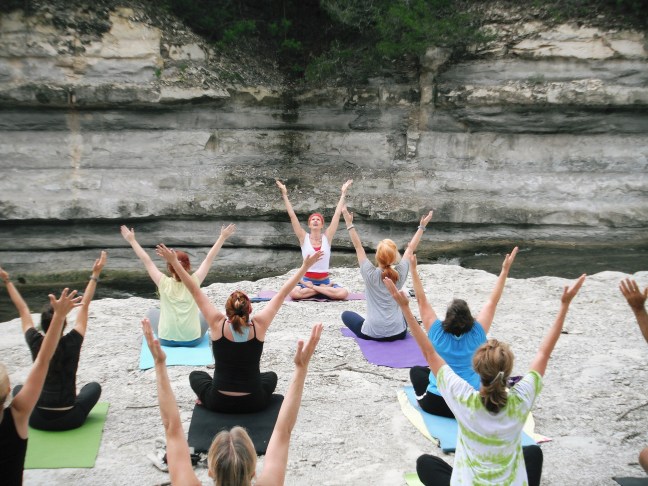
How to Rewrite Your Divorce Story

When divorce happens, it can leave you feeling like a failure. Powerless and adrift in your life. It’s easy to internalize these feelings, to recite them to yourself as if they were gospel.

But what might happen if you change your story? Take back your power?

And rewrite your divorce?

Learn the steps you need to takeΒ to release your divorce find your voice again.

How Yoga Can Help You Through Divorce

I rarely give the advice that people should do a certain thing. After all, we are all different with unique needs and situations.

But today I’m making an exception.

Because this one thing is really that transformative.

If you give it a chance.

Before I explain all of the reasons why yoga will improve your life, I’m going to first dispel some of the myths I frequently hear:

Yoga is not something you have to be flexible to do. In a purely physical sense, yoga is something you do to become flexible. A good teacher can work with you no matter your body type or limitations.

Yoga is not only physical exercise. Yoga is as much in the mind as in the body. In fact, it’s about connecting mind and body. Yes, you get a tight booty but even more importantly, you’ll get a balanced mind.

Yoga is not about wearing the latest tight yoga pants (although you certainly can) or rocking the latest lululemon mat. It’s about connecting breath and movement and as long as your bits are covered, nobody really cares what you’re wearing.

Yoga is not about being trendy. That is IF you find the right studio. Take the time to find the space and the people that fit your needs. Yoga is about connecting with yourself on the mat and experiencing the energy of the group.

Yoga is not one size fits all. You can find everything from super-intense and fast-pasted hot classes to yin classes that often find people falling asleep.

Yoga is not always spiritual. But it can be. Again, look for what meets your needs. Most classes will have some sort of centering and intention-setting at the beginning and some sort of guided meditation/ reading at the end.

Yoga is not necessarily expensive. You can find it taught in churches, community centers and the YMCA. Many communities even offer free classes. And even though it’s not the same as a live class, there are even free videos on YouTube.

Yoga is not just for women. Or skinny people. Or young people. Or [fill in the blank] people.

Do you have a body? Do you have a mind?

Then yoga is for you:)

With me so far? Cool. Now, here’s why yoga is so incredibly powerful for those going through divorce:

Are you feeling sad?

The movement of yoga releases endorphins that help to improve your mood. I recommend a moderate to fast paced movement class (usually called vinyasa) here because it helps to get you out of your head and the pace challenges the body some. If you’re really struggling, try hot yoga, the sweat hides any tears πŸ™‚

Are you feeling anxious or struggling with PTSD-like symptoms?

This was my primary issue and yoga was my biggest ally. I know it seems crazy, but some of the poses cause the mind to panic (especially if it’s a hot class). In life, we’re used to avoiding discomfort. Yoga teaches you to be with it, soften to it and let your breath calm the mind (literally taming the amygdala). Learn those lessons on the mat and you’re better able to handle triggers in the world beyond the studio. Also, it’s worth looking for a teacher who is trained in trauma yoga – they do some incredible work.

Are you angry?

I’m always amazed as the emotions that arise on the mat. And anger is a common one (and not just when the instructor has you doing too much core work!). Good teachers recognize this and even structure classes to elicit certain feelings. And then they carefully guide you to slow your breathing and find your intention again. And that’s a good skill to have.

Are you lonely?

Much of loneliness comes from being disconnected from yourself. And yoga has a way of bringing you home. Apart from that, when you practice in a group, there is an amazing sense of energy that comes from hearing the breath and sensing the movements around you. If you want to chat before or after class, no problem. And if you just want to be left alone, you’ll probably find that people will respect that as well. And if you’re looking for new friends, search out a studio that does day or longer trips (I may go to Costa Rica with my studio this fall!!!).


Are you struggling with comparison?

Is Facebook bringing you down with its endless supply of happy families? Is the news that your ex is getting married hitting you hard? Yoga is a great teacher about the danger of comparing ourselves to others. Just the other day, I nailed crow pose (3 times!!!) for the first time ever. I was stoked. The next day, I started to enter the pose, caught sight of the women next to me doing a harder version, and immediately fell. Yoga is a reminder to keep your mind on your mat and disregard what others think of you and what is going on around you. I love when the teacher says something like, “Don’t worry how xyz pose looks on your neighbor. Your body is unique and the poses will look different for you.” YES!!!

Are you engaging in negative self talk?

Try this little experiment – stand in a one-legged balance pose while you’re focused on your breathing. Now, start engaging in your preferred negative self-banter. Did you fall? That’s the usual response. Yoga teaches you to be loving and accepting of yourself exactly where you are. And when you falter, you often get a physical reminder.

Are you worried about finding your sexual self again?

I just read a study recently that practitioners of yoga have better sex lives. It makes sense. You become more comfortable with your body, more in tune with your physical senses and better able to pay attention to details. And you don’t need a partner to get started.

Are you feeling hopeless?

Yoga does a great job of teaching acceptance in the now and faith in the future. It breaks everything down to the tiniest steps and encourages you to always focus on this breath. And then this one. And before you know it, a full hour has passed. You made it. And you can keep making it!

Are you scared and struggling with fear?

One of the ways I learned to trust again was on the yoga mat. You learn that one leg really is enough to hold you and all that trembling is just noise that can safely ignored. You learn that you can lean back in a twist beyond your self-imposed limits. You learn to let go rather than grasp. And you know what? It’s okay. Strangely enough, the slower classes often trigger this panic (and teach you how to handle it) better than the faster ones. In life, we often keep ourselves busy so that we don’t have to feel. This time to slow down is a gift to yourself.

Are you experiencing a lack of control in your life?

Yoga is more about learning to use the muscles you have than building new ones. When you’re feeling shaky and unstable in a pose, all you need is a simple verbal instruction or well-placed hand to guide you and you activate all those little stabilizing muscles you didn’t know you had. You gain a sense of control (and some soreness the next day!).

Are you having a hard time letting go of expectations?

There is a reason that yoga is always called practice. Because it’s never perfected. Yoga teachers coach you not to worry about where you were last week or even the previous pose. Be where you are in the moment at that moment. You’ll learn that the best practices are those that you approach with an open mind.

Are you feeling overwhelmed?

I folded into a half-moon the other day with my hand to the floor (as I usually do). My balance was off for some reason. Instead of giving up, I reached for the block next me and slid it under my hand before resuming the pose. Yoga is full of modifications and props to use when you become overwhelmed. And learning to ask for and receive help is a valuable life skill at any time.

Are you struggling with confidence?

Yoga is accessible to anyone on their first day. Yet there’s always room to improve. And that feeling of accomplishment and confidence when you finally nail that crow pose? Priceless! (Just don’t look over at your neighbor.)

Are you looking for love again?

Okay, I can’t promise that yoga can do this for you. But it can’t hurt:)

Have you tried yoga? What benefits has it given you? 

Are you thinking about trying it? What questions or concerns do you have?

You know my thoughts – Let’s hear yours!


Why Yoga Is the Answer to Your Post-Divorce Woes

yoga

I rarely give the advice that people should do a certain thing. After all, we are all different with unique needs andΒ situations.

But today I’m making an exception.

Because this one thing is really that transformative.

If you give it a chance.

Before I explain all of the reasons why yoga will improve your life, I’m going to first dispel some of the myths I frequently hear:

Yoga is not something you have to be flexible to do. In a purely physical sense, yoga is something you do to become flexible. A good teacher can work with you no matter your body type or limitations.

Yoga is not only physical exercise. Yoga is as much in the mind as in the body. In fact, it’s about connecting mind and body. Yes, you get a tight booty but even more importantly, you’ll get a balanced mind.

Yoga is not about wearing the latest tight yoga pants (although you certainly can) or rocking the latest lululemon mat. It’s about connecting breath and movement and as long as your bits are covered, nobody really cares what you’re wearing.

Yoga is not about being trendy. That is IF you find the right studio. Take the time to find the space and the people that fit your needs. Yoga is about connecting with yourself on the mat and experiencing the energy of the group.

Yoga is not one size fits all. You can find everything fromΒ super-intense and fast-pasted hot classes to yin classes that often find people falling asleep.

Yoga is not always spiritual.Β But it can be. Again, look for what meets your needs. Most classes will have some sort of centering and intention-setting at the beginning and some sort of guided meditation/ reading at the end.

Yoga is not necessarily expensive. You can find it taught in churches, community centers and the YMCA. Many communities even offer free classes. And even though it’s not the same as a live class, there are even free videos on YouTube.

Yoga is not just for women.Β Or skinny people. Or young people. Or [fill in the blank] people.

Do you have a body? Do you have a mind?

Then yoga is for you:)

With me so far? Cool. Now, here’s why yoga is so incredibly powerful for those going through divorce:

Are you feeling sad?

The movement of yoga releases endorphins that help to improve your mood. I recommend a moderate to fast paced movement class (usually called vinyasa) here because it helps to get you out of your head and the pace challenges the body some. If you’re really struggling, try hot yoga, the sweat hides any tears πŸ™‚

Are you feeling anxious or struggling with PTSD-like symptoms?

This was my primary issue and yoga was my biggest ally. I know it seems crazy, but some of the poses cause the mind to panic (especially if it’s a hot class). In life, we’re used to avoiding discomfort. Yoga teaches you to be with it, soften to it and let your breath calm the mind (literally taming the amygdala). Learn those lessons on the mat and you’re better able to handle triggers in the world beyond the studio. Also, it’s worth looking for a teacher who is trained in trauma yoga – they do some incredible work.

Are you angry?

I’m always amazed as the emotions that arise on the mat. And anger is a common one (and not just when the instructor has you doing too much core work!). Good teachers recognize this and even structure classes to elicit certain feelings. And then they carefully guide you to slow your breathing and find your intention again. And that’s a good skill to have.

Are you lonely?

Much of loneliness comes from being disconnected from yourself. And yoga has a way of bringing you home. Apart from that, when you practice in a group, there is an amazing sense of energy that comes from hearing the breath and sensing the movements around you. If you want to chat before or after class, no problem. And if you just want to be left alone, you’ll probably find that people will respect that as well. And if you’re looking for new friends, search out a studio that does day or longer trips (I may go to Costa Rica with my studio this fall!!!).


Are you struggling with comparison?

Is Facebook bringing you down with its endless supply of happy families? Is the news that your ex is getting married hitting you hard? Yoga is a great teacher about the danger of comparing ourselves to others. Just the other day, I nailed crow pose (3 times!!!) for the first time ever. I was stoked. The next day, I started to enter the pose, caught sight of the women next to me doing a harder version, and immediately fell. Yoga is a reminder to keep your mind on your mat and disregard what others think of you and what is going on around you. I love when the teacher says something like, “Don’t worry how xyz pose looks on your neighbor. Your body is unique and the poses will look different for you.” YES!!!

Are you engaging in negative self talk?

Try this little experiment – stand in a one-legged balance pose while you’re focused on your breathing. Now, start engaging in your preferred negative self-banter. Did you fall? That’s the usual response. Yoga teaches you to be loving and accepting of yourself exactly where you are. And when you falter, you often get a physical reminder.

Are you worried about finding your sexual self again?

I just read a study recently that practitioners of yoga have better sex lives. It makes sense. You become more comfortable with your body, more in tune with your physical senses and better able to pay attention to details. And you don’t need a partner to get started.

Are you feeling hopeless?

Yoga does a great job of teaching acceptance in the now and faith in the future. It breaks everything down to the tiniest steps and encourages you to always focus on this breath. And then this one. And before you know it, a full hour has passed. You made it. And you can keep making it!

Are you scared and struggling with fear?

One of the ways I learned to trust again was on the yoga mat. You learn that one leg really is enough to hold you and all that trembling is just noise that can safely ignored. You learn that you can lean back in a twist beyond your self-imposed limits. You learn to let go rather than grasp. And you know what? It’s okay. Strangely enough, the slower classes often trigger this panic (and teach you how to handle it) better than the faster ones. In life, we often keep ourselves busy so that we don’t have to feel. This time to slow down is a gift to yourself.

Are you experiencing a lack of control in your life?

Yoga is moreΒ about learning to use the muscles you have than building new ones. When you’re feeling shaky and unstable in a pose, all you need is a simple verbal instruction or well-placed hand to guide you and you activate all those little stabilizing muscles you didn’t know you had. You gain a sense of control (and some soreness the next day!).

Are you having a hard time letting go of expectations?

There is a reason that yoga is always called practice. Because it’s never perfected. Yoga teachers coach you not to worry about where you were last week or even the previous pose. Be where you are in the moment at that moment. You’ll learn that the best practices are those that you approach with an open mind.

Are you feeling overwhelmed?

I folded into a half-moon the other day with my hand to the floor (as I usually do). My balance was off for some reason. Instead of giving up, I reached for the block next me and slid it under my hand before resuming the pose. Yoga is full of modifications and props to use when you become overwhelmed. And learning to ask for and receive help is a valuable life skill at any time.

Are you struggling with confidence?

Yoga is accessible to anyone on their first day. Yet there’s always room to improve. And that feeling of accomplishment and confidence when you finally nail that crow pose? Priceless! (Just don’t look over at your neighbor.)

Are you looking for love again?

Okay, I can’t promise that yoga can do this for you. But it can’t hurt:)

Have you tried yoga? What benefits has it given you?Β 

Are you thinking about trying it? What questions or concerns do you have?

You know my thoughts – Let’s hear yours!


After Divorce: The Compelling Case for Detached Compassion

“My ex was such a big part of my life my so many years, I can’t imagine not being friends with them.”

“After what my ex did to me, there’s no way that I can ever forgive them. I’m just so angry.”

“I just heard that my ex is already dating again! Can you believe that?!?”

“My ex keeps asking for my advice. I want to help, but I always end up feeling rotten after the call. What should I do?”

I’ve heard them all. More than once.

And even though the situations are all different, they all have a common theme.

Attachment.

Only now that you’re divorced, those bonds have become restraints.

“A feeling of aversion or attachment toward something is your clue that there’s work to be done.”Β Ram Dass

Yes, it would be awesome for you to be able to be friends with your ex. But that tricky navigation will take time and (I’m sorry to say) may never happen depending upon your circumstances. Be open to the possibility, explore the option if you’re interested, but release your attachment to the outcome.

Yes, your ex did you wrong. Way wrong. And you have every right to be angry. But the misdeeds have already been done. That’s over and no amount of anger can change that. The rage that you’re holding is holding you back, causing you even more pain that the initial injury. Releasing it doesn’t release your ex, it releases you.

Yes, your ex jumped quickly into the dating scene. Maybe even before the marriage over. It’s hard to see them with somebody else, hard to not feel as though you’re being replaced. Your interested because you’re used to being interested and perhaps because you’re hoping to uncover some signs of their unhappiness or their new partner’s shortcomings. Accept that your life is no longer tethered to theirs and if you need to feel as though you’re doing better, focus on building you instead of looking for their defects.

“The more attached we are to a vision of the future, the less present we are to what is actually trying to emerge here and now.”Β Peter Merry

Yes, your ex keeps reaching out to you. Perhaps they’re used to depending on you for advice and guidance. Maybe they’re playing around with the idea of rekindling a romance with you. Or maybe they’re just playing you. Your emotional reaction to the contact is your sign that your boundaries are being tested. It’s too much and/or it’s too soon. Yet, on some level, the contact feels good. Normal. And it feels good to be needed. Yet, by allowing yourself to put in this role, you’re allowing yourself to be stuck in this role.

The solution?

Compassionate detachment.

It worksΒ if your ex is a potential friend down the road or a foe of the worst kind.

It’s applicableΒ if you have to maintain a co-parenting relationship or you will never see them again.

It’s effective in every situation because it only depends on you and your reactions, not on your ex.

Compassionate detachment means that you take a step back. It’s the difference between being soaked in the storm and watching the rain through the window.

Compassionate detachment means that you find a place of empathy for a fellow human being. It’s the difference between squishing the ant on the sidewalk and allowing it to go on its way.

Compassionate detachment does not preclude the opportunity of a friendship; closeness can always be found down the road.

Compassionate detachment does not mean no consequences; if your ex behaves poorly, it’s not your job to protect them from feeling the effects.

Compassionate detachment does not immediately extinguish your impulse to know what your ex is doing; the preoccupation will decline as you maintain the distance.

Compassionate detachmentΒ does not mean no boundaries; establish guidelines to protect yourself and help them when you choose to.

And finally, compassionate detachment does not mean forgetting or ignoring. It means releasing the emotional attachment to the event and the person.

Strive to lead with compassion and detach from the outcome.

“Overcoming attachment does not mean becoming cold and indifferent. On the contrary, it means learning to have relaxed control over our mind through understanding the real causes of happiness and fulfillment, and this enables us to enjoy life more and suffer less.”Β Kathleen McDonald


6 Powerful Ways to Create Your Own Closure After Divorce

closure divorce

Do you feel stuck after divorce?

Are you waiting for an apology or an explanation?

Do you want to be able to find closure from your divorce and move on?

If so, I have some good news for you. You CAN find closure. And you can do it alone.

Here’s how!