Six Years Ago Today

silhouette-691522_1920Six years ago today, I awoke afraid of seeing the man who had abandoned me eight months before. And when he passed me in the courthouse hall, I didn’t even recognize him.

Six years ago today, I was ready for the divorce I never wanted from the man I thought I knew.

Six years ago today, I sat in a courtroom with the man I had spent half of my life with. A man I once considered my best friend. We never made eye contact.

Six years ago today, I looked at his face for any sign of the man I had loved.  I saw none. After sixteen years, he was truly a stranger to me.

Six years ago today, I sat alone in a hallway waiting for the attorneys to decide his fate and mine. Hoping that the judge saw through his lies and would not fall sway to him charms. She didn’t, even asking my husband’s attorney if he was “psycho.” The lawyer could only shrug.

Six years ago today, I cried and shook with the realization that it was all over. It was a relief and yet the finality was jarring.

Six years ago today, I felt a heaviness lift as I cut the dead weight of him from my burden. I believed I couldn’t begin to heal until his malignancy had been removed.

Six years ago today, I laughed when I learned he hadn’t paid his attorney. I had warned the man my husband was a con. Maybe he believed me now.

Six years ago today, I held tightly to that decree, still believing that its declarations had power. I felt relief that he would have to pay back some of what he stole from the marriage. The relief was short lived.

Six years ago today, I took my first steps as a single woman. Steps I never expected to take. The first few were shaky. But I soon started to find my stride.

Six years ago today, I sat around a restaurant table with friends and my mother. A table that had held my husband and I countless times over our marriage. We celebrated the end of the marriage that night. I had celebrated my anniversary there the year before.

Six years ago today, I read my husband’s other wife’s blog for the last time, curious if she would mention anything about the court date. She did not. I erased the URL from my history. It no longer mattered.

Six years ago today, I sealed the piles of paperwork from the divorce and the criminal proceedings into a large plastic tub. As the lid clicked in place, I felt like I was securing all of that anguish in my past.

Six years ago today, I started to wean myself off of the medication that allowed me to sleep and eat through the ordeal. I was thankful it had been there, but I no longer wanted the help.

Six years ago today, I fell asleep dreaming of hope for the future rather than experiencing nightmares of the past.

And now, six years on, I could not be happier with where I am.

Not because of the divorce.

But because losing everything made me thankful for everything.

Because being blind made me learn how to see.

Because being vulnerable created new friendships and bonds.

Because being destroyed made me defiantly want to succeed.

And because losing love made me determined to find it again.

I am happier than I’ve ever been.

And I could not be where I am without six years ago today.


How to Fight Fairly With Your Spouse

When Brock and I first started getting serious, I was afraid of arguments.

Because I didn’t know how to have them. When it came to marital spats, I was a newbie.

At any sign of discord or disappointment, I would flood with emotion and any chance of rational thinking would be washed away. I responded defensively, viewing any comment as an attack. I was so busy being upset and even more so, scared, that I wasn’t able to listen to what was being said.

I’ve spent the last several years learning how to argue so that when all is said and done, we not only feel better, we have become better. Here’s some of what I have learned (and what I’m still learning):

The purpose of fighting isn’t to be right; the purpose is to be better.

When you’re in the midst of an argument, it’s easy to feel as though you’re on the attack and you’re being attacked. This position easily leads to a “I’m right, you’re wrong” stance.

And that’s always a losing battle.

Because in order for one person to be right, the other has to be wrong.

Unless, that is, the entire situation is turned on its head. And instead of fighting to be right, you both are fighting to be better. To make you better. To make your spouse better. To make the marriage better.

Reframe your argument as attacking a climbing wall together rather than pulling against each other in a tug-of-war. Ideally at the beginning of the conversation or as soon as you’re aware, try to define what the overall goal is, name the mountain you’re trying to scale. You don’t have to agree on an approach yet, just the overall goal.

See the obstacles in the way of the goal as challenges to be overcome. Try to shift from working against each other to working together to problem solve a solution.

Try facing the same direction. It seems silly, but it really does shift the focus from an attack to making forward progress towards a shared aim.

Instead of bringing up perceived slights of your partner, bring up challenges you have successfully tackled together.

And here’s the hard part – when your anger rises, strive to refrain from aiming it at your spouse. Remember, you chose them. Challenges and all.

Throughout the argument, remember that goal is to change the situation or the perspective, not your partner. Commit to every fight being a fight for your marriage.

Accept that your ego will be bruised.

Be willing to say the hard truths. And be willing to hear them as well. Part of a good relationship is calling your partner out on his or BS, which never feels good.

It feels good in the moment to surround yourself with “yes men,” but too many sycophants don’t make you better. They only make you think you’re better by petting your ego. Refuse to let your ego stand in your way.

On the other hand, strive to not take everything personally. Just because it’s directed at you, doesn’t always mean it’s about you.

Whenever you start to feel defensive, pay attention. Defensiveness is telling you that you’re getting close to something that demands attention.

Also, you’ll do well to give your spouse the benefit of the doubt. In a heated conversation, the best and most well-intended of us don’t always choose the right words. Sometimes you have to let the words go and focus instead on the meaning behind them.

Compromise is rarely 50-50.

We speak of compromise as meeting half way. Of both people equally giving in and getting their way.

But compromise is defined more by the situation than equal shares.

Sometimes an issue will be more important to one partner than the other. The one who cares more should have more say. Other times there will be other factors that come into play making one viewpoint more easily achieved. And sometimes halfway can be much harder on one person to maintain than the other.

In arguments, it’s best to take the long view. Don’t fight for this moment, fight for all the moments in your marriage that are yet to come. Don’t worry about compromise being equal on this day, ensure that it’s fair overall.

Monitor your and adjust your arousal state (and keep an eye on your partner’s as well).

Have you ever noticed that when your emotions are high, your sight retracts, sounds become distant and your world draws in until it’s difficult to perceive anything outside yourself? Your body may feel hot or you may start to tremble. This is often when the tears or even sobs begin.

When you’re flooded, a fight simply serves as a dam, holding the emotions at their max. The waters of feelings have to be drained before you and your partner will be able to get to the bottom of the issues.

Watch your partner’s state. If they’re flooding, back off. They are not really listening or processing.

Monitor your own emotional state. If you sense that you’re flooding, communicate it, step back and focus on lowering your arousal state through breathing. Or a break.

Break the discussion into bite-sized pieces, but don’t allow an endless buffet.

Some fights take time to digest. Some solutions take time to process. Give them that time. It’s okay to table the argument for a period and then return to it later once both partners have been able to rest and think and relax.

However, be sure to set an end to the argument. A sign that it’s over. And once that benchmark has been reached, lay the fight to rest.

When the conversation is over, don’t neglect your work.

Have you learned some truth about yourself that you need to work on? Have you realized that you are still being influenced by your past? After the argument, take some time to reflect on the lessons embedded within.

View every fight as an opportunity to become closer to your spouse.

And use the time after the fight to nurture that closeness.

And what I am still learning…


Guest Post: How I Told My Kids We Were Getting Divorced

For many people, the most difficult part about divorce is the impact on the kids. And this starts on the day that you tell them about the divorce. Author L.J. Burke shares his story and surprising revelation about the day his kids were told about their parent’s divorce.

 How I Told My Kids We Were Getting Divorced

The toughest part of my divorce was telling the kids that their Mom and Dad weren’t going to be together anymore. I avoided and agonized over this inevitable conversation for weeks. You don’t want them finding out through friends or other family members. You owe it to them to break the news as soon as possible. Preferably the both of you will do this together with your happy faces on.

I don’t think there is a perfect way to tell your kids that you’re getting divorced. There are so many factors; age, maturity, any kind of special problems with physical or mental health. There is no easy way to do this. I believe honesty is the most important thing to keep in mind. Don’t give your kids any false sense of hope that you will not break up. There are way too many Disney movies where divorced couples wind up back together in some magical zany way. Shame on you Disney!

This is how it happened to me: It was a nice summer morning and my soon to be ex-wife woke me up after I was sleeping for about three hours. I worked nights and this was my nighttime. We corralled the kids into the kitchen and my ex started the conversation with, “Kids, we have to tell you something.” She stopped and looked at me for what felt like an eternity. “OK, I guess I will do the dirty work,” I thought to myself. Now I was wide-awake. “There’s no easy way to say this, kids, but your mother and I are getting a divorce.” Both kids smiled at me and told us that they already knew. They both said they heard my soon to be ex having conversations with her divorce lawyer. (Remember, kids are incredible in hearing when they want to.) I went on and told them that we would still be a family; only it will be different now. I wanted to stress how we both loved them, and nobody was going to get abandoned.

I asked if they had any questions and they both said no. They both got up from the table and went on with their regular routines. I wasn’t sure what to think of this. My stomach was still in a knot, and I felt horrible. My ex just continued to pace and really didn’t say all that much.

I realize that wasn’t the perfect way to break the news to my kids, but it could of went much worse.

If you really have no idea how to break the news to your kids, I would suggest you go to a family therapist. Also, it would probably be a good idea for the kids to see a therapist at this very confusing and often difficult time. Make sure you reassure your kids often that you both still love them very much and will do everything in your power to make this process as painless as possible.   Do this often through the divorce process. Protecting your kids is priority one!

About the author:

L.J. Burke is the author of his new book, “Divorced Dad: Kids are Forever, Wives are Not.” Burke wrote this book looking back at his divorce with clarity, seeing what he did wrong and what he did right during this tough time.  It is his sincere hope that if you are contemplating, going through or have gone through a divorce, his book will help you through this very tough time. Burke is a Police Sergeant in a major metropolitan police department. The father of his two teenage boys, Burke recently remarried and is enjoying life with his new blended family.


Why I’m Attracted to People With a Difficult Past

It happens to me all the time.

A knowing look between virtual strangers. Words left unsaid yet with full meaning comprehended. A nod to the side, understood to reference “all that”in the midst of casual conversation.

It says, “I see you. And I see that you have suffered. And even though I don’t know your story, I know that we are kin.”

People that have a past, that have been through stuff, have a way of finding each other. It’s a club none of signed up for, yet we now all know the secret handshakes and code words used to identify other members.

If I inventoried the people most important to me, their combined tragedies would fill a country music album. There are motherless children, those who have been abused and abandoned, people who are enduring long and painful and scary medical ordeals and others who have suffered great losses.

But suffering isn’t the only thing they have in common.

They also have the overcoming (or at least the first steps) of it.

—–

One of the reasons I was attracted to my first husband was that he had a maturity and perspective that comes from going through difficult experiences. It made him stand out from the largely affluent and untouched kids at my high school. As my own life experiences – a sense of abandonment by my dad, a health crisis and the unexpected deaths of several friends – compounded, I no longer felt as though I had anything in common with the average 16 year old.

Then I met him.

And we had that unspoken conversation. That handshake of pain. A meeting of eyes that had seen more than they should.

We didn’t feel as though we belonged in the worlds we inhabited. But we felt as though we belonged together.

It was an hysterical bonding of sorts. A grasping. A union born from suffering.

Of course, I didn’t see any of that at the time. I just knew that I felt understood. That he could relate to facing challenges greater than deciding what to wear the next day or what to do when you hadn’t studies for a test.

Little did I know that he would later become the source of my greatest life lesson to date.

—–

It’s completely natural for people that have difficult pasts to gravitate towards one another. After all, we often bond over shared experiences and beliefs. And we look for people that can relate to and empathize with our own situations.

That attraction isn’t always healthy; however, sometimes bonds formed from suffering become mired in suffering. The pain simply is transferred from one to another, keeping it nurtured and alive. Sometimes one person takes on a victim role and the other, needing to be needed, plays the savior. The past can become the seed that holds the relationship together and a reticence to release it (and possibly the bond) develops.

I see these unhealthy relationships like two weak swimmers trying to save the other from drowning. The combined efforts only seek to weight them both down.

—–

When I started dating again after divorce, I intentionally looked for men that didn’t have pasts. They were surprisingly common, those guys that had made through 30, 35 even 40 years of life relative unscathed.

They intrigued me.

But they didn’t attract me.

Sure, they weren’t as superficial and two-dimensional as a gaggle of sheltered teenagers.

They were perfectly nice and nothing was glaringly wrong.

But they also didn’t get it.

They had never had to face a loss that made every breath feel as though oxygen had been replaced with concrete. They had never been forced to dig so deep within themselves that they feared they would get lost before they got out. They had an easy assurance that everything was going to be okay. Because for them, it always had been.

I felt separate from them. Different.

And I also felt a strange need to protect them. To let them be in their unaffected worldview for as long as fate allowed.

They seemed fragile to me. Untoughened. Untested.

I was equally uninterested in men who still lived in their pasts and showed no signs of wanting to move on or those who tried to pretend that it wasn’t a big deal. I knew what happened when suffering was damped down and pushed aside – my ex taught me that one. And I had no desire to live someone else’s past.

I found myself attracted to men who had been through the lows of life and had climbed out, one difficult step at a time. Someone who also knew how bad it could be and yet hadn’t given up. Someone who developed strength with every step and wisdom from every glance back. Someone who wouldn’t pull me down or carry me along, but who would walk with me.

We’re often dismissive of difficult pasts as being unwanted baggage.

Yet often the people with the most to carry have the greatest spirits.

—–

When I look around at the amazing people I choose to have in my life, I’m blown away by their resilience and attitudes. I surround myself with them because they understand and also because they inspire.


Suggestions Wanted

Today was a day where my expectations ran head-first at a high rate of speed into reality.

Expectations = students will master solving systems of linear equations by substitution

Reality = a steady snowfall all day and kids hopefully anticipating an early release and/or snow day tomorrow

IMG_4755
Here’s the Great Atlanta Blizzard of 2016. Note the grass still clearly poking through.


Consequences = I’m filled with a frazzled energy shaken not stirred with a mixer of frustration

And here’s where I’d love some help –

My usual response when I feel this way is to go for a run (or at the very least, a walk) to burn off the excess energy, bleed the frustration and reset my brain.

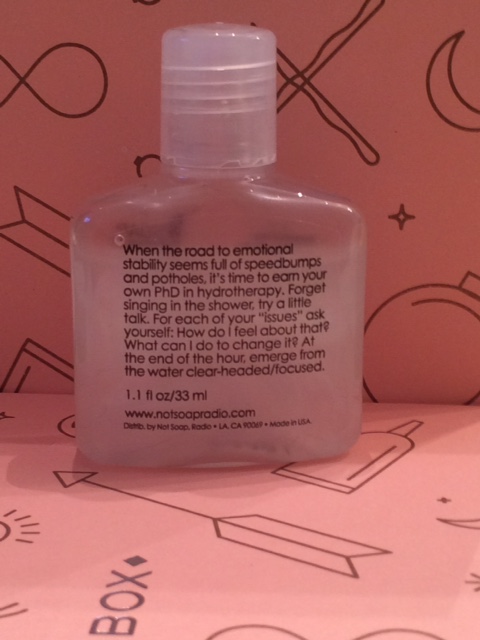
IMG_4756
This was in the Birchbox I received today. Timely:)

The problem? I’m recovering from pneumonia right now and even a flight of stairs has me out of breath.

So no running. No walking. And not even really any yoga to speak of.

And I’m out of ideas.

So I’m open to suggestions.

Any thoughts on ways to release energy and frustration that don’t require any physical exertion?

Please, help me out here! 🙂