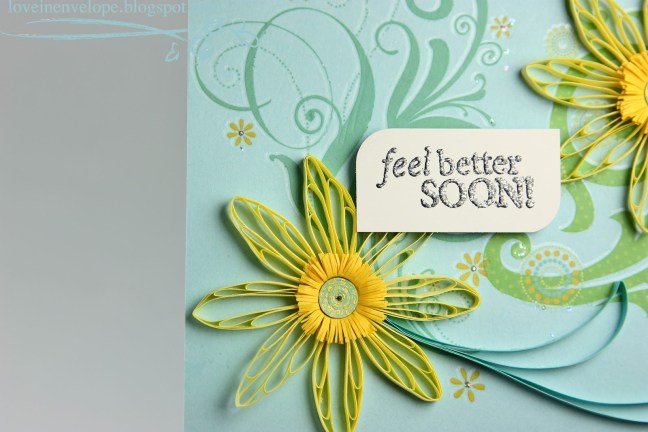
When Will I Feel Better?

“When will I feel better?”

This is perhaps the question I hear the most often.

And it is also the most difficult question to answer.

Because there is no single answer.

Healing does not speak calendar.

Feeling better has nothing to do with lunar cycles or landmark anniversaries.

It operates on a different timeline for everybody, depending upon the circumstances, prior experiences, coping skills and support systems. Some may feel better in weeks, while others take years. One person may appear to be healed while holding in the pain while another wears the pain until it wears off. Feeling better is not linear. It is more the slow decrease of bad moments intermixed with the increase of good than a step by step progression.

Feeling better depends upon perspective. You have to remember how bad bad could be to realize that it’s not so bad anymore. Healing is often subtle. The pain may have come in a great crashing wave, but it recedes like the tide, slowly and often leaving pools behind.

Your progress should not be measure against the progress of others, only against the way you felt in the past. There are no shoulds, no benchmarks to meet. As long as you are making progress, you are okay. You can accept where you are in the moment while still striving to do better.

Some of healing is passive, simply standing by and letting time wash your wounds. But if that is your only approach, you will be limited. In order to truly feel better, you have to take an active role in the process. Fuel yourself with quality food, good sleep, exercise and social connections. Seek out therapy or participate in therapeutic writing.Learn to calm your mind through meditation or yoga or time in nature. Have mantras and goals and scheduled smiles.

The biggest lie we often tell others is, “I’m fine.”

It’s okay to not be fine at all times. It okay to need help or a hug.

The biggest lie we tell ourselves is, “I can’t.”

But you can.

You can feel better.

It may not happen when you want it to.

But it will happen when you need it to.

The way you feel right now is not the way you will feel tomorrow. Or next week.

Find peace in the process and inspiration in the intention.

And you’ll feel better.


Voices of Divorce

We all know about The Five Love Languages, but do you know about the five voices of divorce? You may not refer to them by name, but if you have faced the end of a relationship, you have certainly heard their call. Unlike the gentle languages of love, the voices of divorce are harsh, often abusive in tone. They tell us that we are broken, they implore us to lash out at ourselves and others and they plant seeds of fear and doubt. If we listen to the voices for too long, we risk believing their lies and falling into their trap. Learn the tricks that the five voices of divorce use and how to escape their grasp. Click here to read the rest of the post.

Sprained

If I ever hear one more person say, “Just get over it,” I am going to scream.

Loudly.

I’m warning you now so that you have time to buy earplugs.

I have a little story, an analogy (I know, shocking!), to help the getoverers understand why there are some things you don’t just simply get over. Feel free to share this with anyone who tells you to get over it. And then scream if needed.

Fifteen years ago, during my first winter in Atlanta, I slipped on ice while taking the garbage out to the apartment dumpster and sprained my ankle in the process. Since I’m a Type A personality, it was a Type A sprain, bad enough that the physical therapist I worked for at the time added me to the therapy rotation. Rehab was pretty intense for the first few months. For the next year or so, the injury was always on my mind due to chronic pain and instability. I wore a brace of some sort for most of that time.

As time went by, the injury became less apparent and the brace went into a drawer. But the injury is still there. Every time I take a balance pose in yoga on that side, I have to focus to keep the ankle from collapsing. Whenever my mileage increases with running, I develop biomechanical issues on that side because my hip has to compensate for the wobblyness of the ankle. And, the worst part, is that my ankle is prone to further injury. It’s as though it carries a memory of the trauma in the soft tissue and becomes damaged again with only minor assault.

I haven’t let my ankle slow me down. I wear high heels. I run marathons. I master balance poses in yoga. The vast majority of people in my life don’t even know that the whispers of an old injury lie beneath the scarless skin.

But even though I can still live a full life, I can’t simply get over the injury and pretend it never happened. It’s there. A part of me. I don’t have to give in to it yet I also have to accept that it exists and that it occasionally needs attention or support. The structure of that ankle has been changed. Permanently.

But even though I still limp sometimes, I can still kick ass. And that’s even better than simply getting over it.

Because it shows that I can take a licking and keep on ticking.

It shows that I refuse to turn my traumas into liabilities and limitations.

It shows that accepting weakness is a part of strength.

It shows that even though there are some things you don’t just get over, you don’t have to let them hold you back.

Here are the lessons I’ve learned from my ankle (who’s currently sobbing after a spill on a wet kitchen floor last week) and how they apply to “getting over” divorce:

Rehabilitation  The early and intensive rehabilitation on the ankle was critical and I am so thankful that I had the assistance of an expert. If those interventions had not occurred, it would have been a much slower healing process. In divorce, don’t be too shy or proud to call in the professionals in the beginning. Make taking care of yourself your job. It will pay dividends in the future.

Support At the beginning, my ankle was too weak to go unsupported. If I tried to walk without a brace, it would fold over and re-injure the damaged tissue. Yet I couldn’t cast it forever or it would never grow strong enough to stand on its own. It’s okay to wrap yourself in protective bandages after divorce yet make sure you remove them when ready. Struggle is what makes you strong.

Adaptation Once I realized that my ankle would always be weaker, I worked to strengthen the surrounding muscles. I learned what kind of shoes aggravated the injury and I avoided them. I became more aware of activities that were risky for re-injury and I added support or used caution. After divorce, your circumstances will change. Change with them.

Acceptance I could spend my days cursing my injured ankle. But honestly? I don’t even really think about it. It just is. It doesn’t stop me yet it also doesn’t allow itself to be ignored. But now addressing its needs is second nature. And that’s how divorce is too. It’s there. It doesn’t have to stop you yet it also will need attention at times. And that’s okay.   So next time somebody tells you to just get over it, tell them a little story about the little ankle that could. And then show them that you can still kick ass.

Divorce Tool Box

In my second year of college, I took a psychology of grief class. I signed up because I needed another psych credit but also to help me understand my own experiences at that point with grief and loss. One of the first images in the textbook was the Holmes-Rahe Stress Inventory, a scale that quantifies stressful life events with a score of 1-100. I was no stranger to the instrument; my counselor mom had dozens of copies (and versions) in the books that were scattered about the house. But that day, perhaps bored with the dry lecture, I looked at the scale differently. I wondered what experiences listed on the page I would have. I feared the big one, the 100 point Death of a Spouse. In my mind, that was the only item on the list that would destroy me. The others seemed inconceivable or inconsequential.

A brief note here – Some versions of the scale include death of a child, obviously near the top. This particular one did not, a question I raised with my professor on that day.

I noted that divorce was listed as second only to death of a spouse with a score of 73. That didn’t make sense to me. Perhaps because I thought it would never happen to me (I was three years in to the relationship with my now ex husband at that point and I could not fathom one or both of us choosing to end it), but I just couldn’t understand what could be so devastating about divorce.

I guess the universe wanted to show me I was wrong.

Using the scale that was in my textbook that day, I faced:

73 divorce

53 personal illness

44 major behavior change in spouse

39 new family members

38 financial hardship

30 foreclosure

29 in-law problems

29 change in habits

25 housing change

19 change in recreation

16 change in sleep

15 change in eating

15 change in family get togethers

For a grand total of 425 points. The sirens start to go off at 300 points. And, if you add infidelity, most scales place that around an 81, which would raise my total to a lofty 506. I probably should have been escorted into a padded room at that point. I would also add a few more points for a tsunami divorce, which is somewhere between a death and a divorce. I looked, they haven’t studied the impact of bigamy. I hope that they never need to.

What the scale in my textbook didn’t make clear is that there is no life stone unturned when it comes to divorce. It. changes. everything.

And change, especially unwanted and unexpected change, is stressful.

If there’s ever a time in life when you have to use everything you have at your disposal, it’s divorce.

You can inventory your stress and tally up your debits but you can also inventory your personal tool box and count up your implements of healing.

Here’s what I had in my Divorce Tool Box. Maybe yours looks a little different.

The Extra Battery – Fortitude

There’s no way around it. Divorce is draining. It goes on and on. And on. Just when you think the struggle is over, something will pop up and make you go again. A huge part of getting through is simply getting through, having the ability to persist even when the path is tough. So, pack an extra battery. Hell, pack two:)

The Hammer – Determination

It’s easy to fall apart in divorce. You feel beat down and the instinct may be to roll over and play dead. There is certainly time for acceptance, but there is also time for determination. If you want a better life, you have to build it. Pick up that hammer and make it happen. Just look out for your thumb!

The Tape Measure – Attention

There are a ton of details in divorce. Personally, I think everyone who has experiences it should qualify as a paralegal. There will be times when you have to push the grief and anger aside, pull out the tape measure and pay attention to every detail in every document. Remember, measure twice, cut once. Make sure you know what you’re signing.

The Level – Balance

It’s easy for the divorce to overwhelm your life until it becomes your entire life. Needless to say, that’s not healthy (or much fun). The level in your tool box is to remind you to find balance. Or to check to see if that picture you hung where the wedding photo once was is level:)

The Spackle – Humility

You’ll screw up. You’ll create a hole where there wasn’t supposed to be one. You’l inadvertently bang up someone else as you try to aim at your ex. When you reach for the spackle, you admit that you made a mistake and show that you’re trying to repair it. If you can, buy the spackle that starts pink and dries white. That way you know when your mistakes are corrected:)

The Business Card – Assistance

You can’t do it all. When you’re overwhelmed or stuck, reach for that business card with the name and number of an expert. Call them. And then listen to them. Don’t let your ego get in the way of your healing.

The Liquid Nails – Confidence

You will have to make some big decisions. Do it with confidence. Pull out the permanent adhesive and believe in your decision. Deep down, you know what’s best for you. Make it stick.

The Saw – Humor

When it all starts to overwhelm, reach for the saw and cut it down to size. There’s nothing like a little laughter to put everything into perspective.

That’s my tool box. What’s in yours?

A Woman I Used to Know

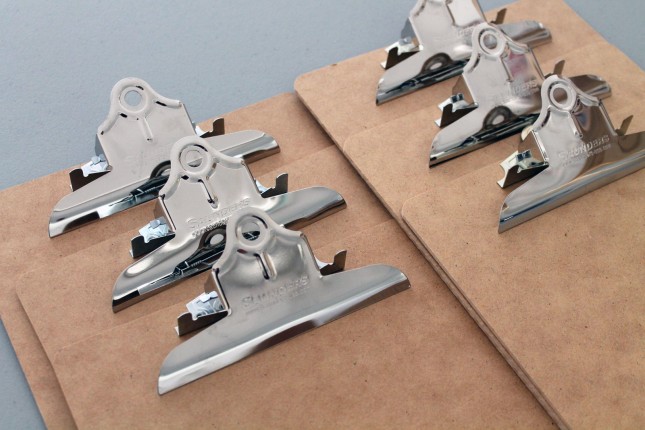
The student pulled a clipboard from the bin.

“Who’s Mrs. —?” he inquired, reading my old married name off the back of the clipboard.

I smiled, “Oh, just a woman I used to know a long time ago.”

Ain’t that the truth.


Many of the items in my classroom are labeled with my old name. When students ask who she is, I’m vague. Most have concluded that she is a retired teacher who gifted many of her classroom items to me.

In a way, they’re right.

She’s certainly retired. Not from teaching, but the old Mrs. — is no longer around. There are those who remember her and tell stories of those days, but they are behind us now.

Mrs. — has been replaced.

No, that’s not quite right.

She’s been transformed.


One of the more difficult aspects of a major life renovation such as divorce is that we struggle to imagine ourselves any way other than we are in that moment. If you asked the old Mrs. — who she was, she would speak of her role as teacher and tutor, she would talk lovingly about her husband, she would tell stories of her dogs and you would be cautioned from getting her on the subject of plants.

In those days when all was washed away, I remember feeling homeless in my soul. I didn’t know who I was anymore. Who I would become. I knew I would never be the same yet I couldn’t imagine anything but what I was.

And that was a scary place to be. Not the old me anymore and yet not the new one either. A limbo of self.

Scary and yet empowering. Because when you’re rebuilding your life and your identity from the ground up, you have the power of choice and the wisdom of experience. And that’s a powerful pair.

And the main choice I made was to be happy. Not happy because of the tsunami divorce. Happy in spite of it.

Everything else was secondary.


And now, here I am. Mrs. again. Dog momma again. About to plant again.

On the surface, much may be the same.

But beneath?

Everything has changed.

Because you can’t go back.

But you can always move on.


The old Mrs.— has retired. And now she’s just a woman I used to know.

And if you happen to see her, please tell her thanks for clipboards.