How to Dilute Your Bitterness

bitterness

The end of a marriage, especially when it comes with infidelity, courtroom drama or excessive vitriol, is like taking a large shot of concentrated bitter. Bitterness comes when we feel a situation was unfair and outside of our control. It is fed by blame, when we feel as though someone else could have prevented the situation.

You come out of the fugue renouncing marriage, blaming the institution for your ills. The thought of starting over again in love and allowing someone unfettered access to your heart brings an acrid taste to your tongue. You look down at affectionate couples like the Grinch looking down at the happy celebrations in Whoville.

You may generalize your rancor, for example painting all men as lying, cheating bastards. Or you may keep the bitter concentrated in a bolus of poison focused on your ex or the affair partner. Sometimes the bitterness lives on the surface, making itself known in most interactions. Other times, it buries itself deeper where it is harder to identify yet it still colors every thought.

Bitterness is anger past its expiration date.

Anger is a sign that something needs to change. It’s a fuel that drives us when we would otherwise crumple in sorrow. Anger sparks when something or someone is testing our boundaries. It tells us to stand up for ourselves and our rights. It’s a neon arrow pointing to what needs to change.

In contrast, bitterness is the residue left once the anger has served its purpose. Bitterness has no purpose. No direction. It may be less intense than the initial anger, but its effects can damage your entire life if you don’t rinse it out.

Since bitterness tends to be more diffuse, permeating every cell, it’s easier to lessen its impact by diluting it rather than trying to simply excise it in one big cut.

First, be truthful with yourself. Be willing to admit any bitterness you carry.

Identify the form your bitterness takes. What words, thoughts or stories carry the acid?

Institute a gag order of your bitterness. Ban the offending words or thoughts.

Eliminate all or none thinking. Life isn’t so black and white.

Bitterness thrives on victimhood. Refuse to be a victim.

Find the lessons within your situation. It doesn’t lessen the pain, but it gives it purpose.

Accept that there are situations you cannot control. And that you can never control other people.

Bitterness feeds upon itself. When you are acrimonious, others will respond in kind.

Take a lesson from cooking. Sweetness cuts bitterness. Find ways to add smiles to your days.

Bitterness holds you back. Letting go allows you to embrace the rest of your life.

Ten Ways Your Divorce Makes You Better Than Before

divorce better

I don’t think anyone ever responds to the childhood question, “What do you want to be when you grow up?” with “Divorced.” Yet, for many of us, the end of a marriage does become part of our life story. I know I don’t have to point out the downsides of divorce to you; after all, they have a way of speaking for themselves.

But what about the upsides? What about the ways that your divorce, even if it was of the unwanted or malignant variety, has made you better than before?

Because whether you realize it or not, divorce (like many other life challenges) has changed you. Shaped you. Strengthened you.

Its harsh grit has left you polished. Its demands have made you grow. And the pain has left its mark.

You aren’t the same person you were before. You’re better.

Maturity

You may have to be a legal adult to get married, but there are no tests for maturity before we pledge our lives wed to another. And in many cases, we enter our first marriages still children in many ways. Perhaps we placed too much faith in the idea of soul mates and happily ever after. Maybe we didn’t fully appreciate the effort that marriage requires. And possibly we still carried childhood wounds and patterns into our marriages rather than assuming adult responsibility for our own responses.

Divorce is like a drill sergeant yelling, “Grow up!” into your tear-streamed face. It leaves no room for childhood fantasies and overdependence on others. It requires that you put on your big-girl panties or big-boy briefs. Maybe for the first time in your life.

Confidence

In the beginning, divorce saps your confidence. You may be feeling defeated because you couldn’t hold your marriage together. If an affair was part of your divorce story, you’re wondering what the new partner had that you do not. And once you face the dating scene again, yet older and saggier than before, your self-doubt grows.

However, that’s only part of the story.

Because whenever you successfully complete something that you thought you could not do, you gain confidence. Whenever you have to reframe your assumptions about your weaknesses and limitations, you fuel belief in yourself. Whenever you face your fears and survive, you acquire strength. And whenever you come through a struggle bruised and battered yet without giving up, you build trust in your abilities. And divorce certainly provides these opportunities in spades.

Perspective

The only way to truly understand something is to first walk through it and then step back and look upon it from a distance. There’s a reason that some of the best marriage advice comes from people who have been divorced – they know the beginning, the middle and what can lead to end in a way that those only speaking from within cannot fathom.

As time goes on, and your divorce moves further back in the rearview mirror, you will be able to see patterns less clouded by emotion and cluttering detail. That perspective gives you information that you can use to change your own behaviors and to improve your future relationships.

Continue to read the rest.

Stepping on Toes in the Pursuit of Happiness

happiness

“But I just wanted to be happy,” my couldn’t-be-ex-quickly-enough whined to the police officer in the interview room where he was being questioned for bigamy.

“That doesn’t give you an excuse to commit a felony,” the officer responded. I could hear him shaking his head in disbelief as he related this encounter to me on the phone later that day.

It brings up an interesting question though – when is it okay to cause distress to others on your own path to self fulfillment?

Your first impulse may be, “never.” Yet, we are not responsible for another’s happiness and we are in charge of our own. And there are times when you may have to step on some toes in order to make the changes that you need to make for you.

And it’s actually more harmful to engage in the people-pleasing (or cowardly) dance around the toes than to be honest and upfront from the beginning. When we try to protect people from our truth, we are acting as gatekeepers, something no relationship on common footing should ever have. Additionally, in trying to avoid hurting anyone, you create an environment seeded for deception (if you do want you want and lie about it to protect the other or yourself) or contempt and resentment (if you don’t follow your dreams and you blame your partner for your circumstances).

There are times when you have to step on some toes. Bruise some egos. Utter words that you know will lead to tears. And maybe even make a decision that causes a heart to break.

It’s not your job to ensure that your partner never feels pain. It’s not your role to act as security guard for your partner’s ego. And it’s not your responsibility to protect your partner’s cheeks from tears.

There are times that you may have to step on some toes in order to find your happiness.

But you are responsible for ensuring that you step as gently as possible. (Unlike my ex, who pretty much tap danced in combat boots over everyone in his life.)

If you are feeling unfulfilled in your life and you suspect that the pursuit of your own happiness will end up hurting others, here is what you need to consider if you want to tread as lightly as possible:

Don’t Be Impulsive

We all get irritated at times. We all reach a breaking point where eruptions are inevitable. This is not the time to throw out some news that will hurt your partner. Wait until you are calm and deliberate. Words can never be erased.

Speak Your Truth Clearly

Say it as it is. Provide the basics and only elaborate if asked.

Do Not Spread Blame

Even if you see your partner as responsible, this is not the time to point fingers. Own your part. And make sure you’re not on a snipe hunt for happiness. Not only is that not fair to your partner, you will never find what you’re looking for.

Be Patient

This may be old news to you, but it’s a breaking headline to your partner. Give them the time and space needed to adjust.

Accept That Some Pain is Inevitable

You can’t keep your partner from hurting. Offer comfort if it is welcome and don’t censor or try to minimize the pain.

Strive to Not Respond to Anger

When we are surprised and in pain, we often lash out. Try to not respond to anger; it won’t lessen the impact of your announcement.

Enlist Professional Help If Needed

Whether the news is delivered in a counseling office or a therapist is secured after-the-fact, recognize that help may be needed.

Listen and Keep an Open Mind

You may have reached a conclusion on your own. Be willing to listen to your partner. First, so that they can feel understood and also because you may find an alternative you did not consider.

And I discourage bigamy; you’ll find the police aren’t very sympathetic:)

What Happens To the Ones Who Leave?

leave divorce

What happens to the ones who leave?

The ones who lie and deceive and then walk out the door into their next chapter without so much as a glance behind.

Do they feel pain? Guilt? Remorse?

Are they happy with their decisions and in their new lives?

Or do they regret the choices that ended their marriages?

For many of us, we will never know. Even if you still have contact with your ex (or keep tabs on his or her whereabouts), the life they put on display for the world may well be a front. And even if they do come back, crying about how upset they are, do you believe the tears? Or are they of the crocodile variety?

It’s common to wonder how your ex is doing. After all, they were once your partner in life, and how they felt directly impacted you. And now that they’re gone, your mind still seeks that information. Perhaps your mind even seeks retribution, wanting to see them face the consequences of their choices.

For a long time (longer than I like to admit), I needed my ex to be in pain. It was almost as though I saw it as some sort of tug-of-war with only a limited amount of happiness to share between us. And so I had to pull his away to ensure that there was enough for me.

photo 1-102

But that’s not really how it works, is it? It’s not as though his okay and my okay were mutually exclusive. I could be okay on my own regardless of how he was feeling.

photo 2-100

So why do we have such a strong drive to see those that hurt us be hurt in kind? Does it mean that we’re somehow malevolent if we harbor feelings of vengeance and pray for karma to hurry up and do her job?

I don’t believe so. In fact, I see these feelings of revenge as coming from a basic human need.

The need to be understood.

Intimate betrayal and deception is one of the most acute pains that one can be subjected to. It’s a deliberate act, carried out by the one you trust the most, that leaves residual tenderness for a lifetime.

And we desperately want someone, anyone, but especially the one responsible, to understand the depths and quality of that pain. We want them to feel it so that we can be understood and, in turn that they can know what devastation their actions have caused.

In even the most mundane of circumstances, it is beyond frustrating and isolating to not be understood. In fact, I’m feeling this way now after a day of attempting to teach math and interact with my colleagues with absolutely no voice. All day, I wrote commands on the board and tried to pantomime how to find the slope of a line only to be greeted with puzzled expressions. I would spot behavior across the room and be unable to do anything about it until I finished with the current student and navigated through the maze of desks. All I wanted was to be able to get my points across.

To be understood.

But not being able to talk for a day or two in a middle school is nothing compared to not being understood by the spouse that caused those feelings in the first place.

That goes way beyond frustrating and isolating.

In fact, for me it went into rage.

I was angry for a long time. And that anger feeds upon itself. I not only felt an immense need to be understood, I also wanted him to face punishment for his actions (it seemed only fair) and I wanted find some pleasure in knowing that I was doing better than him. Petty? Yeah. None of this was pretty.

I didn’t care where he was or what he was doing. I just wanted him to hurt. To feel guilty. Maybe even a little remorseful.

And it was my now-husband who made it clear to me that I had to learn to let the anger go. That it wasn’t hurting my ex, it was hurting me and, in turn, my new relationship. Releasing that anger was a process. I had to enlist some mental choreography to shape conclusions that let me find peace. It was a process. A slow process.

I have an advantage in this over many of you; I don’t have children. And I can’t even imagine what it feels like to see your ex hurting your child. It’s one thing to let go when you were the one who was hurt. It’s quite another when it’s your child. In fact, I see this with my mother, who can still be brought to tears when talking about my past even when I’m smiling because of my present. For you parents, all I can say is do everything you can to teach your kids to be resilient while taking care of yourself. Practice modeling for them what you want for them. And be willing to learn from them; kids often have wisdom that we overlook.

For the most part, I’m past the anger now. In fact, at this point, I want him to be okay. Partly for him, because regardless of everything else, this was a man I loved deeply for many years. Partly for me, because I feel better knowing that I’m not putting any more bad energy out into the world. But mainly for the others that will cross his path. I want him to be okay so that others will be okay. When I saw him and (I think) the other wife hand-in-hand at a festival a couple years ago, I really did hope they were happy. Goodness knows, I was happy I wasn’t the one holding his hand.

But want I want has nothing to do with reality. If he is a narcissist or sociopath, he is incapable of feeling guilt or remorse and most likely will never change. If he has compartmentalized his actions and his past to the point where he no longer remembers the truth, he will not feel pain but may continue to inflict it upon others. If he has spent so long living in a house of lies that he can no longer find the door, he will remain forever trapped.

Even though I no longer harbor a secret desire to fill his car with fire ants, I don’t really worry about how he’s doing. Because I trust that if he has been able to feel the pain from his choices, he will change how he responds in the world. And if he has not felt the anguish, then the negativity he spreads will come right back to him.

And as for me? I no longer have a need to feel understood by him. I think if he was able to understand how it felt, he wouldn’t have done it in the first place. I no longer care to see him punished; I put my faith in karma. And I no longer need to feel superior that I’m doing better than him because my okay is now completely and totally independent of him.

Besides, I’m just happy to be happy.

And I’ll be even happier when I have my voice back:)

Unmoored: Emotional Free Fall After Divorce

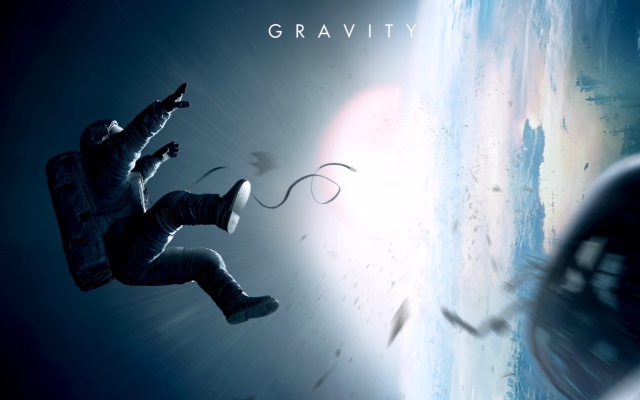
Brock and I watched the movie Gravity several months ago.

Unusually for me, it gave me nightmares. Recurring nightmares.

Several times a month, I would wake up after dreaming of myself in Sandra Bullock’s position – untethered, floating freely through space. Although my body was safely on the bed, my heart would be racing as though I was in mortal danger and it took several minutes for my brain to accept the idea that I was not alone and unmoored.

And that’s really the root of the nightmare, isn’t it?

My fears have nothing at all to do with being lost in space and everything to do with being lost in life.

In those early days, I struggled to find the words to explain how I was feeling. Nothing seemed strong enough. Encompassing enough. But one word kept floating to the surface.

Unmoored.

With the receipt of that text, my ties to most everything in my life had been severed. Those things that defined me, anchored me, were gone and I felt like I was floating uncontrollably away from myself. It was a panicky helpless feeling as my attempts to get back to myself seemed to occur in the dead space of a vacuum. I felt detached with a limited life support system and my oxygen quickly running out.

And in so many ways, that feeling of being unmoored was the scariest of all of the post-divorce emotions.

Because you have to fully let go of what you know in order to grasp on to your future.

I wasn’t free-floating for long. I started to feel anchored once my clothes were placed in the dresser in my friend’s spare bedroom, where I would spend the next year. Another tie came when my mom purchased a gym membership for me and that facility became my home away from my-home-for-a-year. School started up again and even though it was a stressful year due to administration, if felt reassuring to be back in the classroom, even as I answered to a name I no longer identified with. Yoga reconnected body and mind and I learned how to breathe again on a soft carpet on a therapist’s floor. Pen went to paper, and I started to explore the emotions that were within, the anger especially giving me purpose.

I realized only recently that some of the unmoored feeling persisted for quite some time. It was only this past spring, when I tucked plants into the soil in my yard (in an area that feels like home) with a ring again on my finger that I realized I felt anchored again. Not settled, but relaxed into where I want to be with anchors of my choosing.

After divorce, some people find they enjoy the freedom that comes from being unmoored; they design their new life with minimal ties and restraints to allow maximum flexibility. Others crave the feeling that comes from multiple ties to people and places, giving a sense of security and belonging.

Being unmoored alters you. It helps to build your confidence in your ability to survive. It carries a freedom that may frighten or awaken. It confirms who your true friends are and alerts you to the ones that need to be jettisoned. It whispers truths about you and your desires, uncluttered by the wishes of your ex. It’s a moment in time. A flash of clarity with clutter removed.

Because in free fall, you have no limits.

Related: Take Me to the Other Side

Only possibility.