Ten Easy Communication Hacks For Your Marriage

Scan any list about the most important elements of a happy marriage and effective communication will be somewhere between “shared values” and “physical intimacy.” Its ubiquitous inclusion is not because relationship writers are lazy. It’s because communication truly is key in any relationship. Especially one where you face each other every day prior to morning coffee, tackle everything from kitchen remodels to retirement plans and expose your greatest vulnerabilities and dreams.

The reason that communication can become a point of contention in a relationship is that while talking is easy,

Listening is hard.

And taking responsibility for our own emotions and responses is harder still.

But that doesn’t mean that everything to do with improving your communication has to be hard. Here are ten easy hacks to start improving the communication in your marriage beginning today:

Use Figurative Language

Feeling misunderstood is extremely frustrating. And it’s easy to get caught up in blaming your partner for refusing to listen. But maybe they’re listening and simply not relating. Not because they don’t want to. But because they don’t have anything to latch on to.

So instead of getting irritated, try getting creative. Reach back in your mental archives and pull up those metaphors and similes from your school days. Instead of explaining what it is, try painting a picture of what it’s like. You’re not trying to replicate every detail or match every trait. You’re just working to establish an anchor point for understanding. You can fill in the gaps later.

Follow the Percent Rule

I am a huge fan of the 80/20 rule – do the “right” thing 80% of the time and cut yourself some slack the other 20% of the time. Although this is most often applied to nutrition, it works with communication as well.

Share 80% of the positive thoughts you have about your partner or your relationship. (Yes, it would be nice to aim for 100%, but life, you know? So strive for 80%.) This means every time you admire your partner’s butt as he or she walks away, each time you notice that the garbage has been taken out and whenever you see him or her tackle something with ease, you speak up. Or write a note. Or send a text.

And the 20%? Share only 20% of your negative thoughts. This means you may have to choose them wisely. Don’t waste those words on a gripe about the scattered socks unless that’s really something that you to express and you want addressed. These words should be reserved for problems that can be solved together, not complaints for the sake of grumbling.

Pay Attention to Physical Comfort

One of the worst grades I ever made on a college exam was on a chemistry test that was administered in a frigid room while I sat on a cold, unforgiving metal stool. My body was in such discomfort that my mind wasn’t operating anywhere near its best.

Conversations operate the same way. There’s a hierarchy of needs and a full stomach, a rested body and an acceptable environment come before listening and responding effectively.

So by all means, go to bed angry if you need to. Staying up and staying engaged in the discussion will only backfire.

Ask More Questions

Do you find yourself responding defensively or getting angry after a statement by your partner? The instinct is to respond with a sledgehammer, shutting down that line of discussion completely and utterly.

Instead of smashing the claim (and you partner) into smithereens, try increasing the amount of questions that you’re asking. This strategy has a two-pronged benefit – it helps give you added information to aid in your understanding and it validates to your partner that you’re listening to them.

Use a Candle

Do you or your spouse have trouble initiating difficult or complex conversations? Try this simple idea.

Tell Stories of Your Shared Past

One of the ways that researchers are able to predict divorce in a couple is the relationship origination story that they tell. Happy couple tell happy stories, making light of or brushing over any rough patches on the way to the alter. Do they tell happy stories because they are happy or does the mere retelling of a happy story cultivate additional happiness?

I would wager it goes both ways.

Make a habit of telling favorable tales about your shared relationship history. You’re making deposits in the marital bank and reinforcing your bond.

Write It Out Before Talking It Out

Have you ever uttered, “You make me feel…?” No shame. I’m guilty too. We say that because it’s easy, skimming the surface – you did this, I felt this – instead of digging deeper – you did this, it reminded me of that, and I felt this.

One of the biggest things you owe your spouse is to take responsibility for your own stuff. And that starts by being aware of your stuff. The connections between your present and the luggage you brought with you from your past.

So talk to your journal before you talk to your partner.

Because writing your thoughts is a great way for you to see those connections between what was done and how you feel. Because nobody else can make you feel a certain way.

Engage In a Shared Task

The body tells our minds how to feel. If you clench your fists, you will respond more aggressively in conversation. If you roll your shoulders back, you not only appear more confident, you speak more confidently.

So when you want to communicate to establish a connection, begin with a physical association through a shared activity. This doesn’t need to be complicated – washing the dishes, taking a walk, shopping for groceries all count as joint tasks.

Just another reminder that you’re in this thing together.

Use Texting Wisely

In a marriage, texting should only have two uses: 1) Planning or 2) Play.

Logistics comprise a significant portion of any relationship. And texting is a great way to work out the details of shared lives in real time.

But a marriage that only shares plans isn’t much of a marriage.

And phones are great for sharing more than just reminders and schedules.

Flirt. Seduce. Banter. Joke. Play.

And ban anything negative or complicated from your texting vocabulary. Some things are better addressed in person.

And the number one hack you can utilize to improve your communication?

Release Expectations

So often the reason that a conversation heads south is that we react to what we expect to hear instead of what is said. We construct a response before we even hear our partner out.

In other words, the battle is really within ourselves.

The single most important change you can make in your communication is to approach with curiosity instead of conclusions.

Listen.

And you just might learn something new about your partner.

Or even yourself.

Subtle Signs You’re Being Manipulated By a Covert Abuser

Covert abuse is sneaky.

It doesn’t leave a bruise on your cheek.

Or cut you down with scathing words.

Or even obviously isolate you from others.

Instead, it wisps in slowly through tiny cracks. Velvet-trimmed lies whispered into trusting ears. The smoke builds until you no longer remember what it is like to see clearly and your head is filled more with the thoughts of your abuser than with your own.

It’s often only possible to identify covert abuse once you have escaped its clutches (and even then, it usually takes a period of months or years to fully grasp what happened). It’s like a domestic form of Stockholm Syndrome, the persecutor masquerading as a protector.

The following are the subtle signs that were present in my ex husband. Small dots of data that when connected, paint a crimson flag of warning. If you see a preponderance of similar signs in your relationship, it warrants further investigation. If you recognize these traits in your former relationship, it can give you some information that can aid in the healing process.

These signs are subtle and can have many causes and manifestations. Just because someone fits these descriptors, it does not mean they are covert abusers or narcissists. But it does mean that you should look twice. Especially before you leap into marriage with them.

Continue to read the rest.

The Four Words That Are Holding You Back (And the Four Words to Say Instead)

holding

It’s ingrained in all of us.

Inevitably, when I motion for a student to quiet down, I hear the response,

“It’s not my fault.”

(Or its synonym, “It wasn’t me.”)

people-315908_1280

It is a knee-jerk reaction to any pronouncement of culpability.

And rather than grow out of it as we grow older, we begin to pay others to tell us that it is not our fault.

———-

When I first starting getting into health and fitness in the early 90s, I noticed that the industry advice came in two distinct forms – one voice said that you could transform your life and your body through willpower and hard work while the other side spoke of reassurances that the excess weight or sagging muscle was due to no fault of your own (and often this burden shift would be followed up with a “quick fix” for the low, low price of only $19.95).

And I soon figured out that the second view led to increased sales.

Even as it failed to create the desired body.

Because we all like to hear that it’s not our fault. That someone or something else is responsible for whatever is holding us back.

Yet even though we all have situations and circumstances that make certain goals more challenging, you are ultimately the only thing holding you back.

index-315754_1280

I encounter people that tell me that they cannot lose weight because of PCOS or hypothyroidism. “It’s in my genes,” is offered as a reason for the Type II diabetes or metabolic syndrome. I hear others defend their lack of fitness by claiming that their family or job requires all of their time.

They feel a freedom by stating that it is not their fault.

Yet really they are in chains of their own making.

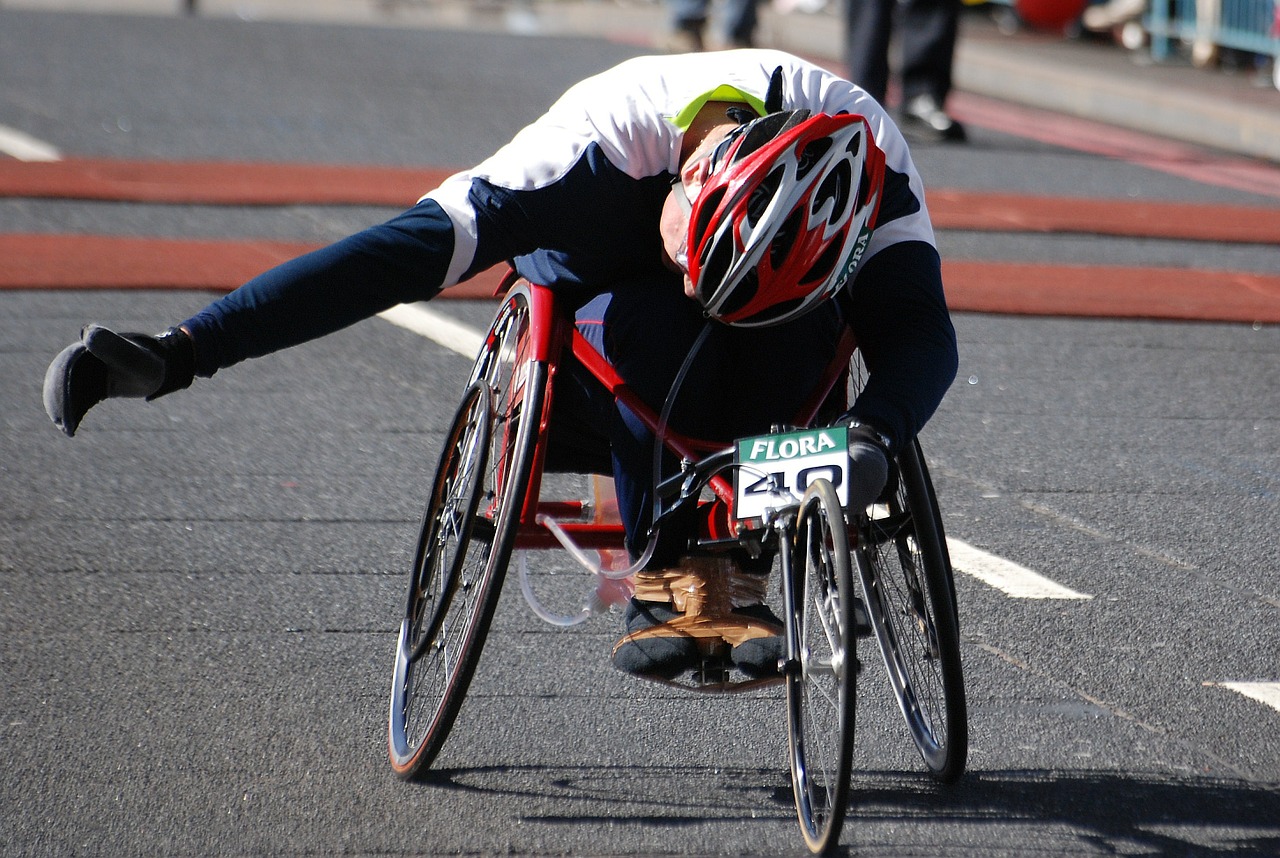
I workout alongside people who use wheelchairs and people with artificial limbs. I have friends who alternate days at the gym with nights at the hospital as they are treated for their autoimmune disorders. I know women with PCOS who accept that weight loss will be harder for them even as they strive to work within the limitations of their disease. I work with single parents who problem-solve creative ways to exercise while the kids are at practice or asleep.

I’ve never once heard any of these people say that the situation is not their fault.

And it’s no accident that they are constantly pushing the boundaries of their situations.

wheelchair-369735_1280

———-

The problem with, “It’s not my fault,” is that it so easily slides into “And therefore there’s nothing I can do about it.”

And the two declarations are vastly different.

It is not your fault if you have been cursed by faulty genes that cause your body to grasp onto every fat cell for dear life.

(And what are you going to do now?)

It is not your fault if you suffered at the hands of abusive or negligent parents who failed to give you the tools to excel in adulthood.

(And what are you going to do now?)

It is not your fault if you have been exposed to trauma, bruising and damaging your very core.

(And what are you going to do now?)

It’s not your fault if your brain struggles with anxiety or depression.

(And what are you going to do now?)

It’s not your fault if your spouse cheated or abandoned you.

(And what are you going to do now?)

In all of these cases (or in any limitations and struggles you have in your life), you can spend your energy on blaming the fault-carrier. Others will help you, either for pay or for free. After all, it’s easy to point fingers at others.

Because then we are absolved of any effort.

Of course, we are also guaranteed not to make any progress.

Because the last time I checked, reps of reciting “It’s my hormones,” had a dramatically lesser effect on fitness than reps on the weight machine.

And assigning liability to a screwed up family of origin is inherently dissatisfying because they’re too entrenched in their own drama to absorb yours.

And calling your cheating ex an ass won’t help you get off yours to build your new life.

So rather than focus on what happened, focus on what you can do now.

Replace “It’s not my fault” with “It is my responsibility.”

Rather than point fingers (or waste your time and money on those that help you pass blame), use those fingers to grab your own bootstraps.

boots-691670_1280

Nobody else is going to do it for you.

———-

Your future is your responsibility.

Your well-being is your responsibility.

Your happiness is your responsibility.

And if you don’t accept that responsibility, that IS your fault.

———-

It is my responsibility to …

Shift my attention from what happened to me to what I am going to make happen.

Focus on what I can do.

See my limitations as my starting point, not as excuses to never start.

Be realistic with my goals.

Set a limit to the amount of energy I expend on placing blame. That energy can be put to better use.

Surround myself with people who believe I can.

Ask for (and accept) help when I need it.

To refuse to allow somebody else to define me.

Communicate my needs clearly and calmly.

Manage my emotions so that they do not control me.

Establish and maintain appropriate boundaries.

Speak and act with kindness. Towards others and also towards myself.

Believe in myself and act in accordance with that belief.

life-863186_1280

And what are you going to do now?

Related:

The Part of the Betrayed

Sprained

I’m Not Strong Enough

The Proliferation of Narc Abuse

narc abuse

In some ways, I wish my divorce was happening today. All I would need to do is supply the word “narcissist” or “narcissist abuse” to my attorneys, my psychiatrist and pretty much anyone else I had to deal with and they would instantly gain insight into the insane world I was attempting to navigate in order to sever ties with my ex.

The use of the label, “narcissist,” in regard to my ex-husband would alert others to following:

-He will not behave according to the standard laws of human decency and interaction. He will lie, project and manipulate anyone who stands in the way of what he wants.

-He will be very charming in person. His intellect will shine through and he will display his expertise at making others feel good about themselves.

-He will make promises. They mean nothing.

-He will concoct elaborate stories that shift the onus of the financial and relationship situation onto me. They will seem plausible. Because he’s good. Very good.

-He will use others for his own gain and then discard them. This extends to his lawyer. Even before payment has been made.

-He was gaslighting me for many years. And it takes time for clarity to return.

But at the time of my divorce in early 2010, the term “narcissist” had not yet left the DSM and entered the common vernacular. There were no templates available for the lawyers and the judge to understand how to handle someone that will manipulate the rules of the game even as they pretend to play. There was precedence for the judge to believe that he would simply ignore her orders, continuing to march to the beat of his own drum. And there was no help for me to start to understand the covert abuse I endured; I still believed that abuse always came with obvious cruelty.

If my divorce happened today, I believe that it would be handled differently. The attorneys would be a bit more aggressive in their demands and less willing to delay based on his excuses. His lawyer would likely have demanded payment up front, not trusting that “the check is in the mail.” The judge may have changed the verbiage in the decree, making the consequences for noncompliance more severe. And I may have received more understanding for the Alice-In-Wonderland-effect of prolonged gaslighting.

Because the proliferation of a label helps to increase public consciousness and understanding of an issue. The more we talk about it, the more we see the common threads and realize we are not alone. The more stories we hear, the more insight we gain into our own experiences as the collective wisdom is cultivated and disseminated.

The popularity of a label can certainly benefit those who fall under its umbrella.

But there is another side to a label becoming in-vogue.

A darker side.

———-

I first went gluten free in 2007 after suffering from gastrointestinal symptoms for several months after recovering from food poisoning. At that point, I had only a vague notion of what gluten was and I had never heard of celiac disease or gluten intolerance.

I only knew that I was hurting. (Along with other things, of which I’ll spare you the details).

Thinking that I may have IBS, I looked online to find the recommended diet and I stumbled across a chart which listed the symptoms of IBS (I had two) and the symptoms of gluten intolerance (I had them all). I immediately pared down my diet to fruits, vegetables and dairy.

And within three days, my bloating and pain were gone.

Each day after the first two weeks, I reintroduced a food. During week four, I got sick again. I looked at the label of the tea I consumed that morning. Third ingredient? Barley. I was further convinced when the ingestion of my multi-vitamin (gluten? really?) brought me back to misery.

In those days, gluten free was anything but trendy. It was unheard of. I had only a small selection of GF products available at the health food store or via mail order that were priced insanely high and tasted insanely bad. I had to forgo eating anything of substance in restaurants and prepare my own food at home using naturally gluten free ingredients.

And in some ways, I wish that my gluten sensitivity had manifested later in life. Because now I can obtain GF pizza, cupcakes and even grilled cheese all within a short drive of my home. It’s a world I dreamed of back in 2007.

But even though I enjoy my GF goodies, it’s not all good.

Because with the popularity of the label comes a cheapening. A watering down.

It’s assumed that I avoid gluten because it’s the “in thing.”

That I wanted to be part of the crowd.

When the reality is that I could not care less about the crowd. I’m doing what I need to for my own well-being.

———-

The increase of the use of the term “narcissist” is much the same. It’s a helpful label for those who are attempting to disentangle their lives from a manipulative and deceptive person. It has brought needed awareness to the fact that some people won’t play by society’s rules. It’s a reminder that sometimes wolves walk around in sheep’s clothing and that not everybody who appears trustworthy is. And, most importantly in my view, it has brought awareness to the fact that abuse can occur quietly and softly behind the scenes.

But as the label is applied generously to everybody who acts selfishly, there is a cheapening of the term. A watering down.

It seems as though everyone’s ex is a narcissist.

At which point, the term becomes useless.

Labels are designed to be a shorthand for understanding. A starting point for awareness. Not an endpoint for assumptions. Or a focal point for your life.

If you identify your ex with the characteristics of a narcissist, then use that collective wisdom to help you understand his or her motivations and actions. Listen to the stories of others and find comfort in the fact that you are not alone. Allow the characteristics of a narcissist to help you separate what was done to you to what happened because of you. Let the label work for you.

And then let it go.

Because at the end of the day, it doesn’t matter if your ex is a narcissist. (And, if they are, the fact that you are keeping your attention on them simply feeds their desires.)

What matters is what you do now.

What “I Need Space” Really Means

I need space

“I need space.”

Whether you have been on the receiving end of these words or you have uttered them to your partner, they are three of the most uncomfortable words in a relationship. They are loaded words, filled to the brim with uncertainty and fear. They may signal a time of transition and renewal or they may be the death knell of the relationship.

The words themselves are simple. Three short syllables.

The feelings and motivations behind them are complex. Multifaceted.

And often left undefined and unspoken.

———-

I want out and I’m too scared to say it.

This is the response that the recipient of these words often fears and sometimes it’s accurate. A request for space can mean that the person is already done but instead of giving a clear, “No,” they are clouding the issue with a muddy, “Maybe.”

I feel like I’m losing myself and I need to take a step back to define myself again.

When couples are together for an extended time, the lines delineating one from another can blur. A request for space can be a sign that interdependence has slid into dependence and one partner is seeking more independence.

I want to be able to have some parts of my life that are separate from you.

Sometimes this is motivated by a desire to hide things from a partner that they would disapprove of (affair, addictions, porn, etc.) and other times it is simply a need to have some areas of life where the partner doesn’t have influence. Not telling your spouse everything is fine. But not if it’s something you are actively hiding.

I’m overwhelmed and I need room to breath.

This overwhelm can come from anywhere – work, school, kids. Some people require more alone time than others, especially when life’s demands become too much. This is a plea for quiet.

I am feeling panic about increasing intimacy and vulnerability and I need space to acclimate.

I often describe increasing intimacy in a relationship like coming up from a deep dive. You have to pause and acclimate occasionally. If you climb too far, too fast, it will make you feel unstable. This is one of the 7 reasons that people may withdraw in a relationship.

I need to direct my energy to other things for a time.

Maybe it’s an ailing family member or a huge project at work. When something is pulling all of our energy, any additional requests for attention can be too much. A relationship can survive attentions that are directed elsewhere for a time. But it cannot last forever.

I feel like you’re making me responsible for your happiness and it doesn’t feel good.

Repeat after me, “It is not my partner’s job to make me happy.” And if you try to make it their job, don’t be surprised if they decide to quit.

I’m reminiscing about a more free period in my life and I’m trying to decide if commitment really is for me.

Ahh…the hallmark of the so-called midlife crisis. We look upon our youth with rose-colored glasses. And sometimes, we try to return.

I’m trying on the idea of life without you to see if fits.

This is the spouse that hasn’t shut the door on the relationship but they are not convinced of its viability either. This is the partner that wants the security of home base and a little space to wander outside its fences before making a choice.

———-

If you’re the one asking for space, be aware that the mere suggestion of these words may incite panic in your partner, causing them to grasp you ever-tighter, thus creating the opposite of the space you requested. Be honest and forthright in your underlying motivations. Be as comforting as you can. If you are not contemplating leaving, reassure your partner of that. If you already have one foot out the door, do not give your spouse false hope.

Being on the receiving end of, “I need space” is a scary world, a land in limbo where you watch and wait from afar. It’s easy to see this declaration as the first step off a cliff and respond by gripping with every fiber of your being. Easy, but also counter-productive. Your partner isn’t saying they need to know you want them. They’re saying they need you to loosen that grip and let them fall or fly on their own.

Also, understand that sometimes the words have nothing at all to do with you and with the relationship. Be open to idea that the pressure may arise from an external source or from prior history. Ask questions to see if you can get to the root cause and be patient as your partner tries to sort it out.

If you find yourself in this place, turn your attention to your own well-being apart from your partner. You cannot control his or her actions and decisions, but you also don’t have to stand idly by as you wait for information. Invest in yourself; it pays dividends.

“I need space” is a landing between floors. It is a brief period of stasis before you either climb to another level or exit the stairwell of the relationship.

It’s a time to catch your breath.

To see your journey clearly.

And decide which direction you will go.