Moments of Vulnerability After Divorce

There are things about divorce that nobody tells you ahead of time.

This is one of them.

Before my tsunami divorce, I felt like a capable adult.

After?

There were moments where I felt like a complete badass.

And moments where I felt like a weak and vulnerable child.

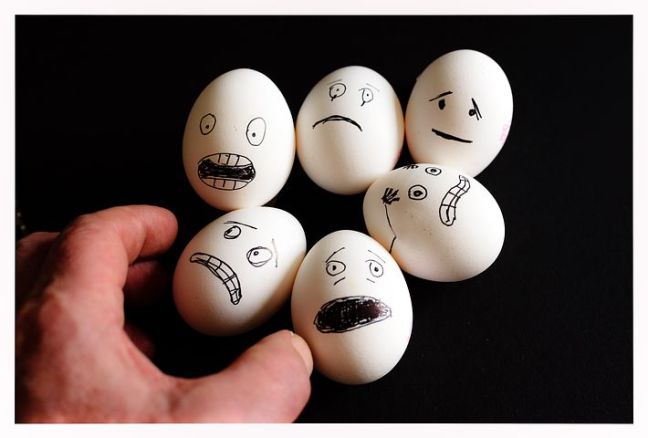
Those feelings of vulnerability have a tendency to pop up at the most unexpected times.


When Somebody Shows You Kindness

I felt a strange mixture of relief and vulnerability when I first talked to the officer that arrested my then-husband. Relief because I had somebody who knew what they were doing to take control for a bit. And vulnerability because his kindness revealed both how in need I was and helped prevent me from an “everybody sucks and I’m going to become a hermit” mentality.

For months, every act of kindness extended my way was met with tears. Of gratitude and also from a feeling of powerlessness. Because apparently I wasn’t as good as hiding my vulnerability and pain as I liked to think I was.


During an Uncontrolled Reaction to Something Small

Every time my phone would buzz, I would jump. I feared more bad news from the attorneys or police. I dreaded yet another fruitless and scary conversation with a creditor. And I secretly hoped it was my still-husband, full of apologies and regrets.

I hated the power that damn phone had over me. I wanted to be in control of my feelings and it was such a humbling admission that this little brick of metal and plastic had more sway with my emotions than I did.


When You’re Sick or Injured

It was just a run-of-the-mill stomach bug. But on top of feeling miserable, I felt completely helpless. Not only was my body useless, my mind was as well. And this time, I didn’t have my husband to lean on and act as my protector while I healed. More than ever before, I related to animals that hide in their burrows whenever they’re sick or injured. It’s simply too scary to face the world when you’re less than a hundred percent.


When You Need Help With a Task

It’s funny in hindsight. I was shoving things in my car to take them from my marital home turned mausoleum to the friend’s house where I would be staying. At one point, I needed three hands to both carry things, open a door and shoo away a pernicious yellow jacket.

Only there were no hands nearby to help.

I set down the things I was carrying with the intention of swatting at the insect and opening the door. Instead, I ended up sitting on my driveway (only it wasn’t really mine anymore) sobbing for the next several minutes. In that moment, everything seemed impossible.


When You Realize You’re Alone

It was just a stupid form.

Yet it was so much more.

“Emergency contact” stared back at me with accusing eyes, as though taunting me that I didn’t have anyone to put in the blank.

I could put in one of my parents, yet they both lived across the country, so that seemed somewhat silly. I could pencil in the friend I lived with, but she was completely overwhelmed with being the emergency contact for her new baby. I sifted through other friends, yet I kept picturing them confused when they received a call as my emergency contact. “Why did she pick me?” they would think.

And so I left it blank.

Realizing that ultimately, I had to take care of myself.

When You Meet Someone New

I was supposed to be happy.

And I was.

But I was also scared sh*tless.

Because if I developed feelings for this guy, it meant I would have to open up.

And if I opened up, I risked being hurt all over again.

But if I stayed curled up in my protective burrow, I knew I would never live again.


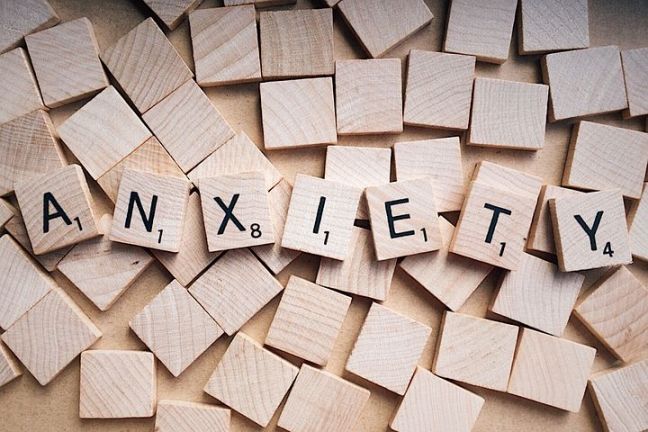
Anxiety After Divorce

The dictionary defines anxiety as, “a feeling of worry, nervousness, or unease, typically about an imminent event or something with an uncertain outcome.” Well, it’s no wonder then that anxiety becomes a constant companion for many facing divorce, which certainly epitomizes an “imminent event…with an uncertain outcome.”

It’s normal to feel anxious before, during and after divorce. You’re experiencing a period of loss and transition at the same time you may be struggling to reconnect with your very identity and purpose. That’s stressful no matter how you look at it.

Anxiety around divorce can be focused on one or more specific areas, or it may be more generalized and diffuse. The feeling may be clear-cut and easy to recognize or it can manifest in more subtle ways. Regardless of the particular nature of your divorce-related anxiety, the more you understand it, the better you can learn to navigate – and eventually curtail – it.

tumblr_oaur2mrNGU1tn5y36o1_400


What You’re Anxious About


The Practical Concerns

These are often the first worries that manifest – How will I pay the bills without their income? Where will I live? How will we manage custody? What will the legal process be like?

There are so many important details of daily life that divorce impacts. And most of these have to be dealt with yesterday. Add the very real financial costs of divorce and it’s no wonder you’re losing sleep.


Personal Strength and Fortitude

I’m not strong enough to get through this” is one of the first thoughts that many people have when they realize that divorce is imminent. The emotions threaten to drown you and the sheer amount of tasks you have to complete is completely overwhelming.

Maybe you’ve never been tested like this before and so you have no track record with which to reassure yourself of your tenacity. Or maybe you’re worried about the duration of this transition – how can you keep going when the finish line isn’t even marked?


The Impact on the Kids

From the first moment you gazed into your newborn’s eyes, a need to protect them from all harm has permeated your every cell.   Yet no matter how deftly you wield your shield, you cannot block all of life’s slings and arrows from reaching your child. And for many children, their parent’s divorce is the first major emotional injury they face.

It’s difficult to watch your child suffer. Their pain ricochets through you like an unreturned racquetball in an empty court. You feel helpless as your normal platitudes and kisses fail to sooth this particular wound and guilty that you failed to protect them in the first place.

from 7 Vital Lessons Divorce Teaches Children

It’s no wonder you’re anxious. You worry about the impact that this family transition will have on your children. You agonize over the pain they’re facing. You stress about how this might affect them moving forward. You lose sleep over the relationship they have with their other parent. And most of all, you constantly question if you’re doing the right thing, making the right decisions.


Emotional Reactions

I remember being so afraid of my emotional response. It felt like being pulled along by some powerful riptide, threatening to drown me at any moment.

The emotional reactions after divorce are strong, variable and unpredictable. You never know if you’re going to break down crying in the middle of a work presentation, burst into inappropriate laughter in a meeting your attorney or fly of the handle in a fit of rage because a form asked for you to indicate your marital status.

And this uncertainty combined with a feeling that you no longer have control over your inner world, leads to a great deal of anxiety.


Things-we-said-683x1024


Future Happiness

“Will I ever be happy again?” you wonder. And your anxious brain is ready with a reply – “No.”

You worry that the best years have already happened and that it’s all downhill from here. You wonder if this divorce will always be your defining moment. And you stress as you contemplate the thought that maybe you’re broken and that you cannot be repaired.


The Views of Others

You feel like those around you are judging you, labeling you as a “quitter” or quietly assuming that you failed as a person in order to have a failed marriage. Their voices – real or imagined – join your own, doubts and criticisms circling around your head like tubes in a lazy river.

This anxiety may extend to your general social standing and connections. Maybe you are now losing the family that you’ve grown to love and cherish. Perhaps you worry that you no longer fit into the “couples only club” that is your primary friend group. Or, in your cultural or religious group, divorce may be viewed as a sin and you’re shunned for your circumstances.


New Relationships and Finding Love Again

You worry that your ex was your soulmate and that you somehow screwed up your only chance for love. The thought of dating again is downright terrifying and you wonder if anybody will love the older, more jaded, and less tolerant version of you. And that’s of course assuming that there are even people out there that you’d be interested in.

Finding love is only the starting place for your anxiety. Then comes the question of keeping it. After all, you don’t have such a great track record right now. You worry that you’re going to end up in this same place again.


I-am-exhausted-from-trying-to-be-stronger-than-I-feel.-Unknown


How the Anxiety Manifests


A Feeling of Being “Driven”

Anxiety has energy. It is an accelerant. A propellant. The focus of this drive can vary, turning towards everything from your performance at work to finding out every detail possible about the person your ex cheated on you with. Sometimes anxiety feels like you’re being driven by a motor but you’re spinning your wheels.


Obsessive Thoughts

You may be obsessively wondering how your ex could have acted the way they did. Or maybe you’re fixated on something you did that contributed to the collapse of the marriage. Anxiety often causes our thoughts to become trapped like the water above a blocked drain, as we desperately sift through them looking for a way to control the outcome.


Avoidance and Distractions

Anxiety is not a comfortable feeling. So when something causes undo stress, we often avoid it in order to eliminate that discomfort. This can manifest by intentionally or subconsciously avoiding locations or situations that you know will trigger an emotional reaction. Others may turn to distractions (everything from dating to work) in an attempt to give a wide berth to anything that may cause anxiety to spike.


Quotes-About-Anxiety


A Sense of Futility

Anxiety is the world’s greatest pessimist. It will always tell you that not only is the glass empty, but the glass is cracked and will never hold anything of substance again. If you’re feeling defeated and assuming that it’s a permanent state, that may be your anxiety talking.


Restlessness

Are you feeling a need to redecorate your entire home? Or maybe move to a new home – or country – altogether? Do you have trouble staying still and you seem to always find something to keep you busy? Anxiety has its own fear – a fear of stillness and quiet. So when you’re anxious, you’re often restless.
 

anxiety-quote-hp-41-1


How to Handle Your Anxiety


Call in the Professionals

Get help if you need it! There is no shame in asking for help. In fact, admitting a need for and accepting help are great signs of strength.

How do you know if you need help with your anxiety? Here are some signs that it’s time:

  • Your anxiety is interfering with your ability to carry out the basic functions of daily life
  • The divorce is history, yet your anxiety still remains
  • Symptoms of depression are present along with the anxiety
  • You’re turning to substances to help you manage your anxiety
  • Your children are being impacted by your anxiety
  • You want to improve your anxiety but you don’t know how


Quotes-about-Anxiety-12


Incorporate Exercise

Exercise won’t cure anxiety, but if you exhaust the body, it has a tendency to tire out the mind as well. And when it comes to worrying, a tired mind is a happier mind.

Play around with different types of exercise. Perhaps you do best with yoga and its emphasis on breathing through discomfort. Or maybe running helps you process your thoughts and gives you a sense of progress. You may find that you’re drawn to martial arts, where your anxiety can be funneled into strikes and you gain a sense of power and strength.

The what doesn’t matter here. The regularity and commitment does. Figure out what works for you and practice it frequently.


Learn to Recognize Anxiety

Be aware of how anxiety manifests in your mind and body. Does your chest get tight? Your stomach upset? Your brain on overdrive?

Just being aware of these signs can 1) give you a sense of control over your anxiety and 2) provide you with an opportunity to do something about it. You’ve heard about love languages. This is the time to become fluent in your own fear language.


Inspirational-Quotes-About-Depression-and-Anxiety


Face Your Fears

When we avoid situations that cause us discomfort, we allow them to grow in size and power. Think about all of the times you’ve been afraid to do something, from jumping into a pool as a child or having a difficult conversation as an adult. How many times did you discover that the anticipation was worse than the reality? Quite a bit, I expect.

And also think about your mindset before and after you faced that fear. Before, you were fixated on the situation, playing out all of the possible outcomes and worrying about every one. After? Well, it no longer seemed so important and all of that mental energy no longer had to be allocated its direction.

It’s pretty simple, really. Not easy, but simple.

Avoidance makes your anxieties grow. Facing your fears diminishes their power.


Chart Your Progress

When it comes to healing from divorce, progress is so slow that it’s often imperceptible from your viewpoint. So document your journey. Bring awareness to your progress.

Journaling is one way to accomplish this. You can go back at any time and read your earlier entries to get a feeling of how far you’ve come. This serves to both help you recognize your strength and also gives you hope that things will continue to improve.


107f3c70d5b502882c7cfcdb74dff897


Question Your Conclusions

Anxiety lies. Just think about it – when you’re sifting through all of the possible outcomes,  how many of them or positive or even neutral? Not very many, I expect. Yet, the reality is that many outcomes fall into these categories. But anxiety always assumes the worst.

So learn to question your conclusions. Where is this assumption coming from – facts or fears? If it’s the latter, you have permission to ignore the advice.


Implement a Gratitude Practice

When you’re grateful, you’re in the moment. When you’re anxious, you’re living in the future. Take some time every day to focus on those things that bring you joy and appreciation. Write them down in a place where you can return time and time again to literally count your blessings.


Listen to Others

We don’t do well when we live only within the echo chamber of our own minds. So allow other voices in. Hear their perceptive and their wisdom.

From others, we gain insight into ourselves and inspiration to keep trying.


Accept Anxiety as a Natural Response

We have evolved to experience anxiety as nature’s way of keeping us safe. We are primed to feel fear and uncertainty around novel situations to help guide our decisions in a safe direction.

Anxiety is natural. However, modern life doesn’t present us with the simple dilemmas our ancient ancestors faced. The question about whether the meat gained from hunting the large game is worth the risk has been replaced with the constant worry about your child’s ability to navigate the emotional fallout from divorce.

So it’s important to both accept your anxiety as a natural response to a potentially threatening and new situation and also expend effort to lessen your anxiety since the potential triggers are ongoing.

And always remember – you may feel anxious at any given moment, but YOU are not your anxiety.

coolnsmart-21321

Critical Signs That Your Emotional Walls Are Too High

emotional walls

After experiencing heartbreak, it’s natural to take a protective stance, to build emotional walls in an attempt to head off any additional pain and loss. These precautionary barricades serve an important purpose at first, as they help to shield us from additional assaults while we’re still tending to the wounds that require immediate attention and we are too fragile to withstand any further insults.

Yet left unchecked, these emotional walls that were initially constructed to provide security inadvertently become our own self-built prison. The possibility of connection exchanged for an illusion of safety. Left too long or built too high, we languish behind those emotional walls. Reassuring ourselves that at least we won’t get hurt again while at the same time allowing loneliness to slowly infect from within.

It’s difficult to accept that we’ve inadvertently walled ourselves in, depriving ourselves of the very things that nourish a heart and soul. It can be downright terrifying to take the risk to open up and again be vulnerable when the memory of the pain is still screaming in your ear.

Yet often the best places can only be reached by taking a leap of faith.


The following are signs that your emotional walls may be too high:


You Panic When You Become Vulnerable

It’s often referred to as flooding – that physical sense of overwhelming emotion. Your stomach churns. The blood rushes. And you’re filled with either an immediate need to escape or a total and complete shut-down.

This fight-or-flight reaction is completely normal when you’re in actual danger. However, when the response is this intense just because somebody saw through your defense, it’s an indicator that your emotional walls are too impenetrable.

Pay attention to those physical signs. Are they appropriate for the situation or are they an overreaction? If you find that you frequently panic or flood when emotions are present, it may be a sign that it’s time to learn how to live with these emotions (instead of simply trying to keep them at bay).


You Cut People Out As Soon As They Get Too Close

In general, there is an emotional dance that happens as you get to know somebody. Over time, the boundaries are renegotiated as trust is built and further access is allowed.

When the emotional walls are too high, this dance becomes interrupted as soon as the hidden tripwire is activated. And once this alarm sounds, the perceived interloper is immediately removed from the premises. Often for good.

There are certainly times when it is completely appropriate and healthy to remove somebody from your life. But if you have a history of cutting people out of your life, it may be a sign that you are afraid of letting them in. Examine your reasons for eliminating others from your life. Are they justified, or do they come down to excuses?


You Continually Choose Unavailable Partners

Do you know the best part about choosing unavailable partners? You always have a ready-made reason for the relationship not working out.

Consider who you are attracted to. Are they already in a relationship? Or are they hiding behind their own walls after facing heartbreak? Perhaps they are physically unavailable due to their location or the demands on their time?

When you’re staying in your comfort zone behind too-high emotional walls, unavailable partners are attractive because they will not try to get too close and they won’t challenge your duck-and-cover strategy. At the same time, accepting these partners is a guarantee that you will remain alone behind your walls.


You Become Defensive Whenever Somebody Questions Your Emotional Walls

“I’m not closed-off!” you insist when somebody notes your unwillingness to be vulnerable and authentic. “It’s just that I haven’t met the right person,” you continue, in an attempt to redirect the attention elsewhere. Or, perhaps you bring up your previous heartbreaks to justify your stance, “You would understand if you had felt pain like I have.”

A defensive response is often indicative of two things – 1) somebody is pushing against an area of tenderness and 2) they are uncovering some truth that you’re not ready to hear. Pay attention to who is hightailing your emotional walls. Are these people who are coming from a place of genuine concern (if so, it may behoove you to listen) or they predatory-types who want you to let them in (bye, Felecia)?


You Strive to Keep Areas of Your Life Completely Separated

It is completely normal to act differently with different people and to have distinct groups of friends related to areas of your life. But if you’re overly concerned about any overlap between these groups, it may be a sign that you’re trying to prevent any one person or group from getting to know you too well.


You Use Projection to Assume What Others Are Feeling

“They wouldn’t want to know,” you tell yourself as you bite your lip to avoid opening up. We all have a tendency to assume that others feel the way we do and to tell ourselves what we want to hear. Taken together, this means that when your emotional walls are too high, you are going to unconsciously reinforce that decision by assuming the intentions of those around you.


You Try to Control the Outcome

Ultimately, the construction and maintenance of emotional walls comes down to control. After experiencing the excruciating pain of loss, you strive to never feel it again. And since you cannot prevent others from leaving, you instead keep them from getting in.

And, of course, that is your choice. Letting down the walls carries with it some real risk. You may be invaded by those intending to do you harm. Or, you may find love only to suffer its end. Whenever we open ourselves to another, we are giving them the opportunity to cause pain.

The problems arise when we are not happy or fulfilled and we don’t recognize that ultimately we are the cause of our discontent. Or, more specifically, our self-made walls are. That those barricades that provided needed protection from the elements for healing to occur have now become obsolete or even detrimental.

At the end of the day, only you can decide for yourself –

Is love worth the risk?


Related: 9 Reasons You’re Struggling to Find Love Again


Benefits of Traveling Outside Your Comfort Zone

comfort zone

images-33

I had two choices for my morning run today – the relative comfort of a treadmill in my dry and air-conditioned gym or the muddy trails of a nearby park in the rain and oppressive mugginess that blankets the east coast in the warm months.

I debated for a few moments, considered how miserable I would likely be on an outdoor run as I struggled to breathe in air that was more water than oxygen and how tempting it was to remain in the manufactured comfort of air-conditioned space.

After swallowing the last of my coffee, I went downstairs and selected my trail-running shoes, opting for the less comfortable option. At the beginning of the trail, I questioned my choice. The sweat was already soaking through my shirt, my lungs were threatening to wheeze and a strange guy on the relatively empty trail caused me to grip the mace I carry just a little tighter.

But then after the first mile, I began to find my stride. The moisture in the air became less noticeable, my breathing began to acclimate and the weird guy stayed weird, but also stayed back. And by the time I made it back to my car, looking like I had just completed a mud run complete with a culminating dunk in a body of water, I was happy that I chose the less comfortable route.

images-36


Which are you more likely to regret – the step that takes you out of your comfort zone or the inaction that keeps you there?


We all like to be comfortable. All of us fear the unknown and to some extent, shudder at the thought of potential failure. We shy away from experiencing any sensation that could be labeled as unpleasant. All of us have become experts at crafting and disseminating excuses that give us permission to maintain the status quo, telling ourselves stories to justify our inaction and our conclusions.

images-34

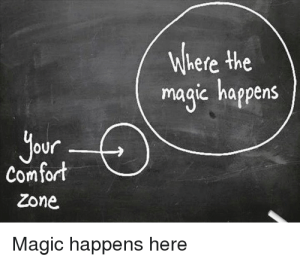
Life – real life – happens outside your comfort zone.


When we take steps outside our comfort zone, we are granted permission to fail.

Once you’ve been labeled “good” at something, you are expected to perform at a certain level every single time. In contrast, when something is brand new to you, any failure is somehow less personal and more situational. That makes it much easier to face.


When we take steps outside our comfort zone, we are allowed to be unsure.

I don’t know about you, but I always feel pressure to appear confident about my decisions and my actions. I feel like this is one of the great lies of adulting. When we were little, we assumed that adults knew what they were doing. Only now, we’re the grown ones and we’re just faking it. When you’re doing something new, you’re allowed to reveal that insecurity.


images-32

When we take steps outside our comfort zone, small achievements are recognized and celebrated.

When you were a baby, your every “first” was marked and even memorialized. That recognition of small successes often fades as we age. When you’re outside your comfort zone, you are far more aware of those “firsts” and mark them of signs of growth.


When we take steps outside our comfort zone, we have fewer expectations from ourselves or from others.

Expectations can be powerful limiters. Just look at those studies where teachers of completely average classes were either told that their children were brilliant or behind. The children performed not based on their ability, but according to their teacher’s expectations. And in our day-to-day lives, we are just as likely to limit ourselves with claims of, “I can’t.” When we take that step outside of our comfort zone, we are instead asking, “But what if I can…?”

our-comfort-zone-where-the-magic-happens-magic-happens-here-18784279


When we take steps outside our comfort zone, assumptions – and beliefs – are challenged and often adjusted.

WE often reach conclusions based on what we experience. So the more limited your experiences, the less-informed and potentially more biased your assumptions will be. When we meet new people and experience new ways of seeing the world, we are forced to re-examine and maybe even readjust our beliefs.


When we take steps outside our comfort zone, learning combats frustration born of stagnation.

Humans get bored. Just watch a modern queue and take notice of how many people are engaged in their phones to avoid a few minutes of idle and purposeless time. The same thing happens on a larger scale. We thrive on novelty, on challenge. When there is nothing left to learn, we become stagnant and then frustrated. The space outside a comfort zone offers unlimited opportunities for learning.

images-35


When we take steps outside our comfort zone, curiosity dominates and inspires wonder.

Have you ever watched a kid in a new environment? A place that is known to you suddenly becomes alive with possibility when seen through their eyes. Our brains have literally evolved to disregard that which is too ordinary. And when your life is spent entirely within a comfort zone, you risk having your brain ignore it all. Newness encourages our brains to wake up and pay attention, bringing with it a childish sense of exploration and wonder.


When we take steps outside our comfort zone, we allow space for authenticity and purpose.

We all-too-often become our labels – mother, father, caretaker, employee, etc. We forget who we really are and what really inspires us and drives us. When we leave our comfort zone, we often discard those labels for a period of time, allowing us the the opportunity to discover what is really important to us.


images-37


Dating After Divorce: Distinguishing Between Forewarnings and Normal Fears

dating after divorce fears

Dating after divorce requires navigating a minefield littered with the emotional debris of your marriage. In such a potentially hostile and alien environment, differentiating between true threats and harmless anxieties can be challenging. Here are some clues to help you decide if your new relationship worries are normal…or something to be worried about –


Signs That You May Need to Reevaluate Your Relationship:


1 – Feeling like the other person “saved” you.

This can be such a seductive feeling. When you’ve been slogging through the suck of divorce and you meet somebody that promises (through word or action) to pull you free of all that misery, it’s an amazing sensation. Things go from seeming insurmountably terrible to unbelievably simple as this person sweeps you off your feet.

It’s tempting to read into this feeling as a sign that you’ve finally met the right one. That by replacing the person on your arm, you’ve immediately shed all of the pain and struggle from your previous relationship. Yet it’s not that simple. That lightness and elation you’re feeling with your new date is a great sign – it tells you that you won’t be mired in the past forever. And when it comes solely from an external source, it will also be fleeting. Because nobody has the power to save you from yourself.

If you find that you’re assuming the stance that you have been saved by your new dating partner, you’re putting yourself in the perilous position of counting on them to remedy your problems. You’re both giving them too much responsibility and too much power over you.


2 – Only staying with your new partner because you don’t want to be alone.

When we’re starving, we’ll settle for food that is less than desirable in order to avoid the urgent discomfort of an empty stomach. Likewise, when we’re hungry for companionship, we’ll accept a partner that is far from ideal.

The fear of being alone is universal and powerful. Consider the role isolation plays in some of the more psychologically terrifying fiction. From Hanks’ character in Cast Away to Wahlberg in The Martian, we feel that primal twinge of panic at the thought of being abandoned. And after divorce? That primal scream is awfully loud.

And so we easily can grasp onto the first available body that we encounter. Not only setting us up for a misguided choice, but also increasing the chances of feeling lonely within a relationship. Which, as many people can attest, is even more isolating than feeling lonely by yourself. Being alone suck, but being with the wrong person is even worse.


3 – Describing your dating partner as good, but…

There’s a common narrative in relationship letters to advice columnists. The writer first describes all of the wonderful characteristics of their partner, only to then follow up with, “but…” And the word that follow that conjunction are often terrible, describing abusive or controlling behaviors. Effectively negating all of the positives that were first recounted.

Nobody will be all-good or even an entirely good fit for you. Every person and every relationship has its “yes, buts…” And in order to have a happy and healthy relationship, you have to be willing to live with (and even ignore) those negatives. However, especially when you’re feeling vulnerable, it can be easy to be in denial about some major red flags. Pay careful attention to the downsides that your partner brings to the table. The good side can only balance out so much.


4 – Only staying with your partner because you don’t want another “failed” relationship.

It’s not easy to accept that either you chose poorly again or haven’t yet developed the skills needed to maintain a healthy relationship (or both). It’s both disheartening and embarrassing to have to admit that you’re yet again at the end.

So maybe you begin to tell yourself that “it’s not that bad” or maybe you begin to believe that this is what all relationships ultimately dissolve into. For many of us, it’s not easy to admit to our mistakes or our shortcomings. We stay on the path because it seems preferable to conceding a wrong turn.

Yet often, refusing to admit to a mistake is the worst mistake you can make. What’s worse – having to say you screwed up or living with a screw-up for the foreseeable future?


5 – Feeling embarrassed to introduce your date to your friends or family.

When you feel like you have to keep your date a secret from others, you need to ask yourself where this shame or embarrassment is coming from. Do you subconsciously believe that they are somehow beneath you? Do they have some very real shortcomings that you privately believe should be deal-breakers (but you still don’t want to break the deal)?

Friends and family can often provide a helpful perspective on your romantic relationships. Unblinded by love (or lust) and fear, they may be able to give you some insight that you’re too close to see. It’s a warning sign if you’re reticent to hear that input.


6 – Justifying or ignoring “deal breakers.”

before you started dating again after divorce, you probably generated a list of deal breakers in a relationship. Some of these may have been reactionary and rather inconsequential (I know I swore off men with a certain pattern of facial hair). But other items on your list are probably there for an important reason.

Take a moment to recall those traits that you swore would be a “stop sign” to a relationship. Have you allowed your resolve to slip and you’re now justifying or excusing those very things you swore you would not tolerate?

Changing your own values and boundaries is a sign that you’re allowing yourself to be swallowed up within your relationship. Remember, the promises you make with yourself are the most important ones of all.


Normal Fears When You’re Dating Again After Divorce:


1 – Struggling with being open and vulnerable.

Dating is risky. Allowing yourself to love again is scary. You will probably find yourself either wanting to hide behind an emotional wall or wanting to run at the first sign of developing intimacy. This impulse is completely normal as you try to find the balance between never wanting to be hurt again and wanting to find love again.


2 – Learning to manage triggers from the past.

You will carry some of your old assumptions and fears into your new relationship. You will struggle to differentiate between an appropriate reaction to the present situation and an attempt to battle ghosts from the past. Feeling triggered often says more about where you are in the healing process than it does about the state of your new dating relationship.


3 – Negotiating the terms and expectations of the relationship.

This new dating relationship is not your marriage. There will be rocky periods as you navigate the unfamiliar terrain and both communicate your needs and expectations. Divorce has most likely influenced you; the terms you seek within a relationship now may differ from those that you sought before.


4 – Fear of losing your dating partner.

You’re fresh on the heels of lost love. It’s completely natural to fear losing it again. You may find that you have a tendency towards clinginess or a drive to know everything your partner is doing in an attempt to control the outcome. This fear is normal; however, it can also easily become out of control if it is allowed to run amuck.


5 – Missing elements of your ex.

No matter how vile you now believe your ex to be, there were traits that drew you to them. Traits that you may now miss. Occasionally longing for the positive elements of your ex is nothing to worry about. Just be careful about comparing your new date to your former spouse. 


6 – A sense of awkwardness and discomfort.

In time, marriages become the comfortable tee shirt you’ve had since college. The sharp folds have been softened as it molds to your body and you’re familiar with its every seam. A new relationship is a unworn pair of boots. Shiny and full of promise, but also a bit uncomfortable and strange feeling. It doesn’t mean it’s not a good fit. You have to give it some time to break in.