Gentrification of a Marriage

I’ve been in Atlanta over fifteen years now and in that time, I’ve seen some neighborhoods slide into disrepair and I’ve watched others climb back from near-ruin. It’s fascinating to observe how an area can go from “No way would I ever live there” to “I wish I could afford to live there!” in under a decade.

And this cycle of new hope, establishment, inattention and renewal is not unique to neighborhoods and it effects more than real estate.

We can also witness it in marriages.

A new marriage is like the construction of a new neighborhood. It is full of promise, even as it is devoid of roots and rituals. Everything can seem perfect as no veneer has yet been worn away from use. New friends are made and a different schedule and routine is worked through. Dreams are shared freely and rarely tempered with reality. This is a period of excitement and possibility.

In a relatively short period of time, the new family transitions into a period of establishment and growth. This may be marked by the raising or children or the focus on nurturing careers. Money, time and attention are directed towards the family. The surroundings and environment are personalized to match the needs as the default template of the new marital construction is discarded. This is a period of creation and purpose.

And now is when the problems can begin to occur. The surroundings may begin to feel stale and too constricting. The small issues can grow into larger ones until they crowd out the good. Life gets in the way and places extra demands. Attention and care may no longer directed towards the family and this inattention starves the marriage. This is a period of uncertainty and fear.

In real estate, this is when some people choose to leave the older neighborhood and look for a newer and fresher home elsewhere. Others stay put and still refrain from putting money into their homes, continuing their disrepair. And some stay and invest in their homes, reinventing their existing space.

It’s the same in marriage. You have three choices.

And if you choose to stay and infuse your established relationship with new vitality, take a cue from gentrification:

Much like the early investors and artists that venture into a neighborhood that has seen better days, you have to be willing to take risks and think creatively.

Instead of tearing down everything, look at the underlying structure to see what can be preserved and enhanced.

Be willing to re-purpose. Just because it’s always been that way, doesn’t mean it always has to be that way.

Do those things you have always wanted to do but always put off.  Put those early dreams into action.

Freshen up. Make you and your space inviting and warm.

Know your limitations. Hire help when needed.

Be empathetic and thoughtful when making changes that impact others.

Balance expectations with reality, wants with needs and frustration with thankfulness.

Make your relationship your hub. Your city center. Surround it with what you need.

Talk up your marriage as if it is the most desirable place to be.

Sell it.

And then buy it.

This is a period of renewal.

Hopes and dreams rooted in connection and history.

Best of the old and the new.

Subtle Signs You’re Being Manipulated By a Covert Abuser

Covert abuse is sneaky.

It doesn’t leave a bruise on your cheek.

Or cut you down with scathing words.

Or even obviously isolate you from others.

Instead, it wisps in slowly through tiny cracks. Velvet-trimmed lies whispered into trusting ears. The smoke builds until you no longer remember what it is like to see clearly and your head is filled more with the thoughts of your abuser than with your own.

It’s often only possible to identify covert abuse once you have escaped its clutches (and even then, it usually takes a period of months or years to fully grasp what happened). It’s like a domestic form of Stockholm Syndrome, the persecutor masquerading as a protector.

The following are the subtle signs that were present in my ex husband. Small dots of data that when connected, paint a crimson flag of warning. If you see a preponderance of similar signs in your relationship, it warrants further investigation. If you recognize these traits in your former relationship, it can give you some information that can aid in the healing process.

These signs are subtle and can have many causes and manifestations. Just because someone fits these descriptors, it does not mean they are covert abusers or narcissists. But it does mean that you should look twice. Especially before you leap into marriage with them.

Continue to read the rest.

What Makes a Marriage Successful? (And Why Divorce Does Not Mean Failure)

marriage successful

What REALLY makes a marriage successful? I’ve always found it funny/sad how we classify marital success purely by its duration. I mean, imagine if we applied this same metric to other areas of our lives –

She was a really great student – she was in school for fifty years!

He was an amazing dog, but he was a failure as a pet because he died before he turned ten.

It was a wonderful dinner. The service was so slow that the meal lasted for hours!

I’m afraid I have to give the book only one star because it ended.

Pretty crazy, huh?

So why do we then so easily apply this faulty logic to marriages? Classifying them as failures if they end and successes if they persist?

I think we all have seen (either from within or from the outside looking in), marriages that go the duration yet are filled with contempt, isolation and misery.

And we have all witnessed relationships that were once strong and fulfilling come to a premature end as the individuals or the circumstances changed.

Yet in our cultural lexicon, the first couple is heralded as a success (and sometimes even asked for their marital wisdom) while the latter is written off as a failure.

IMG_4361

Perhaps it’s time to reevaluate what makes a successful marriage.

Because it is certainly both more complex and more challenging than simply managing to hold on to one another for a lifetime of journeys around the sun.

In a successful marriage,

You both play for the same team. You know that there will be disagreements about how things should be done. But rather than view your spouse as your opponent in these arguments, you see him or her as your ally in life.

The good interactions outweigh the bad. There will be rolled eyes and hurt feelings. And they will be smothered by hugs and positive words.

You share common goals and values. Even when you take different paths to get there.

IMG_4359

Support is given freely and challenges are presented. You don’t seek to change your partner; you want to enhance the best parts of your partner.

A growth mindset is present. Both for the marriage and for the individuals that comprise the union. Each person learns and grows in response to struggle and success.

Mistakes are perceived as opportunities. And the actions are condemned. Not the person.

There is a balance of independence and interdependence.

IMG_4360

The difficult conversations happen. And problems are perceived as a challenge to overcome together.

Each person takes responsibility for his or her own stuff. And each person is willing to carry more than his or her share when the situation demands. Because there will be days when the commitment to the marriage is greater than your commitment to your spouse.

A legacy is left, either by the children born from the union or the others inspired or influenced by the couple. A successful marriage is greater than itself.

And here’s the hard part –

A successful marriage accepts when it is no longer successful. It is willing to make the agonizing decision to pull the plug rather than condemning both people to live in the diminished world of a marriage on life support.

IMG_4362

Now it is true that no good marriages end in divorce.

But it is also true that the marriage that ended may not be the same marriage that existed for some time before.

It’s not just about the number of years.

It’s more about what you do with those years.

And if that marriage brought a smile to your face and eased your burden,

If that marriage challenged you to learn and grow,

If that marriage taught you what it was like to share a common dream and common goals,

If that marriage opened your heart and made you feel seen and understood,

If that marriage made an impact on others,

If that marriage pushed you and tested you,

If that marriage made you realize that nobody else can make you happy,

If that marriage taught you what you don’t want,

If that marriage inspired you to never again allow anyone else to reduce your worth,

If that marriage taught you how strong you are,

Then that marriage was successful.

No matter how long it lasted.

Or how it ended.

Take the lessons and move on.

Because the only failed marriage is one that you refuse to learn from.

Related:

Why I Don’t Want a Perfect Marriage

10 Contradictory Qualities of a Good Marriage

Are You Setting Healthy Boundaries or Hiding Behind Walls?

healthy boundaries

I thought I was setting boundaries.

But in reality I was also building walls.

It’s easy to do. To get so carried away with a line in the sand that it becomes the beginning of a foundation of a fortress. A stronghold intended to keep you safe. But that really holds you prisoner.

Do you know the difference between setting healthy boundaries and constructing isolating walls?

Boundaries

tennis-court-443267_1280Boundaries are rational and deliberate lines that define what is and is not allowed to be done to you. They are communicated and consistent and are less about keeping others out than keeping yourself intact.

Boundaries allow others to see you. Be with you. But they don’t allow others to use you.

Boundaries say, “I’m not letting anyone abuse me” and “You can come in as long as you abide by the rules.”

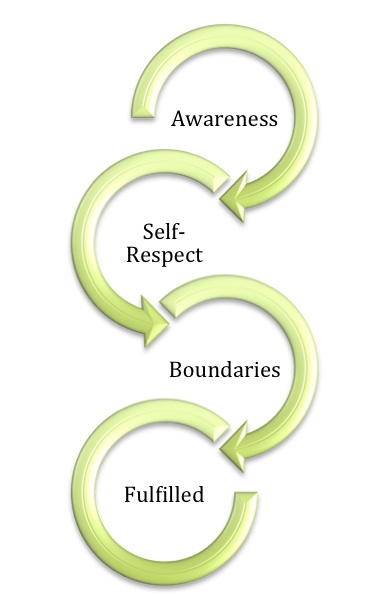
Healthy boundaries are anchored in awareness and self-respect. When in place by both partners, boundaries allow for a deeper connection because both people don’t feel as though they are threatened by an increase in vulnerability.  Although you may be hurt, your self will remain intact.

Examples of boundaries include not tolerating abusive actions or language, refusing to accept the responsibility for another’s happiness or choices and not acting in opposition to your own values and ethics.

boundaries

Walls

brick-293507_1280Emotional walls are bricks of self-protection mortared with fear. They are erected as a result of being wounded. They are rarely acknowledged and their existence is often only discovered when somebody runs head-first into one. Unlike boundaries, which only keep out those who misbehave, walls do not discriminate – they hold everyone back.

Walls say, “I will never allow myself to be hurt again” and “I’m not letting anyone get close to me.”

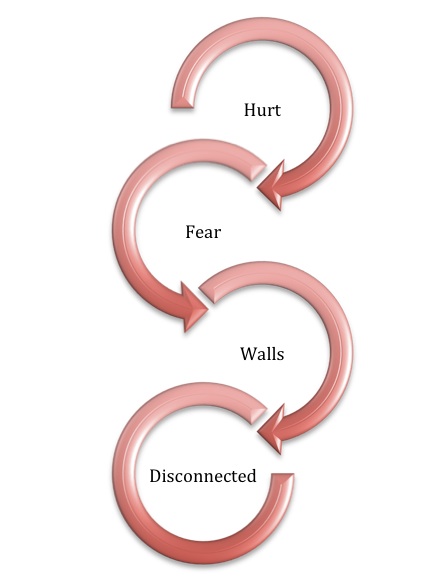
Walls are built upon fear. When one or both partners in a relationship is hiding behind walls, a deeper connection forged through vulnerability is impossible. As a result, the partner(s) hiding behind the walls may feel safe, but he or she will also feel empty and disconnected because the true self is not being seen. The wall keeps others out. And it also holds you prisoner.

Examples of walls include never letting your emotions show, deliberately withholding important information from a potential partner and isolating out of a fear of being hurt again.

wallsWhich are you building? Walls? Or boundaries?

Why A Prenup May Increase the Chances of Divorce

We often make decisions based upon anticipated results.

And these decisions often have unintended consequences.

We often act to limit risk.

And sometimes these actions actually increase what we’re trying to avoid.

———-

As the awareness of the long-term impact of head injuries on mental and brain health has increased, there has been a corresponding increase in the amount of padding and protection surrounding the head of football players. On the surface, it makes sense.

Damage due to excessive forces on the skull that are transferred to the brain? Simply pad the skull and brain better so that the forces are transferred elsewhere and the damage is mitigated.

But that’s not what seems to be happening. Even as the equipment improves, the incidence and severity of head injuries in football remains high.

And some people are responding by calling for additional safety equipment.

But others are taking the opposite stance and advocating for the removal of the helmets, at least during practice.

They point to the disparity in head injuries between the NFL (where players are shielded behind lots of protection) and rugby (just as brutal yet with minimal protection). And it turns out that those vulnerable-seeming rugby players have fewer and less severe head injuries.

Because when we feel invulnerable, we change our behavior.

The NFL players, feeling safe and feeling no pain behind their layers of padding and shielding, show little hesitancy to lead with their heads. Over time, they develop a confidence in their helmets and no longer engage in instinctive self-protective behaviors meant to guard the vulnerable brain.

In contrast, the relatively exposed rugby players never feel safe. They never grow complacent upon their safety gear. When they use too much force, they feel it, getting the immediate feedback that tells them to let up or suffer the consequences. And they learn if they want to keep their head safe, they better keep it out of the way. Some studies are currently being carried out on HS football players in the U.S. and preliminary results are indicating that students that refrain from wearing helmets in practices suffer fewer and less severe head injuries in play.

This unanticipated change in behavior doesn’t only occur on the football field. As cars have become safer and more automated, people take more risks on the road because of a perceived sense of safety. The increased padding in running shoes encourages a new runner to tackle more miles than he or she is ready for as the discomfort to the feet is lessened. Even credit lines that promise no interest for a period of time encourage people to take more risks because the impact occurs at a later time.

Because when we feel invulnerable, we change our behavior.

———-

So what do padded helmets on football players, airbags in cars and credit card offers have to do with prenups and divorce?

A prenuptial agreement is essentially a piece of safety equipment secured to a marriage. It gives a sense of security. Of invulnerability.

And when people feel invulnerable, they change their behavior.

Risks that were once deemed too risky now seem perfectly acceptable.

And when we’re assured we’re safe, we no longer worry about protection. 

There is a benefit to feeling and fearing the pain of impact. To carefully weighing risks and rewards. And when that impact of an action is softened, the actions may only become even more intense.

In other words, if you believe that your prenup will protect you from the fallout of divorce, you may not act to protect the marriage from divorce.

By no means am I advocating that you refrain from seeking a prenuptial agreement.

Only that you realize its limitations.

And the potential unintended consequences.

Because even though it may help to protect your bank account from the impact of divorce, it cannot soften the other effects.

And they are often much more damaging in the long run.