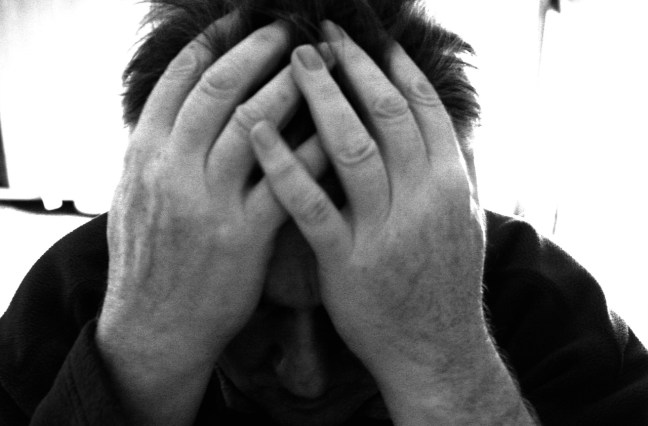
Why I Refuse to Call My Ex Husband a Covert Narcissist

covert narcissist


If anyone has the right to call her ex a covert narcissist, it’s me. While on the surface, he was a giving and caring man everyone loved, the man behind the curtain was another story entirely. He crafted false financial documents and insurance forms to support his lies as he bled our accounts dry. He wooed women, eventually wedding one without attending to the detail of obtaining a divorce from me first. He neglected the requirements of the criminal court system, earning a felony warrant. Even the judge in the divorce case asked my ex’s attorney if his client was “psycho.”

And maybe he is. Not a psycho necessarily, but a narcissist.

But, despite all of the evidence, I intentionally choose to not label my ex as a narcissist.

It seems like “narcissist ex” is the gluten-free of the relationship world – all of a sudden, it’s everywhere. But is it really that pervasive or are we just using the label too recklessly?

Just over 6% of the population has Narcissistic Personality Disorder (NPD) based upon the criteria set forth in the DSM-5: seeking approval from others, viewing oneself as exceptional, blaming setbacks on others, inability to identify with others’ needs and/or feelings and superficial relationships based upon manipulation.

Even though my former husband’s actions seem to check every box, I am bucking the “my ex is a narcissist” trend. Here’s why:


If He’s the “Attacker,” Then I’m the Victim

This was certainly my mindset early on – I viewed him as some Machiavellian perpetrator, deviously plotting ways to hurt me from his basement lair, cleverly disguised as an innocent office. In some ways, it was a comforting mindset as it pardoned me from any culpability. But it was also limiting.

Because if I was a victim, I was powerless.

In order to claim responsibility for my own well-being and create a sense of possibility for the future, I disarmed his memory. He’s no longer my attacker; he’s just the man I used to love who traveled down a dark path.

Preservation of Memory

By the time he sent the text that ended the marriage, my ex and I had spent sixteen years together. It was a lot to lose. If I accepted the proposal offered forth by many who dealt with him in the months to come that he was, in fact, a narcissist, it essentially would discount the thousands of positive memories I had of our time together.

From what I knew, we did have a good marriage with so many happy memories. I decided that those moments were real enough to me at the time and I chose to allow them to remain (as much as possible) unsullied by the idea that they were all orchestrated for some great plot.

It Ignores the Unknowns

 Even the DSM-5 offers the disclaimer that a personality disorder cannot be diagnosed in the presence of addiction or physical illness, as both can mimic the mental condition. My ex admitted to a drinking problem after he left and he was suffering from some pretty substantial medical complaints for the last year or so of the marriage.

It is impossible for anyone, especially a layperson, to diagnose someone with a personality disorder without all of the information (much less the presence of the actual individual in question). Just because a person exhibits certain behaviors does mean that they automatically deserve a diagnosis.

We Are All More Than a Label

Calling someone a narcissist is reductionistic; it distills them down into a list of traits and ignores the complete person. Yes, my ex-husband lied, cheated and stole. But he also showed me (and others) great kindness and tenderness. He was the man that cried at our wedding and nursed our dogs back to health.

By not assigning him a label, I am able to remember the whole man – from loving husband to cruel persecutor and everything in between.

Peace is More Important Than a Reason

In the beginning, I struggled to understand why my husband acted that way and how he could be so cold and calculating. I assumed that once I had a reason, I would be able to move on. I tested out many possible labels (narcissist among them), but none managed to make the pain okay.

Finally, I decided to view him as lost. Hurting. Desperate and in pain. And with that shift, I found compassion, which led to being able to release the anger that held me back. So rather than see him as the evil antagonist in some twisted plot, I try to see him as human. Imperfect rather than malevolent. Not for his benefit, but for mine.

Labels, such as narcissist, have their place in public discourse. They help to provide a framework for understanding and a shared language to discuss important issues. It’s shorthand for a list of common experiences and emotions. I know when I read posts from people that use the term “narcissistic ex,” I will relate to stories of manipulation, gas lighting and projection. I can expect to see similarities between their stories and mine. In fact, I found books about narcissists and sociopaths helpful during the healing journey to provide information and perspective that helped me make sense of my own situation.

Labels are like Cliff Notes. We use them as shortcuts as we develop our own understanding or to help someone else develop theirs. Just like Cliff Notes, they are not the entire story, full of detail and nuance. If we stop at labels, we are limiting ourselves and others. We may be blinded by assumptions as we fill in the gaps in our knowledge automatically.

So your ex may be a narcissist, but that’s not the entire story. Don’t let the label limit you; it’s just the beginning.

Why I Refuse to Call My Ex Husband a Narcissist

covert narcissist

If anyone has the right to call her ex a narcissist, it’s me. While on the surface, he was a giving and caring man everyone loved, the man behind the curtain was another story entirely. He crafted false financial documents and insurance forms to support his lies as he bled our accounts dry. He wooed women, eventually wedding one without attending to the detail of obtaining a divorce from me first. He neglected the requirements of the criminal court system, earning a felony warrant. Even the judge in the divorce case asked my ex’s attorney if his client was “psycho.”

And maybe he is. Not a psycho necessarily, but a narcissist.

But, despite all of the evidence, I intentionally choose to not label my ex as a narcissist.

It seems like “narcissist ex” is the gluten-free of the relationship world – all of a sudden, it’s everywhere. But is it really that pervasive or are we just using the label too recklessly?

Just over 6% of the population has Narcissistic Personality Disorder (NPD) based upon the criteria set forth in the DSM-5: seeking approval from others, viewing oneself as exceptional, blaming setbacks on others, inability to identify with others’ needs and/or feelings and superficial relationships based upon manipulation.

Even though my former husband’s actions seem to check every box, I am bucking the “my ex is a narcissist” trend. Here’s why:


If He’s the “Attacker,” Then I’m the Victim

This was certainly my mindset early on – I viewed him as some Machiavellian perpetrator, deviously plotting ways to hurt me from his basement lair, cleverly disguised as an innocent office. In some ways, it was a comforting mindset as it pardoned me from any culpability. But it was also limiting.

Because if I was a victim, I was powerless.

In order to claim responsibility for my own well-being and create a sense of possibility for the future, I disarmed his memory. He’s no longer my attacker; he’s just the man I used to love who traveled down a dark path.

Preservation of Memory

By the time he sent the text that ended the marriage, my ex and I had spent sixteen years together. It was a lot to lose. If I accepted the proposal offered forth by many who dealt with him in the months to come that he was, in fact, a narcissist, it essentially would discount the thousands of positive memories I had of our time together.

From what I knew, we did have a good marriage with so many happy memories. I decided that those moments were real enough to me at the time and I chose to allow them to remain (as much as possible) unsullied by the idea that they were all orchestrated for some great plot.

It Ignores the Unknowns


Even the DSM-5 offers the disclaimer that a personality disorder cannot be diagnosed in the presence of addiction or physical illness, as both can mimic the mental condition. My ex admitted to a drinking problem after he left and he was suffering from some pretty substantial medical complaints for the last year or so of the marriage.

It is impossible for anyone, especially a layperson, to diagnose someone with a personality disorder without all of the information (much less the presence of the actual individual in question). Just because a person exhibits certain behaviors does mean that they automatically deserve a diagnosis.

We Are All More Than a Label


Calling someone a narcissist is reductionistic; it distills them down into a list of traits and ignores the complete person. Yes, my ex-husband lied, cheated and stole. But he also showed me (and others) great kindness and tenderness. He was the man that cried at our wedding and nursed our dogs back to health.

By not assigning him a label, I am able to remember the whole man – from loving husband to cruel persecutor and everything in between.

Peace is More Important Than a Reason

In the beginning, I struggled to understand why my husband acted that way and how he could be so cold and calculating. I assumed that once I had a reason, I would be able to move on. I tested out many possible labels (narcissist among them), but none managed to make the pain okay.

Finally, I decided to view him as lost. Hurting. Desperate and in pain. And with that shift, I found compassion, which led to being able to release the anger that held me back. So rather than see him as the evil antagonist in some twisted plot, I try to see him as human. Imperfect rather than malevolent. Not for his benefit, but for mine.

Labels, such as narcissist, have their place in public discourse. They help to provide a framework for understanding and a shared language to discuss important issues. It’s shorthand for a list of common experiences and emotions. I know when I read posts from people that use the term “narcissistic ex,” I will relate to stories of manipulation, gas lighting and projection. I can expect to see similarities between their stories and mine. In fact, I found books about narcissists and sociopaths helpful during the healing journey to provide information and perspective that helped me make sense of my own situation.

Labels are like Cliff Notes. We use them as shortcuts as we develop our own understanding or to help someone else develop theirs. Just like Cliff Notes, they are not the entire story, full of detail and nuance. If we stop at labels, we are limiting ourselves and others. We may be blinded by assumptions as we fill in the gaps in our knowledge automatically.

So your ex may be a narcissist, but that’s not the entire story. Don’t let the label limit you; it’s just the beginning.

Choosing Poorly

I made a poor choice this past Saturday.

I didn’t know it at the time, but by lunchtime today, it was beyond clear.

The broccoli, purchased on Saturday, was bad.

On Saturday, I had no way of knowing that rot lay just beneath the surface of the little cruciferous trees. I make an effort to “eat the rainbow” every week at lunch and I lacked a green hue. The broccoli sported no brown spots and carried no fetid odor. That, and the fact they were on sale clinched the deal – it was to be a week of broccoli for lunch.

Except a week turned into one day when the bad odor greeted me from the microwave today and the blackened and soggy end conformed it. Yesterday, I enjoyed my broccoli. Today, it horrified me. And, upon returning home, I immediately purged my fridge of all of its brethren and found a replacement side in the freezer.

And that happens sometimes.

We choose poorly.

Not just broccoli. But jobs. Homes. Financial moves.

Even, and maybe especially, spouses.

We make subpar choices motivated by the catchy signs that distract us from what we really need to see. Or, we see no immediate impairment and so we assume the coast is clear. We make a decision based upon some factors while we studiously ignore others.

Perhaps we know immediately that the choice was a bad one. Yet all too often, we get to enjoy our choice for a time (after all, there is a reason you made it) before becoming aware of the other side.

Now, you can berate yourself for choosing poorly. Call yourself “stupid” as you endlessly play back the faulty selection.

Or, you can instead be grateful for the time you enjoyed when you thought you had chosen well and learn how to pick better the next time.

Five Years Ago Today

Five years ago today, I awoke afraid of seeing the man who had abandoned me eight months before. And when he passed me in the courthouse hall, I didn’t even recognize him.

Five years ago today, I was ready for the divorce I never wanted from the man I thought I knew.

Five years ago today, I sat in a courtroom with the man I had spent half of my life with. A man I once considered my best friend. We never made eye contact.

Five years ago today, I looked at his face for any sign of the man I had loved.  I saw none. After sixteen years, he was truly a stranger to me.

Five years ago today, I sat alone in a hallway waiting for the attorneys to decide his fate and mine. Hoping that the judge saw through his lies and would not fall sway to him charms. She didn’t, even asking my husband’s attorney if he was “psycho.” The lawyer could only shrug.

Five years ago today, I cried and shook with the realization that it was all over. It was a relief and yet the finality was jarring.

Five years ago today, I felt a heaviness lift as I cut the dead weight of him from my burden. I believed I couldn’t begin to heal until his malignancy had been removed.

Five years ago today, I laughed when I learned he hadn’t paid his attorney. I had warned the man my husband was a con. Maybe he believed me now.

Five years ago today, I held tightly to that decree, still believing that its declarations had power. I felt relief that he would have to pay back some of what he stole from the marriage. The relief was short lived.

Five years ago today, I took my first steps as a single woman. Steps I never expected to take. The first few were shaky. But I soon started to find my stride.

Five years ago today, I sat around a restaurant table with friends and my mother. A table that had held my husband and I countless times over our marriage. We celebrated the end of the marriage that night. I had celebrated my anniversary there the year before.

Five years ago today, I read my husband’s other wife’s blog for the last time, curious if she would mention anything about the court date. She did not. I erased the URL from my history. It no longer mattered.

Five years ago today, I sealed the piles of paperwork from the divorce and the criminal proceedings into a large plastic tub. As the lid clicked in place, I felt like I was securing all of that anguish in my past.

Five years ago today, I started to wean myself off of the medication that allowed me to sleep and eat through the ordeal. I was thankful it had been there, but I no longer wanted the help.

Five years ago today, I fell asleep dreaming of hope for the future rather than experiencing nightmares of the past.

And now, five years on, I could not be happier with where I am.

Not because of the divorce.

But because losing everything made me thankful for everything.

Because being blind made me learn how to see.

Because being vulnerable created new friendships and bonds.

Because being destroyed made me defiantly want to succeed.

And because losing love made me determined to find it again.

I am happier than I’ve ever been.

And I could not be where I am without five years ago today.

10 Contradictory Qualities of a Good Marriage

It is often said that marriage is a balancing act. It requires weighing the needs of the individual against the needs of the partnership. It necessitates compromise and constant communication. And a good marriage also needs to find the equilibrium with the following contradictory qualities:

1) Adaptability

A good marriage is adaptable; it grows and molds itself to the environment and current needs. It changes as the partners do, shifting over time and over life transitions. It acts like the flexible caulk used to secure two surfaces together while allowing each to move independently of the other. A good marriage possesses a growth mindset, where both partners are motivated to learn and believe that they can improve with effort. Growth ensures that a marriage remains relevant and useful.

Adaptability extends to the individuals. It accepts that people change over time and with experience. In an adaptable marriage, each partner remains curious about the other and limits assumptions and premature conclusions.

And although a marriage needs to be adjustable, it also requires…

2) Consistency

A sense of security and support is critical in marriage. Both partners need to have a sense that their spouse has their back. Each needs to feel safe, both physically and emotionally, so that the critical component of vulnerability can be revealed.

And much of this peace of mind comes from stability. Consistency. You want to know what you’re returning home to each night. You want to have a sense of what your partner likes and how he or she will react. Consistency encourages confidence and trust, both critical for a marriage to thrive.


3) Personal Responsibility

In a good marriage, both people are looking for a partner to complement them, not complete them. Each person accepts responsibility for his or her baggage, actions and emotions. Nobody is held accountable for the other person’s happiness and nobody is expected to be a white knight to the rescue. Blame is withheld and instead of expecting the other person to change, each partner modified his or her response to a situation. A healthy marriage begins with two healthy people and that requires taking responsibility for yourself.

However, there are times when you can’t do it yourself, and in a good marriage, you also need to be able to…

4) Ask For and Receive Assistance

Being able to ask for help is a sign of both humility and strength. Being able and willing to provide help is a sign of empathy and compassion. Part of a good marriage is being willing to quiet the ego and admit when you lack knowledge or ability. In turn, a strong partnership calls for a partner who is responsive to their spouse’s needs and refrains from making him or her feel inferior when assistance is required. Marriage is about partnership. And a good marriage is about helping your partner when he or she cannot help themselves.


5) Withhold Judgment

In a good marriage, the word “should” is banned from the table. Assumptions and projections are limited as each person is accepted for who he or she is. In conversations, the partners listen to understand rather than listen to respond. Instead of leading with judgment, the spouses lead with curiosity. Criticism kills a marriage. Appreciation nourishes it.

Yet even though a good marriage is free from judgment, it also requires that the partners are not afraid to…

6) Call Each Other Out

Presumably, nobody knows you better than your spouse. And that puts them in a unique position to see and perceive the lies and limitations you place upon yourself. In a good marriage, partners will call each other out on their s**t. Not to shame or bully, but to help the other become better. A marriage thrives when rather than quietly accepting the excuse of “I can’t,” a spouse helps to show their partner that indeed, they can.


7) Overlapping Worlds

A good marriage exists in the intersection of two lives. There are shared experiences. Shared friends. Shared passions. And shared dreams. There is a merging of two lives. “Me” is replaced with “we” and “mine” with “ours.” Each person plays an active and visible role in their spouse’s life. Compromises are made and the marriage is prioritized.

Although a good marriage requires sharing many aspects of life, it also needs…

8) Independence

Each person should always know where they end and their partner begins. A marriage is not one and one make one; it’s two individuals choosing to share their lives. And they need to maintain their individuality. A good marriage allows each person to explore his or her own interests. It provides freedom and encouragement to explore individuality while maintaining the bond of the shared life.


9) Enjoyment of Each Other

A good marriage has at its heart two people that enjoy each other. Partners that greet the other with a smile and look forward to time together. Spouses that are both friends and lovers, providing comfort and excitement with their touch and their presence. Marriage is about the shared and realized dreams. The laughter over a joke nobody else understands. The knowing glance that contains a year’s worth of information with no words exchanged.

Even though the partners in a good marriage enjoy each other, they may not always like each other and so they also…

10) Accept the Bad Days

Even in the best of marriage, there will be bad days. And in the best of marriages, these days are not perceived as the beginning of the end nor do they signal a need for panic. Rather, it is accepted that some days will be bad, that marriages have an ebb and a flow. That there will be times that one person withdraws, and that withdrawal is usually temporary.

Bad days can be an opportunity to learn and grow. Or simply a sign that it’s time to rest a bit and wait for the storm to pass. Just as a bad day does not mean a bad life, a bad day does not signal a bad marriage. The spouses trust that the tide always turns and they’re waiting for each other when it does.