The End of a Relationship: The Leavers and The Left

end relationship

This piece, about what happens to the people that leave relationships abruptly and/or with deception, caused quite a stir on Facebook recently. The comments fell into two camps: “Thank you for validating my experience” and “I’m the one who left my marriage and I’m tired of being painted as the bad guy.”

The reaction got me thinking about our overall views and assumptions about those that leave a relationship versus those that stay. Rarely, is it as simple as leaver = bad and left = good. Let’s explore what it means to be the one who leaves versus the one who is left behind.

The Leaver

Anyone who has chosen to end a marriage faces societal stigma. No matter how sensitively and maturely (don’t worry, we’ll talk about the jerks in a minute) they approach the divorce, they do often face the bulk of the criticism and blame. Those on the outside may paint the leaver as a quitter, not willing to put in the work to sustain a marriage. Even without any suggestion of impropriety, people may question if there was an affair that prompted the decision. Friends of both partners may empathize more with the one who has been left and put the responsibility for the pain at the feet of the leaver.

The spouse that is left may lash out in pain, a struggle to accept the situation morphing into an attack on the departing spouse. Because no matter how much the leaver tries to deliver the news with compassion, the pain screams louder than any concern. In an attempt to garner more sympathy, the left may spin stories about their ex, painting them as horrible instead of human. And for someone who struggled mightily with the decision to leave, this can be an additional punch to the gut.

It is often assumed that the decision to leave was made rashly, selfishly. Yet for the non-jerks, it may well have been an internal battle that had been tearing them up for years. And the decision may have been made as much for the well-being of the other spouse or the children as for the happiness of the one who made the decision.

Sometimes a spouse demonstrates great courage and character by deciding to end the marriage. This is certainly the case when an abused partner gathers the conviction to leave their abuser. It is also the case where boundaries have repeatedly been ignored and promises left unfulfilled; it takes bravery to say, “Enough is enough” and be willing to walk away. And this can also be true when the marriage has real issues and the one who leaves is the only one willing to peak beneath the facade of perfection.

Those who leave are taking a blind dive into the unknown (I know some have a new bed already made; we’ll get to the jerks soon!). They are the ones making that choice and willingly accepting the repercussions. In the case of the good folks, they may agonize over the best way to announce the end so that it causes as little pain as possible.

The leaver may appear to be rational, even cold, after the news is delivered. For the non-jerks, this is usually a combination of months or years adapting to this decision and a need to start creating some emotional distance. They may be dealing with massive guilt and simply can’t bear to see the destruction of the family from the front row. The withdrawal can read as non-caring when it may simply be self-protection.

When it comes to the jerks, their motivations and approach are entirely different. They often exhibit cowardice when leaving – choosing to disappear completely, painting their unsuspecting spouse as the malicious one, embezzling marital funds to ease the transition, or cultivating an affair so that they can slide out of one bed and into another. They make no attempt to soften the blow and may even appear to revel in their ex’s pain. Their reasons for leaving are selfish in nature and may even involve years of deceptions and manipulations. Some of them are ignorant, some of them are mental ill and some of them are just assholes. And they are a big part of the reason we tend to stigmatize those that leave a marriage.
The Left

The spouse who is left usually has the benefit of society’s empathy and commiseration. We’ve all felt the pain of rejection and so it’s easy to put ourselves in that person’s shoes. Even though there still may be some judgment, usually in the form of, “What did you do to make them leave?” it is less pervasive than the criticism faced by the one who leaves.

The one who is left may be in shock and, as a result of not being prepared for this sudden change, may make decisions that seem strange or even harmful. Even though they may not face the same stigma, they may feel pummeled by a storm of the “shoulds” by well-intentioned friends and family.

Sometimes, the one who is left demonstrates perseverance and hope, aware of the issues in the marriage and determined to address them. Maybe they have sought counseling, taken the hard looks inside and made the personal changes needed to improve the marriage. When their partner throws in the towel, they may feel angry that their efforts were wasted.

Other times (like in my case), the one who is left is cowardly, afraid to see the reality of the marriage in case a mere glance is enough to shatter what remains. Maybe they are more afraid of being alone than of staying put and so they close their eyes to the facts. Or perhaps they struggle to take responsibility for their own actions (and consequences), so they stay put hoping that their spouse will be the one to take the leap (and assume the culpability).

The ones who stay may be motivated out of codependence, a belief that they can “fix” their partner. They may be willing to be a doormat, preferring to be trampled on than not needed at all. If there is abuse, they may stay because they’ve been led to believe that they “deserve” the mistreatment (abuse is never okay!) and they lack the self-worth needed to make an escape.

The one who is left may be blindsided by the split (raises hand) or may have played an active role in triaging and trying to treat the marriage. For the former, the one-sidedness of the end can not only create immense shockwaves, it can also make it harder to move out of a victim mindset. For the latter, they may feel gratitude towards their partner for taking that needed (and uncomfortable) step.

No matter the nature of the end, the way that the leaver handles it is a key factor in how the one who is left will respond. The worst ways include abandonment and character assassination. The best, a calm and in-person conversation with time to talk after the initial news has been processed. And that responsibility lies entirely with the leaver, which means the one who is left often feels powerless about the decision and the way it was handled. And this helplessness is perhaps the worst part of being left.

(I’m not going to get into the myriad effects of being left by a jerk here; I feel like I’ve addressed that enough over the years!)

Divorce isn’t easy for anyone, whether you were the one who decided the marriage was over or you were the one who received the news. Regardless of your situation, you are responsible for your actions after the decision has been made. Strive to act with compassion and kindness towards yourself and others. Divorce is hard enough as it is, there’s no need to make it harder.

15 Ways Fear Hides in Plain Sight

fear

It’s one of the few times my mom ever screamed at me. Because of that, the memory is seared into my mind.

I was six years old and ecstatic to visit the “Happiest Place on Earth” for the first time. We were standing at one of the monorail stations, waiting to board the next high-speed train. Curious about the way the unique system functioned, I darted off through the crowd to peer down into the track.

My mom’s angry shriek brought me back from the edge.

But it wasn’t really anger she was expressing, was it?

It was fear.

Fear is a strange emotion. Sometimes it’s easily visible – the shaking hands, the trembling voice, the widened eyes. It can be expressed as worry or anxiety. Or marked with the words, “I’m scared” or “I’m nervous.”

But even more frequently, fear masquerades as something else, especially in people who have been taught that it’s “weak” to show fear or, like with watching your child about to be hit by a train, the fear completely overrides the system. Additionally, fear is not a pleasant emotion and we often allow it to morph into other forms in an attempt to distance ourselves from the discomfort.

So the fear manifests as anger or control or dependency. And if we can learn to recognize – and respond to – the fear behind the mask, we can improve the communication and the interaction.

The following are fifteen common ways that fear hides in plain sight:

1 – Anger

“You’re never going to see the sun again!” the mom angrily threatens when her teenager shows up three hours after curfew. “You’re grounded for the rest of your life!” The parent certainly comes across as furious, with their reddened face and raised voice. But their slight tremble reveals the true emotion – fear that their child wasn’t returning home at all.

2 – Rejection

“I’ve realized I always seem to break up with guys right when we’re getting close,” my friend revealed to me one day. To the men, this behavior read as surprise rejection. Upon further consideration, my friend determined that she ended things out of a fear of growing closer and getting hurt.

3 – Isolation

I am fascinated with the people on the show Life Below Zero, especially Sue, who lives in an extremely isolated camp near the arctic circle. She never reveals much of life story, but her drive to be alone speaks to a deep-seated fear of being close to people.

4 – Irritability

“Why isn’t he picking up his phone,” I grumbled to myself, feeling my annoyance build. On the surface, my irritation stemmed from not having an immediate answer to my benign question. But beneath that impatience was a burgeoning fear that the call went unanswered due to some tragic accident.

5 – Stubbornness

Teaching me to ride a bike was a true exercise in my patience for my parents. Even though I was physically capable of mastering the technique by the age of 7 or so, it took an additional 3 years (and plenty of banana split bribes) for me to lose the training wheels for good. On the outside, I exhibited stubbornness, a resistance to practicing or to removing the supports. On the inside, I was afraid of falling.

6 – Control

Upon hearing about her daughter’s plans to marry before obtaining a college degree, a mother begins to try to dissuade the daughter and the intended husband through manipulation. It comes across as controlling, yet it stems from the mother’s fear that her daughter will not be able to look after herself.

7 – Meanness

The new girl showed up at my school in the middle of eighth grade. She was tall, blond, beautiful and had the best style any of us had ever seen. As the boys tripped over themselves in an attempt to get to know her, the popular girls began immediately to slander her reputation and make her life miserable. This “mean girl” routine was performed out of fear, the popular girls afraid that this interloper would steal their top spot and move them down the (very important in middle school) social ladder.

8 – Delusion

“I won the computer in a raffle at that networking thing I went to today,” explained my then-husband as he placed the new MacBook Pro on the kitchen island. The claim didn’t resonate as true, yet I still accepted his alibi. Because seeing the truth – that my husband was capable of extreme deceit, was too scary to face.

9 – Clowning

I had one student that would become disruptive towards the end of every unit of study. He would interrupt, annoy other students and basically treat the classroom like his own personal stage. Once I became aware of the cyclical nature of the behavior, it became apparent that the clowning was an attempt for him to manage his anxiety about not being prepared for the upcoming assessment.

10 – Distraction

I stood in line for the extreme roller coaster that advertised the steepest drop in the country. As people approached the start of the line, where the view of the first plummet jutted out at a sickening angle, they began to pull their phones out of their pockets and turn their attentions to something less frightening.

11 – Overly Cautious

“I don’t want to get a driver’s license,” the seventeen-year-old revealed to me. I don’t want that responsibility. The former student was one of the more mature ones that I have taught and was more than capable of safely handling a motor vehicle. Although she never admitted that she was afraid of the liability that comes with a license, it was clear that she was holding back out of fear.

12 – Judgmental

“I would NEVER get divorced,” a person on Twitter announced to me. “I would stay and fight for my marriage.” At first, I grew defensive, reacting to the subtext that I too-easily quit on my marriage. Then, it registered that this person’s judgment was really just a veil over their fear of losing their own marriage.

13 – Barriers

“Hi, I’m Lisa. I’m moving out of state within the next few months.” This was basically how I started my first several dates after divorce. I was afraid of getting hurt again, so I basically refused to allow anyone entry.

14 – Dependency

The eighth grader felt more like a preschooler, with his lack of maturity and independence. Once I met his mom and heard her story of a string of miscarriages and years of infertility finally leading to one successful birth, I understood. She was so afraid of losing another child, that she was determined to keep her surviving one a child forever.

15 – Overcompensation

He was easily the largest man in the gym, his biceps roughly the size of my head. Yet although he looked the part of confident bodybuilder, his physique was born of insecurity, a fear that he wasn’t quite enough.

When Was the Last Time You Did Something That Scares You?

“Try it, maybe you’ll like it,” a parental figure probably pronounced to you at the dinner table some time during your youth.

Your young brain, fueled by the anticipation of disgust, immediately kicked up reasons to avoid the offending food.

Maybe you claimed to have tried it and disliked it. Perhaps you asserted that it is similar to something else you dislike and so, by extension, you obviously wouldn’t have liked that either. Regardless, the internal narrative is woven around the idea that you do not like that food.

Some parents refuse to back down and a battle of wills ensues, a parent’s conviction butting up against a child’s expectations. The longer the battle continues, the firmer the conviction becomes. And even if the parent wins at the dinner table, the expectations of disgust usually make the assumed aversion a reality (at least as far as the child is willing to admit!).

And the chosen narrative is reinforced.

Other caregivers step back, refraining from pushing their child. The more timid children are content to stay within their comfort zones. To stay safely tucked within their beliefs. They enter adulthood having never truly tried that particular food, yet firm in their conviction that it is not for them.

The chosen narrative is reinforced.

Other youngsters are more adventurous and eventually volunteer to try the previously offered food at some point. Perhaps, upon the sampling, they decide that they don’t like the selection. But this time, it’s based on experience rather than expectations. And strangely, even though they don’t prefer the item, it has lost it’s power. It no longer requires so much energy to avoid.

The narrative has been adjusted.

And sometimes, the tentative taste results in a surprise appreciation and what was once avoided now becomes sought after or at least tolerated. The once-enemy has been reduced to simply another item on the menu.

And the narrative has been adjusted.

_____

As adults, we rarely react so strongly to strongly to offered foods and hopefully we avoid power struggles about what we choose to eat. But we still react in this same childish way when it comes to those things that we fear.

Think of the amount of emotional and physical energy you have expended over your lifetime simply to avoid what scares you. Consider the excuses your brain kicks up about why that is something that you “can’t” do. Reflect on how your fear has become woven into the tapestry of your being, becoming part of how you see yourself.

The only way to change the narrative surrounding your fears is to face them. Perhaps you find that it really is something that continues to cause you undo distress or maybe, just maybe, you discover that it really isn’t that big of a deal after all. But regardless, once it is faced, it loses the power that avoidance gives it because our imaginations almost always make the anticipation worse that the actuality.


So, when was the last time you did something that scares you?

When was the last time you refused to expend your energy on avoidance and instead decided to invest it in achievement?

When was the last time you challenged your assumptions about yourself and allowed for an opportunity to refine your internal narrative?

Just try it. Maybe you’ll like it.


Why Rock Bottom is a Powerful Place

Rock Bottom.

A place that brings dread.

That no one would choose to visit.

And yet it is also a place of mysterious power.

That allows us to tap into the power within ourselves.

Because when you’re at Rock Bottom you have…

Nothing to Lose

In one moment, I lost my husband, my money, my dogs, my home, my health and almost my sanity. I went from a middle class suburbanite to someone who was technically homeless (at least according to the 2010 census) and could fit all of her belongings in her car.

I realized during that period how much I had become attached to those things in my life. And how, in many cases, I had assigned them more weight than they actually carried.

Rock Bottom is a time of non-attachment. Of acceptance of the non-permanence of life and our own locus of control.

Nothing to Fear

My biggest fear in life was always losing my husband. So when I eventually did lose him, it was actually kind of a relief. Not because I wanted him gone (not at first), but because I had lost my main reason to fear.

And that was incredibly freeing.

I found myself taking risks that I would not have taken earlier, exchanging the “sure thing” for a “let’s try this and see what happens.” I worried less and lived more.

When you’re at Rock Bottom, you’re not worried about falling. After all, that’s already happened and you’re still breathing.

Nothing to Hide From Yourself

I spent years confusing desire with belief, wanting so badly for certain things to be true that I convinced myself that they were. And refusing to look too closely when something whispered otherwise.

I believed on some level that I couldn’t handle the truth and so I operated to protect myself. Until I couldn’t any longer. And once on that cold, hard floor, I had two realizations: 1) I was facing it head on and 2) I was strong enough to do so.

When you fall to Rock Bottom, the lenses of your rose-colored glasses shatter. At first, the world may seem harsh. But eventually, you’ll realize that clarity provides you with a sense of peace.

Nothing But Opportunity 

I spent so much of my adult life reacting without much thought to what I wanted. He needed to move in order to work? I dropped everything and relocated after living alone for a year. He lost his job and I needed to find steady employment? Teaching career, check.

I stopped thinking about what I wanted, put my head down and barreled through. And I didn’t stop until I hit the earth, stunned into silence.

We spend much of our lives simply taking one step in front of the other after we’ve decided which direction to go. Rock Bottom is a pause. An opportunity for reassessment. Do you still want to follow your same path or is it time for something new? This is your chance.

Your stay at Rock Bottom will be fleeting.

Make the most of it.

Are You Setting Healthy Boundaries or Hiding Behind Walls?

healthy boundaries

I thought I was setting boundaries.

But in reality I was also building walls.

It’s easy to do. To get so carried away with a line in the sand that it becomes the beginning of a foundation of a fortress. A stronghold intended to keep you safe. But that really holds you prisoner.

Do you know the difference between setting healthy boundaries and constructing isolating walls?

Boundaries

tennis-court-443267_1280Boundaries are rational and deliberate lines that define what is and is not allowed to be done to you. They are communicated and consistent and are less about keeping others out than keeping yourself intact.

Boundaries allow others to see you. Be with you. But they don’t allow others to use you.

Boundaries say, “I’m not letting anyone abuse me” and “You can come in as long as you abide by the rules.”

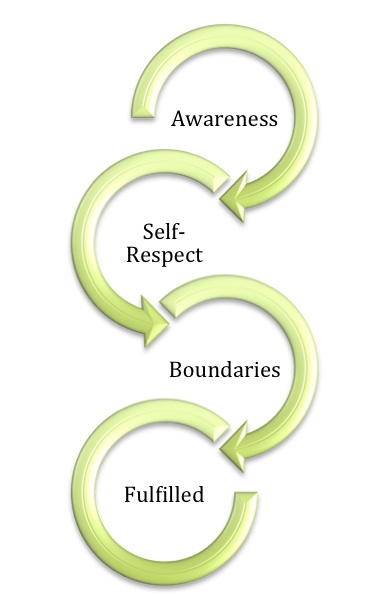
Healthy boundaries are anchored in awareness and self-respect. When in place by both partners, boundaries allow for a deeper connection because both people don’t feel as though they are threatened by an increase in vulnerability.  Although you may be hurt, your self will remain intact.

Examples of boundaries include not tolerating abusive actions or language, refusing to accept the responsibility for another’s happiness or choices and not acting in opposition to your own values and ethics.

boundaries

Walls

brick-293507_1280Emotional walls are bricks of self-protection mortared with fear. They are erected as a result of being wounded. They are rarely acknowledged and their existence is often only discovered when somebody runs head-first into one. Unlike boundaries, which only keep out those who misbehave, walls do not discriminate – they hold everyone back.

Walls say, “I will never allow myself to be hurt again” and “I’m not letting anyone get close to me.”

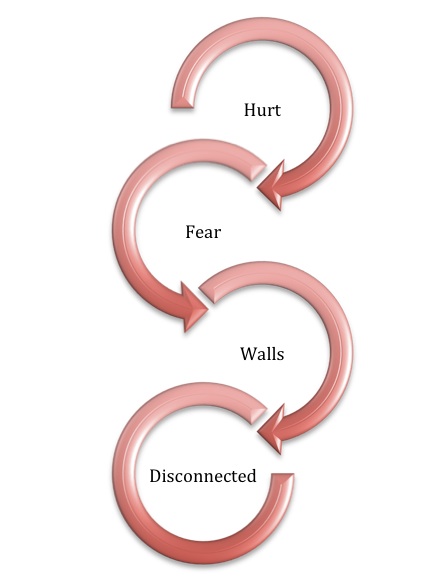
Walls are built upon fear. When one or both partners in a relationship is hiding behind walls, a deeper connection forged through vulnerability is impossible. As a result, the partner(s) hiding behind the walls may feel safe, but he or she will also feel empty and disconnected because the true self is not being seen. The wall keeps others out. And it also holds you prisoner.

Examples of walls include never letting your emotions show, deliberately withholding important information from a potential partner and isolating out of a fear of being hurt again.

wallsWhich are you building? Walls? Or boundaries?