What Happens When You Confuse Desire With Belief?

How long did you believe in Santa? Before you finally accepted the truth, did you have that one year where questions started to arise but you so desperately yearned for the big jolly man to be real that you convinced yourself that he was the one leaving the gifts under the tree?


It’s so difficult for me now to understand how I could have been in the dark about my ex husband’s hidden life. It all seems so obvious to me now, clarity arising from the passage time and the draining of emotion.

But back then? I was in the dark.

Completely and utterly blind.

I remember the fury that would arise in me when others postulated that I must have known something was going on, that I must have had at least some suspicion.

I didn’t blame them for their assumptions (I would have thought the same at that time, had the roles been reversed). Yet their questions angered me beyond my ability to feign politeness. I would retort with a laundry list of the lies he told and the clever acts he committed to hide his deceptions.

But I never told them about me. About my own part in my blindness.

About how I confused desire with belief.

And how wanting something to be true made me convinced that it was.


There are a variety of motivations behind our desperate desires.

That child, grasping onto Santa, is reluctant to release the idea that magic is real and that their parents are not some bastions of truth. That the world is both more and less mysterious than the storybooks would have us believe.

And then that child grows older. Falls in love. Becomes convinced that the emotions must be both stronger and truer than those felt by others. The desire for that love to be true love results in a sloughing off of any niggling doubts, arising both from others and from some protected recesses of their own mind. That dream for perfect love is strong.

Decisions are made. Paths are chosen. Desires are expressed and forgotten as alternate paths fade into the background. A need emerges, rooted in fear, to believe that the chosen path was the right one. Judgement may further obfuscate other options in an attempt to keep questioning at bay.

Desire confused with belief.

A wish mistaken for truth.


That child, upon the realization of santa’s fictional status, may be devastated. There may be anger directed at those that maintained the fantasy. After all, when belief is shattered with truth, there are always cuts. But later, with growth and reflection, that same child may well realize that parents who cared enough to nurture and protect a child’s fantasy are more important than a rotund man with a penchant for red velvet.

The one who loved so deeply, upon experiencing heartbreak for the first time, will learn that love may not be as simple and pure as fiction would have us believe, but that it can be even more powerful. And that love is more about what it asks from us than what it gives to us.

And when one is able to look back at life’s decisions with an open mind, an acceptance of paths chosen while also admitting that they may have been made in error, there is opportunity. A chance for clarity.

Belief recognized as desire.


Like many (if not most) people, I entered into my first marriage with a strong desire to be accepted and protected. I wanted security and I thought that he provided it. I wanted a promise on companionship and I was under the impression that he would furnish it. I wished for a lifetime of marriage and I expected we would have it.

I wanted these things so badly that I believed that I had them. When small questions started to bubble up in my marriage like the first signs of a pancake ready to turn, I quickly popped them and carefully avoided looking underneath. On some level, convinced that if I wanted it badly enough to be true, it would be my reality.

My belief held strong, fortified by fear, until it was torn away in one bloody swipe. My hopes, my dreams shattered.

It was only later, fortified with time and distance, that I realized that those desires posing as belief had held me back. Kept me quiet. Resulted in opportunities lost and risks never taken.

Made me blinded with fear.

And I made a decision to never again close my eyes and make a wish.

But instead to keep my eyes open and never again to confuse desire with belief.
 

How Long Should You Wait For Promised Change?

“He promised he would change. But he’s still the same. I can’t go on like this.”

“She said she was going to be different, but it hasn’t happened yet. How long do I wait?”

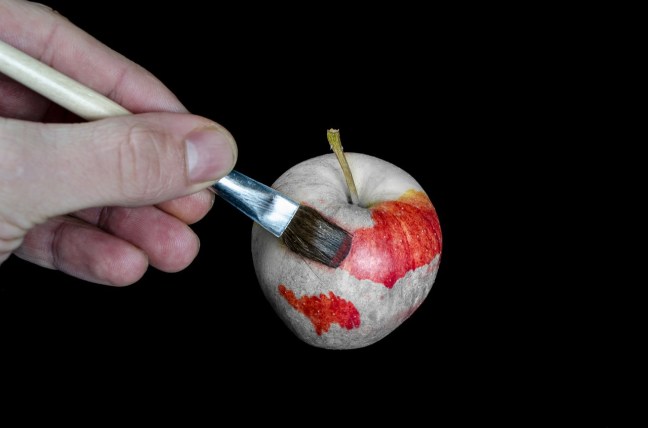
One of the harder places to be in any relationship is waiting for the other person to follow through with promised change. I am often asked how long one should wait for the agreed upon changes to occur – what’s too long and what’s not long enough?

It’s never a pat answer. There is no magic formula, no rule that states how many weeks, or months or years have to pass while you wait powerlessly for the promise to be kept.

If you find yourself in this unenviable position, here are some of the things to consider as you ask yourself how long you should wait:

Who initiated the idea of change?

If you are the one who brought up the desired alterations, it’s time for a pause. You cannot change another person, no matter how much you want to. Even if it was agreed upon, if you initiated the idea, there’s a very good chance it will not come to fruition on your timeline (or at all). The question then becomes are you willing to wait for them to internally motivated to change or not?

Here’s a difficult truth – people never change for another. They change for themselves.

Are you hung up on potential?

The quickest way to anger a teenager is to bring up the fact that they have potential. They’ll immediately shut down, feeling simultaneously judged and unappreciated. Adults are no different. Yes, it’s difficult to see what somebody can become while, from your perspective, they’re squandering some of their gifts. And it’s easy to fall in love with somebody’s promise. But that’s no guarantee they’ll ever reach that ideal that you’ve pictured.

We are all always changing. They may move towards their potential and they may not. All you have to go on is who they are right. this. moment. How do you feel about that person?

snip20161218_24

Are there actions alongside the words of promise?

It’s one thing to claim an intention to change. It’s another to take steps. In these cases, the words tend be grandiose, full of promise and potential. They can distract and cloak reality. In contrast, actions, real actions towards meaningful change tend to be quiet, easily overlooked. Yet these are where you attention should focus.

Understand that change is hard and rarely linear.

As long as actions towards the goal are occurring, be patient and compassionate. Change is scary and often way more difficult that we anticipate. Be supportive. Be an a$$kicker and a cheerleader. When there are signs of progress, give the benefit of the doubt.

snip20161218_23

Set ultimatums with yourself and boundaries with the other person.

You need to decide exactly what you’ll tolerate. Think through those “if…thens…” and make firm decisions on your responses. Communicate these to the other person, not in the form of ultimatums, but in the form of boundaries – what you are and are not willing to put up with.

Ultimatums can be manipulative, seeking to control another’s response (which never goes over well). Instead, make your own decisions about you and communicate them clearly. Then allow the other to make their choices and follow through on what you promised yourself. That last part is important.

Accept that you may have to step back with the hope of one day stepping back in.

It may be that you cannot tolerate the situation unless and until the change has occurred. Or maybe the nature of relationship is in opposition to the change occurring while a certain level of contact is maintained. Distance can be helpful if it does without manipulative intentions and without the expectation of a guarantee.


Be honest about the limitations of change.

Behaviors can be learned or unlearned. Habits can be developed. Personal challenges can be managed. But ultimately, this person is who they are. Is that enough for you? If you are waiting for a total transformation, you’re not being fair to either one of you.

snip20161218_25

When you’re frustrated, change your approach or your response.

After all, it’s what you can control. And you may be surprised just how powerful that can be.


Is addiction a part of the story?

Addicts are extremely skilled at doling out promises of change (peppered with just enough evidence) to keep you waiting. If there is addiction (or the suspicion of) in the mix, you’re going to have to practice some tough love. Check out Al-Anon for help and support here.

Attend to yourself.

Sometimes we get so caught up in somebody else’s issues that we forget to take care of our own. And sometimes we use somebody else’s problems as an excuse to ignore our own. Make sure to attend to yourself.

And most importantly –

Although you may be waiting on change, refuse to wait to live.

7 Subtle Signs You Have a Backseat Driver in Your Life

For a long time (okay, even now), when my now-husband would vocalize his opinion about something that he thought would be good for me, I recoiled. It felt almost invasive.

Smothering.

Controlling.

Not because of what he was saying, but because of what I have been through.

My now-husband is direct, expressing his thoughts and feelings overtly and directly (a trait I very consciously looked for the second time around). Sometime I chafe, but I love the fact that it’s all on the table. And even though it’s not always comfortable, I love that he challenges me to defend my decisions and actions because it serves to help make me better.

My former husband was covert, passive aggressive and manipulative in his approach. Unflinchingly supportive on the surface of any thought or action I undertook, while silently steering me in the direction he wanted. He never questioned me, never told me what to do (except to relax while he tackled some chore on his own). His control was subtle, which is exactly why it was so powerful. My defenses were never triggered until it was too late.

The following strategies are commonly used by people who are passively controlling. Those who, rather than overtly take over the wheel of your life, cunningly influence how you turn the wheel. All of these signs can have multiple meanings; on their own they do not indicate control. But when more than one show up along with a sense that boundaries are being crossed, it warrants a closer look.

The tears may be real, but the emotion is not. This trick is learned in infancy, as babies realize how tears can halt punishment and bring attention. Some never abandon this trick and persist in using tears to manipulate those around them. Look out for waterworks that only come when something is desired and seem to halt as soon as the goal is obtained.

Affection and attention are doled out as a distraction and a pacifier. This was my ex’s favored ploy. It sounds crazy to complain about an attentive husband, but when I look back, the affection was increasingly used whenever I came dangerously close to the truth. His great big bear hugs felt protective at the time, now they seem more like a martial arts-style submission.

Decisions are held back. Waiting to make and/or communicate a choice is a particularly crazy-making form of covert control. Everybody else is held in limbo, their own lives and decisions delayed. Doing nothing can carry with a great deal of power when others are depending upon you.

Money is used as a mode of communication. Sometimes finances are used in overt control, such as when one spouse makes all of the financial decisions and doles out an allowance to the other. But it can also be more indirect, such as when purchases are kept hidden or the partner with the higher income feels entitled to make decisions for everyone.

Judgement is passed. This can be direct, “You look like you’re trying too hard when you wear that skirt,” or indirect, pronouncing something unacceptable in someone else. My ex took it a step further and frequently renounced choices and behaviors in others that he was guilty of himself.

The favors and gifts are given with some sort of reciprocity in mind. The stereotypical idea of a wife using sex to get her husband to do things comes to mind here, but it’s by no means the only modality used. Handouts can be used with great efficacy to shape behaviors. After all, there’s a reason we train animals that way.

They accuse you of being controlling. Projection and gaslighting at its finest.


In a healthy relationship, each partner challenges the other and accepts influence from the other. It flows both ways, balanced.

When there is controlling behavior present, the interchange is not equal. One holds more power than the other.

And when there is a backseat driver, a more passive controller, this imbalance can be difficult to pinpoint.

Control thrives when you’re too close to it, too afraid to see it and unwilling to erect and maintain boundaries.

Take a step back, trust in yourself and practice making decisions by yourself and for yourself.


Related:

I Hate Mums

I Reject Your Reality and Substitute My Own

Subtle Signs You’re Being Manipulated By a Covert Abuser

The Misuse Of Affection

How Being Cheated On Impacts Your Next Relationship

I wish I could say that my first husband’s infidelity has had no impact on my second marriage.

But the unfortunate reality is that, even though my ex has long since been excised from my life, his choices still have an impact. On me and on my marriage.

By understanding how being cheating on impacts your next relationship, you can help to maximize the positive effects and minimize the negative ones. Learn more here.

Bad to the Bone: Is Infidelity a Character Flaw?


We know infidelity is bad.

But what about the people that commit it?

Do they have some ingrained and persistent defect in their character? Or, are they inherently good people who made a bad choice?

Support For Infidelity As a Character Flaw

It is a selfish decision. Cheating happens because somebody is incapable of considering – or caring about – the impact on another. There is a distinct lack of empathy and consideration.

Deception and manipulation are employed. The ends justify the means and in order to maintain their affair, cheaters knowingly and coldly lie and control others for their gain.

There is a distinct lack of grit and perseverance. When the going gets tough, the cheater gets going into the arms of another. Hard work and effort is traded in for the fast appeal of a new model.

They are cowards. Instead of summoning the courage for the difficult conversations, they express their unhappiness and dissatisfaction from afar.

Integrity is absent. There is no moral compass, no ethical code guiding their behavior. Words may say one thing, but the actions speak something entirely different.


Support For Infidelity As a Faulty Decision

A slippery slope led to a catastrophe. A bad choice was made for something that seemed minor. But then the effects compounded like falling dominos after reaching a critical point.

There is a lack of self-awareness. Discontentment wasn’t brought up because it wasn’t realized. Instead, attention was focused on work or others, leaving a gap for an affair to slide in.

Maturity is lacking. And with it, an understanding of personal responsibility or cause and effect. Immaturity also contributes to a desire for instant gratification over sustained effort.

Loneliness and disconnection cloud the thinking. A sense of perceived rejection or being unappreciated contributes to more primal and basic instincts as it plays upon the need for social ties and acceptance.

There is a deficit of coping mechanisms. They never learned how to be in a relationship and how to navigate both inter- and intra-personal conflicts. And this leads to a poor choice.

So what do you think? Is infidelity a sign of an enduring character flaw or is it a consequence of a fallible, yet overall good, person?