A Flexible Marriage

I really hope that no one ever judges me based on how I was in 7th grade – chubby cheeks, bad perm, a chronic case of math ineptitude and an embarrassing obsession with Bon Jovi. Of course, some of my core traits are largely unchanged but, the 7th grade me was a beta version on a good day and a mere prototype on the bad.

photo-13
Not Jon Bon Jovi, but another one of my obsessions – Kyle from Pariah:)

For people that have known me since 7th grade, our relationships have changed, altered by time and mutual growth. The core bond is still there, but some of the details have been altered based upon individual refinements.

I wrote a piece recently on the need for adaptation to the dating world for the newly single. That’s not the only place that adaptation is required. In fact, for anyone or anything to survive a changing environment, adaptation is a necessity.

And that includes marriage.

We often here about the key traits of successful unions: communication, respect, honesty. Those are all true. Yet I add another to the list.

Flexibility.

Marriage exist in a larger world that provides ever changing challenges for the union. The marriage that works for young and childless twenty-somethings who live in town won’t work ten years later in a suburban neighborhood with two kids. And the marriage that works while raising kids won’t work once they are gone. The marriage that evolved for one partner to work will have to adapt when both are employed. The marriage that negotiated a balance between a timid partner and a stronger one must be revamped when confidence is found.

If a marriage is to survive, it has to adapt to its environment.

Marriages are often pictured as inflexible strongholds. The problem with that is image is that it is identical to that of a prison. A marriage that is strong but unbending does not allow for change within itself or its partners. When it no longer matches the needs of the environment, it becomes a jail.

And no one wants to be locked down.

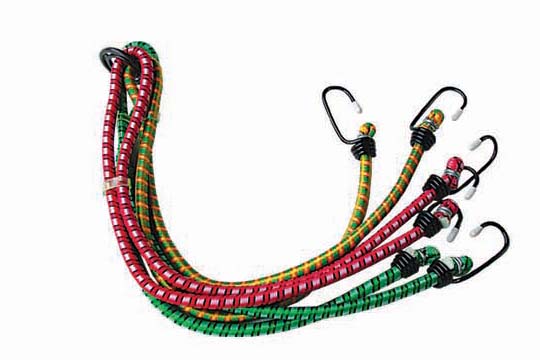
Instead of the ball and chain image, think of bungie cords – strong enough to support a life hurling from the skies yet flexible enough to wrap around your wrist.

Strong yet flexible.

We resist this. We easily relax into the status quo. We fear change. We want to think that the the it is is the way it will always be. It’s scary to realize that your partner will change. It’s scary to contemplate how environmental pressures may challenge your marriage. But a head in the sand won’t make change go away. It just means you can’t respond.

Sometimes what a marriage needs is not more time in the weight room building up its strength but some time on the yoga mat, stretching and releasing.

Longevity is found with flexibility and and adaptation. If it’s going to last, it has to change.

And that includes my bad perm.


This post was inspired by a piece by Vicki Larson over at OMG Chronicles about acting divorced while you’re married. Check it out!

Bust a Rut

Regular gym-goers have a tendency to dread the facility in January. Every machine and every corner is occupied from pre-dawn to well after dark. It can become frustrating when the new exercisers make it difficult to use a machine, invade your personal space in a class or elongate your workout due to the extra wait time.

I used to grumble every year about the influx of newbies. Some years, I even avoided the gym for much of January, only to return once the numbers dwindled down to a more reasonable level.

I don’t complain anymore. After all, we cannot always change our circumstances, but we can always change our attitude. The people are coming, I might as well learn how to accept it:)

I actually really enjoy seeing people embark on a fitness routine. I love seeing the determination and I celebrate their success. I am often more inspired by the people setting foot in a gym for the first time than I am by the people who visit every day. It takes some real guts to start something new, especially when you feel like an outsider. (A la Sephora)

What I don’t like is that my routine is inevitably disrupted.

I don’t have a prescribed set of exercises. I change things up. But I prefer to change them up on my terms.

January doesn’t allow that to happen.

Overnight, I go from being able to choose what exercises I want to do to having to think on the spot and do whatever I can with whatever I can.

It’s a rude awakening, having to relinquish that control.

But I actually kind of like it.

Let’s be honest, if not required by necessity, I wouldn’t bust out of my fitness rut. I may change things up, but I only change them within my comfort zone. In January, there is no comfort zone. It’s already filled with guys doing bench press and ladies doing core work. Rather than alter just a few exercises, I’m forced to start from scratch every time.

It’s frustrating. But also revitalizing.

You don’t see the rut until you’re strong armed into busting it.

Often, when we face change on our terms, we seek to control it. We move slowly or at least in measured and thought out increments. In some ways, change on our terms in easier since we feel like we are in the driver’s seat. Yet, it can also be more challenging as you have to battle with your own fear each step of the way.

Sometimes life doesn’t allow us to change at our own pace. Sometimes it comes as a great big unwanted shift that requires adaptation and acceptance.

Or complaining and resistance.

It’s really your choice.

And for all the gym newbies, I wish you the best. I hope to still see you in February. Just please don’t hog the squat rack:)

Precipice

Sleep has been elusive of late. I’ve struggled to fall asleep and then I find myself awake again far too soon. I’ve run my Kindle battery to zero every night for the past couple weeks. I’ve moved from bedroom to couch, either to escape Brock’s movements that seem to amplify when I can’t sleep or to avoid disturbing him with mine. I’ve resorted to Benadryl to try to force my brain to slumber, but my body just laughs it off.

It’s amazing (yet not surprising) how critical sleep is. When I am tired, everything feels insurmountable, from making decisions about the house to trying to compose an essay. My temper is short and my patience shorter.

I. Just. Want. To. Sleep.

When Brock comes in the bedroom to see me still reading or comes to check on me on the couch, he inquires, “Why aren’t you sleeping?”

The short answer? I don’t know. I’ve never been a great sleeper and I’ve gone through periods where I struggled more with it than usual. Apart from the months after the divorce; however, I have not resorted to prescription sleep aids. Usually, it’s a phase. It seems like my body gets into the habit of sleeplessness and, like any habit, it can be hard to break.

The longer answer is that I am standing on the precipice of a time of great change. I know it’s coming, sooner rather than later. I can somewhat prepare but, no matter what, I cannot do enough now to make the near future any smoother.

I am in the last few precious days of my summer break before the whirlwind of the school year starts again. I just received word that Georgia has opted out of the assessment program that we have spent the last two years preparing for and there is talk of yet another curriculum overhaul. This means that the preparations that I did last year for the coming year are now null and void. I don’t know what I’m walking into next week.

We are set to move in the first couple weeks of September. I’m taking advantage of my time now to begin some packing but most of it will have to wait. Which, in a way that’s good as it says that we use most of the stuff that is in our house, but… it also means that the bulk of the packing will have to occur when I’m trying to acclimate to the new school year and Brock is consumed with some martial arts activities. Likewise, the needed purchases and updates can’t occur until after closing.

So, new school year with new assessments, new house and, let’s not forget, a new marriage all in the next couple months. All good things (okay, except maybe the new assessments), yet all change.

I think change can be easier when it comes in the form of a tsunami. You do not have the anxiety of anticipation nor the time to question it as it occurs. It just sweeps you up and carries you along as you struggle to simply keep your head above water.

Planned change can be harder. You have the illusion of control so it can be more difficult to simply let go. You can see it coming and foresee (and fabricate!) troubles that will come with it.

Right now, I feel like I should be taking action. I have time, something I will not have starting next week. However, that anticipation of the precipice is making action impossible since I cannot achieve the required rest.

I am going to do my best over the next few days to turn my back on the precipice, to not worry about what needs to be done or what may come up, and to simply be in my current moment.

Change is coming and maybe the best thing I can do to be prepared to give myself the gift of this moment. The edge will be here soon enough. Hopefully I can sleep without rolling over it.

A Wife By Any Other Name

When I married for the first time, I changed my name without thought. I was happy to replace the name that I associated with childhood with one that I related to becoming an adult.

I was young – 22 – and I had not yet accomplished much with my given name. Shedding it caused me no harm, only the hassle of making the changes to accounts and cards.

I embraced my wedded name, had no regrets. And, yet, in court when the judge was finishing the last of the paperwork, I was struck dumb when she said, “And I assume you want to keep your last name of B—-.”

After the mute shock wore off, it took everything in my power not to scream,  “$#!@ no!” I wanted away from that name as much as I wanted away from that artificial life. Besides, since he committed bigamy, there was already another Mrs. B—. That’s too many in my book.

My given name was legally restored that day yet I continued to use the other professionally for the remainder of the school year. It was strange time, bridging two worlds and using two names.  I worked under one name yet was applying for new jobs using another. I had accounts and cards in both names. I started my first real Facebook account using my maiden name and it suggested that I friend myself that had the married name (I had an unused account that I opened out of curiosity). For a year, I carried my divorce decree in my purse so that I could prove that I was one and the same, even though I felt worlds apart from my former Mrs. I almost felt like a fraud.

Changing my name was different at that point. I was 32. I had made a name for myself professionally and had hundreds of former students who knew me only as Mrs. B—. I almost lost the opportunity for the job I currently hold. Upon receiving my resume, one of the administrators realized that she was close friends with a former coworker of mine.

The administrator called her friend, “Did you used to work with a Lisa Arends?”

“No,” replied the friend, assuming that I was some charlatan.

She was telling the truth. It was my other self that had worked with her. Luckily, she realized the duality of my identity and called the administrator back to clarify.

That was a wake up call for me.

In a time when women married young and operated primarily in the domestic sphere, a name change was harmless. Now, with women marrying later, working outside the home and facing the realities of potential divorce, a name change can have very tangible consequences. Most discussions that I see on issue address it from a philosophical perspective, eschewing the patriarchal origins or talking about embracing the new family.

That’s romantic and everything, but what about the real world?

When my parents divorced, my mom had no real choice but to keep her married name. She had spent years building up a small business and her name was key to the word of mouth. No name = no way to put food on the table. She has since remarried yet retains her prior married name, at least in the professional realm. Ideal? Perhaps not. But practical.

I am choosing to do much the same. Although I refused to keep my former name out of principle, I now am operating out of practicality. When I wed again this fall, I will keep my given name. I simply have too much to lose if I do not.

On a side note, this reminds me of one the nicest gifts I have ever received. I won Teacher of the Year under my old identity. After the divorce, the plaque, which once occupied a place of honor in my classroom, was relegated to a closet since it was no longer in the right name. For my birthday (the first we were together), Brock snuck the plaque out of the closet and had the nameplate redone to match my new identity. Yes, I cried.

I queried my Facebook followers the other day on this topic. Many of them had also faced setbacks and hassles with multiple name changes and do not intend to change it again, regardless of changes in marital status.

Did you change your name? Would you do it again? How do handle (or intend to handle) the kids’ names (an issue I don’t have to worry about:) )?

It’s always funny when my students comment on my former name. When they see Mrs. B— scrawled across a clipboard or emblazoned on a book, they ask, “Who is she?”

“Oh, just someone I used to work with.”  She feels like a lifetime ago.

Besides, Tiger doesn't care what I'm called, as long as I'm still his momma:)
Besides, Tiger doesn’t care what I’m called, as long as I’m still his momma:)

The End.

You would think that I would be used to endings by now. I finish several books a week, following the tales to their final word. I run races, keeping my eye on the finish line. My weekdays are filled with bells that signal the end of a class period seven times a day. I’ve been through 29 last days of school – some as a student, some as a teacher and a few as both. Hell, even my blog is about an end.

So why do endings, even the ones I look forward to, still manage to feel abrupt? Too soon? A premature conclusion reached before resolution?

This past Friday was the last day of school with kids. I had been waiting for that day, counting down since the end of the spring testing season. Many days, it felt like the end would never come. The days felt longer, the children squirrelier.

But then, that final bell did ring.

As I watched those faces pull away in the school buses for one last time, I felt a loss. For the past nine months, I have laughed and cried with those kids. I have driven them crazy and they have driven me crazier. I’ve struggled to help them make sense of algebra and we have struggled together to make sense of tragedy. For nine months, those 120 teenagers are part of my extended family. And then they’re gone. I will never see or hear from most of them ever again. In one day, they go from constant presence to memory.

Eighth grade is a crossroads year. It is time when teenagers are beginning to develop themselves apart from their parents. They are learning to make choices and beginning to understand the nature of consequences. They try on different personas as often as outfits, going from class clown to teacher’s pet and back again in a blink of an. I call them 150 lb two-year-olds, as they test boundaries yet want to know that you’re still looking out for them. I see them develop over the year into more independent beings but I don’t get to see the conclusion. In May, many of them are still at a crossroads and I am unsure which path they will choose.

It often feels unfinished. I find myself, years later, wondering about certain students. Hoping they did okay yet fearing that they did not. I have to trust in them and relinquish any influence. Sometimes, I receive the gift of an update when former students track me down. It’s funny – I can see the echo of the eighth grader I knew in these adults, yet there are years of experiences that have shaped them after they left me. In some ways, they are frozen in time for me: middle school in perpetuum (now that’s a nightmare!).

I think we all struggle with endings, even those that we initiate or those which we welcome. Every ending has elements that we relish leaving behind and facets that we will miss. Every ending brings uncertainty and transition. Every ending requires a re-scripting and reappraisal as we disentangle ourselves from the past and set course for the future. Every ending has opportunity.

My school year begins with a list of names. Monikers with no faces, no personalities. My year ends with a list of names, as I file reports and stuff report cards. Only now these names have meaning. Visages. Character. The year may have ended, but its impact has not. Those nine months together have influenced us all regardless of what our collective futures hold.

We tend to see endings as a termination, a conclusion. Perhaps it more accurate to think of them as a transition, a sign of change. It may be over, but its reverberations carry forth.