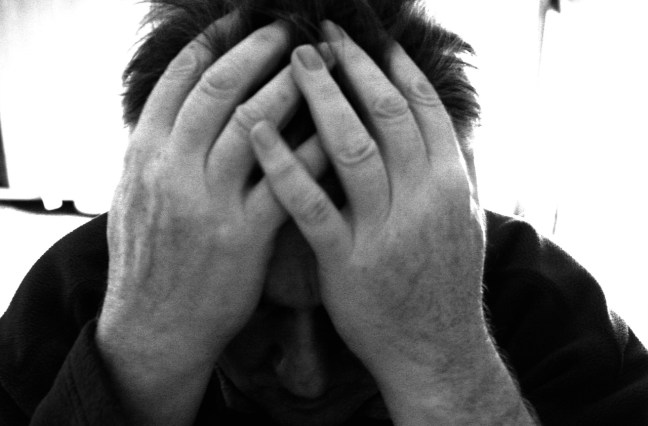
Been Cheated On? 8 Infuriating Excuses You Can Expect to Hear

Discovering the infidelity is often only the first part of the pain. Often it is then followed by excuses and justifications. As though mere words can erase your agony and absolve the cheater of their guilt.

If you have been cheated on, these are some of the excuses you may hear and the real meaning that might be behind the offered justifications.

Six Revealing Reasons People Cheat

Have you been cheated on and you’re wondering why it happened? (It may not be what you think.)

Are you in a relationship and you’re concerned your partner may stray? (Being aware of these signs can allow arely intervention before an affair occurs.)

Would you like to know what to look for in a partner to limit the chances of an affair? (Knowing these shared characteristics can help you select a partner that is less likely to turn to an affair.)

Knowledge is power. Learn more here.

Facing Divorce? Here’s What You NEED to Know

need to know

Is divorce in your future? Here’s what you need to know!

  1. Your brain won’t work right for a while. You’ll fear that the affected thinking is permanent. It’s not. But invest in notepads in the meantime because you’ll need to write everything down. Your brain is sluggish because it is recovering from a TLI – Traumatic Life Injury. It will get better.
  2. When you see seemingly happy families or couples, you’ll experience jealousy like you’ve never imagined, your brain throwing toddler-like temper tantrums of, “It’s not fair.” Sometimes it’s easiest to give them a little distance until your envy fades. And in the meantime, watch or read about people that have it worse than you.IMG_4619
  3. Your body will change. You may gain or lose weight, depending upon your personal dietary response to stress. Wrinkles and gray hairs may suddenly appear or increase in number. You will catch every cold and digestion will be impaired. Protect your sleep, eat your veggies and buy a new belt.
  4. At some point, you will have a sexual dream or fantasy about your ex. And you will go from feeling both titillated and comfortable to being repulsed and unsure. You will wonder how you ever found him or her attractive. Take a lesson from preteens and develop safe crushes and fantasies on famous people. It helps to reassure you that you’re not dead while protecting you from fantasizing about your ex or encouraging you to get between the sheets with another before you’re ready. And the first time you do engage with a new partner? You’ll feel like you’re cheating. IMG_4610
  5. You will be memory slammed. And it will happen just when you feel as though you’ve made progress and when your mind is other places. And it will feel as though you’ve caught a bowling ball launched by Babe Ruth with your gut. Keep breathing. It will fade.
  6. The court process will be worse than you ever imagined. But at the same time, it will be much less important than you believe. You will give the paperwork and the process too much power over you. And you will only realize that misappropriation of significance after it’s over.IMG_4646
  7. Your brain will become your worst enemy, offering up, “What ifs” and rudely bringing up painful memories just as you’re trying to get your sh*t together. You don’t have to indulge its every whim. Try exhausting it or distracting it, much like you would with an unruly toddler.
  8. You will experience a false dawn, a period where you feel excited and “over it.” And you will be angry when others caution you that it’s too soon. As much as you want them to be wrong, you will soon learn that they are right, when you come crashing down again. Even though this respite is brief, let it fill you with hope.IMG_4623
  9. Over time, you will start to see the person you were before the divorce as a separate entity. A different person. A foreign person. You will speak of your life in two chapters – before and after. And as you move further into your new chapter, the pain of the old begins to fade.
  10. As the immediate emotions of fear and anger and despair begin to soften, frustration will move in. You will feel stuck and wonder why you can’t just be done with it already. You will feel embarrassed that you’re still struggling, believing that you should be done by now. Sometimes this is harder than the initial pain because your rational brain is being held hostage and is fighting against the restraints. Escape takes time. Stay with it.IMG_4616
  11. You will be okay. I promise:)IMG_4652

Why We’re Wrong When We Talk About Trust

Whenever I go to a climbing gym, I always follow the same routine. I pick an easy route and pick my way through the handholds until I’m at a height that causes my breath to come just a little faster and my brow to start to moisten. And then I intentionally let go.

Not to fall.

But to feel the security of the ropes and my partner on the ground catch my weight and hold me aloft.

And once I’ve learned to trust that I won’t fall, I am willing to climb.

If only life were so simple.

———-

I used to view trust as a simple concept. Black and white. You either trusted someone. Or you didn’t. A person either earned your trust or deserved your mistrust.

And I trusted my ex husband. Completely. Totally. The trust filling any gaps like caulk around a window, not allowing for any passage of sharp and biting winds.

When I said I trusted him, I meant that I believed that he would never do anything that would intentionally harm me. I was convinced that he would always be there. And that his future actions would always be as loving as his past ones. I felt secure in my trust. I felt secure because of my trust.

We speak of trust as though it is an absolute.

A guarantee.

That when someone is branded as “trustworthy,” that they are safe. Incapable of causing pain through actions or motivations.

And wouldn’t that be amazing? If we could have some sort of promise that the people around us would never hurt us. Never stir up doubt. Never cause us suffering.

Amazing. And also impossible.

Because trust, like love, is organic. Breathing and changing. Described in actions rather than words. And more like the ebb and flow of the tide than the still waters of a static lake.

Because no matter how honorable a person is, he or she will falter sometimes. There will be oversights that cause harm to another. Mistakes that lead to pain. Decisions made without sufficient consideration. And moments of pure weakness and conceit.

Trust doesn’t mean the person will never hurt you. It doesn’t offer a money-back guarantee against the cold and biting winds of the world.

Rather, a trustworthy person will admit to his or her shortcomings. Be willing to take responsibility for any mistakes and work to correct them. Trust isn’t about never screwing up. It’s about owning up.

We speak of trust as being earned. And it is. When actions match words. When commitments are kept and promises honored.

And I think that’s where it’s easy to go off course. To assume that at some point, the deposits are made and the trust is ensured. As though the previous actions were collateral against harm.

We all desperately want to feel safe. Secure. We want some assurance that the way things are now is the way they will always be unless we act to change them. And it’s easy to confuse trust with surety. To believe that promises made will never be broken and that there are people that we can always depend on no matter what.

But that’s not reality. From the loving and well-intentioned parent who makes a poor decision for his or her child without fully considering the effects to a spouse who underestimates the impact of his or her words on a partner, we will all hurt and be hurt.

And when that occurs, we feel as though our trust has been breached.

And maybe the problem is that we focus too much on trusting others.

And not enough on trusting ourselves.

Trusting that we will see what is around us.

And be able to handle anything that comes our way.

There is a reason that the phrase, “blind trust” exists. When we focus too intently on trusting others, we lose sight ourselves. We either become complacent or suffer an anxious suspicion that can never be sated.

Learning to trust again after betrayal is less a matter of finding a person worthy of trust (although that is certainly a key element) and more about listening to your own emotions, intuition and instincts.

It is accepting that trust is no promise against pain and that there are no guarantees in life.

And most importantly, trust is believing in yourself.

It’s not a place of security, but rather a place of calm.

Where you may not always know what is coming, but you know that you have what it takes to face it.

———-

I’m often asked how I’ve been able to trust again after the immense betrayals of my ex. It is a process. And sometimes it’s not so smooth🙂

My ex was quite brilliant about covering his actions – I saw pictures of the auto show he was supposedly working only later to find that he was on his honeymoon and the photos were culled from the internet. His phone was always accessible and unlocked. I can only imagine that there was a second device used for the second life. The mail was intercepted. The phone line cut. I was carefully isolated from the truth so slowly and so gently that I never even knew it was happening.

And the lingering effects of that gaslighting mean that I have a very difficult time accepting even what would seem like “proof” to anyone else. I always have (and probably always will have) that slight tug that whispers that maybe what I am seeing isn’t real.

And so I’ve worked hard to separate the anxiety from the past from what I am actually seeing in the present. I’ve learned to listen to my gut and trust it when it tells me something is off. And I’m no longer blind; my brain is always assembling little bits and data points, ensuring they line up.

Throughout, I’ve been very careful not to give in to suspicious and snooping behavior. First, I think that it only feeds anxiety and mistrust and secondly, I believe that it creates a toxic environment for any relationship. There is a difference between spying and seeing. The former leads with the assumption of wrongdoing whereas the latter leads with an open mind.

I mentioned earlier that finding a trustworthy person is also a component. Here are the characteristics of my now-husband that have made it easier for me to trust:

-He does not hide from uncomfortable truths. And he openly admits his screw-ups.

-His initial words are often unpolished. Sometimes, this may sting, but it is also evidence that the words were not carefully chosen and rehearsed to elicit a desired effect.

-He trusted me early and often. I have found that people who are distrustful of others are often hiding something themselves.

-He doesn’t hold back secrets. I always know of my birthday present (or any “surprise” present) the moment he clicks on “submit payment.”

-His friendships are lasting and he demonstrates intense loyalty to them.

-And the funny one – He struggle with attention to the little details. And after the carefully-crafted facade my ex built and meticulously maintained, I find comfort in this:)

But at the end of day, all of that is just the supporting evidence. It ultimately comes down to trusting myself to see if there is a problem. Trusting myself to make the right decisions.

And trusting myself that I’ll be okay no matter what happens.

Trust doesn’t mean that you’ll never fall.

It means that you have faith in yourself to get back up.

Why I Refuse to Call My Ex Husband a Narcissist

covert narcissist

If anyone has the right to call her ex a narcissist, it’s me. While on the surface, he was a giving and caring man everyone loved, the man behind the curtain was another story entirely. He crafted false financial documents and insurance forms to support his lies as he bled our accounts dry. He wooed women, eventually wedding one without attending to the detail of obtaining a divorce from me first. He neglected the requirements of the criminal court system, earning a felony warrant. Even the judge in the divorce case asked my ex’s attorney if his client was “psycho.”

And maybe he is. Not a psycho necessarily, but a narcissist.

But, despite all of the evidence, I intentionally choose to not label my ex as a narcissist.

It seems like “narcissist ex” is the gluten-free of the relationship world – all of a sudden, it’s everywhere. But is it really that pervasive or are we just using the label too recklessly?

Just over 6% of the population has Narcissistic Personality Disorder (NPD) based upon the criteria set forth in the DSM-5: seeking approval from others, viewing oneself as exceptional, blaming setbacks on others, inability to identify with others’ needs and/or feelings and superficial relationships based upon manipulation.

Even though my former husband’s actions seem to check every box, I am bucking the “my ex is a narcissist” trend. Here’s why:


If He’s the “Attacker,” Then I’m the Victim

This was certainly my mindset early on – I viewed him as some Machiavellian perpetrator, deviously plotting ways to hurt me from his basement lair, cleverly disguised as an innocent office. In some ways, it was a comforting mindset as it pardoned me from any culpability. But it was also limiting.

Because if I was a victim, I was powerless.

In order to claim responsibility for my own well-being and create a sense of possibility for the future, I disarmed his memory. He’s no longer my attacker; he’s just the man I used to love who traveled down a dark path.

Preservation of Memory

By the time he sent the text that ended the marriage, my ex and I had spent sixteen years together. It was a lot to lose. If I accepted the proposal offered forth by many who dealt with him in the months to come that he was, in fact, a narcissist, it essentially would discount the thousands of positive memories I had of our time together.

From what I knew, we did have a good marriage with so many happy memories. I decided that those moments were real enough to me at the time and I chose to allow them to remain (as much as possible) unsullied by the idea that they were all orchestrated for some great plot.

It Ignores the Unknowns


Even the DSM-5 offers the disclaimer that a personality disorder cannot be diagnosed in the presence of addiction or physical illness, as both can mimic the mental condition. My ex admitted to a drinking problem after he left and he was suffering from some pretty substantial medical complaints for the last year or so of the marriage.

It is impossible for anyone, especially a layperson, to diagnose someone with a personality disorder without all of the information (much less the presence of the actual individual in question). Just because a person exhibits certain behaviors does mean that they automatically deserve a diagnosis.

We Are All More Than a Label


Calling someone a narcissist is reductionistic; it distills them down into a list of traits and ignores the complete person. Yes, my ex-husband lied, cheated and stole. But he also showed me (and others) great kindness and tenderness. He was the man that cried at our wedding and nursed our dogs back to health.

By not assigning him a label, I am able to remember the whole man – from loving husband to cruel persecutor and everything in between.

Peace is More Important Than a Reason

In the beginning, I struggled to understand why my husband acted that way and how he could be so cold and calculating. I assumed that once I had a reason, I would be able to move on. I tested out many possible labels (narcissist among them), but none managed to make the pain okay.

Finally, I decided to view him as lost. Hurting. Desperate and in pain. And with that shift, I found compassion, which led to being able to release the anger that held me back. So rather than see him as the evil antagonist in some twisted plot, I try to see him as human. Imperfect rather than malevolent. Not for his benefit, but for mine.

Labels, such as narcissist, have their place in public discourse. They help to provide a framework for understanding and a shared language to discuss important issues. It’s shorthand for a list of common experiences and emotions. I know when I read posts from people that use the term “narcissistic ex,” I will relate to stories of manipulation, gas lighting and projection. I can expect to see similarities between their stories and mine. In fact, I found books about narcissists and sociopaths helpful during the healing journey to provide information and perspective that helped me make sense of my own situation.

Labels are like Cliff Notes. We use them as shortcuts as we develop our own understanding or to help someone else develop theirs. Just like Cliff Notes, they are not the entire story, full of detail and nuance. If we stop at labels, we are limiting ourselves and others. We may be blinded by assumptions as we fill in the gaps in our knowledge automatically.

So your ex may be a narcissist, but that’s not the entire story. Don’t let the label limit you; it’s just the beginning.