Covert Abuse

covert abuse

I’ve never thought of my ex as abusive.

Then readers tell me they recognize their (very much abusive) spouses in my descriptions of my ex.

And I wonder.

I read a story in the paper about a domestic murder in the county where my ex and I lived and I always half expect to see his name.

And I wonder.

Then I discover that security procedures were altered at my old school during my divorce.

And I wonder.

Was he abusive?

He certainly was never overtly abusive. There were no strikes or shoves and never any threat of physical harm. He never belittled or yelled or uttered lines designed to wound. I was not discouraged from seeing friends or enjoying excursions without him. He didn’t exhibit excess jealousy and always demonstrated respect. He was the same man in public with me as he was behind closed doors – attentive, affectionate, loving. I never feared him while we were together.

So then why was I afraid for my life when he left?

I inquired about a restraining order, but since there was no history of abuse and no threats of physical harm, I was denied. However, the police were concerned enough that they performed drive-bys at the house where I was living as well as the house where he was staying. The chief of police told me I was lucky; he related that many cases of marital fraud he encountered resulted in a murder/suicide.

I couldn’t imagine the man that had always touched me so lovingly intending to harm me. But then again, I couldn’t have imagined the rest of it either.

I didn’t know the man I was married to.

Was he abusive?

Domestic abuse, also known as spousal abuse, occurs when one person in an intimate relationship or marriage tries to dominate and control the other person. From HelpGuide

When I read descriptions like that, it seems clear. He certainly was controlling me through his deceptions.

But then I see this:

Domestic violence and abuse are used for one purpose and one purpose only: to gain and maintain total control over you. An abuser doesn’t “play fair.” Abusers use fear, guilt, shame, and intimidation to wear you down and keep you under his or her thumb. Your abuser may also threaten you, hurt you, or hurt those around you. From HelpGuide

Control? Check.

Doesn’t “play fair”? Check.

Fear, guilt, shame and intimidation? No.

At least not until he left.

And that’s when I realized I was terrified of him.

I’m slowly coming to terms with the fact that he was abusive. Not overtly, but undercover. His was a clandestine abuse, hidden even to me until the covers were ripped back when he left, revealing the buried machinations.

His abuse was financial, embezzling from the marital funds while covering his tracks with ever-shifting balances, hidden credit cards and fabricated stories.

His abuse took the form of gaslighting, altering my reality to match his goals. He took it a step further by assassinating my character through lies told behind my back to those around us.

His abuse didn’t use whips; it used a gentle leader of manipulation. Velvet trimmed lies whispered into trusting ears. No need to threaten when I easily followed along.

His abuse gained in cruelty when he abruptly abandoned me with no money and no explanation, refusing all contact. Protector turned persecutor.

During the divorce, he upped the ante, painting me as the controlling one. Falling right in line with the favored “You made me do it” excuse of the textbook abuser.

He never hit. He never yelled. He never isolated.

But behind the scenes, he was pulling the strings I didn’t even know existed.
Gatekeeper

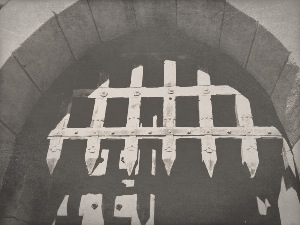
A marriage should not have a gatekeeper.

Where one party restricts and manages the flow of information into the relationship.

And one partner assumes the responsibility of pre-filtering what the other person sees and hears.


A marriage should not have a gatekeeper.

One person acting like a parent who knows what is best for the other.

And one spouse making decisions that impact the relationship without first consulting their partner.


A marriage should not have a gatekeeper.

Where fear that your partner may step out of line prompts new guidelines to be followed.

And one individual attempts to control the thoughts and actions of another.


A marriage should not have a gatekeeper.

Because the mere presence of a gatekeeper speaks to an imbalance of power, one holding the keys while the other is held.

And a balanced marriage is built upon mutual trust and respect, not confinement and limitation.


A marriage should not have a gatekeeper.

A marriage should have two.

Because while one person manning the gate leads to an imbalance, when both partners work as a team to filter what comes into their marriage, they work to make it stronger.

Not with manipulation and coercion, but with conversation and adaptation.

That begins with the acceptance that both partners are whole and capable and can work to strengthen each other rather than restrict each other.

And where the spouses work to hold the marriage together instead of keeping the other out.

Seek to protect your marriage rather than protect your partner.

Be gatekeepers together.


I Used to Judge

I used to judge.

I’m not proud of it.

But I used to judge those who stayed in abusive relationships.

I criticized the victim for staying put while exclaiming that, were I ever to find myself in a similar situation, I would leave immediately.

It always seemed so clear to me. So cut and dry.

If the victim wasn’t choosing to leave, then they were choosing to be hit.

But that was before I was judged myself.

I wasn’t in an abusive relationship*. But I was played. And I played along. Played the fool. People hear of my situation and wonder how I didn’t know about the marital embezzlement or the double life. I’m criticized for staying unaware.

And you know my first response when I hear those words?

You weren’t there.

You don’t know.

The same words spoken by those that have been in abusive relationships.

It’s so easy to declare a solution to a problem when you’re viewing it from the outside. But it’s a false clarity, born of perspective and ignorance. When you only see a piece, it’s easy to play judge. But life isn’t that simple.

People stay in abusive relationships because the abuse comes in slowly and “normal” is changed over time.

People stay in abusive relationships because they learned in childhood that abuse is love.

People stay in abusive relationships because they believe they are not worth more.

People stay in abusive relationships because they fear the repercussions of leaving more than those of staying.

People stay in abusive relationships because they love their partner. Except when they fear him/her.

People stay in abusive relationships because the abuser is a skilled trapper, limiting resources and escape routes.

People stay in abusive relationships because their partner is a wonderful parent.

People stay in abusive relationships because they are hopeful that he/she will return to the way it was.

People stay in abusive relationships because depression keeps them stuck.

People stay in abusive relationships because “one more time” is always repeated once more.

People stay in abusive relationships because of fear. And love. And shame. And hope.

I judged for the same reason people have judged me.

I wanted to believe that I was too strong, too smart, too brave for it to ever happen to me. I wanted to believe that I was safe.

And since then, I’ve made friends with many people who have opened up to me about the abuse they’ve endured. And these friends are all strong and smart and brave.

I’ve learned not to judge. To be willing to accept that I am not immune. That I cannot truly understand a situation unless I have lived it. And that in any case, it is better to listen with compassion that speak with judgement.

*My ex husband never was physically abusive. He was never openly controlling. However, he was manipulative and secretive. And I was physically afraid of him once he left; I realized that he was capable of things I never imagined. It was a type of covert abuse.

If you are on Twitter, check out the hashtags #WhyILeft and #WhyIStayed. Powerful.

I Want You to Want Me

My kids this year are great – happy, funny and generous. Unfortunately, they’re also generous with their germs. Thursday night, those lovely little bugs finally got the best of me and led to a feverish Friday on the couch. My mind was too scrambled to focus on a book, so I ended up reading through the thousands of posts backlogged on my Feedly reader. And, as so often happens on the internets, one click led to another and another.

Until I ended up here on Penelope Trunk’s blog (possible trigger warning – domestic violence).

I’ve subscribed to her blog for years through my RSS reader, but only read the occasional post. I thought she was all about business and start-ups.

She’s not.

The post in question made me very uncomfortable. In it, she displays a picture with a bruise on her hip and tells an accompanying story about her husband shoving her into the bedpost. She is writing from a hotel room with her two kids, where she has sought refuge for the night.

But she doesn’t want to leave him. In fact, she claims in another post that domestic violence is a question of boundaries and that the abused can alter the dynamic alone. Like with so many inflammatory statements, there is a sliver of truth. There are patterns that tend to be in play that lead someone into an abusive relationship. And those (usually childhood) issues have to be addressed for that person to be in a healthy relationship. But, and here’s where my view differs, the first boundary that has to be enforced is getting away from the abuser. And then work on yourself. Get safe first (and get your kids safe) and then get healthy.

Her last sentence in the bruise post seemed to explain it all:

“That’s why I can’t leave. I want someone to miss me.”

Ah, now that’s a sentiment I think we all can understand in some form.

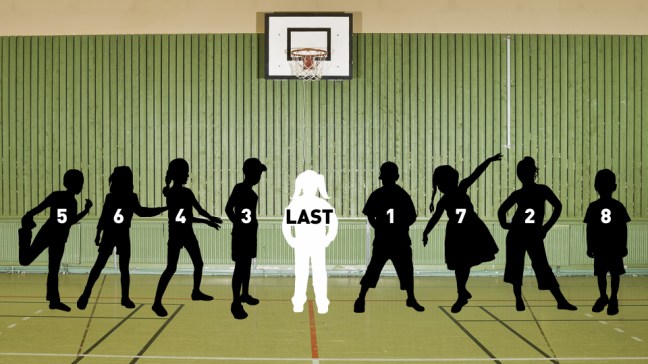
It’s human nature to want to be wanted. From being an early pick for the kickball game in elementary school to being tagged on Facebook from a friend, we all get a little thrill when we are chosen and feel the sting of rejection when we are not.

It’s natural. We’ve evolved to thrive in a community and, at the most basic evolutionary level, those that are not included are less likely to thrive as they struggle alone on the outskirts.

But as is so often the case, a basic drive can also go haywire. We can be so focused on being wanted that we ignore our basic safety and our own boundaries and beliefs. We can twist ourselves into parodies, subvert our true nature or ignore red flags just to save our spot as a chosen one.

The pain of rejection is real. And it is powerful.

But sometimes the pain incurred by avoiding rejection may be even worse.

Especially when you’re rejecting yourself in hopes of being accepted and desired by another.


We all want to be wanted.

But don’t compromise yourself just to be picked.

And make sure you’re wanted for who you are.

Because who you are is enough.

I’d pick you for my team any day:)


Character Assassination

character assassination

I didn’t like reading how many of you relate to being gaslighted. It’s one of those areas that I know for me is still tender. There is much un-probed because it hurts too much to counter often-good memories with the knowledge of the duplicity and lies. And I finally realized that the daunting task of separating the strands of truth from the pot of lies is pointless. Even though I now know otherwise, I have chosen to find comfort in the fact that it was real enough to me at the time and that’s all that matters.

But that only works with the personal gaslighting, the stories told to me to keep me placid and distracted.


It doesn’t work with the external assault. The character assassination that carried nefarious seeds far and wide. That requires a different approach.


For much of our time in Atlanta, my then-husband and I were estranged from his parents by his choice. Over the years, we had many families “adopt” us for holidays and get-togethers, but one always stood out. The husband-wife owners of my husband’s company welcomed us into their family. We were at Christmas and birthdays. The kids and grandkids accepted us.  We knew them as friends as well as employers. I loved the time with them and always appreciated the inclusion.

A few months before he left, my then-husband took a job with another company. It made the relationship with the family a little strange but we still kept in touch.

In the immediate aftermath of his abandonment, I did not think of them. Until a few days in when I found a note from the wife on my mailbox with instructions to call.

I picked up the phone expecting to hear shock and horror – the emotions expressed by everyone else I knew when they tried to digest the news. Instead, I got a more distant and guarded message. Condolences mixed with a dash of “well, what did you expect?”

I was shocked. Almost speechless. I asked what she meant. And heard about stories that my then-husband told at work. Tales of my cheating exploits, complete with a vivid story of walking in on me in his office with a man. Claims of staying late at work to avoid me and my wrath.

He painted a picture of a horrible wife, a victimized husband and a marriage in peril.

This from the man that kissed me tenderly every night.

This from the man who knew where I was at all times because I was rarely anywhere but work, school or home.

This from the man that couldn’t keep his hands off me and bemoaned when work kept him away.

For years, I thought this family was my family.

But they never even knew me.

Because my monthly or so visits could never compete with his daily fictions.

I was too confused and surprised on the phone that day to try to defend myself. Defeated and wounded, I simply hung up after muttering something in response to her request to keep her in the loop and ask for help if I needed it.

I never did call her back.

And I never will.


There are so many tears that come from this. I’m horrified that he was intentionally darkening my character for years. It’s hard not to wonder for how long. I’m embarrassed that people thought I was unfaithful and shrewish. And I’m sad that I lost these friends and others, as I chose to simply cut off those he had access to rather than to try to vindicate myself against his stories. Although I was tempted to send them a copy of his mugshot:)

He was telling them stories to cover his tracks. He was creating a fiction in his mind to defend his actions, both past and future. Perhaps he was desperate to see himself as the good guy so that he could temper any guilt. I’ll never know.

Much like I chose to walk away and cut my losses from the financial deception, I made the decision to leave those friendships behind. Some damage is too great to repair.


So, what’s the lesson in all this?

I know I first started to trust Brock when he actually encouraged me to have time around his friends without him there. It made me realize how my ex carefully negotiated my encounters with his friends.

I know I’ve had to let go of the concern of what people may believe about me and focus on what I know about me.

I know that realizing how my ex lived one way with me and another with others helped me realize that he was not the man I loved.

And I know that I’ve made many, many new friends who know me. The real me.

And that in the end, the only character he assassinated was his own.