I Hate Mums

We walked into Home Depot the other day to buy a section of fence to replace the one that was splintered by the felled tree the other day (totally off topic, but you never realize how large those fence sections are until you try to carry one and you never realize how sail-like they are until they are trying to lift your CRV into the air from their position on the roof.) While walking in, a large display of mums (the fall flower, not the British mother) caught my eye. The flowers were a welcome sight of fresh color at a time when all the hue seems to drain from the other perennials as they succumb to the heat and decide to Rip Van Winkle for several months. I was admiring the diverse colors and full, healthy plants, when out of nowhere a voice in my head declared,

“I hate mums.”

It was a familiar sentiment; I remembered feeling that way and uttering those words. But I was confused. If I hated mums, why was I drawn to them? If I disliked their blooms, why did I have to resist the urge to gather some pots up along with the section of fence?

Perhaps my tastes have changed. After all, I now gravitate towards spicy foods when I used to prefer bland. I am more apt to don color now than the all dark tones that used to dominate my closet. Maybe I somehow developed a fondness for mums with my advancing age.

But I don’t think that’s it.

In fact, I have a very specific memory about mums.

My ex and I were walking into a house about twenty years ago. The front stoop was framed by two large pots of mums, their orange, yellow and copper blooms echoing the colors of autumn. They provided a welcoming, homey image and seemed to freshen the air with their presence.

Upon spying the flowers, my ex announced,

“I hate mums.”

“Me too,” I replied. But did I really have a distaste for the flowers? Or was I trying to show my allegiance to my mum-hating boyfriend? It’s scary to contemplate the latter. That I may have suppressed the urge to disagree with him on something so trivial. It makes me wonder what else I let him decide for me?

Maybe I never really hated mums.

I just let myself believe I did.


And now I’ve added them to list of plants to buy for the front of the house next spring. Because I’ve decided that I like mums after all. And, if I’m lucky, maybe they’ll have special ex-repellent properties:)



The 6 Worst Reasons to Get Married

Okay, so maybe there are worse reasons than the ones below. Like getting hitched because you like the way his last name sounds with your first. Or saying “I do” because you’ve always wanted a Vegas bachelor party a la The Hangover. Or going to a friend’s bachelor/bachelorette party and getting so drunk that you wake up wedded to the hired emm…help. Or signing up for some reality show where you agree to marry a stranger and then allow cameras to follow your every move.

Those would all be pretty bad.

But so are these. And they are much more prevalent and much more subtle.

I Don’t Want to Start Over

In a conversation about her one-year relationship, a friend mentioned that she hopes they will end up progressing to marriage because she “doesn’t want to start all over again.” I get it. Relationships aren’t easy and finding and cultivating one that lasts past the early treacherous stages can be difficult. It’s frustrating and depressing when a relationship falls apart before it reaches the altar (assuming, of course, that marriage is what both partners ultimately want), but a reticence for re-entering the dating scene is no reason to get married. In fact, most likely all you’re doing is delaying your trip back to the dating scene. Only this time with a (or another) failed marriage under your belt. No relationship is ever wasted. Learn from the failed ones and apply that knowledge to the next.

It’s the Next Logical Step

Well, we dated for a year. And then we rented an apartment for another year. And then we bought a dog together. Isn’t a wedding registry the next logical step? Maybe. But maybe not. Sometimes we get so caught up in the “right” or “normal” way of doing things that we turn on autopilot and forget we have a choice. It’s easier to slide in than take a stand. Simpler to avoid conflict or confusion and just follow the well-tred path. But research shows that this pattern leads to a higher likelihood of divorce. Most likely when one partner wakes up five years later and wonders, “How in the world did I end up here?”

I Don’t Want to be Alone

Nobody does. But being married (or having a kid) is no guarantee that you won’t be alone. In fact, feeling isolated and misunderstood is even more painful when you’re with someone. If you enter into marriage with a fear of abandonment, you will cultivate an insecure attachment with your spouse. And if your panicky grasping ways send your partner either literally or metaphorically running, you’ve just fulfilled your own fear. Usually when we don’t want to be alone, it’s because we’re not truly happy with who we are. Start there.

Caving to Outside Pressure

“So, I see your cousin Peggy just got engaged. When is it going to be your turn?” “You know I want grandbabies; when are you going to get started on that?” “All of the other partners at the firm are married. I’d like to keep it that way.” “You’re not shacking up are you? That’s not how you were raised!” Either subtle or overt, the pressure in our society is towards marriage. People who choose to be partnered without papers or (gasp!) remain single are easily ostracized and criticized. You may get Aunt Mildred’s stamp of approval if you wed, but is that really the person you need to please?

Everybody Else is Doing It

Facebook, Instagram and Pintrest can make it feel like everybody else in the world is planning a (professionally-styled yet laid-back Martha Stewart-esque with the latest baubles and bows) wedding. All around you, Misses are becoming Mrs. and bands appear on fourth fingers. Much like middle schoolers in the cafeteria, we want to belong. We want to be an accepted part of the tribe. And so when everybody else walks down the aisle, it’s easy to follow behind like the rats behind the Pied Piper. But remember what happened to the rats? Yeah, it’s best to look before you leap.

I Want to Feel Secure

That marriage vow is funny. We attach meaning and surety to the words “till death do us part” until those words no longer suit us. Somehow a marriage is viewed as stronger, more stable, more secure than any other relationship. But why? A piece of paper does not prevent betrayal or misdeeds. A promise made in front of a priest can be broken as easily as one told over a dinner table. In fact, in many ways, security in any relationship is an illusion. And if you are brave enough to see through it, it can even spice up your sex life. Promise:)

So, if you’re thinking about saying “I do,” make sure it’s for the right reasons, whatever those reasons are for you.

Even if it is because you’ve always wanted to be on a reality show about Vegas stripper weddings.

The Masks We Wear

I read this response to Robin Williams’ death this morning and it struck a nerve.

The author, also in the comedy business, discloses the dark underbelly that is often present beneath the laughs. He describes how childhood trauma or a sense of unworthiness leads to the development of an alter ago – a front man who entertains the crowd while distracting from the scared and broken child beneath.

He spoke of the yin and yang of depression and comedy. The pull of the audience and the isolation inherent in the belief that the performer is only loved for the performance.

Not for the child within who only wants to be loved.


The piece struck a nerve this morning. Caused my coffee to cool as I read.

I don’t fit that personality profile, although I have seen many in my personal and professional lives over the years (some of whom also tragically took their lives).

I don’t fit that profile.

But I fit another that I recognized as I read.


The performer is driven from a need to be loved.

I’m driven by a need to not be abandoned.

The performer learns how to entertain and draw a crowd.

I’ve learned how to be needed.

The performer struggles with depression.

I struggle with anxiety.

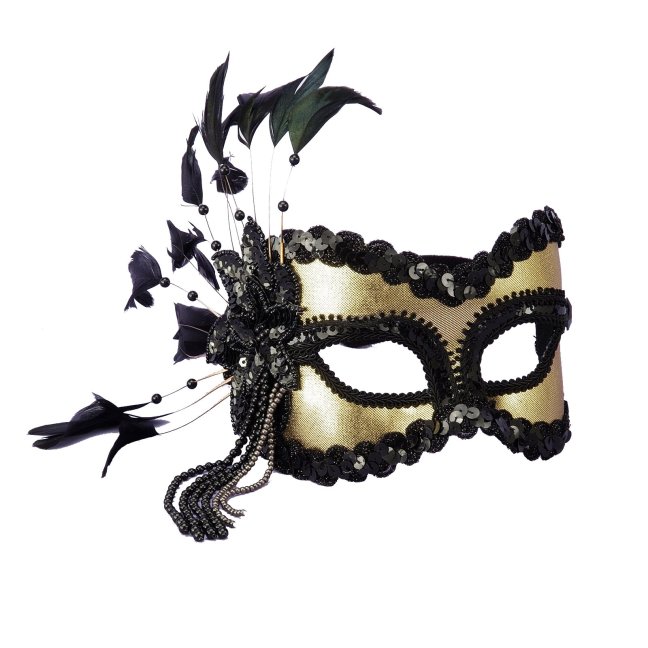
But we both hide behind masks.


In fact, to some extent, we all do.


The following are some of the masks and underlying causes I’ve seen. I see them in adults and I see them in my students – 13 and 14 years old. We all have the same basic needs and the same basic fears. We all try to hide them from the world and we begin to develop our own masks in childhood as we encounter stresses and learn from other’s responses to us.

These are caricatures of people. Oversimplifications. We are much more than the fears that drive us and the costumes we select to shield us.

But even though these are but a brief sketch, there is power in recognizing your own mask of choice and why you may have decided to wear it.


Mask – Performer or Funny Man

Behind the Mask – A sense of being unlovable

This may have the fat kid in school. Or the one who suffered abuse or neglect at the hands of his or her parents. This child felt alone and wanted nothing more than to loved and accepted. The performer found a love of sorts through making others smile. Even though inside he may have crying.

If I make you laugh, you’ll love me.


Mask – Worker Bee or Caregiver

Behind the Mask – A fear of being abandoned

This mask is usually picked up after a childhood event – death, divorce, desertion, or  neglect- leaves behind a fear of being abandoned at an age when adult support is needed. In order to temper the anxiety of being left again, the worker bee becomes an efficient taskmaster and the caregiver becomes a necessary nursemaid.

If you need me, you won’t leave me. 


Mask – Strongman or Overachiever

Behind the Mask – An insecurity of being unworthy

These are the people that grew up always being compared to others and found wanting. They internalize the message and feel that they will never measure up. They learn to overcompensate in a visible way to try to prove their worth and lessen their insecurities. Although often envied by others, they still never feel they will never make the grade.

If I work harder, I’ll meet your approval.


Mask – Professor or Distancer

Behind the Mask – A fear of being vulnerable

This is the person who refuses to show emotion. Who either responds with analytical perspective or indifference to any situation, even those that are emotionally charged. They are often read as cold, uncaring. But often they are soft and sensitive on the inside. So sensitive that they have learned to hide it well.

If I don’t show myself, you can’t wound me.


Most of us wear our masks when we feel threatened – a new situation, a large crowd, a demanding client. But most of us also feel comfortable enough to slip them off around our loved ones, revealing the fears and drives beneath.

It’s lonely living behind a mask for too long. You’re not alone yet you feel no one values you for the real you.

Only for the character you play.

It’s okay to shield your inner child sometimes.

But it’s also okay to let him out to play.

And teach him to trust that he can be loved and accepted as he is.

Fears and all.


Love Is Only Blind When Your Head Is In the Sand

Do you ever look back at a former relationship and wonder what you saw in your one-time flame?

Or do you ever question a friend or family member’s choice in partners?

It’s easy when you’re outside of a relationship to view the bigger picture, the distance providing perspective while damping emotions.

But when you’re in it?

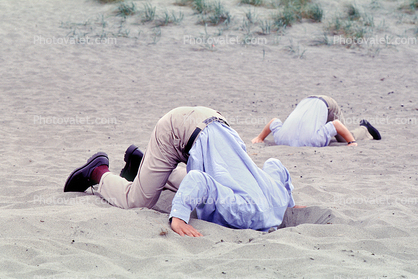
It’s all too easy to bury your head in the sand.


We stick our heads in the sand in relationships for a variety of reasons:

Avoidance

A wife sees a suggestive text on her husband’s phone from an unknown female. Her heart begins to race and panic floods her system. The hint of an affair is overwhelming to her; she cannot face the thought that her marriage is in trouble and that she may lose her husband. She turns away from the text and tries to pretend that she never saw it. That it didn’t happen.

When we see something that frightens us, we have two choices: approach or hide. In a relationship, the latter can cause problems as the truth is not faced because of the anxiety of losing the partnership. Of course, the fear persists even when the truth is not faced head-on. This state is usually temporary when either the truth becomes too big to avoid or the anxiety becomes too high to tolerate and the evidence is finally challenged. Burying your head out of fear may make you blind but it leaves you even more vulnerable to attack.

Mindlessness

A husband is busy at work, long hours and stressful clients have kept him away from home both physically and emotionally. He prides himself on providing for his family and doesn’t really have the time or energy to consider the status of the marriage as a whole. His wife, meanwhile, appreciates his efforts but feels isolated and lonely as her partner has become a husband in name only.

Heads can end up in the sand even without intentional digging. Stay still long enough and the tides will conspire to bury you. This is a blindness born of inattentiveness and busyness rather than willful evasion. Regardless of the motivation, the outcome is still a relationship in danger due to a lack of clarity and communication.

Willful Ignorance

A wife is pretty sure that her husband has a mistress. She intentionally chooses to turn a blind eye to his affair because he is a good father and stable husband. So she decides not to confront him and, even more, chooses to avoid situations that may reveal evidence of the infidelity. She knows something is there but chooses not to look.

This blindness is born more of pragmatism than fear. The reality is known to an extent and even quietly accepted. It’s a desire to pretend that life isn’t messy and emotions can be subjugated to reason. It’s a carefully edited and narrated form of the relationship. Although often dismissed, there is a sadness in this buried head that comes from lack of vulnerability and associated intimacy.

Bargaining

Prior to the marriage, a husband knows that his wife has problems with anger. He is uncomfortable with her temper and it raises red flags for him. However, he wagers her temperament against her other qualities and decides that the good outweigh the bad. When others bring up her outbursts out of concern, the husband responds by dismissing the concerns and tallying the pros that she brings to the table.

This is a common approach when a partner has issues with violence and/or substance abuse. There may be several very good qualities that are only occasionally accompanied by the bad. It’s a dangerous game; however, as the blinded partner slides into enabling the poor behaviors and choices.


A healthy relationship is one where both partners have their heads tall, looking out for problems on the horizon and addressing them as they approach. Burying your head may make you feel safe for a time but it’s no way to live.

Have the courage to lift your head.

Trust that you can handle whatever you see.

True love isn’t blind.


Are Expectations Dooming Marriage?

Expectations.

We build them up.

We revel in them.

And then, all too often, reality dashes them.

We hold them – the expectations and the actual – side by side and look for flaws, not unlike the drawings in the Hallmark magazines of our youth.

And we curse reality, bemoan our bad luck or grow angry at those who contributed to the failure of the imagined.

But maybe we’re directing our outrage the wrong direction.

Maybe it’s not reality that needs to change, but our expectations of it.


And now, more than ever before in history, we have very high expectations of marriage. Men and women no longer operate in defined domestic spheres, opening up vast swaths of terrain open to negotiation and yes, expectation. We are serenaded with romantic stories with all of the rough edges Photoshopped into perfection and we grow to expect our marriages to play out in kind. We expect our men to be emotional and our women to be equal wage earners, yet we don’t yet know how to negotiate the changes that ensue. We have lofty personal goals at the time of marriage and expect the marriage will support those goals. We marry young and carry the expectation that the chosen spouse will still be a match 50 or 60 or even 70 years down the line.

Expectations are not inherently damaging; they act as guides and as goals, especially when they reflect areas where you have control. Expectations become dangerous when they grow too strong and too broad, making assumptions about the behavior of others or of the stars.

The following are some of the potentially destructive expectations of marriage along with ways to shift those predictions into the realm of healthy and realistic:


He/she is my soulmate and will anticipate and meet all of my needs.

It used to be the expected norm that men and women would have many of their social needs met through same-gender friends. In our busy and transient lives, adult time with friends often gets shifted aside with the result of the spouse bearing the brunt of the social needs. It’s unfair and unrealistic to expect one person to meet (let alone anticipate) all of your needs. While most partners agree certain needs should only be met within marriage, there are many others that can be found through friends, classes or groups. If your spouse shares ALL of your interests, you are married to a mirror, not a person.

He/she will change after marriage (or the birth of a baby, or after the completion of school, etc.).

This is a dangerous expectation because it bases present decisions on imagined future results that are not under your control. Major events WILL  likely change your partner, but the change may not be in the direction you wanted. Make your decisions based upon the current day and the core traits that help one to navigate to change (adaptability, communication, perseverance) rather than hope alone. He or she may change but don’t assume.

The way things are in the beginning is the way they’ll always be.

The beginning of a relationship acts much like Photoshop; we filter out the negative and enhance the positive. Enjoy it. But don’t drown in it. Reality, when it comes, can be a bit of a shock, but it also carries with it the potential deeper trust and intimacy. Everything changes. To expect otherwise is to live in disappointment.

Good relationships don’t require effort and/or intention (i.e. work).

ANYTHING worthwhile in life requires effort. And that includes marriage. It shouldn’t feel like you’re slaving away in the salt mines every day but it also won’t always be a day at the beach. Know that some days will be harder than others and that, if done well, the work you put in will pay dividends in your marriage. A marriage that needs effort doesn’t mean it’s not good; it just means that it is a union between two humans.

We will grow together through life’s difficulties.

I wish this was always true. But statistics prove otherwise. Marriages are more likely to fall apart during times of strain: death or illness of a child, infertility, unemployment. We expect that the way we feel and the way we demonstrate those feelings about the event in question is the same way our spouse feels. There are no magic salves for relationships weathering crisis, but you can strive to make sure you are a strong team before the wave hits.


So, what are realistic expectations of marriage?

A partnership built upon shared goals and values that operates with mutual respect and fidelity. A marriage that is not perfect and two people who accept imperfections in themselves and their partner. A union that does not meet all of your needs but that acts as a safe haven where you can be vulnerable and intimate. A merger of two people who are willing to take responsibility and work for the betterment of both.

Marriage can be wonderful. But it won’t ever be perfect.

Make sure your expectations are in line.