The Upside of Betrayal

betrayal

No one needs to tell you that betrayal sucks. It’s a piercing pain formed from grief, anger and confusion. It steals your ability to trust, both in yourself and others. It calls everything into question and provides no easy answers.

There is no refuting the fact that betrayal is horrific. Only the sadistic would choose to go there and most that stumble into its path want nothing more than to be free of its grasp.

But turn that betrayal over, look to see what lies underneath.

There are some upsides to betrayal.

In the beginning, these assets are hidden behind the overwhelming pain. But they are still there, just waiting to be found as the mud and grime of the betrayal is washed away by time and tears. Some of these blessings are more easily harvested than others. See what you can find underneath your suffering.

Empathy

When we are not experiencing pain ourselves, it can be difficult to empathize with those who are within its grasp. Betrayal is lingering pain, not easily forgotten. As a result, you may find that you are more understanding and gentle with those around you who are suffering. You can use that ability as a gift – help those that are in pain and your pain will recede.

Self-Reliance

Before the betrayal, you probably saw you and your partner as a team and you looked to him or her to take care of certain things. There is nothing wrong with a team approach, but a long relationship can slide into over-dependence. When you are betrayed, your trust in others is shattered, so you turn to yourself. You may be surprised at what you’re capable of when the “I can’ts” are replaced with the “I have tos.”

Responsibility

This pairs with self-reliance. When you have been betrayed, the first instinct is often to lash out at your partner, laying all of the blame at his or her feet. If you’re honest with yourself, after that initial anger is bled, you will also shine the light inwards. Not to blame, but to understand and take responsibility. You realize that you can never control another’s actions but that you can always control your response. You learn that you are ultimately responsible for your own happiness and well-being. It can feel like a great burden at first. But then you realize the freedom. You always have a choice.

Clarity

If your partner resorted to gaslighting, story telling designed to make you feel crazy for questioning signs, the realization of betrayal can almost come as a relief. The “off” feeling or constant self-doubting is put to an end as the truth is finally revealed. Even with gaslighting, there a lucidity to be found. Often the betrayed have been unable to see the truth, turning towards some facts and away from others. The revelation of betrayal is like putting the last piece in a puzzle; the bigger picture is revealed.

Connection

Some find that betrayal ultimately strengthens their marriage, the pain leading to more open and honest communication. Betrayal deals a death blow to other relationships, one or both partners unwilling or unable to address the underlying issues. Regardless of the specifics, the betrayed often form deeper and more meaningful connections with someone in their lives. The time after betrayal is characterized by a loss of trust but also an increase in vulnerability. If someone can gain or hold your trust (a friend, a family member, or even your partner), you are unencumbered by many of the defenses that keep people at arm’s length. Those connections that are formed are priceless and can help you learn to trust again.

Confidence

This is one of those deeply hidden gifts. At first, your confidence will most likely take a huge blow. You wonder what is so ugly or deficient about you that your partner chose another. You question yourself endlessly, berating yourself for being a trusting fool. Stop that insulting dialog for a moment. Think about your strengths. Your aptitudes. Think about how you are a survivor and you are making it through. Think about it and believe it. You CAN do this. You CAN move forward. You CAN trust again. You CAN love again. Think about it and believe it.

Acceptance

This is the ultimate upside. You cannot change the past. You cannot change your partner. You can cease the winless struggle of trying to make things not as they are. That’s your starting point. And where it leads is up to you.
Introducing the Thriver’s Club

Days after my tsunami divorce, my mom turned to me and told me I would survive.

I actually got angry and responded rather strongly, “No, I will not survive. I will thrive. To do anything less is to remain his victim.”

I saw surviving as the bare minimum; the mere intake of breath and food in order to go through the motions of life. I refused to settle for that. I wanted more. It felt insurmountable, yet the vision and hope remained intact.

I know many of you have that same spirit. That same dogged determination to not just exist, but to live loudly and with joyous exuberance. To prove that when life knocks you down, you do not just have to stand up again. You can jump up and dance and sing from the rooftops. To live fully and passionately despite the pains of the past.

spirit

And so I introduce to you The Thriver’s Club.

A place to celebrate life after loss.

A place to share our joys and triumphs.

A place to bring hope to those still trying to find their way.

There are no annual dues. No special handshakes. No one is denied entry due to age or gender or religious beliefs. In order to be a member, all you have to do is share one example of how you have thrived after divorce. It can small or grand. A sign of truly moving on or as fleeting as a moment where the sun broke through the clouds.

Please don’t comment on this post. These joys deserve to be featured, not hidden away in some distant piece. Please head on over to the new page and share how you have thrived after your split. Don’t be shy; smiles are meant to be shared not hidden away.

A Flexible Marriage

I really hope that no one ever judges me based on how I was in 7th grade – chubby cheeks, bad perm, a chronic case of math ineptitude and an embarrassing obsession with Bon Jovi. Of course, some of my core traits are largely unchanged but, the 7th grade me was a beta version on a good day and a mere prototype on the bad.

photo-13
Not Jon Bon Jovi, but another one of my obsessions – Kyle from Pariah:)

For people that have known me since 7th grade, our relationships have changed, altered by time and mutual growth. The core bond is still there, but some of the details have been altered based upon individual refinements.

I wrote a piece recently on the need for adaptation to the dating world for the newly single. That’s not the only place that adaptation is required. In fact, for anyone or anything to survive a changing environment, adaptation is a necessity.

And that includes marriage.

We often here about the key traits of successful unions: communication, respect, honesty. Those are all true. Yet I add another to the list.

Flexibility.

Marriage exist in a larger world that provides ever changing challenges for the union. The marriage that works for young and childless twenty-somethings who live in town won’t work ten years later in a suburban neighborhood with two kids. And the marriage that works while raising kids won’t work once they are gone. The marriage that evolved for one partner to work will have to adapt when both are employed. The marriage that negotiated a balance between a timid partner and a stronger one must be revamped when confidence is found.

If a marriage is to survive, it has to adapt to its environment.

Marriages are often pictured as inflexible strongholds. The problem with that is image is that it is identical to that of a prison. A marriage that is strong but unbending does not allow for change within itself or its partners. When it no longer matches the needs of the environment, it becomes a jail.

And no one wants to be locked down.

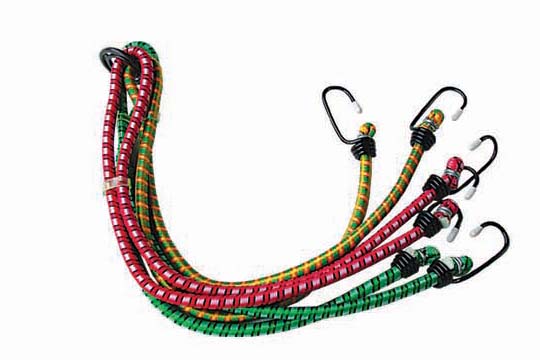
Instead of the ball and chain image, think of bungie cords – strong enough to support a life hurling from the skies yet flexible enough to wrap around your wrist.

Strong yet flexible.

We resist this. We easily relax into the status quo. We fear change. We want to think that the the it is is the way it will always be. It’s scary to realize that your partner will change. It’s scary to contemplate how environmental pressures may challenge your marriage. But a head in the sand won’t make change go away. It just means you can’t respond.

Sometimes what a marriage needs is not more time in the weight room building up its strength but some time on the yoga mat, stretching and releasing.

Longevity is found with flexibility and and adaptation. If it’s going to last, it has to change.

And that includes my bad perm.


This post was inspired by a piece by Vicki Larson over at OMG Chronicles about acting divorced while you’re married. Check it out!

Are You Falling For the Sunk Cost Fallacy in Your Relationship?

sunk cost

I love learning about how our brains operate and how they often fool us. We tend to think of ourselves as rational creatures when the reality is often anything but. There are many fallacies that we fall prey to, but there is one in particular that plays a dominant role in relationships.

The sunk cost fallacy.

This fallacy relates to costs (financial, time, energy) that have already been invested and cannot be recovered. What has occurred is done. Over. It should not have any bearing on our decision going forward.

And yet it often does.

A non-relationship example of the sunk cost fallacy would be the money paid up front for a monthly membership to a class. You go to two classes and decide you hate the course and find the instructor particularly grating. If you were paying per class, you obviously would simply stop going. However, because you paid up front, you view the money as wasted if you do not attend, so you continue to show up, hating every minute.

Pretty silly, huh? I mean, the money is gone regardless of if you turn up at the class or use that time to perfect your soap whittling skills (something which I assume is preferable to the class in question). You would be best served by writing off the money spent and using your time for something beneficial. It may not feel like money well spent, but at least it would be time well spent. And both have value.

In a relationship, the sunk cost fallacy can keep people together even when they may be better apart. The years (or even weeks or months) of time and emotional investment have already occurred and cannot be recovered. As such, they should not be considered in the decision of whether or not to continue the relationship. Moving forward because of sunk costs won’t make you happier. Energy invested in the past doesn’t promise a return in the future. When deciding if a relationship should continue, look at the value it brings to the present and the predicted value in the future, not the investments already made. Those costs are already sunk. Sinking more ships won’t make the first ones rise.

What has passed, is past.

And the past shouldn’t dictate your future.

So, if the relationship still has an intact hull, let it sail on its own merits.

If the hull is breached beyond repair, let it sink.

And then whittle that block of soap into a sculpture:)

Sunk

I love learning about how our brains operate and how they often fool us. We tend to think of ourselves as rational creatures when the reality is often anything but. There are many fallacies that we fall prey to, but there is one in particular that plays a dominant role in relationships.

The sunk cost fallacy.

This fallacy relates to costs (financial, time, energy) that have already been invested and cannot be recovered. What has occurred is done. Over. It should not have any bearing on our decision going forward.

And yet it often does.

A non-relationship example of the sunk cost fallacy would be the money paid up front for a monthly membership to a class. You go to two classes and decide you hate the course and find the instructor particularly grating. If you were paying per class, you obviously would simply stop going. However, because you paid up front, you view the money as wasted if you do not attend, so you continue to show up, hating every minute.

Pretty silly, huh? I mean, the money is gone regardless of if you turn up at the class or use that time to perfect your soap whittling skills (something which I assume is preferable to the class in question). You would be best served by writing off the money spent and using your time for something beneficial. It may not feel like money well spent, but at least it would be time well spent. And both have value.

In a relationship, the sunk cost fallacy can keep people together even when they may be better apart. The years (or even weeks or months) of time and emotional investment have already occurred and cannot be recovered. As such, they should not be considered in the decision of whether or not to continue the relationship. Moving forward because of sunk costs won’t make you happier. Energy invested in the past doesn’t promise a return in the future. When deciding if a relationship should continue, look at the value it brings to the present and the predicted value in the future, not the investments already made. Those costs are already sunk. Sinking more ships won’t make the first ones rise.

What has passed, is past.

And the past shouldn’t dictate your future.

So, if the relationship still has an intact hull, let it sail on its own merits.

If the hull is breached beyond repair, let it sink.

And then whittle that block of soap into a sculpture:)