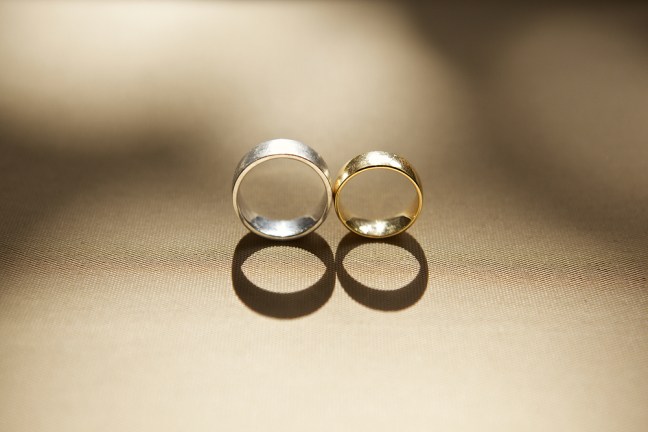
What Do You Owe Your Spouse?

owe owed spouse marriage divorce

A reader emailed me, describing his unhappiness in his marriage. He asked if he owed it to his wife to stay in the relationship. My answer? No. Staying in a relationship solely out of a sense of obligation is a breeding ground for resentment and contempt. The marriage may last, but not in a form that will benefit either partner.

Even with a lifetime vow, I don’t believe we necessarily owe it to our partners to stay. Sometimes, the best move for  your spouse and for you is to leave. Sometimes, the best gift you can give someone is letting them go.

That’s not to say we bear no obligation to our spouses. Once you make that commitment, you owe your spouse the following:

Transparency

No matter how many years or decades you have been with someone, you can never entirely read his or her mind. When conflict or concern is consistently deflected with an, “I’m fine,” you are not being up front with your partner and you are taking away any opportunity to work as a team. If you cultivate a life hidden behind a veil of secrecy, you are shutting out your spouse and opening the door to increasing deceptions.

Transparency does not mean that you utter every thought, share every action. It means that you say what needs to be said, even if it scares you. It means you face ongoing issues rather than tucking them away in some hidden corner. And it means you keep no secrets that you fear being discovered. Your partner is your equal; it is not up to you to shield them from the truth.

Responsibility

One of the most cruel actions a partner can take against the other is to shift blame for his or her own choices to that of the spouse. “Of course I cheated. You gave me no choice. You never want sex and all you do is nag.” “You hold me back.” “You just don’t make me happy any more.”

It is not your spouse’s job to make you happy. It is not your partner’s role to ensure you are fulfilled. That’s on you.

You owe it to your spouse to accept responsibility for your own well-being. If you’re not happy, make the effort to explore what is lacking without immediately blaming your partner or your marriage. And if you’re bored, create excitement in your own life instead of blaming your marriage for the rut. Finally, if you feel stuck, create change before you castigate your spouse for holding you down.

Energy

A marriage cannot thrive without attention. You cannot expend all of energy outside of the relationship and expect for it to survive. Your partner does not have to be the center of your life, but they have to be a part of your life.

You owe it to your spouse to turn towards him or her. You owe it to your spouse to see. To listen. To make an effort and put in the time and energy and attention. You wouldn’t adopt a dog only to ignore it. Why would you do that to your partner?

Fidelity

If the agreement you have with your partner is one of monogamy, then you owe it to them to uphold that promise. If you desire a change in that agreement, your partner deserves transparency and an opportunity to decide what he or she will tolerate.

The obligation of fidelity extends to marital funds. If you misuse money, you are embezzling from the marriage. Again, if there is an issue, you owe it to your spouse to be transparent and allow them an opportunity to respond.

Liberty

Despite the familiar colloquialism of “ball and chain,” marriage should not be a prison. Both partners need to have the freedom and flexibility to make decisions, to grow and change and to express ideas and feelings. 

You owe it to your spouse to see him or her an individual with his or her own opinions. You owe it to your spouse to allow them independence and autonomy. A healthy marriage is not one of dependence, but one of interdependence. And that takes two sovereign entities.

Empathy

When you took the oath to have and to hold, you expressed that you care about your spouse. You have an obligation to your partner to attempt to see from his or her perspective and understand his or her feelings. It doesn’t mean that you will never make a decision that hurts your partner; it means that you will be sympathetic of their suffering and will make an effort to limit the impact.

You owe it to your spouse to see them as human, imperfect and messy. To be quicker to forgive than to judge. And to be patient with their mistakes while admitting that you make them as well.

Civility 

Be kind. There is no excuse to act otherwise.

Considering divorce? Consider these 12 questions first.

Rewriting the End of a Relationship

We often underestimate the power we have to change our own lives. Even when circumstances resist change, we can alter our perceptions and our responses. This is a piece I wrote for the Good Men Project about reframing the end of a relationship. About seeing the loss in a new light. About taking back the reigns and driving your own life. Read it and be inspired to rewrite the end of your relationship. Because every ending holds the seed to a new beginning.

Let it grow.


Rewriting the End of a Relationship

When a relationship ends, it is natural to focus on what is lost, to fully submerge in the heartache and mourn the departed. It is all too easy to become so mired in the sadness that the end of a relationship is extrapolated to mean the end of so much more. But that’s just your wounded heart speaking. And it has a tendency to exaggerate.

The End of a Relationship is Not…Read the rest at the Good Men Project

An Open Letter to Extroverts: What the Introverts in Your Life Want You to Know

introvert

I’m not an extrovert, but I play one in real life.

Most people would probably be shocked to discover than I am a true introvert – that  social situations and crowds exhaust me and I seek balance by being alone. After all, I have chosen to be a teacher. I am outspoken in meetings and not shy to speak in front of a group. On top of that, I have intentionally cultivated a large group of friends and I enjoy spending time with them and having them in my space. I have developed countless online relationships and enjoy time with my online family. Surprisingly, I can be loud. I rarely slow down. And I once rocked a shirt that said, “Sweet Talker in Action” as a kid because I never shut up.

photo-42

But behind all of that is a woman who feels most at home in her office, a “safe” space of solitude. A woman who would be more comfortable in solitary confinement than in a cell with multiple roommates (not that I ever intend to try out either!). I need my alone time in order to be the public me. In a way, I put on an act every day. It’s still me, but it’s the “on” me. It’s the real me with a booster rocket of extroversion. And if I play the role too long, the tank runs dry.

I was looking for a concise article that would explain characteristics of introverts for my very extroverted husband after feeling overwhelmed by the demands of the beginning of the school year.

I drew a blank.

So I decided to write it instead.

Not all of these characteristics will apply to every introvert. After all, that is simply one label and we are all represented by more than a single word. But I think many introverts will recognize themselves here and I hope that extroverts will find some compassion and understanding for their more reserved brethren.

Dear Extroverts,

I envy you sometimes. The way you seem at ease in a crowd. How you seem to know how to initiate and carry on a conversation with no apparent effort. When I’m at the periphery of a crowd, I see you in its center, pulling energy from those around you, like some kind of emotional fusion reactor. And I’m jealous as I feel my own energy waning as the event progresses.

But then, when I’m tucked away in a quiet nook or nose-deep in my latest book, I’m at ease with myself and pleased with my nature. You see, it’s not always easy living as an introvert in an extrovert’s world. We must learn to adapt. To play-act. Or run the risk of being overlooked.

There are more of us out here then you may imagine (usually thought to be somewhere between 25-33% of the population). Some, at the extreme, are obvious – they rarely talk, have a few select friends and work at jobs where the interactions are minimal. But the rest of us? We can be found anywhere – in classrooms and boardrooms, in media and marketing and even in your own home. You see, we’re good at blending in. But sometimes we pay a price.

The following characteristics can help you identify and support the introverts in your life:

1) Shyness and Introversion Are Not the Same

I used to be shy. Painfully so. But that’s a learned response and can be changed. Introversion is a character trait found in shy and more outgoing people. You can learn to work with it but it is a fundamental piece of who you are. Many introverts have no problem approaching new people. And then they will retreat to recharge.

2) Introverts Are Not Always Quiet

The stereotypical introvert is quiet. Bookish. Reserved. Yes, that person is probably an introvert but they are not the only ones. Although I prefer to express my ideas in writing, I frequently find I am the leader and spokesperson for groups. I talk fast and often. I gravitate towards heavy metal and intensity in my activities. Only those close to me know about my need for quiet and solitude. Introversion isn’t worn on my sleeve; it’s carried inside.

Continue to read the rest.

Footprints on My Heart

The following was one of the responses to my most recent piece on The Good Men Project about how to love someone who is dealing with issues from past relationships:


“I however chose to heal alone and become complete and empowered before seeking a new love. The newly divorced me and the three years divorced me are two very different people and I choose different men also. My baggage was quite a weight to carry, but has made me stronger and I’m more skilled in moving through my life with it. I dont think I would be as adept had I dove into seeking assistance with it.”


In some respects, I completely agree with her. I was also significantly altered by my divorce and my interests and attractions changed as a result. I also fully support the idea that it is important to address your trauma and that it is necessary to be whole and happy on your own before you’re even ready to contemplate the idea of a new relationship. And, contrary to how she seems to view my situation, I certainly don’t support diving into a new relationship with the goal of being “saved.”


But from there, our opinions diverge.


It is not possible to completely heal alone.

Yes, you can learn how to be okay on your own. You can address any triggers or trauma that intrude upon your single life.

But as soon as a relationship enters the picture, new issues, related to the past, will emerge that were unnoticed while alone.

And you learn and adapt.

And then the relationship moves to another level, requiring additional vulnerability and trust. And again, the past will whisper.

So you learn and adapt again.


Healing is much more about experiences than time. And some of those experiences can only be done with another.


I find that each “first…since” is another trigger potential and another opportunity for healing –

The first time living with a man since my ex.

The first time trusting someone since my ex.

The first time buying a house since my ex.

The first basement-finishing project since my ex.

The first (and last!) time marrying since my ex.

And, soon, the first cruise since my ex (yippee!!!).


None of those are a sign that I am not healed enough to be in a relationship again. They are simply a sign that the past left its footprints on my heart.

And just like steps, they have to be taken one at a time.


Digital Dumps

So, I guess ending a relationship via text is now an acceptable thing. At least that’s what this article from Psychology Today seems to suggest. The piece calls ending it via text “tacky,” yet seems to feel that is a justifiable way for the man (is this always done by men?) to initiate a break-up.

I just can’t agree. Now, granted, I’m not an objective observer of this particular phenomenon. After all, my ex ended a 16 year relationship with a text without any follow-up at all. It left me angry. Helpless. Filled with questions and impotence. My innocuous phone dispensed with my marriage with nothing more than a chime sounded in warning.

And, from the recipient’s standpoint, I cannot endorse this approach. A text is for information. Flirting. Maybe a slight disagreement.

But to end a relationship of any significance?

No.

Would you quit a career via text? Propose via text? Announce a poor medical diagnosis unexpectedly via text?

Probably not.

So, ending a marriage or engagement?

A side note here. I was on the Frank Love radio show last year and he agreed with my ex’s approach. I could tell I was healed when I found it funny rather than offensive:)

There are some things, no matter how uncomfortable, that simply deserve actually confronting the truth and the person it may hurt, no matter how difficult.

I did like the part in the article about deception and the difficulty the deceiver has facing the collateral damage of his or her choices. It seems some people would rather run away than face the consequences.

Unfortunately, that always leaves someone else to clean up after his or her mess.

Sorry for the rant, this just fires me up. Maybe I should create a public service announcement:)