
One day, you’re madly in love and you can’t imagine your life without this person. And then the next day, you’re storming out of the house and blocking their number on your phone. Only to find yourself back in their arms a few weeks later.
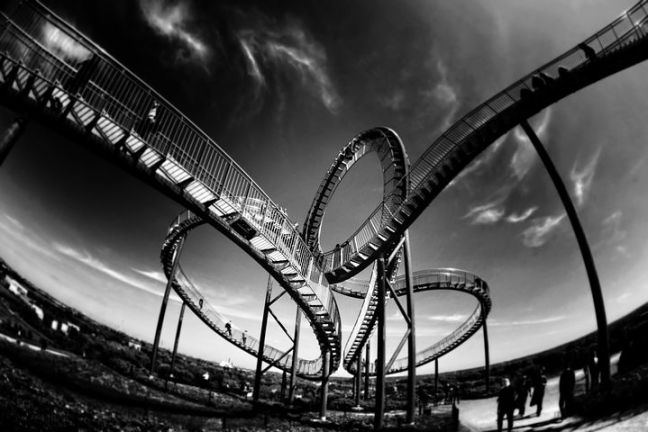
Your relationship feels like a rollercoaster. When it’s good, it’s great. But it never seems to stay great for long. Every high is followed by a corresponding low. And even though you promise yourself that things are going to be different this time, you can’t seem to get off the endless ride of on again, off again.
Why Does the On Again, Off Again Relationship Pattern Occur?
Strong Chemistry
In relationships that follow this rollercoaster pattern, there is often an intense physical connection. This primal response is powerful and can easily overwhelm the more rational side of the brain that is cognizant of the areas where there is frequent discord.
A Focus on the Potential
It’s easy to fall for someone’s potential. You see what they can be and think that if you give it enough time, that is what they will be. You’re pulled back in time and time again because you’re hoping that this time they’ve become what you want them to be.
Never Allowing for Detox
There is a dopamine rush that accompanies the start (or restart) of a relationship. It’s a heady – and addictive – feeling. The end of a relationship comes with a corresponding withdrawal. Without time to fully detox from this cycle, it can be easy to keep looking for that next hit.
Exaggeration of Both the Good and Bad
When you’re apart, you find yourself fixating on what made the relationship good and so you’re pulled back in. But once there, the negative aspects of the relationship begin to wake from dormancy and again overwhelm what works.
Responding to Loneliness
Sometimes we respond to the inevitable loneliness that follows a break up by reaching out for the person that last filled that void. Only to realize – again – that it is possible to be lonelier with somebody that doesn’t see than to be on your own.
Return to the Familiar
We do what we know. And this relationship, even with its problems, is a known entity. As comfortable and familiar as an old sweatshirt. We put it on not because it fits, but because we’re used it.
Believing the Promises
Sometimes your ex is the one who is reaching out in an attempt to reestablish the relationship. That make promises that things will change. And you believe their words because you want so badly for them to be true. But the actions never follow.
Wanting Things to Be Different
You believe that maybe you just didn’t try hard enough the last time. And that if you just tried a little harder, you can make it work this time around. You believe that if you want it to be true, you can make it true.
Falling For the Sunk Cost Fallacy
You have a history with this person. Shared memories and all of the effort that goes into building a relationship. You don’t want to throw all of that away and so you become determined to try again.
Fear of Starting Over
The thought of dating someone new is scary or overwhelming. You wonder if there is anyone else who is any better than this one. After all, doesn’t every relationship have its problems?
Lack of Self-Esteem
You secretly worry that nobody else is going to want you. Perhaps you’re internalizing harsh words that your on again, off again partner has uttered in the downswings of the relationship or you’ve always struggled with not feeling good enough.
Pattern Becomes Normal
You’ve been on this ride for so long that the extreme swings from up to down to up again just feel normal. Whenever you’re in a relationship that is more steady, you become anxious or bored as you crave the stimulation you’ve become accustomed to.
How Can the On Again, Off Again Relationship Hurt You?
For most people, this relationship pattern is agonizing. A sense of safety in the relationship and secure attachment is all-but-impossible when the bottom seems to fall out on a regular basis.
Additionally, this pattern can occur when one or both partners are running from or hiding their issues instead of addressing them in an attempt to heal past traumas. As a result, personal growth doesn’t happen.
And finally, when you’re stuck in this cycle, all of your energy is funneled either into the intoxicating highs or into the all-consuming lows. There is nothing left over to do any real work.
You deserve a real relationship. One that is there on the good days. And the bad. You deserve someone that loves you and is committed to you. And that may be this person. Or, it may be time to let them go to create space for someone new.
Signs That it May Be Worth Another Ride
Enough Time Has Passed
If the time since you were together can still be measured in weeks, nothing has changed. That is simply too short of a window for any significant reflection and growth to occur. Additionally, you are both still operating from a place of scarcity, wanting to fill that void left from the breakup and you may still be susceptible to that chemical urge.
If, however, significant time has passed without significant contact and you still find yourself drawn to this person, it may be worth a try.
Each Person Has Taken Responsibility and Taken Action Towards Their Own Stuff
Both partners share responsibility for the on again, off again relationship pattern. In order for it to transition into a more mature and lasting relationship, both people have to own their own stuff AND take action to address it. This also takes time and if you rush back into things, the changes may only be superficial and temporary.
You Are Ready to Build Again From the Beginning Instead of Picking Up Where You Left Off
The foundation that your relationship was built on had some malformed parts. If you try to keep building from that point, it will always be shaky. In order to have a different relationship, you have to build a new relationship, starting from the beginning and using what you’ve learned to do it differently this time.
Signs That It’s Time to Get Off the Ride
You Replay the Same Pattern Repeatedly
If your relationship has begun to feel like the movie Groundhog Day, where every cycle through feels exactly the previous, it may be time to call it quits. Those patterns have become well-worn grooves and trying to change them with the same person will be very difficult if not impossible.
Words Are Not Supported With Actions
The right words are said. Promises are made. And then they are followed with the same old actions. Words alone are not enough to bind a relationships. If the good is all talk and the actions are all bad, it’s a relationship made of smoke and mirrors.
Your Happiness is Tied to the State of the Relationship
If you find that your well-being is on the same up and down cycle of the relationship, it’s time to step away. You can’t build a happy relationship when you’re depending on that relationship to make you happy. Figure out your happiness first and only then find someone to share it with.


 Lessons From the End of a Marriage