Why I’m Attracted to People With a Difficult Past

It happens to me all the time.

A knowing look between virtual strangers. Words left unsaid yet with full meaning comprehended. A nod to the side, understood to reference “all that”in the midst of casual conversation.

It says, “I see you. And I see that you have suffered. And even though I don’t know your story, I know that we are kin.”

People that have a past, that have been through stuff, have a way of finding each other. It’s a club none of signed up for, yet we now all know the secret handshakes and code words used to identify other members.

If I inventoried the people most important to me, their combined tragedies would fill a country music album. There are motherless children, those who have been abused and abandoned, people who are enduring long and painful and scary medical ordeals and others who have suffered great losses.

But suffering isn’t the only thing they have in common.

They also have the overcoming (or at least the first steps) of it.

—–

One of the reasons I was attracted to my first husband was that he had a maturity and perspective that comes from going through difficult experiences. It made him stand out from the largely affluent and untouched kids at my high school. As my own life experiences – a sense of abandonment by my dad, a health crisis and the unexpected deaths of several friends – compounded, I no longer felt as though I had anything in common with the average 16 year old.

Then I met him.

And we had that unspoken conversation. That handshake of pain. A meeting of eyes that had seen more than they should.

We didn’t feel as though we belonged in the worlds we inhabited. But we felt as though we belonged together.

It was an hysterical bonding of sorts. A grasping. A union born from suffering.

Of course, I didn’t see any of that at the time. I just knew that I felt understood. That he could relate to facing challenges greater than deciding what to wear the next day or what to do when you hadn’t studies for a test.

Little did I know that he would later become the source of my greatest life lesson to date.

—–

It’s completely natural for people that have difficult pasts to gravitate towards one another. After all, we often bond over shared experiences and beliefs. And we look for people that can relate to and empathize with our own situations.

That attraction isn’t always healthy; however, sometimes bonds formed from suffering become mired in suffering. The pain simply is transferred from one to another, keeping it nurtured and alive. Sometimes one person takes on a victim role and the other, needing to be needed, plays the savior. The past can become the seed that holds the relationship together and a reticence to release it (and possibly the bond) develops.

I see these unhealthy relationships like two weak swimmers trying to save the other from drowning. The combined efforts only seek to weight them both down.

—–

When I started dating again after divorce, I intentionally looked for men that didn’t have pasts. They were surprisingly common, those guys that had made through 30, 35 even 40 years of life relative unscathed.

They intrigued me.

But they didn’t attract me.

Sure, they weren’t as superficial and two-dimensional as a gaggle of sheltered teenagers.

They were perfectly nice and nothing was glaringly wrong.

But they also didn’t get it.

They had never had to face a loss that made every breath feel as though oxygen had been replaced with concrete. They had never been forced to dig so deep within themselves that they feared they would get lost before they got out. They had an easy assurance that everything was going to be okay. Because for them, it always had been.

I felt separate from them. Different.

And I also felt a strange need to protect them. To let them be in their unaffected worldview for as long as fate allowed.

They seemed fragile to me. Untoughened. Untested.

I was equally uninterested in men who still lived in their pasts and showed no signs of wanting to move on or those who tried to pretend that it wasn’t a big deal. I knew what happened when suffering was damped down and pushed aside – my ex taught me that one. And I had no desire to live someone else’s past.

I found myself attracted to men who had been through the lows of life and had climbed out, one difficult step at a time. Someone who also knew how bad it could be and yet hadn’t given up. Someone who developed strength with every step and wisdom from every glance back. Someone who wouldn’t pull me down or carry me along, but who would walk with me.

We’re often dismissive of difficult pasts as being unwanted baggage.

Yet often the people with the most to carry have the greatest spirits.

—–

When I look around at the amazing people I choose to have in my life, I’m blown away by their resilience and attitudes. I surround myself with them because they understand and also because they inspire.
 

Escape Valves

I couldn’t help it. Giggles burst from my lips like foam spilling out of an over-filled latte.

I had been taking my Yin yoga class seriously up until the point where the instructor, usually calm and serious, mentioned the human nature of moving away from the stretch. I inwardly groaned at the first escape from the discomfort she mentioned – leaning the body over to the right to release some of the tension on the psoas – as I shifted my own weight back to the left to fully face the stretch. But then I had to laugh as she continued to mention two other common ways that practitioners lessen the intensity.

And I was doing both of them.

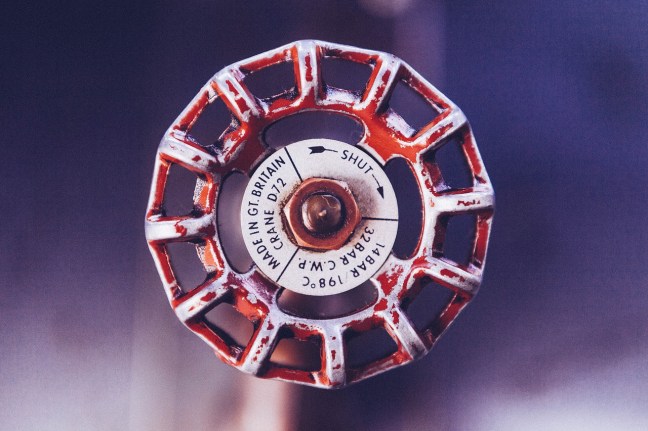
She described this human tendency to avoid discomfort as seeking an escape valve. A way to reduce the pressure and lower the harshness of an experience.

And it really is universal, isn’t it. We try to avoid pain or even unease on the yoga mat. In relationships.

And even in our own minds.

It makes sense. At a basic level, we are programmed to avoid pain in order to protect the body and stay away from dangerous objects and situations. Pain is an important sensation. It tells us to remove our hand from the hot stove or to stay off a broken ankle so as not to cause further damage. Relational pain sometimes informs us that we are in an unhealthy or even dangerous environment and provides the encouragement to leave. Internal pain flares when we neglect our own innate sense of right and wrong and serves as a wake-up call.

Those pains are intense. And the message they send is a critical one – stop what you’re doing now or you will only make it worse.

But often we confuse pain with discomfort. It makes sense to seek to avoid pain.

Yet it frequently it makes sense to embrace discomfort.

On my yoga mat this morning, my breath hitched as I leaned into the stress, shutting off the escape valves. If asked, I would have replied in that moment that I was in pain.

But I really wasn’t. In fact, as I breathed into the psoas and relaxed the surrounding muscles, the position lost its intensity and I was even interested in exploring the pose further. By facing the discomfort, I was able to reduce the discomfort.

Without the instructor’s prompting, I would never have faced the initial discomfort. Unconsciously avoiding even the merest suggestion of pain. And as a result, I would have unwittingly nurtured that area of tightness, allowing it to grow unrestrained.

It doesn’t feel good to feel uncomfortable. But that’s often exactly where we need to be.

———————-

I see the use of escape valves all the time in people facing the end of a relationship –

They decide that they should be over it by now and push it out of their conscious mind. Yet no matter how much you push it down, it always resurfaces until the lessons are released.

They try not to think about their ex or the end because doing so creates pain. Yet trying to avoid the thoughts only makes the thoughts grow more powerful. If they are addressed as they arise, they fail to grow.

They look to distractions to escape the inevitable pain of the end of a relationship. Yet the distractions only work for a time and the pain is patient.

They downplay the impact of the end on their well-being, pretending that it really doesn’t bother them. Only their acting out in other ways belies their assertion.

——————–

The pain at the end of a relationship is more the discomfort from the yoga mat than the agony of a hand on a hot stove. If you face it and work with it, it will begin to release.

Opening an escape valve feels good in the moment. And sometimes, when the pressure is too great to bear, it may be needed. But if you find that you constantly need escape valves, maybe it makes more sense to repair the basic system.

(Note: There is a very important distinction between ruminating and processing. Ruminating would be like taking the yoga pose just to the edge of the pain and then tensing up, holding the breath and staying in pain. Not fun and also not going to get you anywhere. Processing is more like moving through the pain: understanding, exploring, softening, opening and finally releasing.)

Facing Avoidance

I remember this strange limbo after my ex pulled his Copperfield – I was afraid of facing the totality of my new reality and yet I was also afraid of the repercussions of avoiding the truth. In the early days, the decision was made for me; I was barely able to function, much less process. Flaming bits of reality passed by me like meteors falling to earth, moving too fast to see yet leaving behind an uncomfortable heat. But as time shuffled on, I could no longer use the excuse of not being able to face the pain. I had to either confront the truth or accept the fact that I was actively avoiding it.

I applied a logical strategy amidst the illogical domain that I then occupied. I gave myself permission to avoid the pain until a scheduled yoga and meditation retreat. It was the griever’s equivalent of a decade-long smoker going cold turkey. I went into the retreat armed with a journal, my comforting blanket and plenty of tissues. Not present? My phone and any books. There were no distractions. No excuses. This was the time to face the pain.

After registering, exploring the property and meeting the facilitator, I wrapped myself in warm clothing, gathered the journaling supplies and folded myself into a solitary rocking chair overlooking the mountains. I took a deep breath, and gave the pain that I had been studiously avoiding, permission to enter.

It wasn’t what I expected. I held some image of the pain entering my body like a demon possessing some innocent in a horror movie. But my body didn’t jerk back from the shock nor did the chair begin to rock of its own power.

Instead, I felt a dull sort of pain that began to ebb and flow seemingly at random. The tears cycled from monsoon to dry season and back again with whiplash speed. The words inscribed on my pages danced from past to future and nightmare to dream.

I hurt, but much to my surprise, my most dominant feeling was one of relief.

I was relieved to give permission to the tears with no sense of what I “ought” to be doing.

I was relieved to finally face what I had delayed and, in doing so, quiet some of the fear.

I was relieved that the harsh reality didn’t capsize me and that it seemed that I could handle the truth.

I was relieved that the pain felt more like the bombardment of solitary bricks than running into a solid brick wall.

I was relieved that I was finally facing what I had avoided and I held hopes that by facing it, I could diminish it.


We avoid because we are afraid of the truth. Yet fear only builds in the darkness of the unknown.

We avoid because we do not want to suffer. Yet suffering then becomes the background noise of our lives.

We avoid because we want to pretend that reality isn’t real. Yet the truth will always find a way out.

We avoid because we believe we don’t have the energy to face. Yet that’s only because that energy is being expended on running away.

We avoid because we feel that it is someone else’s responsibility to heal us. Yet you cannot outsource healing. You have to do it yourself.

We avoid because we fall victim to the siren song of busyness. Yet that is just another excuse kicked up by a panicking brain.

We avoid because we tell ourselves that we can get to it later. Yet limbo is no way to live.

We avoid because facing it validates it. Yet it was already real even if we refused acceptance.


You cannot accept something until you face it.

You cannot release something until you hold it.

You cannot change something until you see it.

It’s time to face your avoidance.

To trust that you are strong and capable enough to handle whatever hides beneath the bed. Life under the covers is no way to live.

The Judgement of Pain – Enough Already!

They’re dropping like flies. The daily bombardment of death and destruction as the bombs render flesh and landscape into unrecognizable rubble is too much to bear and the drone operators are leaving the job behind to retain their sanity. The intimate, up-close view brings the carnage into reality, even when the one operating the drone is safely occupying a padded chair in a cubicle back in the U.S.

And compounding the anguish?

Many of these pilots are shamed for their feelings, since they are not “real” soldiers and their bodies are not facing physical harm. Their healthy-looking bodies belie their broken minds.

And yes, if you had to put human suffering on a continuum, being physically present in a war zone would certainly seem to be worse than viewing it through a television screen.

But here’s the important part.

We don’t have to put pain on a continuum.

We don’t have to adjudicate and rank hardships.

Better or worse is not only relative, it’s inconsequential.

All that matters for that person is how they feel.

And that they receive compassion, support and encouragement (from themselves and others) to feel better.

Because when we judge suffering, we only add to it.


I read a Twitter exchange the other day between two people who had stumbled across my piece on The Huffington Post about PTSD after divorce:

photo 4

photo 3-4

photo 2-4

photo 1-1I know nothing about these two people and what they have endured. I did not attempt to engage them in conversation. But the exchange made me sad. Not for me, but for the many people who find my site by entering in some combination of “PTSD” and “divorce” into their search engine. Those people are in real pain and they are looking for real validation that their feelings are okay. And probably hope that they will again be okay.

And by telling them that they are not allowed to feel that way, all it does is add shame to the mix. Because if they are not “supposed” to feel that way, then something must be wrong with them.

The first step to resolving suffering is to accept it.

Only then can you begin to address it.


I have to be careful myself with judging pain. Every day, I deal with teenagers who are inconsolable because of some issue that, from my adult perspective, seems petty.

Because they are not seeing it from an adult perspective.

They can’t.

All they know is that based upon what they have experienced, this situation hurts.

And my job is to listen, acknowledge the distress and help them move beyond it.


The takeaways –

  • It doesn’t matter where someone’s experience falls on the continuum of human suffering. All that matters is where it falls on his or her personal continuum.
  • Just because someone’s situation was worse, doesn’t mean their pain was. Don’t assume.
  • When we judge pain, we are saying that we understand their pain. And we can’t. Because we haven’t lived his or her life.
  • Judgement does not alleviate pain; it compounds it. Acknowledgement and compassion are the first steps to ease the suffering.
  • By focusing on the similarities in the responses rather than fixating on the differences that caused the pain, together we can learn how to heal.

And, just so you know, the response was not accepted on the Huffington piece because comments are closed due to the age of the article, not because of any censorship of alternative viewpoints. It’s always interesting how we all make assumptions based upon our beliefs and experiences. Myself included.

Don’t Allow Your Pain to Filibuster

I’ll never forget the social studies class where I first learned about filibusters, reading the story of Thurmond’s famous 24-hour stall tactic in a classroom magazine publication.

Not content with the information contained in the short article, I raised my hand for more.

“What do they talk about for so long?”

“Anything,” my teacher responded. “Senators have even been known to read their grandmother’s recipes or recite the phone book.”

“That’s dumb,” I replied with the know-it-all wisdom of an eight-year-old. “That’s just wasting everyone’s time.”

“Exactly. That’s the point.”

“So they’re just stubborn and want to get their way. Okay, I get that,” I responded, finally satisfied. But I still thought it seemed kind of dumb. I couldn’t believe that grown adults would resort to such childish methods. Giggling under my breath, I pictured them on the senate floor, fingers in their ears, singing, “Na na na na boo boo. I can’t hear you.” Who knows, it’s probably happened.

Now very few of us live with senators and hopefully you do not reside with someone who demands to have the floor to blather on with endless prattle.

But that doesn’t mean you’re immune to filibuster.

Because it’s not only the domain of congress.

It’s a strategy often employed by our emotions as well.

Where the pain blares on long after it has anything useful to say.

With the sole purpose of not allowing any response.

By all means listen to your pain.

And then at some point, show it the door.

Don’t allow your pain to filibuster.

I would like to extend a heartfelt thank you for all of the kind notes, messages and emails the last couple days. I haven’t been able to respond, but please know I’ve read and appreciated them all.