Are You In Love With the Person or With Their Potential?

potential

I was lucky.

The decision to file for divorce was a no-brainer for me. At that point, my husband was MIA, had committed bigamy and had used all of my money (and credit) to fund his other life.

Many of you do not or did not have that decision present itself in such a clear-cut manner.

And I feel for you.

I used to play a little thought exercise where I would consider how I would have responded to finding out about my ex’s actions at some point along his pathway to destruction. When I’m honest with myself, I probably would have been way too forgiving and lenient with his behavior.

Not because I would have been okay with what he was doing, but because I believed in him. After reaching the understanding that he needed help, I would have held onto the hope that he would have accepted it. I know that I would have grasped onto any glimpse of the man I knew and loved and made excuses for actions that didn’t align.

I’m afraid that I would have stayed too long and endured way too much. Confusing a love of his potential for a love of the person. Setting hard boundaries would have felt too much like giving up on him, and that thought would have been devastating.


I currently teach accelerated math students. That means they all have the ability to be in my class and they had to demonstrate that in order to register. But one of the first – and often hardest- lessons they have to learn in my class is that it doesn’t matter what you can do. It only matters what you do.

Most of them learn the lesson. I love to watch them grow and mature over the year as they slowly take on more responsibility for their learning. Others struggle to put their potential into practice. And at some point, I, along with their parents, have to decide if this is the right place for them at this point in time.

It’s given me an interesting perspective on potential. After all, I’m evaluating it on an almost constant basis and with a large number of people. And from what I’ve learned watching them, I would now handle a situation like the imagined one with my ex very differently.

We often face these situations – with our children, our employees and our spouses. We can easily get so caught up in the frustrations of the “shoulds” and the deflection of the fears that we have trouble seeing the situation clearly.

If you’re facing a tough decision about somebody and you’re trying to balance their potential with the current reality, try asking yourself these questions:

Do they believe in their potential? Does it look the same as what I envision?

Are they motivated by different goals that are currently more important to them?

How far away are they from what I perceive as their potential?

Are they motivated to work towards their potential? Do they care about the impact on me? 

Are they making progress towards their potential?

What sort of timeline am I looking at for them to reach their potential? Am I willing to give it that much time?

What will the growth process entail? Am I willing to put the work in too?

Am I realistic about their potential or am I asking them to be somebody they’re not?

Do I believe that I have the power to make them change?

Am I lowering the benchmark or my boundaries in order to avoid making a decision? 

Am I constantly excusing their behavior?

Am I setting appropriate boundaries so that their choices have limited impact on me?

Am I holding onto my hope that they can change out of a fear of confrontation or of letting go?

Am I allowing their actions to consistently compromise my own well-being?

Am I okay if they never change?

It is so hard when we see what somebody can be. We can be so distracted by the possibility that we ignore the reality. Or, we can become fixated on the idea that if we just motivated them the right way, said the right thing, that they would change their ways.

Yet their journey is different than yours.

They may change and grow. But not on your timeline. On theirs. And not to your goals. But to theirs. When we only see people from what we perceive as their potential, we are not truly allowing them to be themselves. Rather, we are trying to push our own ideals, beliefs and needs upon them.

Here’s the reality –

You cannot change them. You cannot ignore their current state forever. You cannot manifest their perfect potential. You cannot decide what is important to them. You cannot make them revert to the way they were or become what they said they wanted.

All you can do is try to gain a clearer picture of the situation and make the best decision you can.

For them.

And for you.

Can You Find Happiness With a New Partner After An Unwanted Divorce?

unwanted divorce

“I can’t imagine being happy with any else but her,” the message in my inbox said. The “her” in question was his ex-wife, who had recently initiated an unwanted divorce. “Do you really believe that it is possible to ever be happy with a new person?”

I asked my journal that same question after my divorce, afraid to voice the query aloud as though that would give my concerns more power. Even while I felt disgust at the realization that I had been sleeping with a stranger, I still fought the connection I had forged with him over sixteen years.

I tried to imagine myself with another man – a generic, faceless one – and I would be instantly snapped back to an image of my ex as though industrial strength bungee cords still tied us together. I thought of how comfortable I was with him and I searched the men in my periphery questioning if I could ever be so vulnerable with any of them. I reflected back on the intensity of the love that I had felt for my ex and I wondered if I would ever experience that again.

I couldn’t imagine ever being happy again with anyone else.

And I’m so grateful that I didn’t allow my imagination to keep me from trying.

___


Here are five truths to consider if you find yourself wondering if you can be happy in a new relationship:


Your happiness is anchored in you.

When you’re with someone for an extended time, the boundaries can begin to blur. Something that makes them happy, makes you happy. And it’s easy to begin to believe that your happiness is dependent upon them.

Yet it’s not and it never was.

True happiness and satisfaction in life comes from living within your own beliefs and values. It is found in living a purpose-driven life where you know who you are and what you have to give. It is in a sense of curiosity and playfulness. And, yes, it is in the relationships you form with others.

Here’s the important part – the root of happiness and the ability to create it is not found in another person or when your external circumstances change. It is in you. Always has been. Always will be.

Believing it only existed with your ex holds you back. Believing that you can find it in someone new leads you astray. Finding containment within will never let you down.


Your marriage wasn’t perfect. 

And it may not have even been good.

I know. Tough pill to swallow. I choked on that one myself for a couple years. But once I accepted it, everything else started to fall into place.

You see, I thought I had a good marriage. A great marriage, even. We never fought. We had great intimacy. We had common goals and values (or so I was led to believe). Much of the responsibility for that illusion lies on his shoulders – he needed for me to believe that things were good so that my suspicions would not be altered. And some of the responsibility falls on me. I needed to believe that the marriage was great because I was too afraid to entertain the alternative.

By allowing myself to see the reality of the relationship, it helped to let it go and by recognizing its imperfections, it also aided my belief that I could be in a happy relationship again.

I used to believe that I had a great first marriage. Now, I believe that its ending was proof that it wasn’t great. And I’m okay with that. I can now look back and smile at the good moments while at the same time accepting that not all was good behind the scenes.

And I’ve taken those hard-won lessons from that relationship and put them to good use in my life now. I’m beyond happy in my current marriage and happier still that it isn’t perfect.


Different can be better.

After an unwanted divorce, all you feel is the loss and all you know is what you had. There’s a tendency to smooth over the rough edges and idealize the person who left. The sense of deprivation causes a panicked grasping, an almost-obsessive need to try to hold on to whatever you can of your former partner. Every ounce of your being is focused on the void you feel and you naturally seek to want to stuff your ex back into that space to fill that hole.

Sometimes this manifests through repeated attempts to win the ex back or a more subtle yet persistent pining for the one who left. Other times it shows up by trying to sift through the single scene looking for a doppelgänger to replace what was lost.

You miss what you know and you don’t know what you haven’t had.

A new relationship will be different than the one you had. And different can be better (especially if you learned from your mistakes).

The grooves you followed in your old relationship will be rough at first, as you trip and stutter over the worn patterns with a new partner. But soon, you’ll find your own music.

The strengths of your ex may not be mirrored in the new partner. Yet they carry their own gifts and you may find they bring out new ones in you.

You won’t relive your early twenties with them, broke and optimistic. Yet you will share more experience and wisdom and the confidence that comes with them.

Happiness in the new relationship is found in recognizing what makes it unique, not in trying to make it a carbon copy.

Rather than see this as a burden, view it as an opportunity. A chance to start again, to start better.


Fear restricts; hope frees.

Fear weaves a web more intricate than any spider. Fear holds you back stronger than any restraints. Fear narrows your vision more than any blinders. And when you’re wondering if you’ll ever be happy with another person again, you’re listening to fear.

And fear lies.

But hope frees.

Fear tells us that the future will be worse than the past. Hope reminds us not to jump to conclusions.

Fear threatens that we’ll always be alone. Hope reminds us that connection is the natural outcome if we’re willing to be open and vulnerable.

Fear warns that we’ll never find happiness again. Hope reminds us that contentment is always present when we know where to find it.


Love doesn’t come with lifetime limits.

I’ve never seen love advertised as, “Limit 1 per customer.”

Yet we often live as though that were true.

Just as parents can find the love for each additional child, you can find the space within you to love again.

Eight years ago, I couldn’t ever imagine being happy with anyone else. And now, I can’t imagine having to go back to who I was with before. Because now, I’m happier than ever.


Three Powerful Lessons About Finding Love From An Unlikely Source

love lessons

Because sometimes the way to learn to do something better is to start with what we already know…

shopping-2411667__480

You know: Never go to the grocery store when hungry.

When you succumb to the grocery store on an empty stomach, you’re possessed by a powerful drive to grab anything in your sight. You have a tendency to zero in on high-calorie items, especially those stocked for maximum visual impact. Your reasoning and planning abilities are sluggish, which may lead to a full cart but an empty pantry as you later realize you forgot the staples.

In contrast, when you navigate the store on a full stomach, you find it easier to stick to your list of needed items and resist those temptations that look good only to leave you feeling bad.

Love lesson: Never date when starving for affection.

When you’re starving for attention and affection, you may enter the dating scene driven by that ravenous and undiscriminating hunger. You’re likely to grab anything that catches your eye with little thought to its long-term impact.

Instead, strive to fill the voids in your life with friends, family, hobbies, passions and purpose before you seek out romantic love. You will make better choices for the long term and be better able to stick to your list of “must haves.” And you’ll also find it easier to pass on those people that make you feel good in the moment only to cause regret in the morning.

You know: Your cart only has so much space.

A grocery cart has finite space and so decisions must be made about what will be chosen to occupy that real estate. Maybe you notice a sale on soda and you’re tempted to fill the basket until the cans pile over the brim. You may justify this decision, claiming that you’re taking advantage of a good deal and that you never know when such a sale may come around again.

But at what expense? Yes, you’ll have soda for months. But you can’t live on pop alone.

Love lesson: Sometimes you have to let go of what makes you feel good in the moment in order to make space for what fulfills you long term.

Once we have allowed someone space in our lives, we tend to justify their place there even when they may not have been the wisest choice. It can be easy to focus on the parts that fit while actively ignoring the reasons why it’s not a good idea.

It’s a version of FOMO (fear of missing out). Because as long as that person is there, you know you have someone. If you let them go, you risk being alone. But there’s only so much space. And sometimes you have to let go of one thing in order to make room for what you need.

You know: Junk food may be quick and easy, but it is detrimental to your health.

So called “food deserts” earned their moniker not from a lack of food, but from a lack of quality food. Processed foods are tempting because they require little investment of time or money. They promise sustenance and indeed provide some feeling of satiety. These “foods” have been carefully engineered to promote maximum consumption and to encourage dependency.

However, in the longer run, these foods can cause starvation even as they widen the waistline since key nutrients have been replaced with fillers and empty calories. Healthy foods take effort, intention and planning as you turn the raw ingredients into something that will both nurture and fortify you.

Love lesson: Healthier relationships take time and energy to prepare.

Quick fixes are tempting in love as well. Those relationships that ignite quickly and fill you with both a surge of temporary well-being and a driving need for more. They can become a drug, leading you to always search for that next spark of interest. Only to leave you empty and lonely once the initial attraction fades.

Healthier relationships are built from the ground up. There is effort. Intention. Sustained energy and shared responsibility. And the pride and ownership that comes from doing something yourself.

Am I Broken?

​​​​​I’m working on writing a couple of books this summer (yes, two because I’m crazy!) and as a result, I’m finding that my body and brain are resistant to spending time crafting blog posts. And since my new phone now has enough memory to operate (more than I do right now, to be honest), I’ll be sharing some videos through the summer. I don’t have the time (or computer power) to edit these, so they’ll be raw. Please forgive:)

This first one is in response those who are feeling broken after divorce, a sentiment I have been encountering quite a bit recently.

​​

The Subterfuge of Scarcity

I listened to an NPR podcast recently that explored the connection between poverty and the mental capacity for problem solving and planning for the future. On the one hand, the results of the research seem evident. After all, we all know that having money gives you the gift of not worrying about money.

On the other hand, the sheer magnitude of the effect was eye-opening. The researchers studied a particular group of sugar cane farmers in India that were “rich” for a few months after they received the annual payout for their efforts and destitute once the money inevitably ran out before the next harvest. The farmer’s impulse control and ability to plan for the long-term was measured and the results were striking. A lack of money literally makes it harder to think.

When the brain perceives scarcity, its focus narrows, much like how blood flow is shut off to the extremities in the case of an emergency situation. Decisions are made for the now, because short-term survival has to supersede any longer-term goals. The more evolved rational brain with its slower and more cautious processing is retired as the more primal and fast-acting limbic system takes center stage. As a result, actions are impulsive and although they may be advantageous in the moment, may cause the current scarcity situation to be lengthened.

A scarcity mindset and its impact on cognition are not limited to finances. When we’re short on time, we often fail to account for the moments we do have, focusing only on the lack of opportunities as the days fly by. When the cupboards are bare before the weekly grocery run, the creative impulse that could help to brainstorm options from the remaining food is dampened. And once the grocery trip is made, the emptiness of the belly may lead to poor choices in the store. The scarcity of words on the page causes writers’ minds to block. A perceived lack of available resources implicit in a short-term sale prompts the brain to jump at the first suggestion.

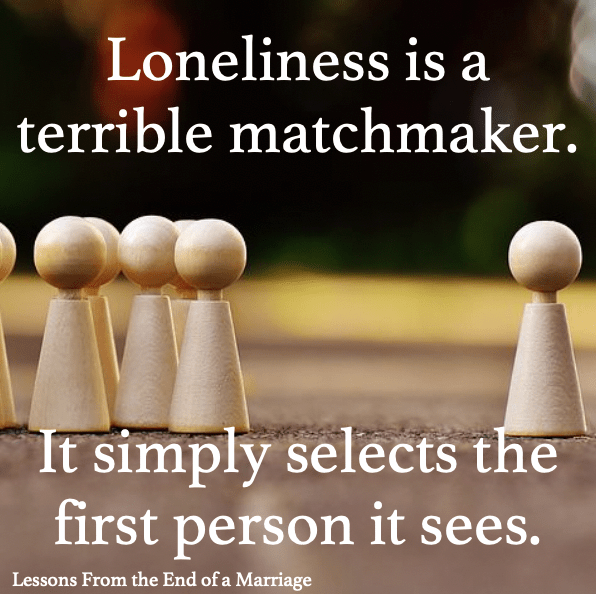
And after a break up, the scarcity of love and affection can result in an almost obsessive drive to find that intimacy again. Much like how those experiencing poverty may make poor decisions in regards to spending, those feeling a love deficit may make unhealthy choices when it comes to relationships. Anyone who shows attention and kindness is welcomed without regard as to the longer-term suitability and impact. It meets the needs of the moment, filling the void and postponing the sense of loneliness. Yet in the long term, those temporary fill-ins can cause more harm than good.

Since money, time, groceries, ideas, sale prices and love cannot be supplied upon demand, are we simply doomed to experience the cognitive weaknesses prompted by scarcity? In some ways, yes. We have evolved to prioritize the most important needs during times of drought. And when something is lacking, there is only so mental trickery we can do to pretend otherwise.

Yet we are not helpless in times of shortage. We can begin by recognizing what is lacking and also the extent of the impact on our initial reactions. Refrain from exaggerating the situation. Acknowledge what is needed and also be aware of what is still present. Balance the fear for what is missing with gratitude for what is not. Reflect on other times of scarcity and remember when the rains eventually came. Use external methods of providing structure and boundaries to help your reckless brain. If you are driven to make a poor choice, be kind to yourself and also strive to find a way to refrain from repeating the mistake.

Scarcity uses subterfuge to trick us into staying in a place of lack. It deceives us into making decisions that satisfy in the moment and starve us over time. Learn to recognize its pretense and be mindful before listening to its bidding.

Because nurturing new growth comes from watering what you have rather than focusing on the fear that you will never have.