Is Divorce Your Only Option?

When I first read this piece by Matt on why he declined to participate in Huffington Post’s collection on when divorce is the only option, my knee-jerk response was that sometimes divorce is the only option.

When I filed for divorce, my husband was MIA, married to another woman and still actively funneling my credit and paycheck towards his new life.

I certainly didn’t see any other option other than cutting those legal ties as quickly as possible.

But what if I had discovered the infidelities (financial and relational) months before? The decision to divorce at that point would not have been so clear. Perhaps he could have received intensive treatment for addiction. Maybe trust could be rebuilt along with the finances, a team approach towards mending a broken marriage.

And if I had been aware of his shame or his unhappiness or his struggles with employment years before the end (and realized my own fear of confrontation), the entire trajectory of those final years could have been altered. Tracks built together towards a different future.

What if we had made a more conscious start to our relationship rather than simply following one foot in front of the other? What if we had spent more time discussing the potential hardships that can befall a marriage and explore ways to avoid those traps?

Or, tracing that reasoning all the way back, what if I had been more aware of my own struggles with abandonment and anxiety and more attuned to his struggles with avoidance and shame when we first started dating? Maybe I would have chosen a different husband. One that wouldn’t have made divorce the only option.

Any marriage can get to a point (The “F” It Point) where divorce becomes the only option.

From ‘Til Death Do You Part?:

I see the vows as like the wheels on a bicycle. Ideally, both are fully functioning and working in concert. If one tire is a little flat, the other can help support the weight for a time until the tire is re-inflated. If one wheel is bent, the ride may not be over as long as the metal is hammered back into shape. Yet if one wheel is removed, the bicycle is useless no matter how hard the remaining wheel works. And it’s time to either find a new wheel or learn how to ride a unicycle.

But that point doesn’t spontaneously generate. And its creation is ultimately the responsibility of both partners.

Sometimes divorce is the only option.

But it doesn’t have to be that way.

If you enter marriage with your eyes open and your ego checked.

If you commit to fixing yourself rather than blaming another.

If you quiet your fears enough to face the truth and trust that you can make it through.

And if you understand that divorce is always an option and that it takes awareness, intention and effort for it to never become the only option.

Should I Divorce? 12 Questions to Consider

 

Facing Divorce? Here’s What You NEED to Know

need to know

Is divorce in your future? Here’s what you need to know!

  1. Your brain won’t work right for a while. You’ll fear that the affected thinking is permanent. It’s not. But invest in notepads in the meantime because you’ll need to write everything down. Your brain is sluggish because it is recovering from a TLI – Traumatic Life Injury. It will get better.
  2. When you see seemingly happy families or couples, you’ll experience jealousy like you’ve never imagined, your brain throwing toddler-like temper tantrums of, “It’s not fair.” Sometimes it’s easiest to give them a little distance until your envy fades. And in the meantime, watch or read about people that have it worse than you.IMG_4619
  3. Your body will change. You may gain or lose weight, depending upon your personal dietary response to stress. Wrinkles and gray hairs may suddenly appear or increase in number. You will catch every cold and digestion will be impaired. Protect your sleep, eat your veggies and buy a new belt.
  4. At some point, you will have a sexual dream or fantasy about your ex. And you will go from feeling both titillated and comfortable to being repulsed and unsure. You will wonder how you ever found him or her attractive. Take a lesson from preteens and develop safe crushes and fantasies on famous people. It helps to reassure you that you’re not dead while protecting you from fantasizing about your ex or encouraging you to get between the sheets with another before you’re ready. And the first time you do engage with a new partner? You’ll feel like you’re cheating. IMG_4610
  5. You will be memory slammed. And it will happen just when you feel as though you’ve made progress and when your mind is other places. And it will feel as though you’ve caught a bowling ball launched by Babe Ruth with your gut. Keep breathing. It will fade.
  6. The court process will be worse than you ever imagined. But at the same time, it will be much less important than you believe. You will give the paperwork and the process too much power over you. And you will only realize that misappropriation of significance after it’s over.IMG_4646
  7. Your brain will become your worst enemy, offering up, “What ifs” and rudely bringing up painful memories just as you’re trying to get your sh*t together. You don’t have to indulge its every whim. Try exhausting it or distracting it, much like you would with an unruly toddler.
  8. You will experience a false dawn, a period where you feel excited and “over it.” And you will be angry when others caution you that it’s too soon. As much as you want them to be wrong, you will soon learn that they are right, when you come crashing down again. Even though this respite is brief, let it fill you with hope.IMG_4623
  9. Over time, you will start to see the person you were before the divorce as a separate entity. A different person. A foreign person. You will speak of your life in two chapters – before and after. And as you move further into your new chapter, the pain of the old begins to fade.
  10. As the immediate emotions of fear and anger and despair begin to soften, frustration will move in. You will feel stuck and wonder why you can’t just be done with it already. You will feel embarrassed that you’re still struggling, believing that you should be done by now. Sometimes this is harder than the initial pain because your rational brain is being held hostage and is fighting against the restraints. Escape takes time. Stay with it.IMG_4616
  11. You will be okay. I promise:)IMG_4652

If I Had Known This One Thing, I Would Have Divorced Differently

When I first hired my attorney, I was pursuing a divorce through publication (not that I even knew what that was until I was left with a text message and a husband that then disappeared). At that time, mere days after the tsunami, I had no idea what happened and no evidence other than the empty accounts and maxed-out credit. My only option at that juncture was to seek a “no fault” divorce.

And then I found the email. And discovered the affair. And the bigamy.

I learned where he was and contacted the police to report the dual marriage.

Even though that first email, which indicated that band hired for his wedding had not yet been paid, sent me through a dark tortuous path that seemed to birth more questions than answers, I not regret the search for information. The drive for information was too strong. The need for some sort of understanding was too overwhelming to simply walk away.

I contacted my attorney with the updated information.

And that’s when I made my mistake.

In Georgia, you have two options when it comes to divorce – fault or no fault. In order to file a fault divorce, there has to be some concrete evidence that one person’s actions directly led to the divorce.

And with the copy of his second marriage license in hand, I had that proof.

So when my attorney asked me if I wanted to continue with a no fault divorce or if I wanted to alter my approach, I responded immediately that I wanted to change course.

But I didn’t really understand what that meant.

Here’s what I thought at the time –

No fault makes it sound as though we simply grew apart. As though the divorce was a mutual decision made over time and with both party’s well-being in mind.

No fault excuses him of his (criminal and otherwise) actions and makes me (since I was the one filing) look like the one responsible.

No fault made me physically ill. It made me feel like he could spit on me, ground my heart and my finances into dust, abandon his family and responsibilities and that I publicly acknowledging that all of those things just happened.

That they weren’t really his fault.

And at a time when what I wanted more than anything was for him to acknowledge the destruction and pain he caused, a public absolution (as I saw no fault indicating), caused the smouldering anger to flare.

I believed that the word “fault” directed at the defendant on the top of the pages would alert the judge that he or she was dealing with somebody unscrupulous.

I thought that placing him at fault would earn me the favor of the courts and positively influence any rulings in my direction.

And I hoped that having the finger-pointing at him would make my then-husband feel guilty for what he done. And maybe even prompt him to apologize.

And here is what I learned –

The. Courts. Don’t. Care.

About the reasons for the divorce. About infidelity. About blindsiding. About abandonment. About financial betrayal.

They don’t care.

My attorney was more than happy to switch gears to a fault divorce. Because proving fault takes time.

And therefore money.

And I’m not even sure the judge noticed the fact that there wasn’t a “no” before fault on the paperwork submitted to her that day. She proceeded as though my almost-ex was a rational and rule-following man as she divvied up responsibilities.

I didn’t receive any favors for not being the at-fault party and I certainly didn’t receive any empathy.

And I didn’t feel validated in the slightest my the fact that the records showed that my ex was at fault.

Because he never accepted responsibility.

And that was what I really wanted.

Something that the courts could never provide.

In the end, removing those two letters – n o – from my suit for dissolution of marriage cost me added months of stress and thousands of dollars.

And brought me nothing.

A note about the legal process – I am by no means an expert in the legal proceedings of divorce. In my state and in my situation, the difference between fault and no fault was negligible. This is not always the case. Make sure you take the time to fully research the path you’re taking. And don’t make assumptions that legal terms have anything to do with the real world.

It is so incredibly difficult to separate the emotional separation from the legal, especially when you have not been preparing for divorce. And even though from my current standpoint, I say that I wish I had not filed a fault divorce, I can’t promise that I would have listened to that advice at the time.

Make the best decisions that you can. And then forgive yourself for any mistakes.

Divorce is one of things that you don’t really understand until you’ve been through it. And I don’t think anyone wants to practice it enough to get better at it.

The Four Words That Are Holding You Back (And the Four Words to Say Instead)

holding

It’s ingrained in all of us.

Inevitably, when I motion for a student to quiet down, I hear the response,

“It’s not my fault.”

(Or its synonym, “It wasn’t me.”)

people-315908_1280

It is a knee-jerk reaction to any pronouncement of culpability.

And rather than grow out of it as we grow older, we begin to pay others to tell us that it is not our fault.

———-

When I first starting getting into health and fitness in the early 90s, I noticed that the industry advice came in two distinct forms – one voice said that you could transform your life and your body through willpower and hard work while the other side spoke of reassurances that the excess weight or sagging muscle was due to no fault of your own (and often this burden shift would be followed up with a “quick fix” for the low, low price of only $19.95).

And I soon figured out that the second view led to increased sales.

Even as it failed to create the desired body.

Because we all like to hear that it’s not our fault. That someone or something else is responsible for whatever is holding us back.

Yet even though we all have situations and circumstances that make certain goals more challenging, you are ultimately the only thing holding you back.

index-315754_1280

I encounter people that tell me that they cannot lose weight because of PCOS or hypothyroidism. “It’s in my genes,” is offered as a reason for the Type II diabetes or metabolic syndrome. I hear others defend their lack of fitness by claiming that their family or job requires all of their time.

They feel a freedom by stating that it is not their fault.

Yet really they are in chains of their own making.

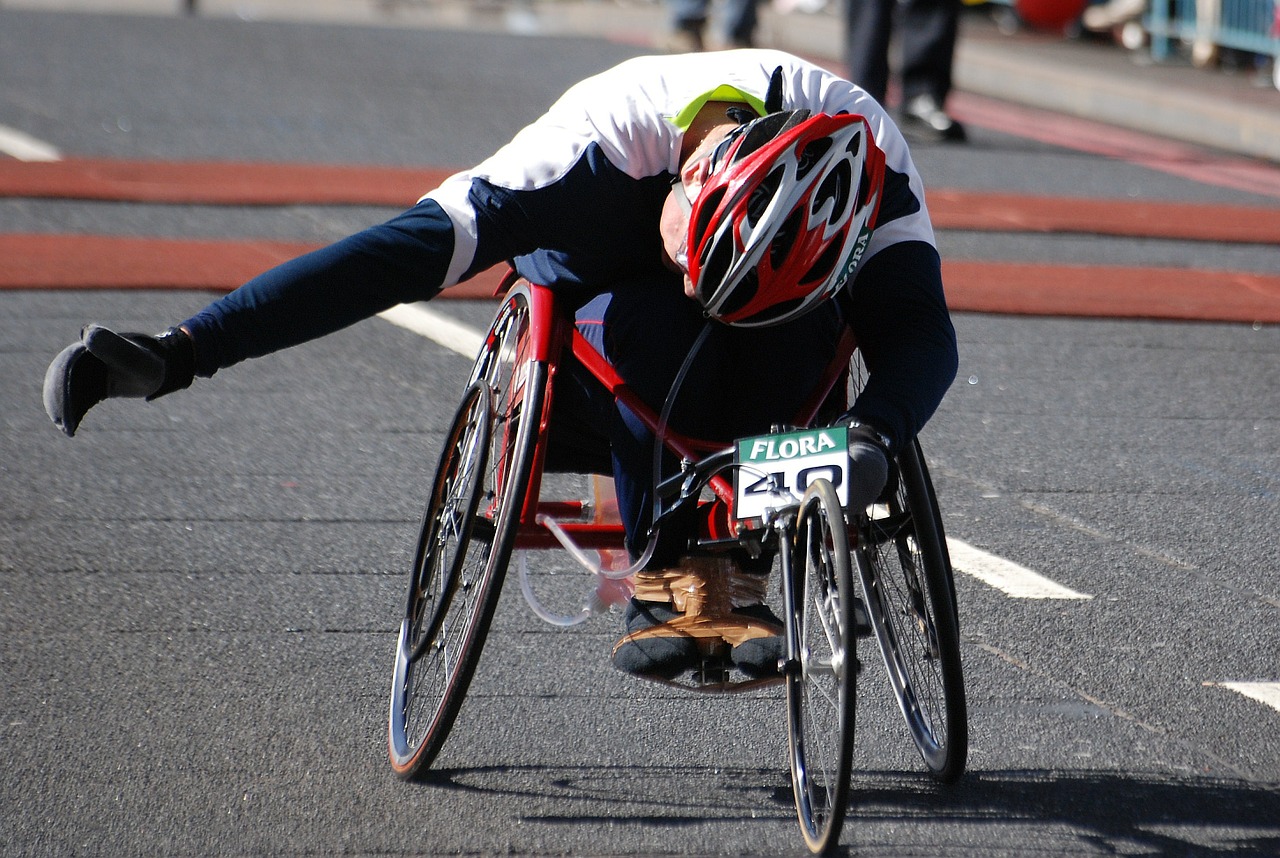
I workout alongside people who use wheelchairs and people with artificial limbs. I have friends who alternate days at the gym with nights at the hospital as they are treated for their autoimmune disorders. I know women with PCOS who accept that weight loss will be harder for them even as they strive to work within the limitations of their disease. I work with single parents who problem-solve creative ways to exercise while the kids are at practice or asleep.

I’ve never once heard any of these people say that the situation is not their fault.

And it’s no accident that they are constantly pushing the boundaries of their situations.

wheelchair-369735_1280

———-

The problem with, “It’s not my fault,” is that it so easily slides into “And therefore there’s nothing I can do about it.”

And the two declarations are vastly different.

It is not your fault if you have been cursed by faulty genes that cause your body to grasp onto every fat cell for dear life.

(And what are you going to do now?)

It is not your fault if you suffered at the hands of abusive or negligent parents who failed to give you the tools to excel in adulthood.

(And what are you going to do now?)

It is not your fault if you have been exposed to trauma, bruising and damaging your very core.

(And what are you going to do now?)

It’s not your fault if your brain struggles with anxiety or depression.

(And what are you going to do now?)

It’s not your fault if your spouse cheated or abandoned you.

(And what are you going to do now?)

In all of these cases (or in any limitations and struggles you have in your life), you can spend your energy on blaming the fault-carrier. Others will help you, either for pay or for free. After all, it’s easy to point fingers at others.

Because then we are absolved of any effort.

Of course, we are also guaranteed not to make any progress.

Because the last time I checked, reps of reciting “It’s my hormones,” had a dramatically lesser effect on fitness than reps on the weight machine.

And assigning liability to a screwed up family of origin is inherently dissatisfying because they’re too entrenched in their own drama to absorb yours.

And calling your cheating ex an ass won’t help you get off yours to build your new life.

So rather than focus on what happened, focus on what you can do now.

Replace “It’s not my fault” with “It is my responsibility.”

Rather than point fingers (or waste your time and money on those that help you pass blame), use those fingers to grab your own bootstraps.

boots-691670_1280

Nobody else is going to do it for you.

———-

Your future is your responsibility.

Your well-being is your responsibility.

Your happiness is your responsibility.

And if you don’t accept that responsibility, that IS your fault.

———-

It is my responsibility to …

Shift my attention from what happened to me to what I am going to make happen.

Focus on what I can do.

See my limitations as my starting point, not as excuses to never start.

Be realistic with my goals.

Set a limit to the amount of energy I expend on placing blame. That energy can be put to better use.

Surround myself with people who believe I can.

Ask for (and accept) help when I need it.

To refuse to allow somebody else to define me.

Communicate my needs clearly and calmly.

Manage my emotions so that they do not control me.

Establish and maintain appropriate boundaries.

Speak and act with kindness. Towards others and also towards myself.

Believe in myself and act in accordance with that belief.

life-863186_1280

And what are you going to do now?

Related:

The Part of the Betrayed

Sprained

I’m Not Strong Enough

Listening to the Subconscious

I used to have bad dreams in my first marriage. Dreams that involved my husband at the time that caused me to wake up angry.

Fuming, in fact.

The plot of the dreams was always tenuous, the storyline threads slipping from my mind as soon as I woke.

But the anger remained for hours until it would dissipate.

I used to warn my husband on those mornings, explaining that if he felt any sort of a chill or irritability from me that is was simply residue from my nocturnal hallucinations.

But they weren’t really hallucinations, were they? In fact, it seems as though the truth only came out when I was safely asleep. The lies safely shielded me when I was awake.

Looking back, those dreams were my training wheels; slowly acclimating me to the reality. Trying on the idea of my husband being a wolf in sheep’s clothing in small, measured doses.

And dreams were one of the tools I used to learn to trust again. It’s been five years now with my new husband, and not one rage-inducing dream yet.

And if one does happen to cross my path one night, you better believe I won’t simply brush it off as just a bad dream. At least not until I make sure it isn’t real.

Did any of you experience suggestions of the truth in your dreams before in came to you in the harshness of the day?