Here There Be Tears

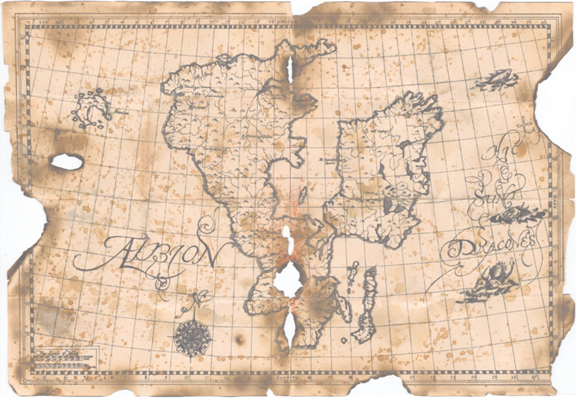
As a kid, I was always fascinated with the portrayal of old maps. I loved the rather amorphous forms of the landmasses. I chuckled at the fanciful guesses about what might lie beyond. And I especially liked the tiny illustrations of dragons at the edges of the plot, warning adventurers of the dangers that can be found in the great unknown.

I’ve had my own dragons at the periphery of my life. Areas where I have dared not tread in case the monsters of memory are too real. Earlier this week, I braved the edges of my mapped life and I faced the unknown.

photo-287
Pretty scary, huh?

It turned out not to be too bad. There were tears but nothing I couldn’t handle.

I have been a dog lover from the get-go. I befriended my parent’s adopted stray as soon as I could feed him from my high chair. From then on, I never went more than a few months without at least one dog in my household. By the end of my marriage, we had three dogs: an elderly, opinionated pug, our “special child” Boston terrier and Glottis, a happy go lucky lab mix. When my ex left me and his life, he locked the three dogs in the basement with limited food and water. Since I was out of town, they had been alone for more than two days when he sent the text. I have a feeling the only reason he sent the message was out of guilt, knowing that the dogs would not survive until I was slated to return. Upon receiving the text, I was able to have a friend take care of the dogs until I could make in back. That same friend took care care of me, offering me a room in her home for the next year.

I knew right away that I could not keep the dogs. I was in no shape emotionally or financially to be able to care for them. I would be living in a guest room in a house with a premature and medically fragile baby. They needed new homes.

I was not strong enough to take on the daunting and devastating task of finding homes for the pets. A friend from work spearheaded the networking connections while my parents tried the shelters and rescue organizations. Over the next few weeks, new homes were found for all.

Within two days, I went from having three dogs to having none. I had to release the care of those innocent creatures who trusted me with their guardianship. I cried more in those two days than I had in the previous few weeks. I knew I was making the best decision for them but, damn, it was hard.

Glottis was the baby in the family. She was sweet and extremely good-natured. She had been impacted the most by the recent upheaval. She used to get so upset when I cried, staying by my side and whimpering along with my keening. A friend at work arranged Glottis’s new home at her parent’s farmhouse in rural Alabama. Glottis would have room to run and new siblings to play with. It was perfect.

On the day of the adoption, my mom and I drove Glottis to the visitor center on the state line, where the transfer was to occur. I cried the whole way while rubbing the thick fur around her neck and ears. I liked Glottis’s new mom right away. She recognized the dog’s sensitive and cautious nature and gave her the time and space she needed to become comfortable. As we sat around a picnic table, the leash was slowly transferred from my hand to her’s. It was done.

Over the years, I received pictures and reports of Glottis (now named Gabby:) ) and her adventures on the farm. I could tell she was thriving. They were able to give her a better life than I could have during that period. It was such a gift to not worry about her, to know that she was loved and cared for.

Throughout this time, I had a standing invitation to visit, but I was afraid of facing that part of my past.

Giving up the dogs was the most painful part of the whole experience. Tears still flow even today when I write or talk about it. Tears from the loss. Tears from the innocent beings caught in the middle. Tears that come from a feeling of failure in my inability to care for them. Tears of gratitude for the people who worked tirelessly to find them homes and for those who adopted them and loved them.

This summer, I finally felt ready.

I’m glad I did. It felt so good to be greeted by that crazy tail, wagging in a huge circle while those familiar ticklish puffs of air danced around my face and she sniffed and greeted me. I believe she remembered me. I received the usual cautious hello, but then her eyes widened and the enthusiasm overflowed. The memories of her came flooding back, opening windows into my former life which I had long since painted shut. It wasn’t painful. It wasn’t scary. It was bittersweet, heavy on the honey.

Glottis AKA Gabby with one of her new sisters

I felt such a bond with her. We had both been abandoned and were forced out of the life we knew. We both had families that took us in when we needed it most. We have both changed, losing some aspects of our old selves and adopting new passions. We both have found loving families and are surrounded by people who care about us. We are survivors.

I watched Glottis, content sitting  on the porch between her two moms. She was at peace. And so was I.

Yes, here there be tears. But they are tears flowing over smiles.

It’s time to redraw the map, replacing the dragons with good memories and wagging tails.

Related: R.I.P. All Terrain Pug

photo-283

7 Reasons to Date an Athlete

After my divorce, I decided I was only going to date athletes. My decision had nothing to do with body fat percentages or max bench press (although those factors certainly don’t hurt!). Nor was this decision dependent upon the man in question being some sort of professional competitor. In fact, I define “athlete” as anyone who regularly and passionately engages in sports or physical activity.

So, why did I limit myself to dating athletes if I didn’t care about the size of a potential partner’s biceps or the scope of his bank account?

Grit
All you have to do is watch the face of a runner in his or her last mile of a marathon to understand that athletes have grit.

Read the rest on The Huffington Post

Drama Queen

“Hi. My name’s Lisa and I’m addicted to drama.”

Luckily that’s not true.

But that hasn’t always been the case.

Until the divorce, my life was pretty drama-free. I grew up in a stable environment and calm order was my status quo.

And then the world fell out from under me. For 8 months, from the text to the decree, my life was a soap opera. Each day brought new information, one shocking tidbit after another. And, after a time, they began to lose their impact. Drama became my new normal. My status quo. I needed bigger and bigger shocks to feel much of anything.

I had unwittingly become a full-on drama junkie.

Part of me yearned for it all to be over so that I could settle into a calm life again. But another part of me craved the stimulation that comes from drama. After the divorce was final and I stopped tracking my ex’s actions, I went through a bit of a withdrawal period. When friends and coworkers would ask for the daily update (I had become the days of their lives), I had to respond that I had nothing. They weren’t interested in hearing about the awesome lesson I taught that day or the furniture I was scoping out at IKEA. Normal life just couldn’t compare to the intrigue provided by bigamy and double lives.

I felt a bit lost for a few weeks. Empty. I was used to a fresh injection of “new” every day and I had gone cold turkey. I had to train myself to be content within the normal pace of life, going from fast-paced thriller to non-fiction. Luckily, my drama-free childhood was a stronger set point than that brief period and I was able to adjust without much trouble.

That’s not the case for everyone.

I was talking with a friend the other day who faced her own period of drama while caring for a very sick child. She is now past the worst of it but has two years of drama conditioning to overcome. She is aware of her higher threshold for stimulation, which is the first step in resetting your normal. I think she’ll be okay as she learns to trust and relax in the face of calm. She has to trust that no news is good news.

I know others that are not so fortunate. Their childhoods were filled with drama. Chaos has been their normal from the get-go. I’m not a proponent of the Law of Attraction (if it worked, all my students would make As on every algebra test) but I do believe that our intent and our vision tends to direct our decisions and influence the types of people that are attracted to us. In this case, drama begets drama. From my perspective now, I look at those crazy lives and I shake my head. I can’t imagine that level of chaos. But, yes I can. I was there myself. From the inside, it eventually doesn’t feel chaotic. It just feels normal. And, for those that were raised within that kind of environment, they know nothing else.

Drama may not be all bad. In my case, my desire for novelty led me to date (“Match Madness”) and helped me make major decisions about where to live and switching jobs. It is an adaptive behavior that keeps us from becoming overwhelmed and shutting down in the midst of craziness.

Life has a way of providing periods of intensity. If they last too long, we have to adapt to survive. When the chaos fades, it is time to release those adaptations. They are no longer needed. Recognize that life may feel boring for a time as you adjust to a lower level of stimulation. If you have children, understand that you are setting their drama status quo when they are young; try not to set the threshold too high.

It’s okay to release the need for constant stimulation.

It’s okay to be boring.

It’s okay to leave the drama for the big screen:)


Flight, Fight or Breathe

Our bodies lie to us.

They send out hormones announcing an imminent threat to our well being when we take the podium or when we get into an argument with a loved one. Our heart rate increases at the thought of taking a test and our immune system is compromised because of a noisy environment. We assume we are in danger because our body tells us so.

Our bodies lie to us.

They interpret so much stimuli (internal and external) as a threat and they respond with a cascade of physiological changes and adaptations that are referred to as the flight or fight response. It begins in the amygdala, a rather primal region of the brain that responds to perceived dangers. The hypothalamus taps the adrenal gland on the metaphorical shoulder to let it know to release adrenaline which leads to a release of cortisol, know familiarly as the stress hormone. Your brain doesn’t want to make you stressed; it wants to keep you alive. It has to assume that any perceived threat is valid and it responds by stimulating an increase in blood pressure, blood sugar, heart rate and respiration. The blood flow is increased to your major muscle groups and diverted away from non-essentials, like digestion and immunity (after all, it doesn’t matter is you digest that steak or ward off that cold if you fall to the saber tooth in the next few minutes).

Our bodies lie to us.

And we so often listen. We may or may not be aware of the stressor, but we are certainly aware of our body’s response. We feel the agitation, the unease in the gut. We instinctively want to lash out, to attack the threat at its source. Or, we elect the other option and bury our heads, fleeing from the danger through action or addiction. If all threats were as simple as a saber tooth, this strategy would be effective. After all, a saber tooth and a human cannot peacefully coexist. The problem comes in that our modern lives possess endless saber toothed imposters, threats from every angle. Some of these dangers can be be effectively fought (a mistaken bill) or fled from (an obnoxious landlord). But, in many cases, we have to find a way to coexist with these imposters. They do not directly threaten our lives but, if we allow them, they can wear away at our defenses by overtaxing our adrenal system.

Our bodies lie to us.

They tell us that we must fight or flee. That we have only two choices. But there is a third option available. An option that will counteract the cascade started when the brain senses a threat. An option that teaches the body that the threats are not real and that you can be peaceful alongside of them. An option that uses the mind to teach the body.

Just breathe.

That’s it. It seems so simple, doesn’t it? But it’s not, especially when your body is screaming at you to move your fists or your feet. It’s not easy to trust, to let go of the impulse and to stay with the breath. It’s not easy to encourage the breath to slow and to allow to heart to follow suit.

Mindfulness meditation changes the body. It removes cortisol from the blood, essentially turning down the dial on the body’s alert system. Even more powerfully, meditation causes changes at the cellular level, counteracting the influence of flight or fight.

Our bodies lie to us.

They tell us that we do not have a choice. That if something is stressful, we have to be stressed.

Instead of moving your body, try moving your mind.

The mind knows the truth. We are only stressed if we allow ourselves to be. So, instead of fighting or fleeing,

just breathe.

Unless the saber tooth is real. Then, please run like the wind:)

The Four Agreements in Wellness

As a homework assignment for my recent girl’s weekend, I was asked to read The Four Agreements. I was fully willing, but somewhat skeptical, since as the only child of a counselor, I was raised on a steady diet of self-help. I think I overdosed.

After the first few pages, my skepticism was replaced with excitement and understanding. This was one book that made sense to me.

The premise is simple: four agreements that, if followed, will change your life. The book is short and the agreements are extremely simple but nowhere near easy. They are applicable to every area of life and manage to be general and still useful all at once. They are interconnected; one always leads to another.

As part of my own work with The Four Agreements, I am drilling down and applying them to various areas of life. Here is my take on The Four Agreements in wellness:

Be Impeccable With Your Word

This agreement, as it relates to wellness, is perhaps more often related to our internal dialog than our external discourse. We have a tendency to belittle ourselves, subjecting our inner selves to a constant barrage of “You’re not good enoughs.” That is not being impeccable with your word; the message does not match the underlying intent (“I am afraid that I am not good enough”) and the nature of the repeating message will cause it to be internalized and believed. An example of this is the person who thinks, “I’m too weak to stick to a diet” whenever he or she is interested in making a change. The truth is not that the person is too weak but that they are afraid of trying to change and failing.

Additionally, you are not being impeccable if your interpret a behavior as a critical flaw in your character. This message takes a simple action and turns it into something inherent and insurmountable. Just because you neglected to meditate today does not mean that you can never commit to anything. It only means that you did not do it today.

Another way that we often fail to be impeccable with our word to ourselves is that we make promises that we cannot keep. Do not commit to running every day if you have only been running once a week. It is not a realistic goal and will only cause you to have to break your promise. A promise to yourself is an important bind; only make it if you can keep it.

Do you blame others for your situation? Are you overweight because of your genes or out of shape because you are too busy to work out? Do you claim that you cannot possibly eat healthy because it is too time consuming or expensive? You guessed it, that’s not being impeccable.

Finally, be impeccable with your words towards others. Do not put them down only to elevate yourself.

I have failed to be impeccable with my word towards myself when it comes to yoga I have told myself for years that I am inflexible. The message was repeated until it was believed. Once I recognized that I was reinforcing my tight hamstrings and hips with my words, I chose to alter my internal dialog from “I am not flexible” to “I am working on becoming more flexible.” Apparently, my hips believed me, because they now can do things I never thought possible.

Be careful of what you say. You are listening.

Don’t Take it Personally

I don’t know about you, but my ego likes to tag along in the gym or in every class I take. It wants to lift more, go faster or bend further than anyone else just to prove it can.

But it’s not about ego.

It’s about making me the best I can be at that moment.

It doesn’t matter what others can do. It doesn’t matter what the readout on the treadmill says. It doesn’t matter what number is engraved on the side of the dumbbell.

None of those things say anything about you.

If someone criticizes the choices on your plate or the number imprinted on the tag on your pants, that is their ego talking. They are expressing their own struggles. It’s not about you.

Don’t Make Assumptions

We are our own worst enemies and assumptions are our biggest weapons.

I was that sickly kid who never managed to run the mile. I would end up wheezing and limping to the office to retrieve my inhaler after only a few short yards. I assumed that I couldn’t run. Even as I outgrew the asthma and became more and more fitness oriented, I assumed I couldn’t run.

Until I pretended that I could. Less than five years later, I completed a marathon.

We have tendency to assume that how we are now is how we will be. We prefer to relax with these beliefs rather than challenge them, for doing so means that we have the responsibility for our own well being.

Your own assumptions are your biggest barrier.

Turn it around. Try assuming that you can. And see what happens.

Always Do Your Best

This agreement is the reminder that we are human. We will falter and we will fail. Be gentle with yourself when you make a mistake and then recommit to doing your best.

Don’t let a small mistake become a pattern of missteps. One cookie (or even a box of cookies!) does not mean that your healthy diet is out the window. Acknowledge it, forgive it and move on.

Yoga is a wonderful teacher of this premise. It calls for you to be fully aware and accepting of who you are on the mat on that day. In that moment. It doesn’t matter what you could do yesterday or what you may be able to achieve tomorrow. Just do your best today.

These four agreements can help you achieve a more balanced and healthy life, regardless of your own wellness challenges. Be honest with yourself, don’t allow your assumptions to limit your potential, let your ego take a back seat and give yourself a pat on the back for your efforts. You deserve the best that you can offer:)

The Four Agreements in Marriage