Outsourcing

You cannot outsource healing. You have to do it yourself.

Therapy, journaling and medication are useful tools. But they are just that – tools. They only work if you do.

Apologies and explanations may feel good in the moment, but they provide no lasting relief. That only comes when you allow it.

Others who have been there may offer guidance along the way, but they cannot take your steps for you.

There are no words that can take away your pain. No actions by others that can relieve your suffering.

You can try to avoid the pain. Distract yourself. Pretend you’re okay.

But that approach never works for long.

Because the only way through is through.

And you can’t outsource healing.

You have to do it yourself.

I Hate Mums

We walked into Home Depot the other day to buy a section of fence to replace the one that was splintered by the felled tree the other day (totally off topic, but you never realize how large those fence sections are until you try to carry one and you never realize how sail-like they are until they are trying to lift your CRV into the air from their position on the roof.) While walking in, a large display of mums (the fall flower, not the British mother) caught my eye. The flowers were a welcome sight of fresh color at a time when all the hue seems to drain from the other perennials as they succumb to the heat and decide to Rip Van Winkle for several months. I was admiring the diverse colors and full, healthy plants, when out of nowhere a voice in my head declared,

“I hate mums.”

It was a familiar sentiment; I remembered feeling that way and uttering those words. But I was confused. If I hated mums, why was I drawn to them? If I disliked their blooms, why did I have to resist the urge to gather some pots up along with the section of fence?

Perhaps my tastes have changed. After all, I now gravitate towards spicy foods when I used to prefer bland. I am more apt to don color now than the all dark tones that used to dominate my closet. Maybe I somehow developed a fondness for mums with my advancing age.

But I don’t think that’s it.

In fact, I have a very specific memory about mums.

My ex and I were walking into a house about twenty years ago. The front stoop was framed by two large pots of mums, their orange, yellow and copper blooms echoing the colors of autumn. They provided a welcoming, homey image and seemed to freshen the air with their presence.

Upon spying the flowers, my ex announced,

“I hate mums.”

“Me too,” I replied. But did I really have a distaste for the flowers? Or was I trying to show my allegiance to my mum-hating boyfriend? It’s scary to contemplate the latter. That I may have suppressed the urge to disagree with him on something so trivial. It makes me wonder what else I let him decide for me?

Maybe I never really hated mums.

I just let myself believe I did.


And now I’ve added them to list of plants to buy for the front of the house next spring. Because I’ve decided that I like mums after all. And, if I’m lucky, maybe they’ll have special ex-repellent properties:)


Take Me to the Other Side

I have a person in my life who is currently in crisis, a breakdown at the intersection of environment and predisposition. A brain hijacked and a life on stutter.

For the sake of brevity and anonymity, I’m going to refer to this person as A.

But this isn’t really about A.

It’s about all of us.

Because at some point, all of us break.

And the stronger we are, the harder we fall.

As I sat listening to A replay the scene in a deadened and distant voice, I heard my own voice telling and retelling the story of the text. As I listened to A’s fears about losing self and the possibility of the loss being permanent, I recalled my own similar fears. As I heard the desperation to simply survive each day, I felt an echo of my own panic each dawn. And, as is so often the case with ones we care about, I wished I could take on A’s pain rather than watch A endure. I wanted to be able to fix it, to make it okay again.

I wanted to hold A’s hand and escort A to the other side.

To where the pain and fear are a memory, not reality.

Here is some of what I told A and what I want to tell all of you who are also in the breakdown lane:

Understand Your Brain 

I remember my fear and frustration one morning soon after the text when I tried to make an answer key for my class. I sat and stared at an equation for twenty minutes, unsure how to proceed. I had been solving similar with no issues for 20 years. But that morning, my brain was not working. In fact, it didn’t really work right for almost a year. When anxiety and depression move in, they displace normal functioning. Your brain won’t function correctly until the interlopers have been removed.

Accept Help 

Call in the professionals. If medication is suggested, take it. Your friends and family want to help. Allow them. Recognize that they each will help in different ways.  I resisted medication at first, believing that I was strong enough to go at it alone. But I wasn’t. And that’s okay.

Suicide Hotline

Trust in the Help

Give the medication time to work. Have faith that therapy will start to unravel your stuck mind and help you make sense of it all. Trust that your loved ones want what’s best for you, even when they struggle to show it. It’s easy to get frustrated that progress isn’t happening. It is; it’s just slow going at first.

Live Breath by Breath

I remember looking down the horizon to the divorce being final and it felt like untreadable terrain. So I stopped looking at the “end” and just focused on the next step. And then the next. Progress is progress, no matter how small.

Breathe

Discard Shame

Shame, often hand-in-hand with guilt, is a favored weapon of the malfunctioning brain. Try to see it for what it is and leave it behind.

Allow Dreams

When your brain isn’t functioning properly, it is difficult to make decisions and plans. That’s okay. Table them for a while. But in the meantime, allow yourself to dream. Brainstorm. Even if none of it actually comes to fruition, it is not wasted energy.

Embrace Impermanence 

The way you feel right now is not the way you will always feel.

You will make it to the other side.

An Open Letter to Extroverts: What the Introverts in Your Life Want You to Know

introvert

I’m not an extrovert, but I play one in real life.

Most people would probably be shocked to discover than I am a true introvert – that  social situations and crowds exhaust me and I seek balance by being alone. After all, I have chosen to be a teacher. I am outspoken in meetings and not shy to speak in front of a group. On top of that, I have intentionally cultivated a large group of friends and I enjoy spending time with them and having them in my space. I have developed countless online relationships and enjoy time with my online family. Surprisingly, I can be loud. I rarely slow down. And I once rocked a shirt that said, “Sweet Talker in Action” as a kid because I never shut up.

photo-42

But behind all of that is a woman who feels most at home in her office, a “safe” space of solitude. A woman who would be more comfortable in solitary confinement than in a cell with multiple roommates (not that I ever intend to try out either!). I need my alone time in order to be the public me. In a way, I put on an act every day. It’s still me, but it’s the “on” me. It’s the real me with a booster rocket of extroversion. And if I play the role too long, the tank runs dry.

I was looking for a concise article that would explain characteristics of introverts for my very extroverted husband after feeling overwhelmed by the demands of the beginning of the school year.

I drew a blank.

So I decided to write it instead.

Not all of these characteristics will apply to every introvert. After all, that is simply one label and we are all represented by more than a single word. But I think many introverts will recognize themselves here and I hope that extroverts will find some compassion and understanding for their more reserved brethren.

Dear Extroverts,

I envy you sometimes. The way you seem at ease in a crowd. How you seem to know how to initiate and carry on a conversation with no apparent effort. When I’m at the periphery of a crowd, I see you in its center, pulling energy from those around you, like some kind of emotional fusion reactor. And I’m jealous as I feel my own energy waning as the event progresses.

But then, when I’m tucked away in a quiet nook or nose-deep in my latest book, I’m at ease with myself and pleased with my nature. You see, it’s not always easy living as an introvert in an extrovert’s world. We must learn to adapt. To play-act. Or run the risk of being overlooked.

There are more of us out here then you may imagine (usually thought to be somewhere between 25-33% of the population). Some, at the extreme, are obvious – they rarely talk, have a few select friends and work at jobs where the interactions are minimal. But the rest of us? We can be found anywhere – in classrooms and boardrooms, in media and marketing and even in your own home. You see, we’re good at blending in. But sometimes we pay a price.

The following characteristics can help you identify and support the introverts in your life:

1) Shyness and Introversion Are Not the Same

I used to be shy. Painfully so. But that’s a learned response and can be changed. Introversion is a character trait found in shy and more outgoing people. You can learn to work with it but it is a fundamental piece of who you are. Many introverts have no problem approaching new people. And then they will retreat to recharge.

2) Introverts Are Not Always Quiet

The stereotypical introvert is quiet. Bookish. Reserved. Yes, that person is probably an introvert but they are not the only ones. Although I prefer to express my ideas in writing, I frequently find I am the leader and spokesperson for groups. I talk fast and often. I gravitate towards heavy metal and intensity in my activities. Only those close to me know about my need for quiet and solitude. Introversion isn’t worn on my sleeve; it’s carried inside.

Continue to read the rest.

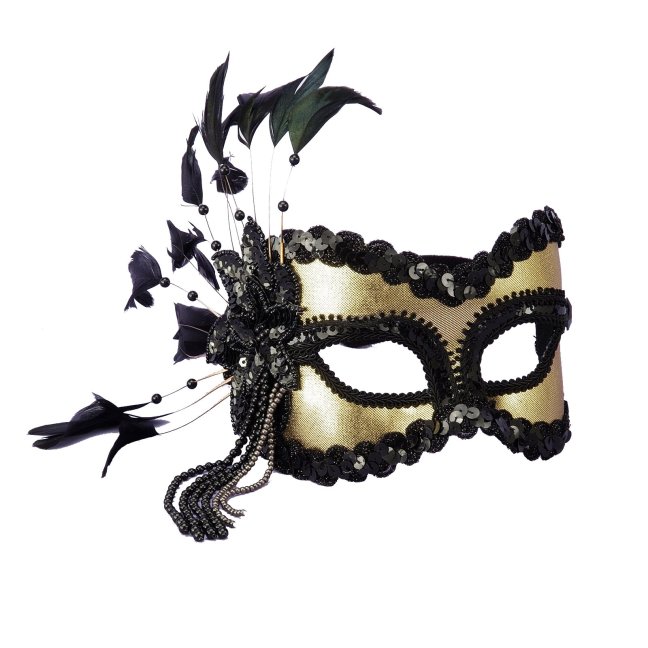
The Masks We Wear

I read this response to Robin Williams’ death this morning and it struck a nerve.

The author, also in the comedy business, discloses the dark underbelly that is often present beneath the laughs. He describes how childhood trauma or a sense of unworthiness leads to the development of an alter ago – a front man who entertains the crowd while distracting from the scared and broken child beneath.

He spoke of the yin and yang of depression and comedy. The pull of the audience and the isolation inherent in the belief that the performer is only loved for the performance.

Not for the child within who only wants to be loved.


The piece struck a nerve this morning. Caused my coffee to cool as I read.

I don’t fit that personality profile, although I have seen many in my personal and professional lives over the years (some of whom also tragically took their lives).

I don’t fit that profile.

But I fit another that I recognized as I read.


The performer is driven from a need to be loved.

I’m driven by a need to not be abandoned.

The performer learns how to entertain and draw a crowd.

I’ve learned how to be needed.

The performer struggles with depression.

I struggle with anxiety.

But we both hide behind masks.


In fact, to some extent, we all do.


The following are some of the masks and underlying causes I’ve seen. I see them in adults and I see them in my students – 13 and 14 years old. We all have the same basic needs and the same basic fears. We all try to hide them from the world and we begin to develop our own masks in childhood as we encounter stresses and learn from other’s responses to us.

These are caricatures of people. Oversimplifications. We are much more than the fears that drive us and the costumes we select to shield us.

But even though these are but a brief sketch, there is power in recognizing your own mask of choice and why you may have decided to wear it.


Mask – Performer or Funny Man

Behind the Mask – A sense of being unlovable

This may have the fat kid in school. Or the one who suffered abuse or neglect at the hands of his or her parents. This child felt alone and wanted nothing more than to loved and accepted. The performer found a love of sorts through making others smile. Even though inside he may have crying.

If I make you laugh, you’ll love me.


Mask – Worker Bee or Caregiver

Behind the Mask – A fear of being abandoned

This mask is usually picked up after a childhood event – death, divorce, desertion, or  neglect- leaves behind a fear of being abandoned at an age when adult support is needed. In order to temper the anxiety of being left again, the worker bee becomes an efficient taskmaster and the caregiver becomes a necessary nursemaid.

If you need me, you won’t leave me. 


Mask – Strongman or Overachiever

Behind the Mask – An insecurity of being unworthy

These are the people that grew up always being compared to others and found wanting. They internalize the message and feel that they will never measure up. They learn to overcompensate in a visible way to try to prove their worth and lessen their insecurities. Although often envied by others, they still never feel they will never make the grade.

If I work harder, I’ll meet your approval.


Mask – Professor or Distancer

Behind the Mask – A fear of being vulnerable

This is the person who refuses to show emotion. Who either responds with analytical perspective or indifference to any situation, even those that are emotionally charged. They are often read as cold, uncaring. But often they are soft and sensitive on the inside. So sensitive that they have learned to hide it well.

If I don’t show myself, you can’t wound me.


Most of us wear our masks when we feel threatened – a new situation, a large crowd, a demanding client. But most of us also feel comfortable enough to slip them off around our loved ones, revealing the fears and drives beneath.

It’s lonely living behind a mask for too long. You’re not alone yet you feel no one values you for the real you.

Only for the character you play.

It’s okay to shield your inner child sometimes.

But it’s also okay to let him out to play.

And teach him to trust that he can be loved and accepted as he is.

Fears and all.