Awakening From Hibernation

In some areas, it’s not quite spring but we are well over winter. The trees and flowers are just beginning to stir. The first signs of the cherry blossoms have appeared. The daffodils are letting their yellow undercoats peek out at the tepid sun. Tree branches are rounded with the soft buds of the new leaves. The stirrings are not limited to the plants. Joggers are beginning to fill the trails, especially on those days between cold and rain fronts. The squirrels are out in force, digging up the acorns they buried months ago. The birds have lifted their self-imposed ban on song and their chirps and warbles fill the mornings once again.

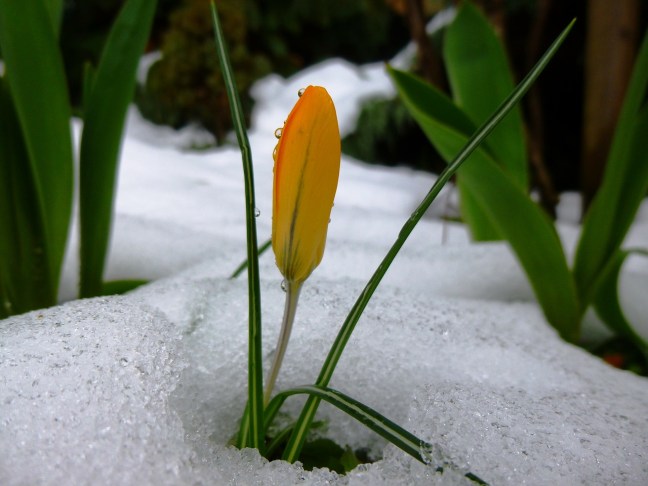
narcissus-6368_1280

It’s natural to hibernate when the world outside becomes too harsh to bear. It’s instinctive to curl up and tuck in, settling into a protective stasis. We do it annually to some extent as we follow the natural rhythms of shorter days and colder nights. We tend to narrow our worlds in the winter, paring back and slowing down. It is a time of restoration.

That contraction is countered by the expansion that occurs each spring, as we expand our reach along with the increasing hours in a day. It’s an instinctive cycle, an inhalation and exhalation on a broad scale. We are not unlike the flowers in our balance of growth and rest.

fern-340854_1280

And, just like the blossoms, we can have our rhythm disturbed. A sudden late freeze will send the plants into shock, causing them to die back and halt their growth until they feel like it’s safe to peek their petals out again. A sudden shock can just as easily cause us to slow and even stop. Parts of us can die, turning withered and black. It can lead to a period of hibernation as the body and mind turn inward. The body slows, the appetite decreases and the brain becomes sluggish.

It’s a natural response to a sudden freeze where the world becomes inhospitable and fierce. Don’t try to resist the natural cycles – you’ll lose. Be with it; ride it out. Curl up and hide but don’t forget to look outside for the first signs of spring and allow yourself to spread and grow as the sun’s first warmth touches you again.

The flowers never let the risk of a late freeze keep them from showing their beauty. Why should you?

yellow-flower-191765_1280

Curiosity Cap

Do you ever approach a new situation with the assumption it is going to be terrible?

Perhaps it’s the biting cold of your first winter run. Or the inaugural road trip with a young child. Or a medical procedure that carries the expectation of pain.

The potential list is endless; we greet new experiences with a suitcase full of expectation expressed as worries or complaints.

About something we’ve never done.

We anticipate the discomfort. The annoyances. The pain.

And by doing so, we prime the pump for reality to bear out our assumptions.

Helping to ensure that the anticipated awfulness comes to be.

There is a different way.

Put down that suitcase of expectations and put on that cap of curiosity.

My curiosity cap. And a reminder not to take things too seriously.

After all, this is something you haven’t experienced before, right? Or, even if you’ve done it prior, there are some variables that have been manipulated so that it is no longer the same event.

So rather than lead with a conclusion of full-on suckitude, approach with a sense of curiosity.

I wonder how the cold air is going to feel on my lungs.

It will be interesting to see how the baby responds to travel.

I’m intrigued to see what it feels like to have my body repaired.

And yes, you may find that it is terrible.

But you also leave the door open for the discovery that it’s not.

Present and Accounted For

As a teacher, my biggest frustration is when a kid is absent repeatedly. Without fail, they ask for their work the next day and then at some point, come to me with the words, “I don’t get it.”

I usually respond with some version of, “I know. You missed the lesson. When can you come in to learn it?” And with this being middle school and math, online videos and parents are of limited help (for you parents out there, you’re not crazy – this math is taught differently than how we learned it). For most kids, they need some direct instruction to learn the material. And with limited time in the school day and material that continues to build, repeated absences add up to a big problem.

When I have a kid, even a struggling or not very motivated one, who is in class, I can work with them. I can watch their reactions during a lesson and clear up misconceptions before they build. I can observe them attempt problems and intervene when they make a misstep. I can encourage them when their attention flags and build up their confidence when they are afraid to try.

It’s frustrating to see them falter when I can’t do anything about it.

Presence comes before progress.

And isn’t that true in a marriage as well?

Even when things are rocky, presence matters. If you have a struggling spouse who is still present in the relationship, you can lend support. Missteps and mistakes can be corrected when both partners are vested. When one person’s attention wanes yet they are still in attendance, there is hope for redirection and re-engagement. When one spouse is fearful and able to show it, the other can sound the rallying cry.

But when one partner racks up the absences and is already checked-out?

There’s not much the other person can do.

Because that’s the mathematics of marriage.

1+1=2

But 2-1=0

It takes two to make it work and only one to destroy it.

And accepting that you cannot fix everything no matter how much you want to is a painful lesson indeed.

Did You Miss These?

My newly planted plants managed to survive the freeze with only cosmetic damage. It’s funny, similar damage used to devastate me. Now? I just shrug it off. I know that the wilted and damaged tissue will fall off of its own accord in a matter of days and that in a few weeks, there will hardly be a scar.

And now that the weather is in agreement with the calendar again, I’ve returned to yard to tend and water and plant some more.

With my hands busy in the garden, they have been idle at the keyboard.

The following are some posts that, according to the numbers, there’s a good chance you missed. Why not check out one that piques your interest?

Rewriting the End of a Relationship We often underestimate the power we have. Learn to embrace it.

Bust a Rut Sometimes life doesn’t allow us to change at our own pace.

Sacrifice Surprise – this can be a reason marriages end.

Growth Mindset in Marriage There’s a reason this trait is prioritized by job interviews.

The Anti-Victim Use these strategies to empower someone else. Or maybe even yourself.

Debridement Hard to read. But powerful lessons to learn.

Progressive Resistance It doesn’t get easier. You get stronger.

The Faux Commute Some take it literally. Others stick to metaphor. But we all have something to learn on this drive,

Outsourcing You can’t outsource healing. You have to do it yourself.

You Are Not Your Divorce Sometimes we need a reminder and a little perspective.

Confirmation Bias in Marriage Strive to see with your eyes rather than your assumptions.

Understanding and Addressing Loneliness After Divorce

It has been postulated that loneliness is one of the primary epidemics of our age. Loneliness is much more complex then it may seem; the single person living alone may not be lonely while the married person constantly surrounded with others might be. Teenagers today, never far from their countless social media feeds, report feeling lonelier than generations past. Loneliness comes not from the quantity of our social connections, but from the quality.

Loneliness is so much more than the ache of being isolated. It is associated with a greater risk of depression and an increased chance of death though all means. We are a social species; like Maslow’s young monkeys proved, we have evolved to form relationships. And we only thrive when those relationships thrive.

Understanding Loneliness After Divorce

Your spouse probably knew you better than anybody. Even if the final years of the marriage were filled with conflict, just the fact that he or she knew exactly how to push those buttons is a sign that you were known. And then at some point, either before or after the split is made official, you became persona non grata in his or her eyes. And that’s the door sliding shut on your solitary confinement.

If you do not have children or your children spend time visiting their other parent, you are facing the haunting echoes of an empty home. The barren space mirroring the chasm in your heart. It’s a strange feeling, being alone, when you’re used to another person being there. Even if your spouse traveled frequently leaving you home, you may find that the finality to this emptiness gives it more weight.

The end of a marriage is the end of so much more. Like the ripples from a stone thrust rudely into the waters, the impact of the divorce carries far and wide. You may lose friends. And many of the friendships will certainly change. It’s a cruel joke – when you need connections the most, they fall apart.

Some of loneliness after divorce is inevitable. There is a void that takes time to fill. There are changes to adapt to and a curve to learn.

But you don’t have to sit idly by. You may feel as though you’re in solitary confinement, but the only locks on that door are the ones you secured yourself.

Addressing Loneliness After Divorce

The first step in combating loneliness is understanding your social and relationship needs. Are you an introvert that thrives on alone time and only needs a few close connections? Or, are you happier when you are surrounded by people? It’s an important distinction. The introvert can feel lonely and stressed if in the center of the action, whereas an extrovert can feel painfully isolated even in the company of a single close companion. Know thyself. And create a world that matches your needs.

So many rebound relationships are entered into in an attempt to patch that intimacy void left by a departing spouse. It never works, at least at first. It takes time to form connection; a new relationship, no matter how exciting, does not yet have that vulnerability and intimacy of an established one. Instead of looking to new partners to fill that gap, turn to existing relationships. This is a great time to nurture that bond with a close family member or your best friend. Those relationships tend to take a back seat when you’re married. Invite them to sit shotgun.

In divorce, you lose people. So go find more. Invite a coworker to lunch. Accept the invitation to a party. Join Meetup.com and sign up for a group that interests you. Get to know your local grocery clerks; a smile and some brief chatter from a friendly face can change your entire day.

Cultivate your passions. What did you used to enjoy doing as a child or young adult that you no longer do? This is your opportunity. Pick up that paintbrush again. Brush the dust off that guitar. Sign up for the soccer league. When you’re engaged in what you love, you don’t feel lonely. Even if you’re the only one in the room.

One of the most devastating elements of loneliness is the feeling that you don’t matter. That you could exit the world today and no one would even notice. So make an impact. Join a volunteer organization. Become a Big Brother or Big Sister. Spend time with the elderly at a retirement home and gain wisdom from their stories. Or, register to rock newborns in the nursery and gain hope from their innocent eyes.

Ultimately, loneliness is a choice. And inaction is choosing to remain isolated.

So if you’re feeling lonely, do something.

Reach out.

Nurture connections.

And get busy.

Divorce can make you lonely.

But you don’t have to stay there.