Vantage Point

Let me state right up front that I am not a parent. Apart from living with an infant for a year, I have not resided with a child. I have never experienced the fear that grips when you lose sight of your child in a park. I have never felt the aching pull when you have to be at work and your child is ill. I have never felt the overwhelming joy when your child takes his first step or reads her first book.

But that’s not to say I’m ignorant of parenting. I’ve spent the past thirteen years teaching 13 and 14 year olds. It’s a pivotal point in their lives; this is when they are starting to apply the lessons they learned in childhood. They are beginning to separate from their parents and take their first tentative steps into the bigger world. And it’s an interesting vantage point.

There are aspects of parenting I will never understand or appreciate. I have the utmost respect for those who parent selflessly. It’s a difficult job.

And it’s one that I often see people approach as though they’re afraid they will be terminated.

But the thing about parenting is that, if you do it well, you will lose the job.

That’s the point.

The goal of parenting should not be to be the parent possible or even to create the best kids possible.

It’s to raise the best adults possible.

It’s a blend of accepting the realities of the moment (terrible twos anyone?) yet always keeping in mind the intended outcomes. It’s about being the parent that your child needs, not the parent you would prefer to be (or the parent your parent was).

Based on my observations on the thousands of teenagers that have crossed my path over the years, these are the most important lessons to give your children:

Perseverance

Let your child fail but don’t let them internalize failure. Let them see you struggle and let them see what you gain when you do. Teach them that everything worthwhile in life requires effort. Discourage the use of the words, “I can’t.” Encourage them. Celebrate success but also celebrate attempts. Especially repeated ones. Remind them of skills they now take for granted that took tenacity to develop. Teach them the difference between quitting and letting go. Give them love but make them earn respect. If you give them everything, they become like a lion in a zoo. Unable to hunt on their own.

Empathy

Expose your child to the larger world. Do not attempt to hide all suffering. Suffering is part of life. Teach your child to respect and honor it. Model empathy. Use stories in books and movies as an opportunity to have them express what a character is feeling. Give them an opportunity to care for another. Even if it’s just a fish.

Integrity

Be careful what you model; they will do as you do, not what you say. Reward honesty. Discuss implications of dishonesty, both personal and societal. When they call you out when your actions do not match your words (this WILL happen), admit it. And then fix it.

Responsibility

Teach them that their response is always a choice. Nobody can make them feel or act a certain way. Discuss consequences of choices and then let them happen. A consequence must be felt to be effective. Don’t intervene in every situation. There will come a time when you can’t and your child needs to learn how to fight for himself.

Humility

Teach them that if they think they know everything, they will learn nothing. “I don’t know” is a starting point, not a conclusion. Let them see you learn. Show that you are human. And fallible. And teach them that they are too.

Gratitude

Have them create gratitude lists, whether through bedtime prayers or in a journal. Highlight the positives. Teach them that whatever they nurture will grow and help them grow life’s flowers. Don’t just tell them they have it good; show them. Gratitude is a powerful tool; help them learn to wield it.

It’s easy to get caught up in the thousands of details that fill each day as a parent. But in the end, the lessons above are the ones that really matter. Teach those and you will put yourself out of a job. And this is one job you want to lose.

Because the severance package is pretty awesome.

Legacy

During periods of struggle in my life, my maternal grandmother has been my lighthouse. She has endured many hardships during her 94 years and each one has caused her to embrace life with even more passion and vigor. She showed me from a very young age that although you cannot always change your circumstances, you can always change your attitude.

I’ve always identified with my grandmother; we have similar wiring that causes us to think (and often over think!) through problems, planning every little detail. This means that we’re always prepared, but it also can create needless worry about things that may never occur. We are both driven by a hunger to know more, understand more. And we both have a memory that is both a blessing and a curse, that retains and replays every life scene.

Her lessons make me laugh, as they never come in the expected form of words from a grandmother to a child. Her wisdom is transmitted through quips and actions that reveal the astuteness beneath. Here are a few of her pearls and the gifts beneath.

Tenacity

When I was in second grade, I was assigned a project to collect and identify seeds from several different trees. As an overachiever, I was not content to simply utilize the trees around my home in Texas, so I asked my grandmother to send me some from Wisconsin. A few days later, I opened an envelope with an assortment of seeds and a handwritten piece of paper detailing their origin. I promptly glued those seeds along with their southern relatives on a piece of poster board, labeled each find and turned it in. I was done. But grandma was just getting started. For the next three years, I would periodically receive an envelope filled with more seeds. I don’t think she stopped until she had collected genetic material from every tree in the state.

Play

One of my favorite memories of my grandmother is from a visit when I was a teenager. All of the cousins were present on this visit and the decision was made (probably for sanity’s sake) for the entire family to go to the water park. I assumed my grandmother, who was around 80 at the time, would elect to stay home or, at the very least, stay with the bags and the baby while the rest of us tackled the slides. I could not have been more wrong. There is something about the sight of an 80-year-old woman squealing with joy beneath her flowered swim cap going down a water slide that makes everyone smile.

Openness

I first moved in with my ex husband when we were just 19. I was nervous about my grandmother’s reaction. And shocked when I received it. One day, mere weeks after moving in, I received an envelope with a check for $200 (a fortune to two 19-year-olds just starting out) and a note that read, “This is a gift in stages for a marriage in stages.”

Curiosity

I think my grandmother could probably secure a job as a presidential advisor. No, seriously. She craves knowledge like a retriever follows a tennis ball. When mobility issues started to keep her home more, she found ways to bring the world to her. It’s not unusual for her to know about a weather event or other news story in my area before I do. Even though she has never been able to visit me in my 15 years in Atlanta, give her a map and she could plot every place I’ve ever lived and worked. Let’s just say we should all be appreciative she uses her powers for good, not evil.

Defiance

I have always been a rule follower. My grandmother is a rule breaker. No need to alert the police, she doesn’t speed or jaywalk or anything of that nature. But she also doesn’t let other’s rules box her in. Women aren’t supposed to do that? Hogwash. I’m too old? Watch this. Oh, I’m not supposed to think that way? Tough. At times, she has faced consequences for her actions, but she doesn’t waver.

Acceptance

I made a trek to Wisconsin mere weeks after Brock and I started dating. When I saw his picture on my grandmother’s fridge, I was a bit startled. It seemed too soon; I wasn’t sure this guy deserved a place among the family yet. “Don’t worry,” my grandmother replied to my inquisition with a smile, “It’s not up there with glue.”

Gratitude

My grandmother has nursed enough people to earn an honorary RN. She has survived the death of two husbands. She kept her family going through the depression and other hardships. She faced more obstacles than a participant in a mud run. And the amazing part? She never complains. No matter what life throws at her, she turns it over to see the positives hidden beneath.

Her legacy is in her lessons, now passed on to her children, grandchildren, great grandchildren and anyone else who has crossed her path.


A Woman I Used to Know

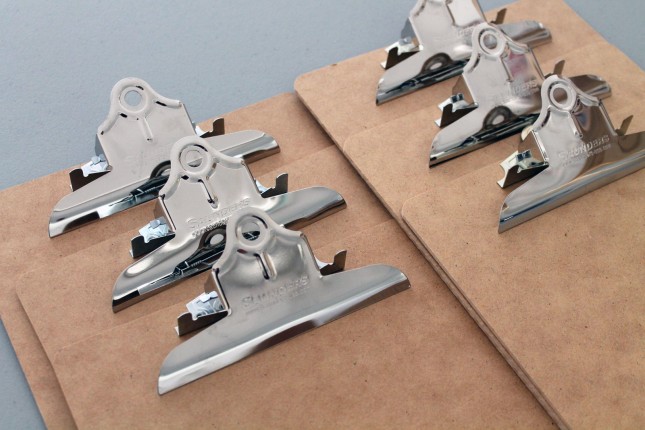
The student pulled a clipboard from the bin.

“Who’s Mrs. —?” he inquired, reading my old married name off the back of the clipboard.

I smiled, “Oh, just a woman I used to know a long time ago.”

Ain’t that the truth.


Many of the items in my classroom are labeled with my old name. When students ask who she is, I’m vague. Most have concluded that she is a retired teacher who gifted many of her classroom items to me.

In a way, they’re right.

She’s certainly retired. Not from teaching, but the old Mrs. — is no longer around. There are those who remember her and tell stories of those days, but they are behind us now.

Mrs. — has been replaced.

No, that’s not quite right.

She’s been transformed.


One of the more difficult aspects of a major life renovation such as divorce is that we struggle to imagine ourselves any way other than we are in that moment. If you asked the old Mrs. — who she was, she would speak of her role as teacher and tutor, she would talk lovingly about her husband, she would tell stories of her dogs and you would be cautioned from getting her on the subject of plants.

In those days when all was washed away, I remember feeling homeless in my soul. I didn’t know who I was anymore. Who I would become. I knew I would never be the same yet I couldn’t imagine anything but what I was.

And that was a scary place to be. Not the old me anymore and yet not the new one either. A limbo of self.

Scary and yet empowering. Because when you’re rebuilding your life and your identity from the ground up, you have the power of choice and the wisdom of experience. And that’s a powerful pair.

And the main choice I made was to be happy. Not happy because of the tsunami divorce. Happy in spite of it.

Everything else was secondary.


And now, here I am. Mrs. again. Dog momma again. About to plant again.

On the surface, much may be the same.

But beneath?

Everything has changed.

Because you can’t go back.

But you can always move on.


The old Mrs.— has retired. And now she’s just a woman I used to know.

And if you happen to see her, please tell her thanks for clipboards.


Bookends

I rarely think or write about my parent’s divorce. It feels like ancient history and, for the most part, I never viewed it as a defining moment in my life.

But I may have been wrong.

As I dig down into the roots of some of my thought patterns, it seems like the fallout from their divorce is the soil from which they sprouted.

Damn.

My parents, at least from my perspective, had a good divorce. Or at least as good as a divorce can be. I was insulated from as much of it as possible. There were no court battles, custody and child support agreements were made and followed. They both refrained from talking badly about the other and both made huge efforts to put my needs first.

They did pretty much everything right. Which is probably why I handled the transition well and don’t recall feeling undue stress.

But even when done well, change changes you.

We soon went from a family of three to a mom-daughter pair. I knew she was stressed and I didn’t want to add to that burden. I knew money was limited and I didn’t want to spend. I knew she had an abundance of responsibility and I didn’t want to contribute to the load.

Additionally, their divorce left me a bit like a chick pushed out of the nest a little too soon. And even though they picked me right back up, the knowledge of that unforgiving ground was impossible to forget.

Some kids go a little wild when their parents split, looking for attention and release.

I went the other way.

I became responsible.

I became perfectionistic.

I became self-reliant.

I took it upon myself to become my own parent. I watched my grades carefully and gave myself talks when I didn’t perform up to my potential. I carefully considered consequences and often held back for fear of negative outcomes.

I assumed the role of clock-watcher. Drill sergeant. Task master. If you wanted it done, I was your gal.

I took “I can do it myself” to whole new levels.

This was not an assigned role; it was self-appointed. It was my way of feeling like I had some control in my life.

Taking responsibility is a good thing. But I took it too far, assuming other’s burdens as well as my own.

Self-reliance is a positive trait. But I used it as a way to avoid feeling vulnerable.

It was my armor. My shield. My assurance.

And it was never really tested until my divorce.

And that was the first time I couldn’t do it myself.

I had to learn to release control. I had to learn how to accept help.

And I had no choice but to be vulnerable.

It’s wild – I learned self-reliance from my parent’s divorce and how to accept help from my own split.

It’s amazing how often life’s experiences will circle around again, healing old wounds and reteaching lessons. Each parallel event offering wisdom and yet threatening wounds. It can be tempting to desire a life without these difficult episodes, to dream of smooth days and comfortable nights. But I see these events differently. They are what bring meaning and purpose and perspective to our lives. They challenge us and teach us. They shape us.

Bookended tutorials supporting the life in between.

I wonder what lesson will circle around next? I just hope this one doesn’t come with a side of divorce. I’ve had enough of that!:)


8 Lessons From the Campground

Our annual Thanksgiving camping trip is only days away. The long underwear has been unearthed and the tent located. My weekly shopping list makes it clear that I am preparing for cold weather and hearty appetites. I love our times at the campground – they have been a key part of our relationship from the beginning. Here is a repost of our first Thanksgiving camping trip. If you want the full effect, read in front of a campfire:)


Mere days before Thanksgiving, my partner and I found out we had to move within 30 days because his house had just sold.  We had been planning a camping trip over the break and our initial reaction was to cancel the trip, so that we could focus on the move.  I am so glad that we decided to continue with the trip.  Not only did we have a good time and enjoyed the time together, but it actually made the move less stressful because we had lessons that we took with us from the campground.

1) Teamwork Required

One of the best aspects about camping is that it requires teamwork.  Assembling a large tent is a,most an impossibility single-handedly, but becomes a fun challenge when tackled by two.  We quickly fell into a rhythm, working together, sharing some tasks and dividing others.  He would brave the early morning frost to get the fire started so that we could prepare breakfast.  I faced the frigid waters to clean the dishes of their breakfast remnants.  The dog, well, he just laid there shivering in a sleeping bag looking pitiful. We functioned as a team.

2) Take Pleasure in the Smallest Things

When camping, you certainly have to do without many of life’s modern conveniences.  However, because your expectations are in line with reality, it is not necessary a bad thing to leave that behind.  You learn to appreciate the smallest achievements, the tiniest bit of warmth, a few steps on level ground.  You don’t know when your next bit of pleasure will arrive, so you celebrate each moment of it that comes your way.  And, just so you know, Starbucks VIA works great at a campsite; that first sip of coffee each brisk morning was heaven.

3) Surroundings Don’t Impact You as Much as You Think

I have always been sensitive to my surroundings; I need things “just so” so that I can work or relax.  This can be a problem when moving, because some amount of chaos and disorder is inevitable.  The campground was organized for functionality.  We certainly had beautiful views, but they were not to be had in our immediate surroundings.  But it was okay.  Happiness is not found in a campground that looks beautiful, but is devoid of soul.  I learned to release some of my obsession with my surroundings; they don’t matter as much as I think.

4)Take Breaks

We spent each day on long hikes up nearby mountains.  We had our goal of reaching the tops, of course, but we planned each day with plenty of time to get there.  As a result, we were able to take breaks whenever and wherever we chose.  These are some of my favorite memories of the trip; the times sitting on the side of a mountain, looking out over the vistas, my boys by my side.  Immense pleasure can be found in those moments between activity.

5) Share Burdens

Long day hikes require a decent amount of supplies, especially when your partner insists on bringing survival gear:)  We shared the load, distributing the weight so that no one person had too much to bear.  Even the dog has to carry his part.  There is no reason that any burden has to be carried alone; you can even share the load with your dog if need to.

6)  Uphills are Balanced by Downs

Some of those hikes felt like they were uphill both ways, but any loop or out-and-back will have a net elevation change of zero.  Just like on the trails, we are often more aware of the uphills in life, but remember that they are balanced by the downhills.  Make an effort to notice the times the path is easy.

7) Use Your Resources

This is where my partner really shines.  When we realized that one of the tent stakes had broken when we were assembling the nylon beast, he grabbed some supplies from his pack and some sticks from the woods and quickly fashioned a replacement within minutes.  Before declaring a situation beyond hope, look around you and see what you can utilize to help.

8)  It Takes Effort to Gain Perspective

Our campsite was located at the base of Table Rock Mountain, its visage towering over us in all its granite splendor.  Our first day was spent preparing the campground, we were in our little insular world.  The next afternoon after a long, uphill climb, we reached elevation where we could see our campsite and how it related to the larger landscape.  We tend to live life in its details and forget to look at the big picture.  It takes effort to gain perspective, but a climb to the top gives valuable information.  It’s worth checking out now and then.

We took those lessons with us into the move and we try to carry them with us all of the time.