An Open Letter to Those Who Have Been Ghosted by a Partner

ghosted

I see you.

I know that right now you’re feeling insignificant and discarded. I see you standing there in utter shock, struggling to process how everything changed in an instant. The “before” and “after” alternately body slamming you with the brutal reality. I see you because I was you.

I hear you.

I know that you’re frustrated that your voice, your very right to speak, has been taken from you. I hear your silent screams into the void, the endless question of “why” echoing through the fog. I hear your voice because it follows my own.

I understand you.

I know that you’re questioning everything, running every detail through your mind, worrying each strand of memory like a loose thread. I understand the doubts that are starting to creep in, that you’re wondering what clues you may have missed or even believing that you somehow deserved this on some level. I understand you because I was in that same place several years ago.

The pain and confusion you’re experiencing are totally normal reactions to such a complete and total blow and betrayal.

Being abruptly abandoned without explanation is one of the more painful experiences that life can deliver.

And the first thing you need to understand is that leaving in that manner is a reflection of your ex’s character. Not yours. Some may remind you that relationships take two. And this is true. Yet ending it on this jarring note was a decision made without your cooperation. You may experience judgement from others. Try to be patient with them as they truly don’t understand what it’s like. Even loved ones may seem to blame you. This is often because they cannot bear to imagine this happening to them and so they need to try to make some sense of why this happened to you.

Ghosting is cowardly. Instead of having the difficult conversations and potentially seeing you hurt, they chose to run and hide. That is not healthy adult behavior, especially with a relationship of significant depth and duration. It’s not fair to end a relationship this way. It robs you of any opportunity to ask questions, much less eliminates any chance you may have had to fight for the relationship.

After being ghosted, you are haunted by the unknowns. Those endless questions can drive you crazy. Again, I’ve been there and I took that ride for a time. You may get some answers. It could be that they were seeing someone on the side or that they had amassed secrets that they wanted to keep hidden. I know the temptation to hunt for information is strong; however, I encourage you to keep this urge on a leash. Too much obsession over the reasons for their actions will only serve to bring you more misery. They gave you important information about themselves by leaving this way. Ultimately, that matters more than any details.

Are you desperately looking for closure?

If you’re finding yourself stuck by not knowing what happened like an unfinished puzzle with a lost piece, use what you know to fill in the gaps. Craft a story from the facts you have and your knowledge of your ex. You may not get it right. But it doesn’t matter. Our minds fixate on what is missing. Once you fill in those holes, it gives the brain permission to rest. Here are some more ideas on how you can find closure without your ex’s cooperation.

Perhaps the most cruel part of being ghosted is that the residual doubt and uncertainty lingers and follows you into new relationships. You can easily become anxious, desperate not to be blindsided again. And this worry can easily poison your new relationship if you allow it to simmer. It’s important to learn to trust yourself again. It’s possible that you didn’t signs in your other relationship because you were afraid of what they would mean. Trust that you can not only recognize brewing problems but that you can also face whatever may come.

I’m probably getting a little ahead of myself. Right now, you just want to know how to make the pain end. I wish I could wave a magic wand for you and release the anguish you feel. But I can’t. No one can. Not even your ex.

They are gone.

The way they went about it is cowardly and shitty. Yet the end result is the same. They are gone.

They had all the power in how they chose to end things. You have all the power now in how you choose to move forward.

I’m going to interrupt to share with you a little story about ghosts –

When I was six years old, my parents took me to Disney World. I insisted on waiting in the two-hour line for the haunted mansion ride. They indulged me (yes, I am an only child.) As we approached the front of the line, the details of the house and the spooky sounds playing over the speakers began to frighten me. Panicked, I refused to step inside the attraction.

A short time later, I gathered up my courage and decided that I wanted to brave the ride again. My parents again indulged me, only with some well-deserved grumbles this time.

It turned out that I had built those ghosts up to be way bigger and way more powerful than they were. The fear was within me. The story that they would harm me was one that I was telling myself. And when I walked back out into that Florida sunshine, I felt proud of myself that I had faced those ghosts and made it out the other side.

I know this ghost is different. They have hurt you. Deeply. Yet now they are like a projection in that haunted house – the real danger is over. What’s left is the apparition in your mind. And even that will fade as you again walk back into the light.

You will never forget “the one who ran away.” But don’t waste your life chasing after them. They are not worth your time.

Your love and loyalty and energy are better spent on those that deserve it.

And that includes you.

I see you.

I hear you.

I understand you.

And I believe in you.

Lisa


Want to learn more about my story when I was abruptly abandoned by my husband after sixteen years?


Are you looking for help recovering from being ghosted? 


Diving for Pearls

There are times when Truth is important –

When my students use verified geometric theorems to prove triangles congruent.

When my husband tells me where he’s going on a Tuesday night.

When my doctor asks about my family history of cancer.


And then there are times when Truth really doesn’t matter.


A person reached out to me yesterday with the concern about their place in their former partner’s view – did they love me or did they use me?

As I sat on the bench in the gym locker room typing out a response, I was transported to a time when that same question consumed me. As the details of my husband’s other life began to surface, I couldn’t help but contrast what I was feeling at that time (loved) with what he was doing at the time (anything but loving). There was no doubt that he was acting without concern for me towards the end, but did that mean that he never cared for the entire sixteen years?

I was obsessed with answering this question. I would consider evidence in the form of memories or discovered facts and dutifully enter a mental tally mark in either the “He loved me” or the “He loved me not” column. And yet, I never seemed able to settle on a true answer. For every indication that he loved me at some time, I could find a counterclaim that I was merely a pawn in his game.

I was looking for definite proof. For Truth.

But what I really wanted was for the pain to stop.

And Truth, assuming it could even be ascertained, really didn’t matter.


I made a conscious decision to retire my search for Truth. I accepted that he had used me  in the final few years of the marriage and I chose to believe that the love I felt prior to that was real. Maybe I’m right and he did have the capacity for love until he collapsed under the pressure of shame and addiction. Or, I may be completely off base and he may have been a manipulative sociopath from the beginning.

It doesn’t matter.

The marriage is over. I don’t need this information to make any decisions in the present moment. My views don’t impact my ex one way or the other. I’m not presenting this conclusion as definitive and I’m not deceiving anyone. There are no judges evaluating the evidence for my claim and no real-world repercussions either way.

It only matters within me.

So I choose to believe the truth that brings me peace and allows me to hold onto some of the good memories instead of throwing sixteen years of my life away.


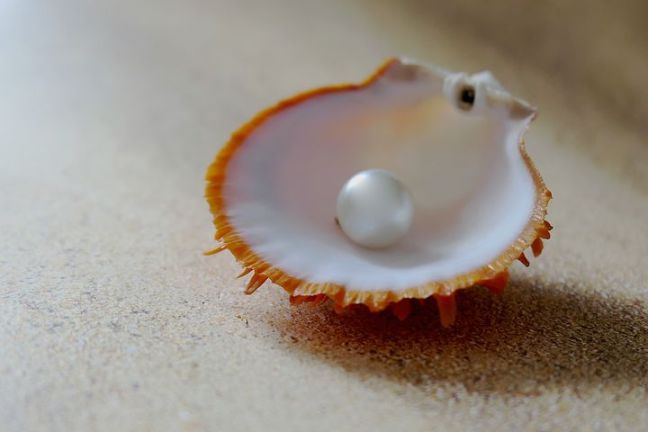
Oysters developed a resourceful strategy for handling unwanted and irritating invaders. In order to reduce the pain from a wayward grain of sand or grit, they surround the unwanted particle with smooth coating of calcium carbonate.

That’s how I see my resolution to conclude that I was once loved by him – a pearl enveloping and softening the pain.

And it may not be Truth in any real sense, but it’s real enough to me.


Was Divorce What You Expected?

Do You Suspect Your Partner is Cheating?

cheating

Do you suspect your partner is cheating?


I laughed it off at the time.

My then-husband had recently become enamored with a particular style of Calvin Klein boxer briefs after years of mainly going commando. Since I was off school for spring break, I took on the task of tracking down several pairs for him so that he had enough to last a full week on the road.

I had read that a sudden change in preference of undergarments was a potential sign of an affair, but the thought that this man who was always so attentive and complimentary was seeing somebody else was laughable. I dismissed the idea as rapidly as it came to me.

And then, months later, the truth hit with a surprise uppercut.

The husband-of-the-year had disappeared into the arms of another. And he took his new boxer briefs with him.

Until I saw the evidence of the infidelity, his potential cheating was like Schrodinger’s Cat – until the box was opened, he was both faithful and unfaithful. I could both drive myself crazy by assuming that he was cheating or I could find false comfort in the conclusion that he was faithful.

And neither position of mine would have altered the facts surrounding his infidelity.

One of the most challenging truths about trust and fidelity in a relationship is that you have limited influence on the actions of your partner.

You can choose wisely, be a loving and present spouse and be alert to possible signs of cheating. And then you have to find acceptance in that in between space, where infidelity is simultaneously a possibility and out of the question.

After being cheated on in my first marriage, I was concerned about finding the balance between awareness of potential issues in my new relationship and also trust in my partner. My concern was that I would err too far on the side of suspicion, looking so hard for signs of cheating that, even if my partner was faithful, I would be living as though I was being betrayed.

I heard recently about a woman who knows her husband is cheating on her. Instead of making a decision about the future of the marriage, she is instead constantly monitoring his location. I can understand this reaction. By keeping tabs on his whereabouts, she is maintaining a sense of control in a situation where she is quite powerless. She can’t keep him from seeing his girlfriend, but at least she knows when he’s at the girlfriend’s house.

I understand this reaction, but the thought of living in that space makes me shudder. It must be horrible to know the details of the infidelity but be unable to alter its course. This false control becomes a distraction from the true source of power she does have – the decision if she is going to continue to tolerate this dynamic.

Other people are prone to snooping with the excuse that knowledge is power, assuming that if they just know enough about their partner’s life and interactions, they can stop potential infidelity before it starts.

It is a nice thought, that information is sufficient to shape the behavior of others. But, like with the illusion of control that comes from relationship insecurity, it’s a false comfort.

You will never know everything about your spouse’s life or history. You can spend all day together and they could be engaging in a secret online romance or you could have a long distance relationship where everything is aboveboard. Insisting on knowing everything is off-putting and creates an environment where your spouse is tempted to hide in order to avoid the constant questioning or to claim a reasonable amount of privacy. On the other hand, a total disinterest in information gives a sign of disinterest and even implied permission to act poorly.

There are times that I miss the sense of security I had in my first marriage, a certainty that he would be by my side no matter what.

And then I remember how that ended up.

I traded security born from willful ignorance for an acceptance about life’s impermanence and an appreciation for today.

An exchange I feel good about.

A few years ago, my now-husband found a type of underwear he loved. I looked from grading one evening to see him opening up a package from Amazon with multiple pairs. After admiring the view as he modeled a pair for me, I paused for a moment, remembering the similar scenario several years prior with my first husband.

Even though the immediate facts were homologous, the circumstances were completely different. Perhaps most importantly, I was no longer afraid to consider and confront the idea of infidelity in my husband (if I thought that it was a possibility). If I had been honest with myself ten years ago, I probably would have identified other facts that might have indicated that something was going on. When I considered this possibility with my second husband, I landed on a complete lack of evidence of infidelity. Furthermore, I had become quite uneasy towards the end of my first marriage, a current of anxiety of unknown origin coursed through me constantly. Whereas in my second marriage, I have never had that same vague sense of dread.

If certain signs have made you suspicious about your partner’s behavior, you have some decisions to make.

First, what do you want to do with this information? You can pretend you didn’t see it (not advisable, see my story for reasons), you can gather more data or you can confront your partner with your concerns. Here’s the hard part – once your brain has considered this possibility, there is likely little that your partner can say to completely alleviate your fears. That doesn’t mean that they are cheating; it means that trust has to operate on both faith and facts.

If you learn that your concerns are valid, are you prepared to set some boundaries? Maybe you are willing to try to work through this if your partner is on board or perhaps this is a deal-breaker for you. If they deny the affair (and you have proof) or they refuse to end the infidelity, what decision will you make?

I caution against remaining overly suspicious for the long term. It won’t lessen the chances of an affair (in fact, if anything, it can encourage it, “If you’re going to accuse me of it, I might as well do it.”) and it will only serve to make you miserable. If your concerns appear to be unfounded, consider the possibility that they have more to do with your own insecurities than your partner’s actions.

Transfer your energy from your partner’s activities to your own thoughts.

If infidelity is Schrodinger’s Cat, I refused to open that box in my first marriage, stubbornly believing that as long as I didn’t look, my marriage was still alive. Now, I take the occasional peek in the box to ensure that all is well, but for the most part, I operate from a place of trust. Because living a life of suspicion means that I am allowing myself to be a perpetual victim of infidelity. And that’s not the life I want to live.


Are You Wondering if You Tried Hard Enough to Save Your Marriage?

Have you reached the conclusion that your marriage is over yet you are still questioning your decision? Are you haunted by the thought that maybe you didn’t try hard enough to save your marriage and that you were too hasty in pronouncing it dead? Are you experiencing guilt surrounding your decision to divorce, especially as you see the ripple effect that it has on others?

I can’t reassure that you did everything you could and I also cannot tell you that there was more that you could have done. Only you know the particular culture of your marriage, the efforts you put forth and the responsiveness (or lack thereof) of your ex. But maybe I can help you find some clarity in your decision.

Just the fact that you’re stressing about your choice means that you are giving this decision the attention it merits. Your questions are a natural response to a life-altering conclusion, a sign that you take your commitments seriously and that you have empathy for the impact that your choices have on others. Furthermore, by wondering if there was more that you could have done, you’re demonstrating personal responsibility, an honorable trait.

Yet even though that questioning is a sign of consideration and character, listening to the constant barrage of “What ifs…” can drive you crazy, especially in the immediate aftermath of the split when everything seems worse than before. This constant doubt can hold you back, keeping your energy focused backwards instead of moving on from where you are.

The decision to divorce is rarely clear-cut. It’s no wonder you’re feeling confused when the waters are murky. This is especially true when you are unable to make a mutual decision about divorce, when the decision rests entirely on your shoulders. Maybe you’ve spent years trying to get your partner to engage and they continually refuse to put forth any effort in the marriage. Perhaps you’ve endured endless cutting words and psychological sabotage. Or possibly your partner is okay with a mediocre life and marriage but you desire more.

Regardless of your situation, your sphere of influence can only travel so far. You can makes changes within yourself. You can talk to your spouse about what you want your marriage to look like. You can ask for changes, suggest ideas and implement new strategies. But you also cannot do all of it alone. If you’re not satisfied with your marriage and your partner is refusing to work with you, you’re ultimately left with three choices: 1) accept the marriage and your spouse as they are, 2) stay in the marriage and continue to be unhappy and frustrated, or 3) leave.

I like to compare these choices to what happens when your bicycle breaks down:

I see the vows as like the wheels on a bicycle. Ideally, both are fully functioning and working in concert. If one tire is a little flat, the other can help support the weight for a time until the tire is re-inflated. If one wheel is bent, the ride may not be over as long as the metal is hammered back into shape. Yet if one wheel is removed, the bicycle is useless no matter how hard the remaining wheel works. And it’s time to either find a new wheel or learn how to ride a unicycle.


Here’s a painful truth – even if the decision to divorce was the right move in your case, it doesn’t mean that you’re necessarily going to feel good about it. The right thing is rarely the easy thing. And sometimes the decisions we have to make are going to result in some collateral damage. (Here are your responsibilities when making a decision that will negatively impact others.) You have to balance your needs with the desires of others.

For parents, it is impossible to separate the decision to divorce from the impact it will have on the children. You may be wondering if you should have stayed and dealt with your unhappiness quietly in order to preserve a two-parent home for your kids. Yet this is often presented as too simplistic of a choice: go and it’s bad for the kids or stay and it’s good for the kids. Both options have both potentially detrimental impacts and allow for new possibilities. Divorce is difficult for children, but so is staying in a home with fighting or constant negative energy. Make your choice and then do what you need to support your kids.

It’s common to question the decision to divorce in the year following the initial separation. This is a challenging time for everyone, a dismantling and demolition. From this vantage, it can often seem that the decision was made recklessly because the marriage doesn’t seem so bad compared to its aftermath. Be patient and compassionate with yourself during this period. This temporary struggle is not a sign about the integrity of your decision to divorce.


Some of the most difficult divorce decisions come when you still love your partner but you are unable to stay married to them for some reason. That’s a hard pill to swallow, that just because you love someone, it doesn’t necessarily mean that you’re good together. It’s true, sometimes the greatest sign of love is letting someone go. Even when the release hurts likes hell.

As you move forward with greater wisdom and self-reflection, you may indeed realize that there were things that you screwed up in your marriage. You can allow this to solidify into guilt and regret or you can accept that you did the best you could at the time and promise to not let those lessons go to waste in the future.


Related reading:

What Do You Owe Your Spouse? 

What Makes a Marriage Successful? (And Why Divorce Doesn’t Mean Failure)