Ten Lessons I am Still Learning

photo-302

I took a break from the work of moving this past Sunday morning to sit on my new screened in porch with Tiger, both of us enjoying the view and the serenity (although I think he appreciated the squirrels more than I). Being able to take that break when there was so much to do was progress for me, a sign that I am indeed still learning. It prompted me to dust off this oldie but goodie from the archives – Ten Lessons I Am Still Learning. It’s funny when I look at this list now – I have downhill skied, learned how to relax more and even fallen in love with stretching in the form of yoga. I’m straddling two homes at the moments, both with extremely cluttered kitchens (and other rooms!). It’s a sign that we are always evolving and changing. I guess I need to come up with some new lessons soon:)

Ten Lessons I Am Still Learning (originally published winter of 2012)

One of the things I love most about my partner is that he sees himself as a perpetual student; he is always willing and eager to learn something new, even in an area where he is considered an expert.

Last year, we were out at dinner with a group of friends.  One of our friend’s 8 year son opened the conversation with my boyfriend (now soon to be husband!).

“Do you have a black belt?” the boy asked eagerly.

“I do,” came the reply.

“Actually, he has several,” interjected the boy’s dad.

“Wow!  Does that mean you know everything?”

“Actually, a black belt means that you are ready to begin learning.”

I loved that response.  It serves as a reminder to me to always be open to learning more, especially in those areas where I already have knowledge.

In that spirit, here are ten lessons that I am still learning:

1) Life doesn’t just have two speeds – on and off.  It is not only possible to go slowly, but sometimes it is preferable.

2) It is okay not to be the first one at work; stuff still manages to get done even if I arrive after the custodians.

3) I’m working on learning to sleep past 6:00 am and considering the possibility of mastering the power nap.

4)  A messy kitchen does not mean a chaotic life.  It just means that people actually live in our house.

5) Sometimes it is okay for the play to come before the work.  (I got this one from my dog)

6) I am still working on going downhill on wheels (bikes, skates, etc.).  I just don’t  trust those things!

7) Stretching is worthwhile exercise even if is doesn’t work up a sweat.

8) It is okay to relax.

9) Money will be there; I don’t need to get too stressed about it.

10) Always take time to appreciate what you have and remember to express your gratitude.  Especially when the kitchen is messy.

Three Things

I’m enjoying my first slow cup of coffee since the start of the new school year. My tired feet are enjoying their morning free of heels. My throat, scratchy from overuse, is relishing a day without the need for much in the way of vocalization. This, the first pause of the school year, is when I finally get a chance to get to know my students.

From almost my first year in the classroom, I’ve started the year with the same homework assignment. It’s simply titled Three Things.

Three Things

Please write in complete sentences.

What are three things you like about math?

What are three things you don’t like about math?

What are three things I should know about you?

It seems so simple, doesn’t it? Basic questions that should elicit basic responses. Yet, every year, the papers that turned in tell me more than you can imagine about the person behind the writing.

Of course, I learn the basics. I learn if they follow directions. I can tell if they struggle with communicating in writing. Some never even complete the assignment at all and I certainly learn important information from that! I discover who prefers algebra to geometry and who likes to perform computation (not me!). I find out cool facts about each of them that would not be revealed in class (these kids have some great taste in music and hobbies!).

But it goes way deeper.

I learn about their history, both with schooling and with math. Their attitude towards the subject and themselves is clear upon the page.

Some celebrate the challenge of math and discuss the joy of struggle followed by success. They realize that we all fail. They are not afraid to try and try again. They do see themselves as failures even when they fail.

Others share their frustrations when they do not understand something and they internalize the message, calling themselves “dumb” or “stupid” or “bad.” They see their failure as fixed. They are usually timid in class, afraid to try. Many will hide their discomfort behind behaviors, becoming the class clown or the “bad” kid. They would rather not try than to try and risk failing, adding yet another tally to negative view of themselves. When describing what I should know about them, they often say things like, “I try hard even when it seems like I don’t,” “I get upset when I don’t understand things” or “Even though I can be bad in class, I’m really a good kid.”  They want people to know that they are more than their grades. More than their failures.

Those are the kids I focus on from the beginning. Before I ever teach them how to graph a line, I have to reach them. I have to start to change their view of themselves, show them that they are smart and capable. Help them see that everybody struggles with something. Let them experience the pride and accomplishment that comes from hard work and perseverance.

These are the kids that believe that they can’t do math. And the thing is, they’re right. But only because they’re limited by that belief. I have to help them change their beliefs about themselves first. And then I can teach them anything.

It’s amazing to me how ingrained these internal messages can already be in a thirteen year old kid. Just imagine what ours, as adults, must be. What beliefs do you have about yourself that you have been carrying around since childhood? What things do you believe you’re bad at or simply can’t do? Are those beliefs accurate or are they self-fulfilling? Do you ever become the adult version of the class clown or the “bad” kid to hide your own insecurities and feelings of failure? Are you limited by your beliefs?

My homework for you is to complete the adult version of my Three Things assignment.

Please think in honest sentences.

What are three things you value in yourself?

What are three things you believe about yourself?

What are three ways you limit yourself?

Don’t worry; I won’t mark it late if it’s not in by Monday morning:)

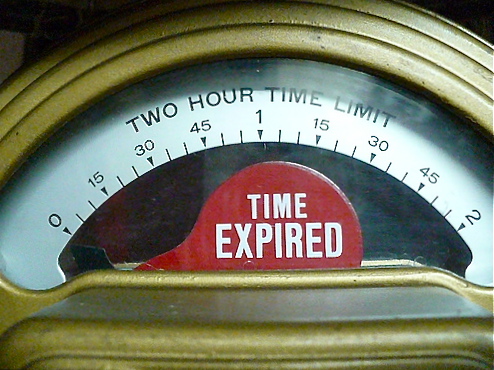
Expiration

Next week, I will meet 120 strangers. They won’t remain strangers for long. I’ll soon learn their names (okay, maybe “soon” isn’t the right word…this seems to take longer and longer every year!). I’ll discover their likes and dislikes, their celebrity crushes (please no Bieber this year!) and their favorite clothing brands. I’ll hear about their summers, their siblings, their pets and their families. I’ll figure out who needs to be pushed and who needs extra TLC.

These kids will be in my life for 180 days. Most of them, I will never see again after May. These are relationships with an expiration date. Before I ever meet them, I know when the connection will end.

There is an urgency to teaching. I have around 160 hours (once you subtract out testing days) with each of these students. In that time, I have to teach them the 8th grade math as well as remediate any gaps from prior years. I have to improve their reading and writing abilities. I have to help them mature and grow as students and as people. I have to form relationships, as that is the single best way to motivate a middle schooler. I seek to teach them the importance of perseverance and of failure. I want to inspire them to make healthy choices and to become role models themselves. I want to be remembered, not as their favorite teacher, but as the one that pushed them and helped them realize their potential.

Every moment has an importance with that expiration date on the horizon.

On the flip side, when they are driving me crazy (shocking, I know, but middle schoolers can be trying at times!), I remember that it is temporary. The child who constantly argues or interrupts will be gone from my room before I know it.

The expiration date minimizes the impact of those negative moments.

When I entered my first marriage, I saw it as a relationship with no expiration date. We were young and it seemed like our time together would stretch on forever. Moments passed without importance because we were sure there would be many more on the horizon. Only when the marriage unexpectedly spoiled, did I realize that there were wasted times that slipped through.

With my soon to be second marriage, I know that it has an end. I hope that the end is far in the future, but there is no way to be certain. We’re older and more aware of the end of life and of the illnesses that can strike out of nowhere. I am more aware that marriages can falter even without intent. I no longer count on those untold years in some imagined future, as they may never materialize.

I treat my relationship now as though it has an expiration date. I savor each wonderful moment and don’t fixate on the frustrating ones. I know I have a limited time and I want to make the most of it. Only in this case, I’m not worried about teaching math concepts:)

And for today, making the most of it means taking a family hike before the craziness of a new school year, a move and a wedding. I’m not at the precipice anymore; I’m taking the plunge!


For All You Parents…

I wrote this piece about how to help your child in math for Yahoo. This is the same advice I give the parents of my 8th graders during open house every year. I find the parents are often more fearful of algebra than the students:)

I thought I’d share it here as well, since I know many of you are parents of school age children. I hope this can help lower the stress level in your home this fall!

How to Help Your Child In Math (When You Don’t Know It Yourself)

The End.

You would think that I would be used to endings by now. I finish several books a week, following the tales to their final word. I run races, keeping my eye on the finish line. My weekdays are filled with bells that signal the end of a class period seven times a day. I’ve been through 29 last days of school – some as a student, some as a teacher and a few as both. Hell, even my blog is about an end.

So why do endings, even the ones I look forward to, still manage to feel abrupt? Too soon? A premature conclusion reached before resolution?

This past Friday was the last day of school with kids. I had been waiting for that day, counting down since the end of the spring testing season. Many days, it felt like the end would never come. The days felt longer, the children squirrelier.

But then, that final bell did ring.

As I watched those faces pull away in the school buses for one last time, I felt a loss. For the past nine months, I have laughed and cried with those kids. I have driven them crazy and they have driven me crazier. I’ve struggled to help them make sense of algebra and we have struggled together to make sense of tragedy. For nine months, those 120 teenagers are part of my extended family. And then they’re gone. I will never see or hear from most of them ever again. In one day, they go from constant presence to memory.

Eighth grade is a crossroads year. It is time when teenagers are beginning to develop themselves apart from their parents. They are learning to make choices and beginning to understand the nature of consequences. They try on different personas as often as outfits, going from class clown to teacher’s pet and back again in a blink of an. I call them 150 lb two-year-olds, as they test boundaries yet want to know that you’re still looking out for them. I see them develop over the year into more independent beings but I don’t get to see the conclusion. In May, many of them are still at a crossroads and I am unsure which path they will choose.

It often feels unfinished. I find myself, years later, wondering about certain students. Hoping they did okay yet fearing that they did not. I have to trust in them and relinquish any influence. Sometimes, I receive the gift of an update when former students track me down. It’s funny – I can see the echo of the eighth grader I knew in these adults, yet there are years of experiences that have shaped them after they left me. In some ways, they are frozen in time for me: middle school in perpetuum (now that’s a nightmare!).

I think we all struggle with endings, even those that we initiate or those which we welcome. Every ending has elements that we relish leaving behind and facets that we will miss. Every ending brings uncertainty and transition. Every ending requires a re-scripting and reappraisal as we disentangle ourselves from the past and set course for the future. Every ending has opportunity.

My school year begins with a list of names. Monikers with no faces, no personalities. My year ends with a list of names, as I file reports and stuff report cards. Only now these names have meaning. Visages. Character. The year may have ended, but its impact has not. Those nine months together have influenced us all regardless of what our collective futures hold.

We tend to see endings as a termination, a conclusion. Perhaps it more accurate to think of them as a transition, a sign of change. It may be over, but its reverberations carry forth.