I started a conversation on my Facebook page yesterday and it has some interesting and thought-provoking responses. I’d love to hear what you think, either here or on my Facebook page.
Complete the sentence:
Divorce is like…because…

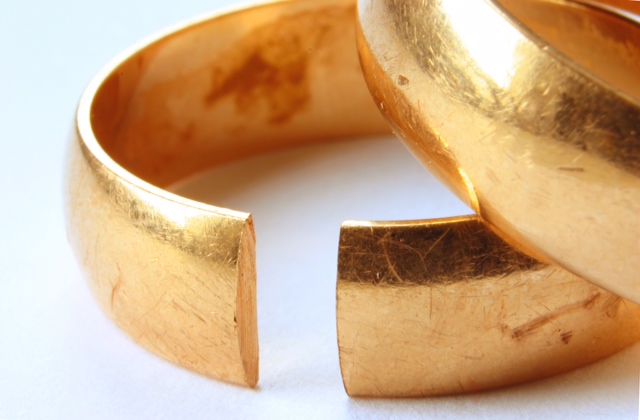
I started a conversation on my Facebook page yesterday and it has some interesting and thought-provoking responses. I’d love to hear what you think, either here or on my Facebook page.
Complete the sentence:
Divorce is like…because…

You’ve been betrayed.
The one who promised to have and hold instead lied and stole.
Leaving you broken and questioning.
It’s not right. It’s not fair. And it’s not okay.
But it happens nonetheless.
Regardless of your feelings about monogamy or someone’s right to seek attention elsewhere if they are not receiving it at home, an affair is a breach of a contract. And many believe, a breach of character. It is an act of selfishness at best and an act of malice at worst.
But let’s forget for a minute about the betrayer. The act itself. And let us even set aside the pain for a moment or two.
Now that it’s happened, what’s your part?
What can you learn from the experience?
Don’t Internalize the Affair You didn’t cause it. You didn’t make your spouse cheat (even if they try to convince you that you did). Let go of that thought. This was their choice and their choice alone. It shows where they’re lacking, not you.
Take a Look at the Bigger Picture Sometimes an affair happens solely because of a person’s own issues. Other times, it’s a perfect storm of nature and nurture, the marital environment also playing a role. Are there areas where the marriage can be improved or where you can respond differently in a new relationship?
Add a Dash of Understanding to Your Judgment It’s natural to blame your spouse. To lash out in anger. I get it. Try also to find some understanding of why he or she responded the way they did. Just proclaiming it as wrong doesn’t help you. Understanding some of why it happened does.
Watch Your Triggers An affair can trigger earlier memories of abandonment or it can certainly be what future triggers will be about. The affair is not your part; healing its impact on you is.
Consider Alternatives Is your marriage the right fit for both of you at this time? Have you or your partner changed and now need a different option?
Protect Your Children You know how piercing and scary betrayal is for an adult. Imagine it through a child’s eyes. Shelter them from the affair when they’re young. If there are truths they need to discover (like a personality disorder, etc.) let them reveal themselves in time.
Consider the Balance of Comfort and Passion We often ask too much of our partners. We want them to be our best friends, our lovers, our dependable partner, the children’s parent and sometimes even a business partner. And all this for 50+ years til death knocks on the marital home. You can maintain passion, but too much comfort is the death of excitement. Find the balance.
You can address the above despite what your straying partner does or doesn’t do. You can learn from the experience if it ends in divorce or becomes a renewal of your marriage. You can choose how you look at the affair and how you respond.
I read an interesting interview with Esther Perel, author of Mating in Captivity, which looks at the challenges facing modern marriages. Take a look at the article; it’s thought-provoking.
Oh, and for those of you that set your pain aside for a few moments, it’s okay to let it talk again. Just don’t allow it to filibuster.

We’ve all felt it.
That certain chill in the air. The posture slightly too rigid and closed off. The tone that is just a little too clipped. The words may be right, but something is off.
A disconnection.
It’s like the plug that charges the relationship is only partly plugged in.
It happens in every relationship. It can be as minor as one partner withdrawing for a few moments or hours. Or, it can also prove fatal to the marriage when withdrawal becomes the default position.
So why do people withdraw from their partners? What makes the connection faulty and the charge intermittent?
It’s scary to allow someone in to your innermost thoughts, dreams and fears. As relationships progress into ever-deepening levels, it’s common to pause and even retreat for a bit to acclimate to the new level of connection must like a deep sea diver has to take breaks on the return to the surface. This type of withdrawal, when short-lived, is nothing to worry about. It’s simply time spent adjusting and processing before the next level is reached. If, however, the retreat from intimacy occurs early and often, it may be a sign that someone is not yet ready to be vulnerable and open.
This withdrawal type can lead to a sad self-feeding loop. One partner is afraid of rejection and decides that he or she would rather retreat than risk approach. The other partner can then easily feel rejected by their partner pulling back. You can have a situation where both people crave connection yet are too afraid to risk asking for it. If you find that you are afraid of rejection, work to address your own needs that allow this worry to grow. If your partner makes a bid for attention, work to respond in a way that is accepting rather than rejecting.
Some people are more sensitive than others; an amount of emotion that may feel perfectly tepid to one person may be scalding to another. When somebody floods, their emotions are overwhelming them. And even though their surface may remain placid, inside they are a tantruming toddler. When someone is flooded, they are unable to respond rationally and struggle to normalize their emotional balance. When something is too intense, it’s natural to retreat for a time. Flooding is often a sign of some unresolved trauma, the emotions triggered having more to do with the past than the present. If your partner is easily triggered, work to be supportive and patient while encouraging him or her to address the underlying issues. If you find that you are easily overwhelmed, make resolving your trauma a priority.
Some people wear their anger on their sleeves, leaving no doubt as to the emotion at the helm. Others are more covert, either because they have been trained to hide anger or because they are afraid of addressing the underlying problem face on. And furtive anger can often lead to withdrawal when one partner steams in silence. When anger is at a peak, it is often advisable to retreat for a time to calm down and think more rationally. That respite should be followed by approach, communicating the anger and working together to resolve the broken boundaries. If one (or both) partners consistently fume from afar, the anger will only mutate into resentment, causing a more permanent rift in the relationship.
Some people simply require more solitude than others. It’s easy for an extrovert to sense a disconnect from their introverted partner when the latter is retreating in order to refuel his or her energy. If you are the more introverted partner, it is your responsibility to communicate your need for alone time to your spouse and make connection and intimacy a priority when you are together. If you are feeling left out by an introvert, learn how to establish connection without overwhelming their senses.
Marriages do not exist in a vacuum. We all have demands placed (okay, sometimes heaped) upon us from outside the relationship. Withdrawal can occur anytime someone is feeling overwhelmed and overworked. It’s a method of survival, cutting off blood flow to some areas in order to focus on what is critical in the moment. A marriage can survive a short-term starvation of attention and energy. Yet leave the tourniquet on too long, and there will be no marriage to return to. If your spouse is in survival mode, strive to be compassionate yet also persistent about maintaining connection. If you are the drowning one, don’t neglect to ask your spouse for a hand.
This is one of the fatal relationship patterns often described by Gottman. Understand that your partner’s withdrawal has more to do with them then with you. Don’t take it personally. But at the same time, take it seriously, because a habit of withdrawal can initiate a catastrophic domino effect. The initial withdrawal can occur for any of the above reasons. If it is then followed by a desperate grab for attention by a panicking spouse, it sets up the choreography for a dance where one partner is always retreating and the other is always grasping.
All relationships have an ebb and flow of intimacy. The challenge is learn how to ride it out rather than allow any periods of withdrawal to slide into a downward spiral of disconnection. For the partner sensing the distance and craving connection, the key is to relax and not push away or flood the more reserved partner. And for the attachment to return, the retreating partner must be aware of his or her own patterns and make a sustained effort to maintain the intimacy.

I was working on a post about relationships that begin with infidelity the other day when I found myself at a loss.
Unless I’m sharing my personal story, I try to write from as much as a gender-neutral perspective as possible. I typed the phrase, “Mistress or …” waiting for the masculine version of the word to pop into my head.
And I drew a blank. My trusty thesaurus wasn’t any better and even Twitter couldn’t find a male-gendered term that means an affair partner.
As I reworked the sentence to include a gender-neutral poor substitute (paramour), I found my mind actively chewing on this suddenly-realized vacancy in our language. After all, women cheat (the studies are notoriously inaccurate, but the rates aren’t usually much below men) and I would wager (again, going with statistical evidence) that the majority of those women are cheating with men.
So what are those men called?
It gets even more interesting.
We have a gendered name for the betrayed husband – cuckhold – a term that originally meant a deceived man who ended up caring for a child born from another man. And in fact, adultery has historically (and in many cultures) been considered much more heinous when it is between a married woman and another man than when the man is the one straying from the marital bed. Which makes sense from a purely economical standpoint; a wayward wife may mean a man’s resources are going to help perpetuate another’s genes.
Yet even without the biological concern of a woman unknowingly raising another woman’s child, there are certainly plenty of men who procreate outside of marriage.
So what do we call their deceived wives?
When a mistress is reviled (such as by the wife), she is referred to as the “homewrecker.”
I’ve never heard of a man referred to by that term, even though it is not exclusively feminine.
The woman is also more likely to be called terms that shame her for her sexuality, whereas the man is more likely to be called out for his duplicity.
The words used extend to within a marriage. How often do we hear about a “frigid” wife being the cause of a sexless marriage? Yet Google implies that men are equally likely to be the frigid ones. Except we don’t call them that.
The language seems to favor the fooled husband on the marital side and the kept and wanton woman on the outside of the marriage. Even though those roles are easily interchangeable and are more about character and circumstance than about gender.
And what does that reveal about our assumptions?
Interesting to think about.
Have any known words to add?
Any words you would like to create?

I know I was shocked when I first heard the news.
I’ll bet you were too.
We trusted him. We respected him.
We felt like we knew him.
And then when the stories about his impropriety began to surface, we started to question.
Not only his authenticity, but also our own judgment.
Like so many that lead lives of misconduct, Bill Cosby hid behind an illusion of perfection. He played the father we all wished we had, and his off-screen demeanor paralleled his on screen performance. He always seemed kind. And patient. Making us laugh and making us learn.
And also making us look away from his behavior behind the scenes.
Causing those that heard of his behavior to question the veracity of the claims.
And perhaps even making those subject to his offenses question their own memories.
Because in so many ways, he was so good.
Too good to be true.
I never realized that my ex was also too good to be true in many ways. I thought I was lucky to have a husband that I got along with so well that we never seemed to have areas of friction. I felt blessed that he was so patient with me and would strive to temper any anxiety I felt. I was in awe of his ability to solve any problem and I delighted at the fact that he always had an answer.
I trusted him. I respected him.
I felt like we knew him.
And then when the stories about his impropriety began to surface, I started to question.
Not only his authenticity, but also my own judgment.
And all too often, that’s how it is. Sometimes the wolves walk among us unshielded. But much of the time, the wolves are dressed in the finest wool, revered as the ideal lamb.
And who suspects a lamb?
Watch out for those who overcompensate. Those who seem too good to be true. Be wary when tensions never rise and irritation rarely shows. Be cautious around people who never sweat and never seem fazed.
Because all of us are a blend of both wolf and sheep.
And those who pretend otherwise are hiding something.
Related: Covert Abuse
 Lessons From the End of a Marriage