Are You Setting Healthy Boundaries or Hiding Behind Walls?

healthy boundaries

I thought I was setting boundaries.

But in reality I was also building walls.

It’s easy to do. To get so carried away with a line in the sand that it becomes the beginning of a foundation of a fortress. A stronghold intended to keep you safe. But that really holds you prisoner.

Do you know the difference between setting healthy boundaries and constructing isolating walls?

Boundaries

tennis-court-443267_1280Boundaries are rational and deliberate lines that define what is and is not allowed to be done to you. They are communicated and consistent and are less about keeping others out than keeping yourself intact.

Boundaries allow others to see you. Be with you. But they don’t allow others to use you.

Boundaries say, “I’m not letting anyone abuse me” and “You can come in as long as you abide by the rules.”

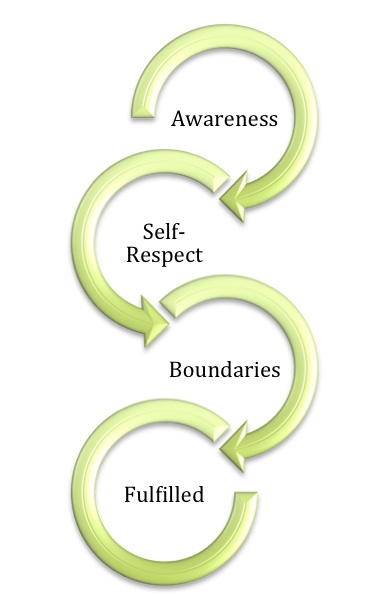
Healthy boundaries are anchored in awareness and self-respect. When in place by both partners, boundaries allow for a deeper connection because both people don’t feel as though they are threatened by an increase in vulnerability.  Although you may be hurt, your self will remain intact.

Examples of boundaries include not tolerating abusive actions or language, refusing to accept the responsibility for another’s happiness or choices and not acting in opposition to your own values and ethics.

boundaries

Walls

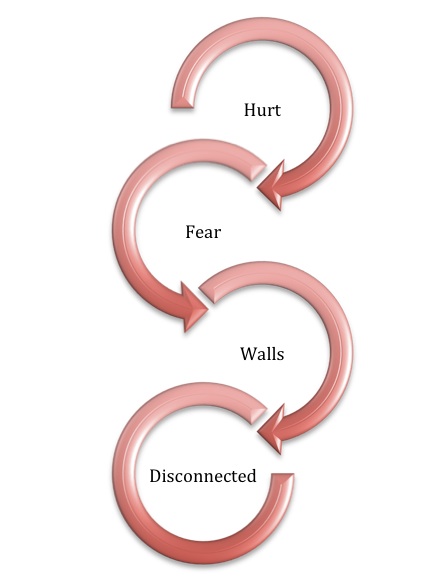
brick-293507_1280Emotional walls are bricks of self-protection mortared with fear. They are erected as a result of being wounded. They are rarely acknowledged and their existence is often only discovered when somebody runs head-first into one. Unlike boundaries, which only keep out those who misbehave, walls do not discriminate – they hold everyone back.

Walls say, “I will never allow myself to be hurt again” and “I’m not letting anyone get close to me.”

Walls are built upon fear. When one or both partners in a relationship is hiding behind walls, a deeper connection forged through vulnerability is impossible. As a result, the partner(s) hiding behind the walls may feel safe, but he or she will also feel empty and disconnected because the true self is not being seen. The wall keeps others out. And it also holds you prisoner.

Examples of walls include never letting your emotions show, deliberately withholding important information from a potential partner and isolating out of a fear of being hurt again.

wallsWhich are you building? Walls? Or boundaries?

Why I Don’t Want a Perfect Marriage

I became a bit incredulous yesterday when a woman on Twitter proclaimed that her marriage was “perfect” once she found a compatible partner. You see, not only do I not believe in perfection (except in the obvious exception of the first sip of hot coffee on a cold morning), I don’t trust it.

Sometimes perfection is a cover.

In many ways, my first marriage was perfect: we rarely disagreed, we shared many views and ideas and we worked together seamlessly. But underneath that facade was a husband who was playing a role and a wife too afraid to turn on the stage lights.

Sometimes perfection is a phase.

In the early stages of a relationship, it is completely normal to place your partner on a pedestal and to casually whitewash over any red flags (or even areas of discord). It’s easy to be perfect when reality hasn’t had time to intrude upon fantasy.

Sometimes perfection is boring.

There’s a reason that artists add a jarring element to their work and writers give their protagonists a flaw. Perfection isn’t interesting. It doesn’t hold our attention or stimulate our thoughts. It demands nothing of us and offers little contrast to prompt gratitude and attention.

And sometimes perfection is protection.

It’s scary to truly accept your partner as an individual with his or her own views, perceptions and decisions. It’s terrifying to see that no marriage, no matter how seemingly perfect, is infallible. It’s much nicer to see your vessel as sink-proof rather than acknowledge the weakness inherent in its construction.

Perfection is illusion.

None of us are perfect in our own right. And when you join two together in a day-to-day venture with long-reaching goals? That imperfection can easily be amplified. Marriage is not a fairy tale. Happily ever after is not a conclusion; it is a choice.

Relationships are not easy.

But that doesn’t mean that they should be a source of constant struggle or endless fear.

There is a wide span between dysfunctional and perfect.

A world between bad and flawless.

Aim to be there.

Finding a compatible (and healthy) partner is important.

But that’s not the end game.

It’s just the beginning of a relationship that requires intention, attention and adaptation.

I don’t want a perfect marriage.

I want a marriage that encourages two imperfect people to become better.

I don’t want a husband that always agrees with me.

Sure, it’s nice to hear that you’re right. It’s validating to have somebody echo your perspectives and pat you on the back for your insight. But it’s also limiting. If you surround yourself with “yes men,” you will never have your assumptions challenged or be forced to confront your own incorrect beliefs and conclusions.

I want to be called out on my B.S. Not because it feels good, but because it forces me to face it. I want to have to defend my thoughts. Not because I always seek debate, but because it requires that I think about a topic rationally and thoroughly. I want to hear other perspectives. Not because I always agree, but because seeing all sides of a thing adds to understanding.

I want a husband that always believes in me.

Although I don’t want a husband that is a sycophantic parrot who agrees with my every utterance, I do want a spouse that believes in me. That sees my potential even when he disagrees with my approach. That trusts that my intentions are sound even when my tactics may be less than ideal. That sees past the noise of the moment and sees the person beneath.

I want a husband that believes in me even though I am far from perfect and that believes in our marriage even when that marriage requires work.

I don’t want a partner to complete me.

I am whole on my own, thank you very much. One of the ironies of a good relationship is that it starts when neither partner needs the other. I’ve lived the life where I experienced a constant fear of losing my spouse. And I don’t want to ever live that again.

I don’t want a person that molds to my every weakness, filling in the areas where I lack. I don’t want somebody that always takes over when I am lacking, shifting all of the burden onto his shoulders. I don’t want dependence. I want interdependence.

I want a partner that complements me.

I want a partner who shares a life vision and philosophy with me. Who has the same overall goals even when the approach may differ. I want my husband to model ways of improving my weaknesses and act as a cheerleader and coach to help me strengthen those areas. I want to do the same for my spouse, not enabling but encouraging.

I want a partner that does the jobs I don’t enjoy or that don’t match my skills. But I also want my partner to teach me how to do them. Even if I never excel, at least I know that I am capable.

I don’t want a relationship that always makes me feel comfortable.

It’s nice to be comfortable. There’s a reason most of us live in conditioned spaces furnished with upholstered pieces. It’s relaxing. But it’s also limiting. Because when you are too comfortable, you become afraid of change.

And change is inevitable.

Growth is optional.

Our adult relationships are often the place where we play out and hopefully resolve the wounds of our childhoods. Common themes of abandonment, codependency and addiction often follow us into our marriages, forcing us to confront uncomfortable truths.

We don’t learn when we’re comfortable. But we also don’t learn when we’re panicked.

I want a relationship that makes me feel safe.

I want a relationship where I feel safe. Not just physically, but emotionally. Where I feel like I won’t be shunned for stating my feelings and I feel able to express my emotions. Where it is understood that a disagreement does not mark the end and that a different view does not represent a different intention.

I want a relationship that may not always be the upholstered chair but that is always a sanctuary to return to. Where I know I’m okay even though I may be a little uncomfortable.

I don’t want a partnership where I never have to compromise my choices.

It’s unrealistic to believe that two people can coexist without some compromise. Whether it be the color on the walls or the number of children, there will be times when one or both partners have to adjust their desires. When the good of the marriage is more important than the good of the individual.

I want a partnership where sometimes my spouse caves in to my desires. And when sometimes I have to subdue mine for his sake. Part of playing nicely is learning how to share.

I want a partnership where I never compromise my core self and values.

But I also want a partnership where I feel at peace and connected to myself. Where I hold true to my values and basic beliefs. Where I am not lost under the weight of the marriage, but serve as one of the foundations of it.

I don’t want a marriage that is perfect.

I don’t want a perfect marriage. A perfect marriage doesn’t have the ability to grow and change as life changes around it. It doesn’t serve to challenge its participants and teach them how to improve. A perfect marriage is a risky marriage; there is no practice in facing adversity from within. When a perfect marriage fails to be perfect, it fails.

I want a marriage that accepts imperfections and grows and adapts. And that encourages me to do the same.

I want a marriage that accepts me as I am. I want a marriage that challenges me. I want a marriage that is exciting and a little uncertain. I want a marriage that requires attention to grow. I want a marriage that looks different in ten years than it does today. I want a marriage that adapts and keeps me on my toes.

I want a marriage that is real.

And real is rarely perfect.

As for the woman on Twitter with the perfect marriage?

I ended the conversation by saying that I am happy for her.

And I am.

I just hope that she doesn’t get cut too deeply if that perfections shatters.

Time to Bloom

You would think I would know better by now.

But apparently I don’t.

Okay, so that’s not quite true.

I DO know better. I just choose to ignore what I know I should do so that I can instead do what I want to do.

Sometimes the risk pays off and the rewards are early and plentiful.

Other times?

The risk leads to added work, stunted progress or even an early demise.

The official frost-free date for the Atlanta area is April 15. This means that, to be safe, nothing other than the hardiest of shrubs or perennials should be placed in the ground until that date.

And after emerging from the dark of winter, the middle of April feels a lifetime away. Added to that are the early blooms catcalling to me on every corner and the seduction of 80 degree days interspersed among the cold, damp days of early spring.

And so, like every other year I’ve had a plot of soil, I gave in. I spent all day Saturday turning this

photo 2into this.

photo 1And now there is a freeze predicted for the coming weekend. And if I don’t respond, my new plants will end up stunted or even dead.

But even though I will be hauling blankets and towels across my yard this weekend, I don’t regret my choice. Those early flowers are bringing joy now and with a little TLC over the next couple weeks, will become a permanent tapestry in the garden.

I had to laugh at myself this past weekend as I stubbornly and impatiently ignored the advice of the experts as I tucked the tender foliage into the cool soil. I was reminded of how I was after my ex left. When I stubbornly and impatiently ignored the advice of the experts as I dove headfirst into the dating world.

I was advised to wait until the divorce was final to begin dating. But that still-unknown date felt like a lifetime away. Besides, the marriage was dead and buried the day he left. I was counseled to wait until I was healed before fraternizing with other men. But even though I was making progress, healed as a finality still seemed an impossibility (and I also fully believe that some areas of healing can only happen within the context of a new relationship). Besides, I reasoned, I’m not looking for a relationship. Just some dates for some education and distraction. It was suggested that I start out slowly, testing the dating waters (and my own constitution) before going all-in.

I stubbornly and impatiently ignored all of that advice, signing up for Match and (over)filling my dating calendar.

It was a risk. I was still a tender plant not yet toughened to the harsh world outside the protection of the nursery. I could have faced stunted growth or even my destruction.

I wasn’t ignorant of these facts. But I chose to ignore them.

To heed the drive inside that demanded growth and blooms.

To feed the soul that craved some beauty in a life that had been reduced to rubbish.

To believe the hope that abundance would return and that roots would form again.

It wasn’t always an easy path. There were times I had to cover myself in blankets as I waited out a chill I was not yet strong enough to endure. I faced setbacks and challenges. But I do not regret my choice.

There are always those who advocate waiting to explore love again. There is often prudence to waiting. But it can also become a trap of never finding the perfect conditions.

My advice?

You’re ready when the urge to grow becomes greater than the need to hibernate.

You’re ready when the potential of the rewards makes the risks seem bearable.

You’re ready when you can accept that the blooms may be temporary, but that you can enjoy them nonetheless.

And most importantly –

You’re ready when you’re ready. Not when some expert tells you that you should be.

Til Death Do You Part?

I got into a Twitter conversation yesterday with a man whose view intrigued me. From what I can gather, he is divorced with a couple young kids.

A divorce he didn’t want.

A divorce, that for whatever reason, his wife did.

And even though the vows are now broken, he is still maintaining his promise of fidelity to her until death severs their oath.

I can certainly see why someone would choose not to date while they are focused on raising their children. I can empathize with the decision to avoid the balancing act of blending families. And I can even appreciate someone electing to not reenter the dating world out of fear of additional heartbreak or simply a discovery of contentment with singlehood.

But the piece I can’t seem to wrap my head around is keeping a promise to someone who has made it very clear that your loyalty is not valued.

He offered a clue that the rejection by the one he trusted the most delivered a message that he had no value.

And I think everyone that has faced betrayal and rejection can identify with that sentiment. It’s certainly hard to disentangle your views of yourself with your ex-partner’s (new) views of you.

Yet, even with that, I struggle with the idea of a one-sided pledge of allegiance.

I see the vows as like the wheels on a bicycle. Ideally, both are fully functioning and working in concert. If one tire is a little flat, the other can help support the weight for a time until the tire is re-inflated. If one wheel is bent, the ride may not be over as long as the metal is hammered back into shape. Yet if one wheel is removed, the bicycle is useless no matter how hard the remaining wheel works. And it’s time to either find a new wheel or learn how to ride a unicycle.

That’s my two cents. What’s yours?

Dating After Divorce: Does Their Marital History Matter?

When I first started to contemplate dating after my tsunami divorce, I was taken aback when a friend posed the question, “So, are you looking for guys that have never been married or are you looking for a man that is also divorced?”. Since the last time I was on the dating scene, I was just looking for boys who were old enough to drive, I had never had to consider prior marital status before.

I rolled the imagined pros and cons of each around in my mind for a few moments.

Never married – No ex-wife to deal with, not one to marry impulsively, and has had sufficient time to fully enjoy the bachelor life. On the other hand, perhaps they are not ready for marriage, they don’t know how to “do” marriage and they may struggle to adapt to the lifestyle changes.

Divorced – Knows how to be married, may have friends that are more marriage-oriented, and they are not commitment-shy. Of course, there is always the ex-wife, the newly single man about town energy and they may be dealing with residual triggers and bitterness from the divorce.

I concluded, “I’m fine with either. I figure at my age (32 at the time), I’ll find more that are divorced. Of course, kids are a deal-breaker for me, so that may mean I find more that have never been married.”

And during my period of Match Madness, I did date both. And I found that some of my assumptions were incorrect. I met married men who, based upon discussion, never did learn how to be married. I met lifelong bachelors that had certain traits that made it difficult to imagine anyone wanting to marry them. Ever. And I discovered that difficult and in-the-picture exes were as likely to be of the girlfriend as the wife variety. Divorced doesn’t mean “damaged” any more than never married means “defective.”

In the end, I fell in love with a man (then 37) who had never been married. Not because he had some fatal flaw, but because he knew himself well enough to wait until he was ready. He may not have known how to be married, but that was okay. After all, I didn’t know how to be married to him. And every marriage is different. We gave each other the gifts of time and patience – for me to work on healing and letting go of the residual anger and for him to adapt to a partnered life and learn what it means to be married. And now that never-been-married-before man is a seriously amazing husband.

Just like I wouldn’t want anyone to hold my past against me, someone’s romantic history doesn’t tell the story of their romantic future. Focus more on their character traits than on the characters they dated or married. Pay more attention to their readiness now then their readiness then. And most importantly, look for someone that will learn along with you as you navigate a life together.