Renovation

I’ve witnessed an uptick in home renovations over the past several weeks. Home Depot is busier than ever, dumpsters fill area driveways and signs advertising handymen are planted amongst the flowers in many of the yards. As I walk and run the neighborhood streets, I keep track of these remodeling jobs. I take note of what is changing, from landscaping to paint to flooring to whole new kitchens. I celebrate when the signs of work dissipate and I envision the family enjoying their new or refurbished spaces.

But all too often, those signs of remodeling are followed quickly by a “For Sale” sign, the upgrades completed only to say good-bye. I get the freshening up of a new coat of paint before putting a house on the market. I understand that it’s easier to lay new flooring when the current furnishings are already disassembled and in boxes. But some of these remodels speak of dreams long held by the owners – additions that improve the house, adding decks or patios to enjoy the outdoors or updating a kitchen or bath that was dated when the house was purchased.

And that makes me sad. The thought of those improvements being put off until it is too late. The thought of the family settling over time and allowing the dreams for the space to fade. The thought that they didn’t make creating the best home for them a priority while they there.

Perhaps it makes me sad because it parallels what I so often see in marriages. The diet and exercise programs only undertaken after the papers are signed. The commitment to becoming more patient or more compassionate only embraced after the marriage is dissolved. Or, in my own case, the tendency to work too much only mitigated after the end of the marriage.

Just like you adapt to your surroundings in a home, you adapt to your marriage over time. You may have great goals and intentions for yourself and your life, but then they fade into the backdrop of daily noise. And so you let it go.

Until it’s time to put yourself back on the market. And then out come the remodeling tools.

But you don’t have to wait to create the change you want. Dream it. Then do it.

But you don’t have to wait to add that deck until you’re placing your house on the market. And you don’t have to wait to better yourself until you’re back on the market. Making the changes earlier only increases the return on your investment. Even if you do have to move.

Value Added

When I interviewed for my current teaching position, one of the questions I was asked was to describe my value added. The interviewing committee wanted to know what worth I would bring to the school outside of the usual classroom duties. I described my passion for wellness and how I could help the staff and students with education and motivation with food and fitness. I guess my answer was acceptable, since I got the job:)

That question stayed with me over the past three years. All too often, people’s assets and strengths remain hidden. In a school environment, great leaders and planners and problem solvers often hide behind their classroom doors in an environment that may not reveal all of their strengths. And, unfortunately, sometimes liabilities are visible while assets are buried (I think about one former coworker who always missed meeting but was amazing at parent phone calls, which we rarely witnessed).

It’s all too easy to make assumptions about what someone brings (or fails to bring) to the table. But we only see a piece of the story. A part of the environment.

In a relationship, your partner may not be hiding some of his or her assets behind a classroom door (unless you’re married to a teacher, that is!), but it is still easy for strengths to hide and for you to fail to see some of the value added that your partner brings to the relationship.

I was aware of this in my own marriage this past week. I was on spring break, so I had time at home during the work week. I could overhear Brock conducting his business from down the hall and it reminded me all over again how expert he is at assertive negotiations. That’s a side of him I do not normally witness. I revealed some of my own value added by planning, shopping for and installing over 150 plants in a single day. He knew I could garden, but had never actually seen me in action. He was puzzled (about a third of them are roots and rhizomes still buried beneath the soil) but impressed.

We often fixate on what our partners don’t have; we ruminate on their weaknesses and liabilities. Next time you find yourself complaining about what isn’t there, try focusing on the value added that they bring to the relationship. If you feel like some of your strengths are unappreciated, ask yourself if they are hidden. We often assume that others are aware of all that we do, but there focus is on their thoughts and tasks. It’s okay to share your value added.

We all have strengths. Reveal them. Share them. Embrace them.

You are valuable.

And if you’re ever in Atlanta and have a talent for weeding, please give me call. I’ll be happy to see your value added:)

Closed

I used to be obsessed with finding closure.

I pursued it with the intensity of Tiger chasing a tennis ball, convinced that it contained the peace I so desperately needed. I yearned for it at night and awoke frustrated when it hadn’t been gifted to me in my slumbers. I kept searching for the one thought, the one idea, the one fact that would seal my past away behind an air-tight door. I feared that closure would not be possible within the limitations my circumstances provided. I worried that I was dependent upon him to create that closure. I was concerned that I needed an apology or at least an answer to form that seal against the pain. An answer and apology that I knew I would never receive.

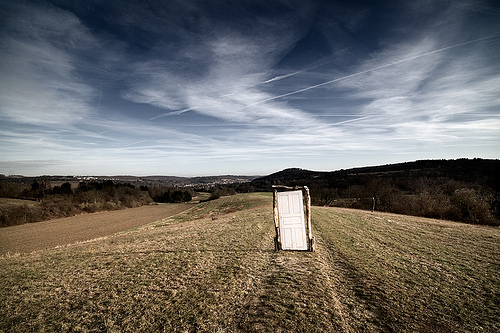
I started to believe that my closure would forever be incomplete, a door ajar allowing the whispers of the past to carry through.

And that thought scared the hell out of me. So I used that fear to drive my search for the elusive closure. I had to be creative since I had few answers and even fewer signs of remorse.

Closure is closely linked with understanding. If we know why something happened, it’s easier to accept its occurrence. But sometimes circumstances don’t allow us to sift out the truth from the past. But you can create your understanding even when you don’t have all the answers.

I started my search for understanding by learning about and systematically affixing labels to him: sociopath, narcissist, addict, etc. None seemed to truly fit, but they allowed an anchor for understanding. Next, I assembled pieces of the past like a giant puzzle, looking for patterns and ideas that fit. Slowly, an image began to emerge of a man that carried a dark passenger, a man that was defeated by his shame and his secrets. My conclusions may be accurate or they may be entirely woven of fiction. But it doesn’t really matter where understanding comes from; it brings relief regardless of its origins.

I had hoped that understanding was enough to bring closure. It was not. It answered the “why” but still did not alleviate the pain. My anguish was still a doorstop propping open the door to the past. So I focused on being thankful, using gratitude to soften the sorrow. Allowing the perspective of the bigger picture to bring purpose to the pain. And it helped. But closure was still hiding. I felt like there was still some unanswered question that kept me from being able to reach a conclusion.

Eventually, I tired of the search. I stopped looking for what I couldn’t seem to find.

I figured closure would remain a dream for me.

But then I drove by my old house last Friday and felt nothing but gratitude. And I realized that I had finally had it. My search for closure is now closed.

Sometimes the best way to find something is to stop looking for it.

Sometimes you have to trust that doors will continue to open before you can close the one you came in through.

And sometimes dreams do come true.

The Types of Friends You Need During Divorce

It is normal for your marriage to be at the center of your social life. You have a built-in activity partner. You share friends. The “plus one” is expected when you receive an invitation.

And then the marriage dies.

Your go-to is gone. The mutual friends may be divvied up like a bag of Skittles, or they may simply scatter as though the bag of candy was dropped to the floor.

It is tempting to hide. To hibernate. You may want to pull the covers over your head and not come out until the debris field has been cleared. It’s tempting, but it won’t help you heal. Think of the skin under a bandage that has been left on too long. Is that what you want your heart to look like?  Click here to read the rest.

When Will I Feel Better?

“When will I feel better?”

This is perhaps the question I hear the most often.

And it is also the most difficult question to answer.

Because there is no single answer.

Healing does not speak calendar.

Feeling better has nothing to do with lunar cycles or landmark anniversaries.

It operates on a different timeline for everybody, depending upon the circumstances, prior experiences, coping skills and support systems. Some may feel better in weeks, while others take years. One person may appear to be healed while holding in the pain while another wears the pain until it wears off. Feeling better is not linear. It is more the slow decrease of bad moments intermixed with the increase of good than a step by step progression.

Feeling better depends upon perspective. You have to remember how bad bad could be to realize that it’s not so bad anymore. Healing is often subtle. The pain may have come in a great crashing wave, but it recedes like the tide, slowly and often leaving pools behind.

Your progress should not be measure against the progress of others, only against the way you felt in the past. There are no shoulds, no benchmarks to meet. As long as you are making progress, you are okay. You can accept where you are in the moment while still striving to do better.

Some of healing is passive, simply standing by and letting time wash your wounds. But if that is your only approach, you will be limited. In order to truly feel better, you have to take an active role in the process. Fuel yourself with quality food, good sleep, exercise and social connections. Seek out therapy or participate in therapeutic writing.Learn to calm your mind through meditation or yoga or time in nature. Have mantras and goals and scheduled smiles.

The biggest lie we often tell others is, “I’m fine.”

It’s okay to not be fine at all times. It okay to need help or a hug.

The biggest lie we tell ourselves is, “I can’t.”

But you can.

You can feel better.

It may not happen when you want it to.

But it will happen when you need it to.

The way you feel right now is not the way you will feel tomorrow. Or next week.

Find peace in the process and inspiration in the intention.

And you’ll feel better.