Why the Hard Work After a Breakup Is Worth It

“It’s not fair,” I remember thinking. He’s the one that had the affair, led a secret life and committed crimes and yet I was left having to manage the recovery from his actions. Part of me railed against putting in the emotional work to right myself again. After all, if he made the mess, shouldn’t he have to clean it up?

In the beginning, I did place the responsibility in his lap (and in the hands of the courts). I was convinced that I needed an apology. I was certain that I needed him to hear my victim impact statement. I was determined that I needed for him to return the swindled funds in order for me to move on.

Yet those things never happened. And so I could wait. Or I could try to navigate the road back to “okay” again on my own.

I chose the latter.

At times, I was angry when it seemed as though he was escaping consequence as easily as a cat navigates through a fence. I felt despair when the reality of where I was mentally  crashed rudely into my reality and getting better seemed like more mirage than realistic goal. I became frustrated when certain strategies or passed milestones failed to bring immediate relief, worried that my efforts were being wasted. And throughout, I was exhausted. Emotional work may not break a sweat, but it sure feels harder than any workout at the gym.

But then, as I kept slogging through the emotional wasteland, some strange things started to happen. Because although the work may be hard, the efforts are worth it.


Opportunities to Heal Earlier Traumas

While I wrestled with the pain and consequences of abandonment, the early childhood pain of my parent’s divorce and my dad’s subsequent move across the country resurfaced. I had long ago buried this sense of abandonment, convinced that it wasn’t worth the attention. Yet when my ex-husband left, I became acutely aware at how strong of a presence this fear was in my life.

The pros call it “trauma reenactment.” Others refer to it as baggage. No matter its label, the stuff that has happened to us tends to stay with us unless we do the work of processing it – absorbing the lessons and dispelling the waste. We often fail to do this work because it’s not fun and we can usually convince ourselves that it’s not necessary.

A breakup will often trigger earlier trauma that has not been resolved. It’s a spotlight on your past, pointing out areas that need attention. And if you do the work to resolve those early pains, it will help you find and create better relationships going forward.


Acceptance of Personal Power

I felt powerless after my marriage ended. I had no say in (or even knowledge of) of its eminent demise. I felt like I had few choices in how I handled the immediate aftermath and my basic needs. And no matter how much I tried, I couldn’t make him talk to me, much less offer an explanation or apology.

I started small. I pledged to finish an entire waffle for dinner. Or to walk twice a week. I accepted the offer of medications to calm the body and allow it to rest.

Then, I began to cook instead of just eat. My walks turned into runs, which led to crossing a finish line of a half marathon. The medications allowed me to experiment with other ways to calm my body, leading me to solid yoga and meditation practices.

Maybe I didn’t have a say in my marriage or my divorce, but I realized just how much of a say I still had in my life.

When you undertake the emotional work of recovering from a breakup, you’re learning to identify those things you can control. And even though your agency is limited to your sphere, it’s amazing how much of a difference just changing your attitude and perspective can make.


An Opening to Build Authentic Confidence

Breakups have a way of destroying our self-confidence. We feel rejected. Unloved. Unwanted. Even while smearing our ex’s character, we silently question if we are somehow broken and not worth loving.

Emotional recovery is a long and often arduous process, two steps forward followed by a long slide backward. It can difficult to see the progress along the way, because it is often nonlinear and even nonsensical.

Yet at some point, you’ll encounter a memory, or a bit of writing, or a picture that highlights just how far you’ve come. And you’ll shake your head in wonder even as you feel a little sense of pride blossoming within you – “I made it through that. Damn, I’m a badass!”

That newfound confidence, along with the insight and skills you have learned, will serve you well going forward as you approach subsequent life challenges.


An Invitation to Overcome Inertia

Okay, so maybe “invitation” isn’t quite the right word. It’s way more like being shoved out of a plane with a tangled parachute and having only part of the instructions for its use.

It certainly is a wake-up call.

In my former life, I had certain elements that I was discontent with and I had allowed myself to become content with that discontent. I rationalized my reasons for avoiding the efforts of change, but really it came down to being more comfortable with the status quo than uncomfortable with my life.

When my ex left, I no longer had the option to remain as I was. My life had been pulled out from under me and I was either going to have to make some changes or crash spectacularly into the ground. Those options certainly make the efforts required to do the emotional work a lot more compelling.

This is a magical moment. A break in the routine. A chance to try something different. You’re not settled, not anchored, not stuck. You can move, you can shift. You can even dance.


A Gift

So the wrapping is ugly. And at first glance, the contents seem rotten. Yet inside that mess are the seeds that you can plant and nurture and grow. And once you see the verdant and magnificent results, you realize that all the efforts were worth it.



Not Suitable For Release

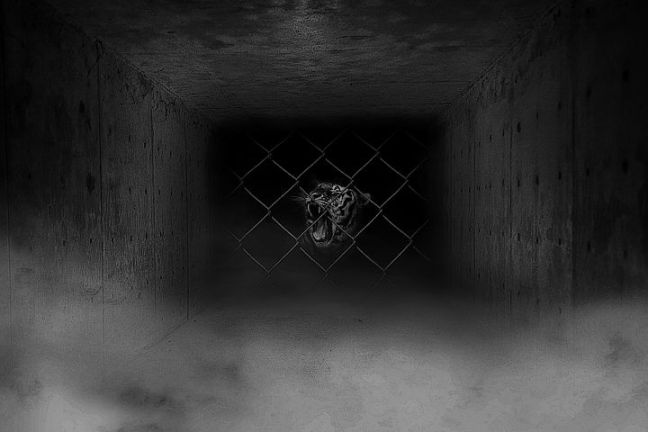
Several days ago, a tiger was spotted near I-75 just outside of Atlanta. I can only imagine the initial reaction of the 911 center when the first call came through early that morning –

“911. What’s your emergency.”

“Uh, yeah. There’s a tiger walking down my street.”

“Did you say a tiger, sir?” the operator responds, trying to maintain professionalism and keeping the incredulousness out of her voice.

“Yes. A tiger.”

Hours later, a woman was alerted to something by the sharp barks of her dog outside in the yard and the sudden illumination of her kitchen from the headlights of the police cars. The timing was serendipitous; just as the great cat snatched the small dog in its jaws, the police fired upon the tiger. The dog was fine. The cat, unfortunately, had to be killed. With the city beginning to stir and children heading to their bus stops soon, it was simply too dangerous to wait for the team with the tranquilizers darts to arrive on scene.

It wasn’t until later that night that the full story came out. The tiger was part of a circus convoy driving to Tennessee. Somehow, it managed to escape the trailer while it was parked overnight and it decided to explore the wilds of central Georgia.

This story made me think about the life of that female tiger. I don’t know if she was born in captivity or captured as a cub, but I do know that she spent years in captivity. In some ways, her life as a kept animal was easier than that in the wild – she never had to face hunger, she didn’t have to work too hard for food and any injuries or illness would be quickly attended to.

And like all animals accustomed to captivity, I’m sure she adapted. Over time, those natural instincts to hunt and wait and fight for food would begin to soften. Her nose, no longer needed for survival, would become lazy. And her ability to endure the hardships would weaken as she grew comfortable in her limited and unchallenging world.

After only a brief period in captivity, many wild animals are deemed, “not suitable for release.” They have become too soft, too complacent to make it out in the real world with its fights and its famines. They no longer know how to hunt. They have forgotten how to interact with the group. They have lost the drive and the grit to survive.

Much the same can happen to us. When we’re held in environments that both constrain us and overly care for us, we can become soft. Forgetful of how to be hungry and fearful of struggle. Like the captive animals, we become accustomed to things being easy and we can flounder when circumstances become more difficult.

There’s a lesson here, one of which I’m always cognizant of in the classroom, when we try to make things too easy, to remove all of the discomfort, we are teaching our children and ourselves to be dependent, not suitable for release. I’ve never been a fan of “no pain, no gain,” but I’m a big believer in the idea that struggle is what makes us strong. There’s a huge span between comfortable and pain. And that’s where the growth happens.

However, all that being said,

Snip20170929_1


10 Empowering Thoughts to Hold Onto When It’s All Falling Apart

My Restorative Introvert Cave

I’ve always been drawn to small, enclosed spaces. As a child, I would play (and sleep) in appliance boxes that I decorated and filled with blankets and pillows.

I’ve felt very over-taxed and over-stimulated this school year and could tell that I needed to get serious about my self-care. I have a dormer in my home office that has been my meditation nook for a few years, but with its view of my workspace, I tended to be distracted by what I needed to get done.

IMG_0802

So, last weekend, I added some curtains (to block the view of the computer) and stocked up on T.J.Maxx pillows to make the floor inviting. The combination of soft light, fluffy pillows and incense is like a dose of instant calm.

IMG_0813.JPG

Now, if I could just figure out a way to have one of these in my classroom 🙂

Does Time Heal All Wounds?

When people contact me early in their divorce experience, the edges still rough and the emotions raw, I often find myself saying, “It’s early still. Give it some time.” It’s counsel I hate to give because it suggests that the pain has to be endured before it can be erased. Yet it’s also truth; there are some parts of healing that can only be addressed through the passage of time.

Time is a critical component of healing from loss. Yet it is no panacea, containing all of the answers.

What time does…

Time Softens I like to think of time as flowing like a river. When you first experience loss, it is a rough and jagged stone, thrust suddenly into the stream. At first, the river is diverted, pausing as it navigates this alien and unwanted intruder. In time, the river wears away at the rock, softening its edges and incorporating it into its topography. The loss is still there, but the serrated edges that sawed through your heart are worn into a blunt edge that provides a constant, yet bearable, pressure.

Time Muddies Memories At first, memories come in great waves, slamming into your gut without notice and stealing your breath away. The images play across your brain in high definition and the current reality pushes in with its ugly disparity. As the calendar advances, these memories lose some of their clarity, the details fading like linen left in the sun.

Time Permits Acclimation When you first experience loss, it’s like the gaping hole left behind by a missing tooth. It demands your attention. You worry at it. Obsess about it. Over a period of weeks and months, the shock and novelty fade. The need to talk about your situation will become less pressing and your mind will begin to make space for other things again.

Time Provides Experience The first time through any difficult experience is always the hardest, as the coping mechanisms and strategies have yet to be developed and you are not sure what to expect. Time gives you ample opportunity to practice breaking down and making it through. Each time you feel the pain, you get a little better at being with it and moving through it.

Time Allows For Opportunity Time supplies you with opportunities to implement the modalities that help with healing – counseling, journaling, mindfulness, movement. All of those strategies require time and repetition in order to be effective. Time also allows for new experiences, reminders that even though you’ve experienced loss, you’re still living and there are smiles to be found amongst the tears. Those moments of respite give you hope that things can be better.


What time does not…

Time Doesn’t Mean You Forget You will never forget. Time does not erase all memories, delete all pain. It’s still there, but there is also space for you to live alongside of it.

Provide Automatic Processing Time doesn’t do the healing. You do. If all you do is wait, you’ll feel much the same, only with more wrinkles. Time simply gives you the space and opportunity to work through it.

Time Doesn’t Provide Understanding Time won’t answer the “why” question for you. It won’t reveal why life is harder for some of us than others and why bad things can happen to good people. What time does give you is some perspective that suggests that maybe understanding why isn’t really that important.


Time may not heal all wounds, but it helps to cushion you from the emotional wound, becoming a sort of insulating layer. And with that distance, you have to space to breathe, to process and to live again.