The Theory of Relationship Relativity

It wasn’t all that long ago (in fact, almost exactly 3 years now) that I wrote about the years spent with my first husband versus the time I had spent up to that point with my now-husband:

I received the text just months shy of our tenth anniversary. The divorce process being what it is, the marriage persisted after the ten year mark. The wedding was never the year we marked, however. We always added six to go back to when we started dating. So, by the time it was over, we had been together for sixteen years. That was half of my life.

It felt like my life odometer had been abruptly and violently forced back to 000000. It was painful, but it was also frustrating. It felt like those were miles wasted on a pointless journey that was aborted before its intended destination. The consistent rolling of the numbers indicating the length of the relationship felt purposeful. They spoke to where we had been and where we were going to go.

When my boyfriend and I reached the six month mark (an important period that frequently delineates casual dating from more serious partnerships), he commented on how long we had been together. I remember scoffing internally. Six months was nothing. I had been with my ex thirty two times that! I didn’t get it yet.

Then, one year came, again commented upon by my boyfriend. I still didn’t get it. I can be a slow learner at times.

It was strange to come across that post again. I haven’t compared the years together in well, years. Because it’s clear that it’s not simply a matter of comparing years to years.

It’s all relative.

According to Einstein’s theory of relativity, the measurement of space and time varies according to the relative position of the observer.

And it turns out that the theory is not only applicable to particles approaching the speed of light.

It also reveals some truths about relationships moving at the rate of Earth’s revolutions.

Because the further away you are, the more the time spent in a former relationship dilates.

It’s hard to imagine now that I once worried that the 16 years spent with my ex were wasted since they ended. Because now not only can I look back on those years with a smile, I am also so grateful for where I have gone and who I have become since it ended. And besides, those 16 years are starting to feel like simply a brief chapter in a full life. (Okay, it does help that it’s no longer half my life. Aging happens regardless of relativity!)

Because the further away the observer, the more the time shinks. Making the recent years feel bigger and the distant ones more diminutive.

Especially because I have so intentionally packed life into those more recent years.

And now I’m celebrating two years married to my wonderful husband later this week. :)))))

In my post from three years ago, I concluded that my relationship math had some errors:

It wasn’t until two years when I finally understood. First, due to the magic of ratios, it was now only 1/8 of the time that I spent with my ex. But, more importantly, I viewed my entire life odometer differently. I had been viewing it as the primary and permanent wheel in the center of my console, quietly ticking away through the journeys of my life. I saw the divorce as an assault on the dial, overriding the system.

Then I realized that life is rarely that linear. Our lives are perhaps better marked with trip odometers that are reset to mark the beginning of a new journey. These parallel journeys should not be quantified; the distance is not what adds to the quality. Rather, each trip should be accepted for what it is with the understanding that the odometer can be reset if needed.

I now don’t worry about sixteen years. I don’t compare times together, creating ever-improving ratios. Now, I just roll down the windows and enjoy the ride 🙂

Sounds like a good idea. I think I’ll take my advice:)

Are You Setting Healthy Boundaries or Hiding Behind Walls?

healthy boundaries

I thought I was setting boundaries.

But in reality I was also building walls.

It’s easy to do. To get so carried away with a line in the sand that it becomes the beginning of a foundation of a fortress. A stronghold intended to keep you safe. But that really holds you prisoner.

Do you know the difference between setting healthy boundaries and constructing isolating walls?

Boundaries

tennis-court-443267_1280Boundaries are rational and deliberate lines that define what is and is not allowed to be done to you. They are communicated and consistent and are less about keeping others out than keeping yourself intact.

Boundaries allow others to see you. Be with you. But they don’t allow others to use you.

Boundaries say, “I’m not letting anyone abuse me” and “You can come in as long as you abide by the rules.”

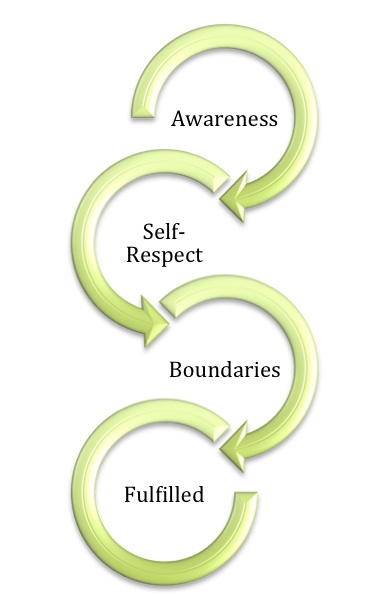
Healthy boundaries are anchored in awareness and self-respect. When in place by both partners, boundaries allow for a deeper connection because both people don’t feel as though they are threatened by an increase in vulnerability.  Although you may be hurt, your self will remain intact.

Examples of boundaries include not tolerating abusive actions or language, refusing to accept the responsibility for another’s happiness or choices and not acting in opposition to your own values and ethics.

boundaries

Walls

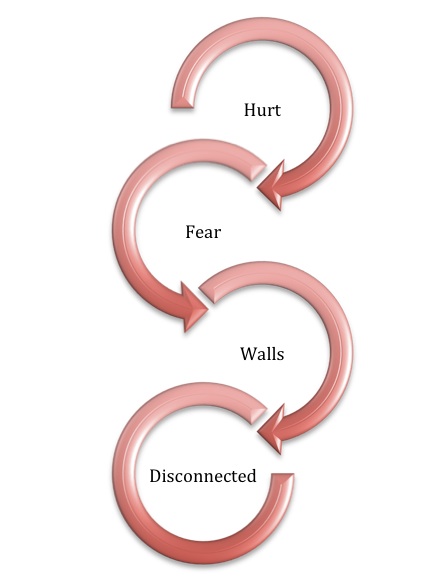
brick-293507_1280Emotional walls are bricks of self-protection mortared with fear. They are erected as a result of being wounded. They are rarely acknowledged and their existence is often only discovered when somebody runs head-first into one. Unlike boundaries, which only keep out those who misbehave, walls do not discriminate – they hold everyone back.

Walls say, “I will never allow myself to be hurt again” and “I’m not letting anyone get close to me.”

Walls are built upon fear. When one or both partners in a relationship is hiding behind walls, a deeper connection forged through vulnerability is impossible. As a result, the partner(s) hiding behind the walls may feel safe, but he or she will also feel empty and disconnected because the true self is not being seen. The wall keeps others out. And it also holds you prisoner.

Examples of walls include never letting your emotions show, deliberately withholding important information from a potential partner and isolating out of a fear of being hurt again.

wallsWhich are you building? Walls? Or boundaries?

Why A Prenup May Increase the Chances of Divorce

We often make decisions based upon anticipated results.

And these decisions often have unintended consequences.

We often act to limit risk.

And sometimes these actions actually increase what we’re trying to avoid.

———-

As the awareness of the long-term impact of head injuries on mental and brain health has increased, there has been a corresponding increase in the amount of padding and protection surrounding the head of football players. On the surface, it makes sense.

Damage due to excessive forces on the skull that are transferred to the brain? Simply pad the skull and brain better so that the forces are transferred elsewhere and the damage is mitigated.

But that’s not what seems to be happening. Even as the equipment improves, the incidence and severity of head injuries in football remains high.

And some people are responding by calling for additional safety equipment.

But others are taking the opposite stance and advocating for the removal of the helmets, at least during practice.

They point to the disparity in head injuries between the NFL (where players are shielded behind lots of protection) and rugby (just as brutal yet with minimal protection). And it turns out that those vulnerable-seeming rugby players have fewer and less severe head injuries.

Because when we feel invulnerable, we change our behavior.

The NFL players, feeling safe and feeling no pain behind their layers of padding and shielding, show little hesitancy to lead with their heads. Over time, they develop a confidence in their helmets and no longer engage in instinctive self-protective behaviors meant to guard the vulnerable brain.

In contrast, the relatively exposed rugby players never feel safe. They never grow complacent upon their safety gear. When they use too much force, they feel it, getting the immediate feedback that tells them to let up or suffer the consequences. And they learn if they want to keep their head safe, they better keep it out of the way. Some studies are currently being carried out on HS football players in the U.S. and preliminary results are indicating that students that refrain from wearing helmets in practices suffer fewer and less severe head injuries in play.

This unanticipated change in behavior doesn’t only occur on the football field. As cars have become safer and more automated, people take more risks on the road because of a perceived sense of safety. The increased padding in running shoes encourages a new runner to tackle more miles than he or she is ready for as the discomfort to the feet is lessened. Even credit lines that promise no interest for a period of time encourage people to take more risks because the impact occurs at a later time.

Because when we feel invulnerable, we change our behavior.

———-

So what do padded helmets on football players, airbags in cars and credit card offers have to do with prenups and divorce?

A prenuptial agreement is essentially a piece of safety equipment secured to a marriage. It gives a sense of security. Of invulnerability.

And when people feel invulnerable, they change their behavior.

Risks that were once deemed too risky now seem perfectly acceptable.

And when we’re assured we’re safe, we no longer worry about protection. 

There is a benefit to feeling and fearing the pain of impact. To carefully weighing risks and rewards. And when that impact of an action is softened, the actions may only become even more intense.

In other words, if you believe that your prenup will protect you from the fallout of divorce, you may not act to protect the marriage from divorce.

By no means am I advocating that you refrain from seeking a prenuptial agreement.

Only that you realize its limitations.

And the potential unintended consequences.

Because even though it may help to protect your bank account from the impact of divorce, it cannot soften the other effects.

And they are often much more damaging in the long run.

9 Reasons You’re Struggling to Find Love Again

love struggling

Are you struggling to find love again after divorce?


“I’m never going to find anybody else.”

“I’m doomed to die an old cat lady.”

“Nobody else is ever going to love me like he/she did.”

“My ex was the one. And now he/she is gone and I’m alone.”

I hear it all the time. Variations on a theme. A composition of loneliness and longing that often settles into bitterness and resolve.

After divorce or a break up, most people enter a phase of chosen singlehood. It is a period to regain sanity, re-establish self and start the steps into a new life. If kids are in the picture, this swearing-off of partnership may last until the children are grown and gone.

Yet at some point, most people decide (or, even if it is not a conscious choice, start to respond to a pull towards) to enter a new relationship. To entertain the thought of dating and be open to the idea of love.

Some people are happy and fulfilled single and make a thoughtful decision to stay solo. This is not for them.

This is for those that want love but cannot seem to find it.

Those who sign up for online dating and never seem to get past the first coffee date. Those who think they found somebody only for the nascent relationship to spectacularly explode before its first anniversary. Those who only seem to attract the broken or seem to always end up with the sh*tty people. Those that are tired of watching everybody else pair off while they’re afraid they will never again be picked.


If you want love,

you want a partner

but you feel like giving up,

This is for you.

You’re Scared of Being Vulnerable

Relationships are hard. Damned hard. And anyone who tells you differently is selling something. After experiencing the anguish at the end of a relationship, it is so tempting (and so easy) to keep others at an arm’s distance. But that never works; love is all or none. If you have walls built around your heart (even if you didn’t intentionally construct them), you are keeping love away.

In order to love, you have to be willing to accept the very real risk of loss of love. Personally, I think trade-off is well worth it (even when I’m feeling overly vulnerable), but you will have to decide for yourself if and when it’s worth it in your own life.


You’re Looking to Fill Your Ex’s Shoes

When something or someone slides into our pasts, it can be easy to look back with rose-tinted glasses. Smoothing over the rough spots and settling on the good. Additionally, when we are with someone for a period of time, we grow accustomed to their particular strengths and can easily take them for granted and assume they are universal traits.

This can combine to creating an ex-shaped hole in your life that you are looking to fill exactly by seeking a doppelgänger. Perhaps you might find someone that seems to fit the gap, but then you discover some characteristic that causes discord in your assumptions. Or, you find that potential partners sense that they are replacements and they leave in search of somebody who wants them as they are.

A new relationship will never be the same as your former one. It will be different. And be open to the idea that different can be better. It means that you will have to accept the lack of some things you used to take for granted and it means you will be surprised by new benefits you didn’t have before.

And most importantly, it means that you have to take responsibility for filling that ex-shaped hole before you go looking for love. Be a partner to love. Not a cavity to fill.


You’re Seeking Perfection

Sometimes when a relationship ends, we assign its failure to its imperfection. And so we seek the ideal. The guaranteed. This time, we want the real thing. The soul mate and the fairy tale. Because if we can just find the perfect person, it will all work out.

And there is truth in some of that. At its most basic, your marriage did fail because of imperfection. Not just with the situation. And not just with your spouse. But also with you. Because nothing and no one is flawless and faultless.

Real love, lasting love, doesn’t begin with perfection. It begins with the acceptance (and open discussion) of imperfection. Perfection assumes you say, “I do” and then you’re done. You just sit back for the ride. Acceptance of the idea that we are all always learning creates the foundation for a growth mindset marriage. Not perfect, but fulfilling.


Your Actions Don’t Align With Your Intentions

It’s easy to say you want love. It’s easy to complain about the quality of the people on dating sites or the lack of options in your environment. Words take little energy. Wishes even less.

Love doesn’t come to the lazy. Especially love after loss.

If you want a relationship, ensure that your actions match your intentions. Get out and meet people. Lead with curiosity rather than judgement. Say “yes” to experiences and opportunities.

If you want a relationship, don’t act like you’re on the prowl. Act with integrity. Be trustworthy. Show that you can be committed. Don’t claim you want stability while you’re refusing to stand still. And most importantly, be the person you hope to attract.


You Are Sending Out Warning Signals

We are often unaware at the subtle signals that we are constantly receiving from others and sending out to those around us. And even those these signals are often subtle and below conscious awareness, they are powerful.

Do you keep attracting broken people that seem to need fixing or parenting? Perhaps you’re unwittingly sending out the message that you need to be needed in order to feel okay about yourself.

Do you keep attracting control-freaks that at first want to “save” you only to later try to dictate your life? Maybe your damsel-in-distress call has been heard by someone that needs to feel powerful.

Do you continually have people abandon you? Is it possible that you come across as too clingy, your intense neediness inadvertently pushing others away?

It’s hard to see these signals head-on; it’s often easier to spot them in the patterns of our relationships. If you always seem to end up in the same position, look to your own insecurities to learn why.


You’re Looking For Too Much Too Soon

When you’ve been married or in a long-term relationship, you acclimate to the intimacy of a well-known person. You become comfortable. Safe. And it’s easy to except to find that same feeling again.

But that’s impossible.

Because relationships are formed, not found.

It takes time and effort to develop a partnership. Instead of looking for insta-intimacy (which is usually just lust and/or desperation), look for someone that has the raw materials that you want that you believe you can build a relationship with.


You’re Still Anchored to the Past

It’s easy to be so done with the past that you try to move on too soon. There is a reason that the saying, “The best way to get over a man is to get under another” exists. There is nothing wrong with post-divorce flings, but don’t confuse them with love.

When you’re still enmeshed in your past, either situationally or emotionally, you are not creating the space or providing the nourishment for a new relationship.

Maybe you just need time. Or maybe you need some help.

But you have to let go before you can move on.


You Are Not Happy With Yourself

This is especially common with people who have been subjected to abuse, abandonment or infidelity. It is so easy to internalize your partner’s actions. To take them personally. To assume that unloving actions and words were directed at you because you are somehow flawed. Unlovable.

And when you believe that, others will begin to believe it as well.

Finding love with and for another has to begin with finding love for yourself. With forgiving your own mistakes and seeing your own beauty.

And the first step is realizing that when somebody treats you poorly, they are telling you more about their character than about your worth.


You Tell Yourself, “I’m Never Going to Find Love Again”

When you prime the pump for failure, don’t be surprised when you fail. Yes, learning to be open and vulnerable again is hard. Yes, finding somebody that meets your needs and puts up with your flaws is hard. Yes, relationships are harder when we are older have have more complications in our lives. And yes, getting a relationship past the early dates and into love is hard.

And hard doesn’t mean impossible.

Never say never.


What “I Need Space” Really Means

I need space

“I need space.”

Whether you have been on the receiving end of these words or you have uttered them to your partner, they are three of the most uncomfortable words in a relationship. They are loaded words, filled to the brim with uncertainty and fear. They may signal a time of transition and renewal or they may be the death knell of the relationship.

The words themselves are simple. Three short syllables.

The feelings and motivations behind them are complex. Multifaceted.

And often left undefined and unspoken.

———-

I want out and I’m too scared to say it.

This is the response that the recipient of these words often fears and sometimes it’s accurate. A request for space can mean that the person is already done but instead of giving a clear, “No,” they are clouding the issue with a muddy, “Maybe.”

I feel like I’m losing myself and I need to take a step back to define myself again.

When couples are together for an extended time, the lines delineating one from another can blur. A request for space can be a sign that interdependence has slid into dependence and one partner is seeking more independence.

I want to be able to have some parts of my life that are separate from you.

Sometimes this is motivated by a desire to hide things from a partner that they would disapprove of (affair, addictions, porn, etc.) and other times it is simply a need to have some areas of life where the partner doesn’t have influence. Not telling your spouse everything is fine. But not if it’s something you are actively hiding.

I’m overwhelmed and I need room to breath.

This overwhelm can come from anywhere – work, school, kids. Some people require more alone time than others, especially when life’s demands become too much. This is a plea for quiet.

I am feeling panic about increasing intimacy and vulnerability and I need space to acclimate.

I often describe increasing intimacy in a relationship like coming up from a deep dive. You have to pause and acclimate occasionally. If you climb too far, too fast, it will make you feel unstable. This is one of the 7 reasons that people may withdraw in a relationship.

I need to direct my energy to other things for a time.

Maybe it’s an ailing family member or a huge project at work. When something is pulling all of our energy, any additional requests for attention can be too much. A relationship can survive attentions that are directed elsewhere for a time. But it cannot last forever.

I feel like you’re making me responsible for your happiness and it doesn’t feel good.

Repeat after me, “It is not my partner’s job to make me happy.” And if you try to make it their job, don’t be surprised if they decide to quit.

I’m reminiscing about a more free period in my life and I’m trying to decide if commitment really is for me.

Ahh…the hallmark of the so-called midlife crisis. We look upon our youth with rose-colored glasses. And sometimes, we try to return.

I’m trying on the idea of life without you to see if fits.

This is the spouse that hasn’t shut the door on the relationship but they are not convinced of its viability either. This is the partner that wants the security of home base and a little space to wander outside its fences before making a choice.

———-

If you’re the one asking for space, be aware that the mere suggestion of these words may incite panic in your partner, causing them to grasp you ever-tighter, thus creating the opposite of the space you requested. Be honest and forthright in your underlying motivations. Be as comforting as you can. If you are not contemplating leaving, reassure your partner of that. If you already have one foot out the door, do not give your spouse false hope.

Being on the receiving end of, “I need space” is a scary world, a land in limbo where you watch and wait from afar. It’s easy to see this declaration as the first step off a cliff and respond by gripping with every fiber of your being. Easy, but also counter-productive. Your partner isn’t saying they need to know you want them. They’re saying they need you to loosen that grip and let them fall or fly on their own.

Also, understand that sometimes the words have nothing at all to do with you and with the relationship. Be open to idea that the pressure may arise from an external source or from prior history. Ask questions to see if you can get to the root cause and be patient as your partner tries to sort it out.

If you find yourself in this place, turn your attention to your own well-being apart from your partner. You cannot control his or her actions and decisions, but you also don’t have to stand idly by as you wait for information. Invest in yourself; it pays dividends.

“I need space” is a landing between floors. It is a brief period of stasis before you either climb to another level or exit the stairwell of the relationship.

It’s a time to catch your breath.

To see your journey clearly.

And decide which direction you will go.