Six Compelling Signs It’s Time to Ask For Help

ask for help

I’ve never liked to ask for help. Even as a toddler, I would improvise tools to reach light switches or fold up my blanket in order to avoid having to rely upon somebody else.

Fast forward to adulthood, and my, “I got this” attitude only increased. At work, I would volunteer to take on all of a project in order to avoid the inevitable frustration of waiting for others and the seemingly inevitable disappointment with their final product. When sick, I would downplay my symptoms in an attempt to limit the burden on others and would soldier on despite the pain. And in relationships (yes, including my first marriage), I would stoically insist that everything was under control even as I panicked inside.

As it turns out, that stubborn insistence to handle everything alone isn’t healthy and it also isn’t sustainable. Yet for those of us that are often perceived as “the strong ones,” it can be a challenge to even recognize when it is time to ask for help, whether it be an extra hand, medical assistance or emotional support.
ask for help

Here are six signs that it’s time to admit your limitations and call in some support:

1 – You’ve Been Trying to Make a Change With No Lasting Success

You recognized that something needs to change and you make both a promise and a plan for yourself. At first, it looks promising. You’re making headway and beginning to feel better.

But then something happens to knock you off track. Maybe it’s some external pressure or your internal narrative. Regardless, you soon find yourself back at square one. Only this time you’re feeling a little less hopeful and a little more defeated.

Often we don’t ask for help because it feels like we’re admitting defeat when we accept that we cannot do it alone. But failure doesn’t come from setting yourself up for success; failure comes when you don’t allow yourself to receive the tools you need to reach your goals. When you’ve exhausted your own knowledge or skillset and have yet to make lasting progress, perhaps it is time to ask for help.

2 – The Issue is Beginning to Impact Other Areas of Your Life

Sometimes an issue becomes too big to ignore. For me, one of the key signs that it’s time to ask for help is when something has ballooned to the point where it is beginning to impact my ability to sleep and/or eat for more than a couple weeks. Experience has taught me that once that point has been reached, I will end up in a catch-22 downward spiral without some sort of assistance.

When your sad mood begins to impact your work or your nagging health issue starts to limit your ability to exercise, it’s a pretty clear sign that it is time to ask for help. Sometimes we just need a little encouragement and understanding to help reset and other times we may need more tangible assistance. Either way, it’s easier to tackle big things with help by your side.

3 – You’re Consistently Overly Emotional or Defensive

We are terrible observers and reporters of our own reality. We often get so caught up in the stories that we tell ourselves that it becomes difficult, if not impossible, to see the truth. And then to make matters worse, we often cling furiously to the stories we tell ourselves, becoming emotional or defensive when anyone threatens to unravel our yarn.

Have you ever attempted to remove a difficult splinter on your own? It’s challenging, isn’t it? You anticipate the pain and so you flinch before the tweezers even touch the flesh. And then once you summon the courage to search for the foreign substance, you find it difficult to dig deep enough as your pain receptors scream at you for your assault. Often, we claim defeat, not because the task is impossible, but because we allow ourselves to believe that it is too difficult.

The same thing happens in other areas of our lives (even in response to something as seemingly innocuous as household chores). When we’re too close to something, we feel it rather than see it. So when your emotions are consistently running high or you find that you’re responding defensively to something rather benign, it’s a sign that it may be time to ask for help.

4 – You Have No Idea Where to Begin

You know you need something to change. What you have clearly isn’t working. Yet when you think about the situation, you become overwhelmed at its enormity and subsequently shut down. You’ve tried prioritizing. You have written down steps. But still you doubt yourself and your judgment.

Uncertainty about the first steps is a clear sign that it’s time to call in a certain type of help – the guidance of someone who has walked this path before. This mentor can provide you with the wisdom that only comes from experience. They can gift you with the knowledge learned from their mistakes and embolden you with the hope of their success.

5 – Multiple People Have Expressed Concern For You

Many of us have a tendency to stubbornly insist that we’re fine (even to ourselves) despite hard evidence to the contrary. We brush off the pain as just the aftershocks of an old injury or downplay the pervasive thoughts that tap out dissonant chords upon our synapses. “It’s not that bad,” we tell ourselves through gritted teeth while we attempt to wipe away our tears.

So it can come as a shock when you learn that your mask of “okay” hasn’t done its job and others begin to inquire about your well-being. It’s easy to get irritated at this concern, reading it as intrusive or as a sign that we’re weak or incompetent. Yet in reality, this attention is often a warning sign that you’re ignoring something that really does need attention and that maybe you need to ask for help in order to address it.


6 – You Are Consistently Trying to Escape Your Reality

When we’re not happy with something, we often try to avoid looking at it (ever closed the door to a room to avoid seeing the clutter?). If you’ve noticed that you’re spending increasingly more time invested in escape strategies – substances, social media, unhealthy relationships, shopping, eating, etc. – it may be a signal that you have something you’re trying to escape from.

One of the reasons that we often need to ask for help in these situations is that while it’s easy to identify the escapism behaviors, it is often much more difficult to identify and address the underlying causes of those behaviors. This is where the perspective of an outside observer can be beneficial; they will help you see what you cannot on your own.

There is no shame in asking for help. Admitting your limitations is a sign of strength, not weakness. Displaying your vulnerabilities takes great courage and a willingness to accept a helping hand requires humility. Sometimes asking for help is just as important as giving it.
Five Qualities You Gain From Struggle

struggle

When I checked my Twitter feed the other day, I saw that something called the “Barkley Marathon” was trending.

I was instantly curious. After all, I’d never heard of this particular run (even though I’m a runner) and there didn’t seem to be any terrorist activity associated with the race (thank goodness). So why was this obscure race dominating Twitter that on that day?

I had to find out.

One of the Tweets linked to an article that briefly described the race. The second sentence? “Only 15 runners have finished the race in its 32-year history.”

Wow. It was immediately obvious that this race was something special.

It turns out that “marathon” is a misnomer. Because this race is more than one hundred miles – that’s basically four marathons. And it has to be completed in under 60 consecutive hours.

But that’s not all. Just to add to the “fun,” this run is completed on an unmarked, unlit course without any aide stations or lighting (with only 60 hours to complete the course, they have to run through the night). And it’s not just the one hundred miles of horizontal distance these runners have to contend with, they also have to deal with a total of over eleven miles of elevation change over the entirety of the course!

And yet, people still sign up.

So of course, I had to watch the documentary about the race later that evening. I was captivated (and supremely humbled). One of my favorite moments came in a brief clip of an interview with one of the runners –

“I think we all could do with a little more pain in our lives,” he stated after describing what led him to ultra marathons.

And I think in many ways, he’s right.

Not that we should all sign up to run for two-and-a-half days through the untamed Tennessee wilderness, but that we all have capabilities and reserves that are left untapped. That we all are capable of so much more than we believe.

And that we all can gain from struggle.


Because when you struggle, you gain…


Confidence

The only way to build your belief in yourself is to take on challenges where there is a very real chance of failure. Your confidence soars  you face something that you fear and you somehow manage to summon the bravery needed to take that leap of faith. It matters less how well you do against the struggle; the self-assurance comes from meeting  it head-on.


Appreciation

One of the more frustrating parts of teaching suburban middle schoolers is that they rarely understand how good they have it. It’s not their fault – they haven’t seen how bad it can be, so they haven’t gained an appreciation for what they have. There’s a reason that the first sip of a cold beverage is more satisfying after hard labor. When we have to slog through the hard times, we become grateful for even the smallest things.


Perspective

We have a tendency to set up residence within our own heads. We often lose sight of what really matters and become fixated on the never-ending (and often frustrating) details of daily life. During times of crisis, we drop those details out of necessity and we often elect to leave some of them behind once we realize that they are not as important as we once believed.


Peace

When things are too easy, our brains have a tendency to invent things for us to worry about. For many of us, we worry more about what might happen than what actually is happening. Once we’re in the thick of it, the only option is to focus the efforts on getting through. Struggle acts to prune the mind of superfluous concern as we enter a state of focused intention.


Joy

It seems counterintuitive that struggle can make us happy. After all, in the midst of the pain and effort, we are often miserable and dispirited. Yet those very times that almost destroy us are the very ones that allow us to find and recognize life’s greatest delights. In struggle, we learn to believe in ourselves and to put our trust in others. Boundaries are bulldozed and bonds are built. We smile when we’re happy and we smile even more when we’ve fought mightily for that happiness.


One of my 6th grade students already understand the value of struggle. On a recent survey about accelerated math, she wrote the following:

“The challenge, risks and excitement I get in this class is what makes me want to go to school. The satisfaction I get from doing something right in math is one I want to keep forever. Sure, I don’t always get the BEST grades in math, but that doesn’t discourage me. You’re supposed to get confused, frustrated and struggle because that’s what math is all about. I feel as though this class is preparing me for the obstacles I’ll face later on throughout the years.”


Embrace the struggle.


Struggle is both life’s training ground and its proving ground.

Challenges teach us and they put us to the test.

Hard times shape us and reveal who we are.

So embrace the struggle. It will make you better.

Even if you never run a Barkley.


Not Suitable For Release

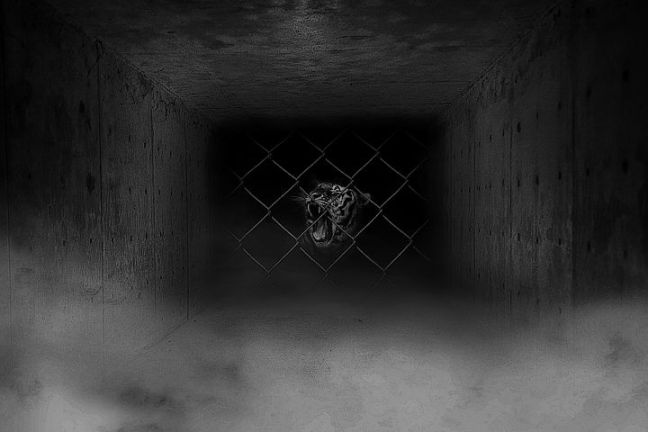
Several days ago, a tiger was spotted near I-75 just outside of Atlanta. I can only imagine the initial reaction of the 911 center when the first call came through early that morning –

“911. What’s your emergency.”

“Uh, yeah. There’s a tiger walking down my street.”

“Did you say a tiger, sir?” the operator responds, trying to maintain professionalism and keeping the incredulousness out of her voice.

“Yes. A tiger.”

Hours later, a woman was alerted to something by the sharp barks of her dog outside in the yard and the sudden illumination of her kitchen from the headlights of the police cars. The timing was serendipitous; just as the great cat snatched the small dog in its jaws, the police fired upon the tiger. The dog was fine. The cat, unfortunately, had to be killed. With the city beginning to stir and children heading to their bus stops soon, it was simply too dangerous to wait for the team with the tranquilizers darts to arrive on scene.

It wasn’t until later that night that the full story came out. The tiger was part of a circus convoy driving to Tennessee. Somehow, it managed to escape the trailer while it was parked overnight and it decided to explore the wilds of central Georgia.

This story made me think about the life of that female tiger. I don’t know if she was born in captivity or captured as a cub, but I do know that she spent years in captivity. In some ways, her life as a kept animal was easier than that in the wild – she never had to face hunger, she didn’t have to work too hard for food and any injuries or illness would be quickly attended to.

And like all animals accustomed to captivity, I’m sure she adapted. Over time, those natural instincts to hunt and wait and fight for food would begin to soften. Her nose, no longer needed for survival, would become lazy. And her ability to endure the hardships would weaken as she grew comfortable in her limited and unchallenging world.

After only a brief period in captivity, many wild animals are deemed, “not suitable for release.” They have become too soft, too complacent to make it out in the real world with its fights and its famines. They no longer know how to hunt. They have forgotten how to interact with the group. They have lost the drive and the grit to survive.

Much the same can happen to us. When we’re held in environments that both constrain us and overly care for us, we can become soft. Forgetful of how to be hungry and fearful of struggle. Like the captive animals, we become accustomed to things being easy and we can flounder when circumstances become more difficult.

There’s a lesson here, one of which I’m always cognizant of in the classroom, when we try to make things too easy, to remove all of the discomfort, we are teaching our children and ourselves to be dependent, not suitable for release. I’ve never been a fan of “no pain, no gain,” but I’m a big believer in the idea that struggle is what makes us strong. There’s a huge span between comfortable and pain. And that’s where the growth happens.

However, all that being said,

Snip20170929_1


The Power of “Me Too”

I recently responded to a woman over at Divorce Force. She had just discovered that for 30 of the 34 years she spent with her husband, he had another family. Her post is brief, the details sparse. But I’m confident that one of the many overwhelming emotions she is feeling right now is that of being alone in this experience.

I’m confident because I remember feeling the same. Convinced that there was nobody else who could possibly relate to the shock of sudden abandonment and the crazy making aspects of divorcing someone who made his own reality.

And then I found some message boards. A few articles. A book. And those words all whispered, “Me too.”

“My husband left me a note on the counter and I never heard from him again.”

“My wife simply didn’t come home from work. I found out later that she moved in with her boyfriend that same day.”

“My ex husband  fabricated all of the documents that were submitted to the courts. It’s all lies.”

“My ex wife falsely accused me of being abusive. Now the judge looks at me like I’m the bad one.”

As I read these entries, I felt sorry for those that had endured. And I also felt some relief. Some companionship. Some sense that I had found my tribe.

All because of the power of “me too.”

“Me too” doesn’t try to compete for the greatest pain trophy. It doesn’t try upstage the circumstances or tell a better story. It doesn’t engage in a game of tug of war, attempting to direct all of the energy to one side. “Me too” doesn’t claim to understand all of what another is feeling or to insinuate that the paths are the same.

What “me too” does is tell you that you’re not alone in your experience. That others have been in a similar place and can empathize with how you are feeling. “Me too” provides hope as you learn that others who are doing okay now were once not okay. When you hear the words, “me too,” you know you have a compassionate and nonjudgmental ear where you can feel safe and understood.

If you’re feeling alone, seek your tribe and find peace among those who whisper, “me too.” And once you’ve been there and through the other side, be brave enough to remember your own struggles, share your own “me too” and then just be there and listen.


Growing Older, Growing Wiser…IF You Keep This in Mind

Have you noticed that some people seem to find their inner zen and worldly wisdom as they age while others only seem to settle into negativity and bitterness?

Have you ever wondered why that is?

As we get older, there are two opposing forces that can impact our general happiness and outlook. Two divergent agencies both raising their voices to be heard.

Which one will you listen to?

The Voice of Life Lost

When I look around me, I see some people who have made it beyond middle age without suffering any major setbacks or losses. But only a few. I’m convinced that wrinkles are only partially due to thinning collagen and the relentless pull of gravity. I think wrinkles are the visible signs of the emotional scars we carry in ever-increasing numbers.

And as those hurts and losses begin to compound, it’s easy to become buried. Become embittered. It may seem that there is more lost than has ever been gained and the thought of trying again feels insurmountable. With so many difficult life experiences, everything can become tainted, turning the once-innocuous into a potential trigger.

Some people let this toxicity build like an algal bloom on a once-clear lake, blocking out all of the light and choking out all of the life. Their lives become a tally of what has happened and how they’ve been targeted by misfortune.

As they grow older, they become more agitated, more pessimistic and often as a result, more alone.

The Voice of Life Lived

And then there are those who listen to the other voice. These souls are no more fortunate, no less likely to have experienced hardship. They simply hear a different message.

They look back at their long lives with its many struggles with the gift of perspective. Perhaps they are able to see how something that was devastating at the time became a gift, even though it was unwanted and a great price, after the passage of the seasons. They view their myriad losses at part of the signs of a life spent giving and loving rather than focusing on what is no longer present.

Instead of questioning why things happened to them, they are able to look back with a sense of quiet pride that they made it through so many trials. And that confidence gives them the optimism that they’ll make it through the next one as well. With time and practice, coping skills and strategies have been perfected and practiced, using the difficult times as opportunities to become better.

Instead of focusing on what they don’t have with bitterness, they view what they do have with gratitude.

Thankful for every moment and every breath.

We all have both voices speaking to us, the proverbial devil and angel perched upon our shoulders. Which voice will you listen to – the one who counsels misery or the one that brings you inner peace and wisdom?