How Teaching 8th Grade Helped Me Through Divorce

“I don’t get it,” one of my coworkers said to me the other day, “All of a sudden I have a bunch of kids failing that have always been A or B students!”

“That’s normal this time of year,” I explained, “As high school looms ever closer, some of them express their fear through self-sabotage. Others regress and become more immature. Some become clingy, like preschoolers holding tight to a parent’s leg. It’s a big transition and they’re scared. But only a few are ready to articulate it, face it and step up responsibility. It’s our job to help them all get there.”

Teaching 8th grade is like tending to hundreds of metamorphizing pupa. With attitude. Sometimes LOTS of attitude. It can get messy and yet the end results make it all worth it.

The year is all about transition. From child to adult. From parent’s control to self-control. From being told what to do to making decisions. From being shielded to facing consequences. From passing off liability to shouldering responsibility.

And transition is always hard.

Not just for teenagers.

For all of us.

I’ve been in a unique position to observe thousands of young people undergo transitions over my career. It allows me to interpolate trends and analyze patterns.

Patterns that hold true for anyone undergoing transition.

Transition is Messy

I used to have a snake, a small Kenyan sand boa. He was generally docile except when he was preparing to shed his skin to account for his expanding body. For several days a few time a year, he became irritable. Short-tempered. He would demand food and then turn his nose up at the offerings. Once his old skin was peeled off like a soiled tube sock left on the floor, he would again return to his amicable self. Until the next growth spurt.

Transition is messy. Dirty. Often ugly. It’s rarely a smooth process and never a linear one. The movies make it seem like it’s easy to go from ugly duckling to sensational swan in a few challenging moments and a short montage set to great music. The movies lie. The reality is much longer and more difficult than many of us realize.

And those undergoing transition can be difficult to live with (especially if it’s yourself!).

They’re irritable. Short-tempered. Demanding.

But that’s only because they’re confused. Scared. Uncomfortable.

Because transition is hard.

Self-Sabotage

It can be scary to reach for new heights. And sometimes it’s easier to act as though you couldn’t do it rather than try and risk failing. It’s common for people in transition to hamstring themselves, to make decisions and act on impulses that are in opposition to their stated goals. It’s a way of staying comfortable.

It’s the student refusing to turn in assignments. It’s the recovering alcoholic taking a job at a nightclub. The woman trying to save her marriage flirting with her coworker. The newly divorced constantly complaining about the ex. The newly dating turning all of their energy towards work and wondering why new relationships continue to falter.

Grasping

In order to make a life transition, you have to first let go of your former life. It’s an act of great courage and great faith. And before many are ready to take that leap, they respond to the idea of letting go by holding on ever-tighter.

Sometimes the grasping may latch onto something or someone in the present that is a stand-in for something or someone from the past. This can be a flash-in-the-pan rebound relationship or the sudden and overwhelming attachment to a new hobby or habit.

Regression

Periods of growth are often preceded by periods of retraction, as the increased vulnerability of change prompts a desire to be taken care of and protected. Many people who have two or children are familiar with this tendency as they watched their toddler revert to diapers or preschooler beg for the bottle upon the birth of a new baby. It’s a lot of responsibility to be the “big one” and sometimes we all just want somebody to take care of everything.

It’s okay to need and seek extra help during times of transition. In fact, that’s completely normal and healthy. Be careful not to become too dependent for too long; however, or you risk giving up control of your life.

Taking Risks

Transition is a time when you’re neither here nor there. It’s a time of changing boundaries and it’s natural to explore where those boundaries now lie. When nothing is certain, everything feels possible and it’s exciting to explore a world where limitations don’t seem to exist.

Risks still have consequences. It’s great to explore. But please, take your brain with you!

Acceptance of Past

This is one conversation I wish I never had to have with a student again. And yet, every year, I have to have it with several. Some of my kids have had the misfortune to have absent parents. Or abusive ones. Or they’ve just had way too much happen to them at a young age. And I have the frank conversation with those kids that they are coming up on the age where they have to decide if that’s going to hold them back or if they’re going to succeed in spite of it.

And that’s a huge part of transition – accepting the parts you cannot control and taking responsibility for those you can.

Confidence

Transition often starts with “I can’t.” Because you can see where you’ve been and you struggle to imagine where you’re going. But with every step taken with courage and faith, confidence is built.

My favorite part of watching people in transition is seeing the growth in confidence. I love observing “I can’t” morph into “Look what I did!” and “I got this!”

Transition is Temporary

When my former students visit or write and I get to see the results of those difficult days, it makes it all worth it. Transition is temporary. It doesn’t last. You outlast it. Emerging bruised and battered. And also better.

I Never Learned This in School

So December 2013 is another month marked by yet another school shooting. It’s almost commonplace now yet as I looked around the excited faces of our middle schoolers at their annual basketball pep rally this afternoon, it’s unimaginable. I cannot envision one of them turning on their classmates and teachers with a deadly weapon. I cannot picture an armed intruder entering our school.

And I don’t want to.

After Brock heard about the latest incident on the news, he brought up the idea of doing some pro bono training for teachers. This is a man who has made his life’s passion about protection and defense. I have no doubt that his empty hands against a gun would at least result in a fight. He wants to share his expertise so that teachers could be better prepared. I appreciate and understand his motivation and intent.

But I don’t want to.

I don’t like assuming the role of a security officer at school. I am stretched enough as teacher and counselor and social worker and nurse and cheerleader. And playing police defeats those other roles. The roles I signed up for. I don’t know if I possess the capacity for the duplicity required. Middle schoolers don’t respond to clinical detachment; you have to form relationships. But how do you build a relationship at the same time you train how to take them out? Perhaps it is something that can be learned.

ButI don’t want to.

It makes Brock upset. And, I’m sure, scared every time he hears those reports. He knows techniques and strategies that could potentially help. It frustrates him that I don’t want to learn those operations. But I don’t know if I can and continue to work in my role as a teacher.

I never learned this in school. I was taught how to attack curriculum, not people. I was taught how to motivate kids, not take out adversaries. I learned how to break apart the processes of math, not the bones of others. I am sure I could learn these other lessons,  these techniques more suited to SWAT than pep rally.

But I don’t want to.

Maybe it’s my way of keeping my head in the sand. Keeping the possibility at a safe enough distance. Maybe it’s because being a teacher is overwhelming enough and I can’t imagine adding another layer to balance. Perhaps I’m just not made of the right stuff to be able to respond tactically in chaos. Maybe it seems futile because I can not (will not?) dedicate the time needed for real training.

I don’t know.

But I do know that these reports always shake me to the core.

The hard slap of reality delivered with a frightening regularity.

I do know it makes me want to hug my students.

And assure them they’re not alone.

I do know it changes the way I feel, walking into my job every day.

It puts the little things in perspective.

I just read an article today that discussed the first national summit on school shootings. Those involved were trying to come with a profile that would fit the classic perpetrator. And basically, what they came up with was a pretty typical teenage boy. Not necessarily a loner, no more likely to come from a single parent home. Just a kid.

The kind that move through my classroom every day by the dozens.

I don’t want to view each of those kids as a potential shooter.

I can’t.

What I can do is try my best to see each one as an individual. To build relationships. To reach out. To listen. To get help when needed. To reassure and motivate. To build community and trust.

I may not know how to wrestle a gun from someone’s hands. But maybe I can do a little bit to keep it from those hands in the first place.

And hope that is enough.

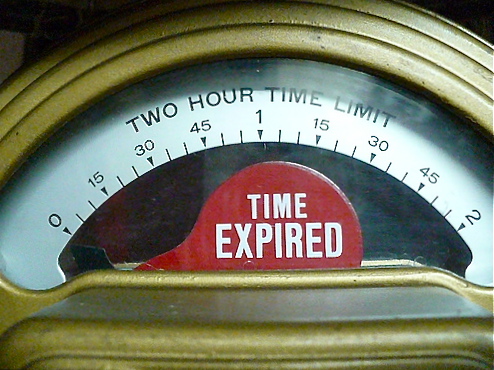
Expiration

Next week, I will meet 120 strangers. They won’t remain strangers for long. I’ll soon learn their names (okay, maybe “soon” isn’t the right word…this seems to take longer and longer every year!). I’ll discover their likes and dislikes, their celebrity crushes (please no Bieber this year!) and their favorite clothing brands. I’ll hear about their summers, their siblings, their pets and their families. I’ll figure out who needs to be pushed and who needs extra TLC.

These kids will be in my life for 180 days. Most of them, I will never see again after May. These are relationships with an expiration date. Before I ever meet them, I know when the connection will end.

There is an urgency to teaching. I have around 160 hours (once you subtract out testing days) with each of these students. In that time, I have to teach them the 8th grade math as well as remediate any gaps from prior years. I have to improve their reading and writing abilities. I have to help them mature and grow as students and as people. I have to form relationships, as that is the single best way to motivate a middle schooler. I seek to teach them the importance of perseverance and of failure. I want to inspire them to make healthy choices and to become role models themselves. I want to be remembered, not as their favorite teacher, but as the one that pushed them and helped them realize their potential.

Every moment has an importance with that expiration date on the horizon.

On the flip side, when they are driving me crazy (shocking, I know, but middle schoolers can be trying at times!), I remember that it is temporary. The child who constantly argues or interrupts will be gone from my room before I know it.

The expiration date minimizes the impact of those negative moments.

When I entered my first marriage, I saw it as a relationship with no expiration date. We were young and it seemed like our time together would stretch on forever. Moments passed without importance because we were sure there would be many more on the horizon. Only when the marriage unexpectedly spoiled, did I realize that there were wasted times that slipped through.

With my soon to be second marriage, I know that it has an end. I hope that the end is far in the future, but there is no way to be certain. We’re older and more aware of the end of life and of the illnesses that can strike out of nowhere. I am more aware that marriages can falter even without intent. I no longer count on those untold years in some imagined future, as they may never materialize.

I treat my relationship now as though it has an expiration date. I savor each wonderful moment and don’t fixate on the frustrating ones. I know I have a limited time and I want to make the most of it. Only in this case, I’m not worried about teaching math concepts:)

And for today, making the most of it means taking a family hike before the craziness of a new school year, a move and a wedding. I’m not at the precipice anymore; I’m taking the plunge!


The End.

You would think that I would be used to endings by now. I finish several books a week, following the tales to their final word. I run races, keeping my eye on the finish line. My weekdays are filled with bells that signal the end of a class period seven times a day. I’ve been through 29 last days of school – some as a student, some as a teacher and a few as both. Hell, even my blog is about an end.

So why do endings, even the ones I look forward to, still manage to feel abrupt? Too soon? A premature conclusion reached before resolution?

This past Friday was the last day of school with kids. I had been waiting for that day, counting down since the end of the spring testing season. Many days, it felt like the end would never come. The days felt longer, the children squirrelier.

But then, that final bell did ring.

As I watched those faces pull away in the school buses for one last time, I felt a loss. For the past nine months, I have laughed and cried with those kids. I have driven them crazy and they have driven me crazier. I’ve struggled to help them make sense of algebra and we have struggled together to make sense of tragedy. For nine months, those 120 teenagers are part of my extended family. And then they’re gone. I will never see or hear from most of them ever again. In one day, they go from constant presence to memory.

Eighth grade is a crossroads year. It is time when teenagers are beginning to develop themselves apart from their parents. They are learning to make choices and beginning to understand the nature of consequences. They try on different personas as often as outfits, going from class clown to teacher’s pet and back again in a blink of an. I call them 150 lb two-year-olds, as they test boundaries yet want to know that you’re still looking out for them. I see them develop over the year into more independent beings but I don’t get to see the conclusion. In May, many of them are still at a crossroads and I am unsure which path they will choose.

It often feels unfinished. I find myself, years later, wondering about certain students. Hoping they did okay yet fearing that they did not. I have to trust in them and relinquish any influence. Sometimes, I receive the gift of an update when former students track me down. It’s funny – I can see the echo of the eighth grader I knew in these adults, yet there are years of experiences that have shaped them after they left me. In some ways, they are frozen in time for me: middle school in perpetuum (now that’s a nightmare!).

I think we all struggle with endings, even those that we initiate or those which we welcome. Every ending has elements that we relish leaving behind and facets that we will miss. Every ending brings uncertainty and transition. Every ending requires a re-scripting and reappraisal as we disentangle ourselves from the past and set course for the future. Every ending has opportunity.

My school year begins with a list of names. Monikers with no faces, no personalities. My year ends with a list of names, as I file reports and stuff report cards. Only now these names have meaning. Visages. Character. The year may have ended, but its impact has not. Those nine months together have influenced us all regardless of what our collective futures hold.

We tend to see endings as a termination, a conclusion. Perhaps it more accurate to think of them as a transition, a sign of change. It may be over, but its reverberations carry forth.

Three Way Conversation

Do you remember three way calling? Where you pushed a button after connecting with one person to allow you to dial out to a third?

Three way calling dominated my middle school years. I spent countless hours curled in the corner of my waterbed atop my zebra-striped comforter (hey now, it was the early 90s!) with my ear pressed to my corded phone (I didn’t have a cordless model for a few more years). Much of time, one of two of my two closest friends were on the other line. We could spend hours talking about everything and nothing. But mostly, the talk centered around boys. Hmmm…would they be classified as everything or nothing?

The legendary zebra bed and my infamous chubby cheeks of childhood:)

And then the topic of a three way call would come up. Who should we call? Is there anything we need to discuss before they are on the phone? Any bit on intel to which they are not privy? It was so deliberate, that addition of a third to the conversation. The new voice could entirely change the tone or course of an exchange. New topics may be broached or old ones discarded due to their proclivities and knowledge.

It was always a balancing act, those three way conversations. Especially with middle school girls involved. We usually had alliances; the affections were not spread equally between the three. It was always a dance between inclusion and exclusion, always wondering your place in the mix.

Three way conversations have again appeared in my life. Not via phone (do iPhones even have that capability or has it gone the way of the floppy disk?) but in my relationship.

I am acutely aware that every conversation between Brock and I also includes our pasts, the ghosts from before dialing in to voice their feelings and opinions.

Now obviously every conversation between two people pulls from their respective pasts. It’s impossible for two adults of any age to speak without their pasts whispering their ears. Our experiences shape or beliefs and our perceptions. We filter the world through this netting woven from days gone by.

With my ex, I was not as aware of the past. We were together from such a young age, perhaps I assumed my past was his past.

But that’s not accurate. Even though we lived parallel lives for many years, we had different perspectives born from our childhoods. I neglected to listen to the specters whispering of the trauma caused by his alcoholic family and I didn’t pay attention to my fear of abandonment on the other line. I acted as though we were in on a private conversation when, in reality, it was a three way conversation with our pasts.

I’ve returned to the state of my youth. I am more deliberate about those three way conversations. I listen to the voice that is speaking – past or present – and try to respond appropriately. It’s easier now to tease out the utterances of former lives, as we each bring years of unshared experiences to the table. I am more aware of their effect on our views and responses, the latter of which are often anchored more in yesterday than today. We cannot hang up on our pasts; we must learn how to engage them in the conversation.

The zebra-topped water bed has long since been retired and I no longer have a corded phone. However, the three way conversations continue. Only now we don’t spend hours giggling about boys.

To those impacted by Boston: Marathoners train to endure pain. But there is no training that can prepare you for this kind of torment. My heart goes out to the runners, their supporters and the thousands of people who are taking care of the affected.