Diving for Pearls

There are times when Truth is important –

When my students use verified geometric theorems to prove triangles congruent.

When my husband tells me where he’s going on a Tuesday night.

When my doctor asks about my family history of cancer.


And then there are times when Truth really doesn’t matter.


A person reached out to me yesterday with the concern about their place in their former partner’s view – did they love me or did they use me?

As I sat on the bench in the gym locker room typing out a response, I was transported to a time when that same question consumed me. As the details of my husband’s other life began to surface, I couldn’t help but contrast what I was feeling at that time (loved) with what he was doing at the time (anything but loving). There was no doubt that he was acting without concern for me towards the end, but did that mean that he never cared for the entire sixteen years?

I was obsessed with answering this question. I would consider evidence in the form of memories or discovered facts and dutifully enter a mental tally mark in either the “He loved me” or the “He loved me not” column. And yet, I never seemed able to settle on a true answer. For every indication that he loved me at some time, I could find a counterclaim that I was merely a pawn in his game.

I was looking for definite proof. For Truth.

But what I really wanted was for the pain to stop.

And Truth, assuming it could even be ascertained, really didn’t matter.


I made a conscious decision to retire my search for Truth. I accepted that he had used me  in the final few years of the marriage and I chose to believe that the love I felt prior to that was real. Maybe I’m right and he did have the capacity for love until he collapsed under the pressure of shame and addiction. Or, I may be completely off base and he may have been a manipulative sociopath from the beginning.

It doesn’t matter.

The marriage is over. I don’t need this information to make any decisions in the present moment. My views don’t impact my ex one way or the other. I’m not presenting this conclusion as definitive and I’m not deceiving anyone. There are no judges evaluating the evidence for my claim and no real-world repercussions either way.

It only matters within me.

So I choose to believe the truth that brings me peace and allows me to hold onto some of the good memories instead of throwing sixteen years of my life away.


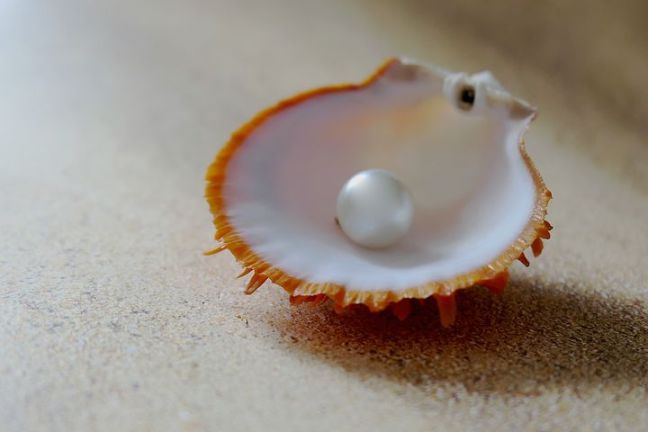
Oysters developed a resourceful strategy for handling unwanted and irritating invaders. In order to reduce the pain from a wayward grain of sand or grit, they surround the unwanted particle with smooth coating of calcium carbonate.

That’s how I see my resolution to conclude that I was once loved by him – a pearl enveloping and softening the pain.

And it may not be Truth in any real sense, but it’s real enough to me.

 

“I Want You” vs. “I Need You”

I want you I need you
There’s nothing sexy about being needed.

I feel it after a long day at work after hundreds of children have made their demands, becoming more task-monitor and cognition-manager than woman. Mothers describe feeling like little more than a milk-generating machine during those months when breastfeeding may be a constant. Bread-winners may start to feel more like a money-making automaton than a living, breathing creature. Caretakers often begin to resent their charge, love clouded by a fog of endless need.

Those on the other side often chafe at their sense of dependency. They need, but they don’t want to need. They desire independence, yet may be unable (or unwilling) to strive for it.

There’s nothing sexy about being needed.

Yet, so often, “need” is exactly the energy that begins to permeate our relationships after the initial, heady rush of burgeoning love. As “I want you” is slowly replaced by “I need you.”

You hear this from people who bemoan that their spouse is essentially another child who is absolutely clueless at handling the day-to-day on their own. They begin to see their partner as dependent and incapable, neither of which are particularly attractive traits. Others may become overly needed on an emotional level. Often called emotional labor, this feeling of always being “on” and taking care of the family’s relationship, communication and emotional needs is as tiring as physical labor (if not more so). Those that are fearful of being alone may overly cling to their partner. And feeling suffocated by somebody’s anxieties is a sure way to dull any attraction.

And in all of these cases, the needed one speaks to seeing their spouse as more like a friend or a roommate than a romantic partner. The more needy partner can begin to take offense at their position and may begin to act out. Furthermore, the unhealthy dynamic can lead to an increase in irritations and frustrations on both sides.

Here’s the unbridled truth – if you are both adults, neither one of you truly needs the other (no matter what it feels like).

In fact, I think this is possibly the most important lesson I learned from the end of my first marriage. I sure believed that I needed my first husband. After all, I had never navigated adulthood without him. He would handle making retail returns and spending hours debating with the gas company on the phone, both tasks with which I struggled. He knew just how to soothe me after a stressful day and he would laugh at all of our inside jokes. He (sometimes) brought in needed income and used his impressive carpentry and handy-man skills to upgrade and maintain our home on the cheap. He was always willing to talk (even in the middle of the night) and so I rarely felt alone or ignored.

I thought I needed him.

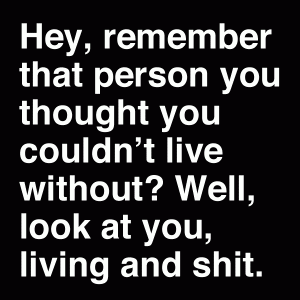
But it turned out I was wrong. Somehow, with a few changes and some missteps along the way, I was able to survive (actually thrive) without the person I thought I couldn’t live without.

Thank goodness:)


lookatyoulivingandshit


Being needed can feel good. It gives you purpose. Shores up your confidence and helps to mitigate any fears about being alone (after all, if someone needs you, they’re unlikely to leave you). Yet, taken too far or applied too liberally and being needed can begin to feel like an inescapable prison.


On the other hand, we all like to feel to wanted.

It’s a compliment, an acceptance. It makes us feel both desirable and powerful. It speaks to being chosen. Appreciated and valued.


“I want you” vs. “I need you”


I need you says that you are responsible for my happiness.

I want you declares that I’m happier when you’re around.


I need you implies that neither one of you are free agents and that you’re trapped.

I want you suggests that there are other options and you are the chosen one.


I need you sets the stage for an imbalance of power as one gives and the other takes.

I want you acknowledges the power within both of you and allows for an equal exchange.


I need you speaks to what you can do for the other person; it focuses on the tasks you perform.

I want you expresses a desire for the person; it focuses on who you are.


There’s nothing sexy about being needed and there’s nothing sexier than hearing someone you care about say,

“I want you.”


Just Because You Love Someone…

love

Sometimes love is not enough…

When we were on the lookout for a new dog this past winter, one thing became immediately clear – the shelters and the foster homes were filled with amazing dogs who had been surrendered by their original families. In most cases, these dogs were relinquished not because they weren’t loved or because they were “bad” dogs, but because they were not the right dog for the family. A painful choice, but sometimes the best one once a mismatch has been made.

Human relationships often fall into the same category. We choose poorly or the situation changes after we’ve made our choice. We struggle to admit that maybe we were wrong. We hold onto hope that maybe things will improve. We fear ending things because sometimes being with anybody is better than being alone. And we justify our inaction or our excuses by declaring our love.


When you say, “I love them, but…,” it’s the words that follow that are the most important to pay attention to.


Amazing things are accomplished in the name of love. People are nurtured and challenged, accepted and encouraged. Love gives us hope and purpose, bringing light into even the darkest corners.

Yet sometimes love is used as an excuse. A reason to avoid making those difficult choices that sometimes life brings our way.


Just because you love someone…

You do not have to maintain a relationship with them. Whether it be an abusive relationship with a partner or a toxic relationship with a parent, you can love someone and keep them at arm’s reach (or even further). This can be a decision made from a place of compassion, recognizing that continuing the relationship is harmful for one or both parties. Love means that you want the best for them, but this doesn’t have to be at the exclusion of your own well-being.


Just because you love someone…

You do not have to tolerate their abusive and cruel words or behaviors. It’s rare that abusive people are all-bad; there is often a soft and vulnerable and wonderful side as well. And you can love that part of them while at the same time, refusing to put yourself in the position of being subject to their bouts of anger or coercion. Maybe you limit your exposure or make a promise to yourself to walk away whenever things turn sour.


Just because you love someone…

You do not have to agree with their choices. You can love the person and hate the actions.    Furthermore, love does not preclude you from letting them experience the repercussions of their choices. Sometimes love means doing what is best for the person in the long run even though they may not be able to see it in the short term.


Just because you love someone…

You don’t have to like them. In this moment or in general. Everybody is worthy of love, but you have to really put effort into being liked. Here’s the hard part, though – when there is love without like, there is also great internal conflict as you wrestle with the often conflicting emotions.


Just because you love someone…

Doesn’t mean they are the right person for you. This can strangely be one of the harder positions to be in. When you love them, believe they are a good person and yet, for whatever reason, you’re unsure about the relationship. There are no easy answers here, no strong, solid reasons to leave that accompany the, “I love them, but…” It is possible to love someone. To like them and respect them. And also recognize that they are not what you’re looking for. A painful choice, but one that may allow both of you to move forward and find someone you love without the “but.”


Important Factors to Consider Before Relocating for a Relationship

relocating relationship

Have you ever relocated for a relationship?

I have.

Twice.

The first time, I followed my future-ex-husband from San Antonio to Atlanta. I left behind family, friends and school to move to unseen apartment in a city that I had never even visited. Even with all of the sacrifice, I never considered not making the move. At that point, being with my fiance was more important than anything else.

What can I say, you live and you learn.

The next time was slightly different. After the divorce, I was ready to launch myself out of Atlanta like a pilot jettisoning from a crashing plane. I had my sights and my intention focused on Seattle. And then I met my future husband (and later his dog, Tiger) and made the decision to stay put in the area for at least a year.

But I still had to move, even though it was only towards the western end of town instead of the west coast. This time, I was able to become comfortable with my new surroundings, pick out my own apartment and find a job in the area all before I took the plunge.

Yet even with all of that preparation, it was still sometimes a struggle. Because when you relocate for a relationship, you inevitably are making some trade-offs. Ultimately, it’s up to you to decide if the exchanges are worth it (and many time they are). But make sure you carefully consider these factors before you take the plunge:


Is this a location where you would choose to live in spite of your partner?

The place where you live has an enormous impact on your overall well-being and happiness. No matter how in love you are, if you hate your city every day, you’ll become miserable. If the draw of the relationship is too great to ignore, can you find a way to make the location more palatable? Maybe a certain neighborhood is more pleasing or the perfect home outweighs the negatives of the rest of the environment. My mom ended up in landlocked San Antonio and she cursed the lack of water until she installed a small backyard pool.

If you and your partner break up, will (or even can you) stay in this location?

At one point, my now-ex and I were looking into the possibility of relocating to California. I remember feeling a strangle little pull in the pit of my stomach when I realized that there was no chance of being able to ever afford to live there on my own salary (and this was when I thought the marriage was healthy). It’s good to have the outline of a “what if” plan sketched out before you invest the time and money into moving.


Do you have your own social group in the location? If not, what will you do to build your own connections?

When one half of a couple relocates for the other, it can easily create a situation where the newly-moved is completely dependent upon the other for their social and emotional needs. If you don’t already have friends or family in the location, what can you put in place immediately to start to grow new friendships. Also, how will you keep in touch with established friends as you nurture these new relationships? Try to have more than one possible source for friendships at the ready in case one proves to be a bust.


Are you giving up status at work or credits at school in order to move? How will that impact you down the road?

When I moved to Atlanta, I basically lost over two years of college credits. Then, when my ex lost his job, I was forced to make some difficult decisions about my planned degree. At the time, I was okay with the decision, yet I’m not sure that I would make the same one again. Be very careful about your professional or earning potential losses with a relocation. The impact of those can be quite large and irreversible. It may make sense to delay to move for a time or to work to find a creative solution.


What will your living situation be like? Are you starting fresh together or moving into their established space?

Moving into someone else’s space is difficult. Even once all of your clothes are in the closet and your pictures are on the wall, you can still feel more like a guest than a permanent resident. Beyond that, how will your space differ from that which you’re accustomed to? Are you moving from the suburbs to a small city apartment or having to deal with the lack of public transit for the first time? Do your research, ask questions and read this for more advice on how to move in together.


Do you have children? How will they be impacted by the move? How will their relationship with their other parent be affected?

Will your kids have to change schools? Based upon their ages and temperaments, do anticipate this will be relatively easy for them or especially traumatic? Will they have to share a bedroom for the first time or adjust to a change in available activities? What can you put in place ahead of time to create a niche for them to slide into? If you’re moving away from their other parent (and this parent is involved), plan ahead for ways that your kids can maintain contact. Adult friendships can be sustained with minimal and/or infrequent meaningful contact. Kids’ relationships with their parents cannot.


Does your partner frequently expect you to be the one who makes sacrifices or is this generally an equitable relationship?

This is a biggie. Maybe in this case, it makes sense for you to be the one uprooted. But if the tables were turned, would your partner relocate for you? Outside of the move, is your partner willing to compromise their own desires sometimes for the betterment of the relationship? I know that I would never move for somebody that wouldn’t also move for me.


So how about you?

Have you moved for love (or for what you thought was love at the time)?

Do you have any regrets?

Did you experience any triumphs?

Do you have any lessons to share?


Love, But Not “In Love”

in love

“I love you, but I’m not ‘in love’ with you.”


This sentence, although common, is one of the more bewildering and unsettling statements to both utter and to receive. It both speaks to both caring and to a pulling away. It professes concern while confessing a lack of desire. Those little words are an admission that the deliverer wants what is best for the other person, but no longer wants the other person.

For the speaker, this declaration may come from months or years of feeling that something is missing, even as the exact nature of what is lacking remains elusive. To the listener, the words can prompt a sense of helpless falling, tumbling upon the rocks into the deep and dark pool below.

Sometimes this feeling of loving without being “in love” comes at the crucial point where a relationship is transitioning from the early hormone and excitement fueled lust and attraction into a more mature and steady love. When the expectations that the early rush will persist forever come crashing against the reality of settling into the comfort of the known, the lack of intensity can be interpreted as a lack of desire.

Yet other times, this feeling comes on more slowly and after the relationship has successfully navigated the passage into a more stable and long-term relationship. Often it slides in unnoticed, until one day a realization is reached that the passion, the wanting, is gone.  When you look at your spouse and you see a good parent, a good provider, a good friend. You feel safe with them. Perhaps too safe. The unknown is gone. The danger is gone. The hunger is gone.


We cannot have desire without uncertainty.


When we first begin seeing someone new, there is no doubt that they are “other.” They smell different, feel different and we cannot predict what they will say or do next. The unknown is a bit scary (after all, we don’t know where this will lead), but it is also exciting. A road trip without a map provides plenty of adventures.

That taste of fear is titillating. It feeds into our base desires and interrupts our more rationalized and carefully metered thoughts and reactions. But most of us struggle to stay in that space for long. After all, it’s not comfortable to stay with uncertainty and so we tend towards the reassurance of consistency and predictability.

But there’s a dark side with becoming too familiar. When we lose that sense of our spouse as “other” and instead fully assimilate them into a shared “we,” our aversion to feeling desire for those we perceive as family begins to kick in. We often believe that a lack of passion for a partner comes first and then we begin to see them more as a friend or even sibling. However, frequently the shift in perceived role comes first and the lack of desire follows naturally after.


Falling in love again requires letting go.


Love, but not “in love” is not necessarily a death sentence for a marriage. The passion and excitement can be cultivated and nurtured and desire can be brought back from its resting place, no matter if you’re the one saying those words or the one hearing them for the first time.


Remember Why You Care

Recount the origin story of your relationship. What drew you to your partner? Remember the shared history and revisit the times when you felt the greatest connection or the most overwhelming desire.


Be Selfish

Go after what you want. Don’t be afraid to seek pleasure and enjoy it wholeheartedly when you find it. The confidence that you show when you know what you want and you go after is an aphrodisiac. Do what makes you feel desirable. Replace restraint with hunger.


Partake in Adventures

Try new things, both with your partner and by yourself. Break out of the mold that you have placed yourself within. Try something new. Change your mind. Allow this rush of adrenaline and dopamine to wash over your partner and your marriage.


See Your Spouse Through New Eyes

Try to view your partner as a new acquaintance would. Ask questions as though you don’t know the answers (perhaps you may be surprised). See their role as parent or caretaker or provider as part of them, but not all of them. Refrain from being critical and try being curious.


Embrace Uncertainty and Vulnerability

Speak up. Take risks. Be uncomfortable. Allow the thought that your partner may behave in ways you cannot predict. And accept that you may have thoughts and desires that you have shoved into submission. Replace “what now” with “what if” and throw out those tired and worn stories you’re telling yourself.


Let Go of Control (You Never Had it Anyway)

Take a step back. When you’re holding on too tightly, you don’t give the other person an opportunity to breathe. Accept that you cannot dictate the future and you cannot force attraction.


At the end of the day, we all want to be wanted. We want the feeling of being desired and accepted. We all want to be loved and we want to know that we are loved. And the first step to welcoming that love into your life is allowing that you cannot control it.


We push people away because we are afraid of letting them in and being hurt when they leave.

We grasp on to people that are not good for us because we are afraid of being alone and someone is better than no one.

Pushing and pulling are fear, not love.

Love is holding.

Loosely enough so that each person has the freedom to grow and change.

And firmly enough so that each person knows they are supported.

It is trusting the other person enough that they want to stay even if they have the ability to leave.

And trusting yourself that you will be okay if they do.