The Dark Passenger

Sometimes I wish I could talk to my ex.

Not the man of now, whoever and wherever he is.

Nor the man that sent the text that ended the marriage.

But the man I was married to several years ago.

The man that was sliding on that slippery slope to utter destruction yet still seemed to have a grasp on reality.

I wish I could I talk to him.

And ask him how it felt to split into two.

How it felt to live one life aloud while whispering the other.

How it felt to believe that no one would accept him for who he was.

How it felt to carry the ever-increasing burden of the dark passenger.

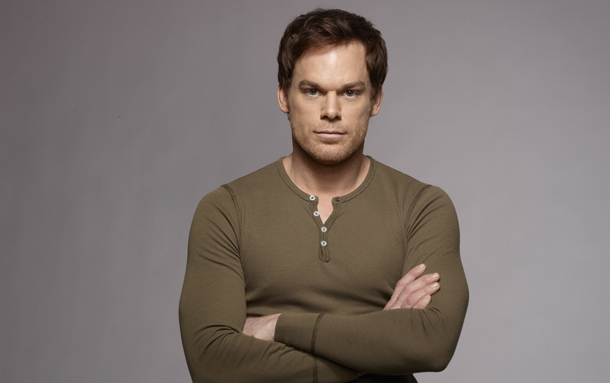
Brock and I just finished watching the first season of Dexter last night, a first viewing for him and a second for me. The show had an entirely different meaning for me now.

You see, the first time I watched it, I may as well have been sitting next to Dexter, the friendly serial killer. Now, as far as I know, my ex wasn’t a killer. But I sure see reflections of him in Dexter’s struggles to feed his dark passenger while maintaining a smile. To everyone around him, Dexter is normal with a job, a sister and even a girlfriend. But he is playing pretend. Behind the scenes, Dexter is a killer who, based upon the “code” his father taught him, targets only other killers. The first season focuses on Dexter’s struggles to maintain balance between the two lives and to sustain the illusion that he was just like everyone else.

I wish I talk to my ex and ask him if he related to Dexter at the time.

Did he also feel like he was born from some long-ago tragedy?

Did he feel the drive to satisfy dark urges and keep them under wraps?

Did he also learn to pretend to be normal while viewing himself as anything but?

Was it strange to sit on the sofa next to his unsuspicious wife while watching a similar drama play out on screen?

Or, did he not see himself in Dexter at all, convinced that he was in control of whatever was happening? That somehow he was special. Different.

I wish I could talk to him so that I could understand what initiated his fracture.

So that I could see the bigger picture.

The whole of him rather than just the side he presented.

The man and his dark passenger.

But most of all, I just hope that wherever he is, he has decided that the dark passenger has ridden long enough.

And kicked him to the curb.

I’m sure part of the show’s appeal comes from the ability of all us to relate to Dexter’s dichotomy to some extent. We all have parts of ourselves that we view as dark, even unlovable. We all sometimes feel as though we are pretending, worried that others may see through the act. I believe the lesson in the both the show and in my ex’s life is that the dark passenger only grows more powerful when isolated from the whole person. Accept yourself. Ask for help. And bring some light to the dark.

Connection

One of the complaints I often hear from the newly divorced and newly dating is that they don’t feel a connection with any of their companions. They say the dates are “okay” but bemoan the lack of a spark or bond.

But I wonder if they’re looking for the right thing.

In a marriage, intimacy develops between the spouses. You have seen the other at his or her best as well as his or her worst. In time, you accept their vulnerabilities and expose your own. You become accustomed to that level of connection.

And then divorce happens. And either suddenly or with a slow slip over time, that intimacy is gone. And it feels strange. Foreign. Isolating. Lonely.

So you look for that connection, that intimacy. You meet people, go out on dates, looking to regain that feeling of being connected and understood. But every encounter falls short. Sure, some start off with a bang (sometimes literally), but then sooner or later you’re left feeling alone again as the chasm between you and your not-too-far-from-stranger-date becomes clear.

One of my most memorable moments with Brock occurred after we had been dating for less than a year. I was over at his house for the night, where he woke me up around 2:00 a.m. to inform me we needed to go to the emergency room. He was scared – I could see it in his eyes. An hour later, we were in an exam room, the basics addressed and waiting for further tests. This normally strong and self-assured man was prone on a hospital bed, the gown revealing little flesh but lots of vulnerabilities. He asked for me to hold his hand. He asked for me to read to him. It was the first time since my marriage that an adult had been laid bare in front of me.

After months of more superficial connections, it was a bit strange being at that level of intimacy again. Foreign, yet familiar. This was the feeling I was looking for on dates. But that was a fool’s mission. Because that kind of intimacy takes trust and trust takes time to build.

I had been looking for that type of connection again on my dates.

But connections are formed, not found.

You may find lust on a first date, but you won’t find trust.

You may find curiosity, but you won’t experience intimacy.

You may find potential, but you won’t find a partner.

That takes time.

And adaptation.

I have a guest post about the role of adaptation in dating over at Must Be This Tall to Ride. Check it out and then follow Matt’s blog. He’s a divorced father who writes refreshingly honest and funny essays about the adventures. You’ll be entertained and enlightened at all once:)

Sunk

I love learning about how our brains operate and how they often fool us. We tend to think of ourselves as rational creatures when the reality is often anything but. There are many fallacies that we fall prey to, but there is one in particular that plays a dominant role in relationships.

The sunk cost fallacy.

This fallacy relates to costs (financial, time, energy) that have already been invested and cannot be recovered. What has occurred is done. Over. It should not have any bearing on our decision going forward.

And yet it often does.

A non-relationship example of the sunk cost fallacy would be the money paid up front for a monthly membership to a class. You go to two classes and decide you hate the course and find the instructor particularly grating. If you were paying per class, you obviously would simply stop going. However, because you paid up front, you view the money as wasted if you do not attend, so you continue to show up, hating every minute.

Pretty silly, huh? I mean, the money is gone regardless of if you turn up at the class or use that time to perfect your soap whittling skills (something which I assume is preferable to the class in question). You would be best served by writing off the money spent and using your time for something beneficial. It may not feel like money well spent, but at least it would be time well spent. And both have value.

In a relationship, the sunk cost fallacy can keep people together even when they may be better apart. The years (or even weeks or months) of time and emotional investment have already occurred and cannot be recovered. As such, they should not be considered in the decision of whether or not to continue the relationship. Moving forward because of sunk costs won’t make you happier. Energy invested in the past doesn’t promise a return in the future. When deciding if a relationship should continue, look at the value it brings to the present and the predicted value in the future, not the investments already made. Those costs are already sunk. Sinking more ships won’t make the first ones rise.

What has passed, is past.

And the past shouldn’t dictate your future.

So, if the relationship still has an intact hull, let it sail on its own merits.

If the hull is breached beyond repair, let it sink.

And then whittle that block of soap into a sculpture:)


Are You Falling For the Sunk Cost Fallacy in Your Relationship?

sunk cost

I love learning about how our brains operate and how they often fool us. We tend to think of ourselves as rational creatures when the reality is often anything but. There are many fallacies that we fall prey to, but there is one in particular that plays a dominant role in relationships.

The sunk cost fallacy.

This fallacy relates to costs (financial, time, energy) that have already been invested and cannot be recovered. What has occurred is done. Over. It should not have any bearing on our decision going forward.

And yet it often does.

A non-relationship example of the sunk cost fallacy would be the money paid up front for a monthly membership to a class. You go to two classes and decide you hate the course and find the instructor particularly grating. If you were paying per class, you obviously would simply stop going. However, because you paid up front, you view the money as wasted if you do not attend, so you continue to show up, hating every minute.

Pretty silly, huh? I mean, the money is gone regardless of if you turn up at the class or use that time to perfect your soap whittling skills (something which I assume is preferable to the class in question). You would be best served by writing off the money spent and using your time for something beneficial. It may not feel like money well spent, but at least it would be time well spent. And both have value.

In a relationship, the sunk cost fallacy can keep people together even when they may be better apart. The years (or even weeks or months) of time and emotional investment have already occurred and cannot be recovered. As such, they should not be considered in the decision of whether or not to continue the relationship. Moving forward because of sunk costs won’t make you happier. Energy invested in the past doesn’t promise a return in the future. When deciding if a relationship should continue, look at the value it brings to the present and the predicted value in the future, not the investments already made. Those costs are already sunk. Sinking more ships won’t make the first ones rise.

What has passed, is past.

And the past shouldn’t dictate your future.

So, if the relationship still has an intact hull, let it sail on its own merits.

If the hull is breached beyond repair, let it sink.

And then whittle that block of soap into a sculpture:)

Black Ice

One of the worst car accidents I’ve ever seen happened on black ice. It was several years ago, in front of the school where I used to work. It was a cold morning, well below freezing, but there had been no precipitation for days and so there was no expectation of ice. It turned out that an in ground sprinkler system at the front of a neighborhood had ruptured, spilling water out onto the road in the predawn hours. The water soon froze in the frigid air, becoming an unseen sheet of ice under the shadow of trees. The location was particularly treacherous, as it was not only on a hill, but also an area where people braked hard to turn into the school.

From my vantage point at a red light a block away, I saw one car after another cross the slick terrain, lose control and barrel into oncoming traffic. The engines were revving faster than reaction times so the ping-pong actions of the cars went through several iterations before traffic came to a standstill. Thankfully, on the morning in question, there were no serious injuries, yet the damage was severe. Dozens of cars were totaled. A power line was down. An overturned milk truck’s spilled contents added to the icy mess. And the road was blocked for hours.

Yet nobody involved left their house that morning afraid of the roads. No one took precautions for potential ice. It was business as usual. Until it wasn’t.

I just returned from a walk around my area of iced-locked Atlanta. The roads are still covered in 1/4″ thick sheets of glassy ice, their sides (and sometimes centers) littered with abandoned cars and even school buses. But there is some traffic moving today, the cars carefully maintaining a steady speed and avoiding sudden turns. The folks out today knew to be cautious, the ice is a known danger and they are implementing proper precautions. There are certainly accidents occurring, but few of the severity of the one I witnessed years ago.

Life’s challenges often have this distinction. Some are unanticipated and unforeseeable while others are more easily anticipated. We often berate ourselves when faced with a challenge we did not forecast. I know I did that with my divorce, wasted energy wishing that I had seen it coming so that I could prepare my bug-out bag.

But would it really have been better if I had anticipated it?

Sometimes, even when we know a challenge is coming, we can not prevent it or, like the politicians in Atlanta this week, we take a gamble and choose to not implement those preventative measures. Just the knowledge that my marriage was ending may not have been enough to change the outcome. Or, perhaps I would have gambled on things working out and chosen not to prepare.

Regardless, like the drivers on the roads today, I would have been scared, aware of the potential dangers around every bend. I would have been wary of every step, armed with the knowledge that each one taken could be one that sweeps out my life from under me. Hell, let’s be honest. If I had known that the end of the marriage was in sight, I probably would have been so scared that I would have been frozen in place. Iced in.

Black ice is treacherous because of its ability to hide. Yet its rarity means that we don’t walk around fearing its danger.

It’s funny. I used to view the tsunami nature of the end as one of the worst parts. Now? I’m thankful for it. It was a helluva wreck, but at least I wasn’t scared to drive. And even though the damages were great, there were no fatalities.

Thankful to be warm and home after an adventurous trek home from work yesterday that included a three hour drive followed by a three hour hike (and an awesome husband that met me halfway on my walk with hiking boots and hot coffee!). Many in the metro were not so lucky and spent the night in stranded cars, schools or in emergency shelters. Even though the surrounding cities screwed this up, the stories of the individuals stepping up to help others is amazing. Challenges are so much easier when we have help.