Love Is Holding

Always good to remember…

We push people away because we are afraid of letting them in and being hurt when they leave.

We grasp on to people that are not good for us because we are afraid of being alone and someone is better than no one.

Pushing and pulling are fear, not love.

Love is holding.

Loosely enough so that each person has the freedom to grow and change.

And firmly enough so that each person knows they are supported.

It is trusting the other person enough that they want to stay even if they have the ability to leave.

And trusting yourself that you will be okay if they do.

Love Doesn't End

Escalation

I came home last night to images of the riots in Baltimore on the TV.  I wanted to turn around and walk out, so that I could pretend for just a little longer that we lived in a world where situations like this didn’t occur on a regular basis.

It’s sad. Both sides – the police and the communities – are angry and scared and frustrated. The police are asked to go into dangerous situations and deal with unstable people on a daily basis. They never know which encounter may turn violent. They walk a narrow edge of fear and some use dominance to control it. The community members never know the mindset of an officer or what residue his/her previous calls left behind. They never know if an officer may respond too strongly. They too, walk a narrow edge of fear and some are using aggression to vocalize it.

Both sides have a justified mistrust of the other.

And I fear that mistrust will only grow as the escalation continues.

You have a majority of people that are honest and decent. And then you have those – in uniform and out – that take it too far. That respond with a “10” to an offense of a “5.” And those few up the ante for everyone else, especially when the media is happy to stir the pot, much like the teenager at the edge egging on the fight.

In a personal relationship, it’s difficult enough to stop the escalation. To respond with a “4” to your partner’s “5.” We naturally want to rise to occasion and see a softer response as a sign of weakness. But often when the intensity is dialed down by one, the other responds in kind. When one is willing to back down and listen, the real conversation can begin with a focus on understanding rather than blaming and deflection.

Often the partners act against each other when they really have the same goal of a healthy and happy relationship.

That’s hard enough in personal relationships. It’s releasing the ego. It’s being willing to be perceived as weaker and vulnerable. It’s being willing to listen, even if some of the words are uncomfortable.

And it’s even harder in entire communities. When the identity is formed not by one, but by the shared history of an entire group. When being seen as weak can be a death sentence and strength is found in numbers. And it’s hard to listen when the cries of the crowd are in your ears.

Often the groups act against each other when they really have the same goal of a healthy and happy community.

These conversations are happening. In small groups and online. With each incident, I’m hearing more people talking about what can be done to fix the problem rather than focusing on amplifying the problem.

Nobody wants to be the one who shows up with a knife at a gun fight. But maybe we can work to stop the fight from happening at all.

Facing Avoidance

I remember this strange limbo after my ex pulled his Copperfield – I was afraid of facing the totality of my new reality and yet I was also afraid of the repercussions of avoiding the truth. In the early days, the decision was made for me; I was barely able to function, much less process. Flaming bits of reality passed by me like meteors falling to earth, moving too fast to see yet leaving behind an uncomfortable heat. But as time shuffled on, I could no longer use the excuse of not being able to face the pain. I had to either confront the truth or accept the fact that I was actively avoiding it.

I applied a logical strategy amidst the illogical domain that I then occupied. I gave myself permission to avoid the pain until a scheduled yoga and meditation retreat. It was the griever’s equivalent of a decade-long smoker going cold turkey. I went into the retreat armed with a journal, my comforting blanket and plenty of tissues. Not present? My phone and any books. There were no distractions. No excuses. This was the time to face the pain.

After registering, exploring the property and meeting the facilitator, I wrapped myself in warm clothing, gathered the journaling supplies and folded myself into a solitary rocking chair overlooking the mountains. I took a deep breath, and gave the pain that I had been studiously avoiding, permission to enter.

It wasn’t what I expected. I held some image of the pain entering my body like a demon possessing some innocent in a horror movie. But my body didn’t jerk back from the shock nor did the chair begin to rock of its own power.

Instead, I felt a dull sort of pain that began to ebb and flow seemingly at random. The tears cycled from monsoon to dry season and back again with whiplash speed. The words inscribed on my pages danced from past to future and nightmare to dream.

I hurt, but much to my surprise, my most dominant feeling was one of relief.

I was relieved to give permission to the tears with no sense of what I “ought” to be doing.

I was relieved to finally face what I had delayed and, in doing so, quiet some of the fear.

I was relieved that the harsh reality didn’t capsize me and that it seemed that I could handle the truth.

I was relieved that the pain felt more like the bombardment of solitary bricks than running into a solid brick wall.

I was relieved that I was finally facing what I had avoided and I held hopes that by facing it, I could diminish it.


We avoid because we are afraid of the truth. Yet fear only builds in the darkness of the unknown.

We avoid because we do not want to suffer. Yet suffering then becomes the background noise of our lives.

We avoid because we want to pretend that reality isn’t real. Yet the truth will always find a way out.

We avoid because we believe we don’t have the energy to face. Yet that’s only because that energy is being expended on running away.

We avoid because we feel that it is someone else’s responsibility to heal us. Yet you cannot outsource healing. You have to do it yourself.

We avoid because we fall victim to the siren song of busyness. Yet that is just another excuse kicked up by a panicking brain.

We avoid because we tell ourselves that we can get to it later. Yet limbo is no way to live.

We avoid because facing it validates it. Yet it was already real even if we refused acceptance.


You cannot accept something until you face it.

You cannot release something until you hold it.

You cannot change something until you see it.

It’s time to face your avoidance.

To trust that you are strong and capable enough to handle whatever hides beneath the bed. Life under the covers is no way to live.

Unmoored: Emotional Free Fall After Divorce

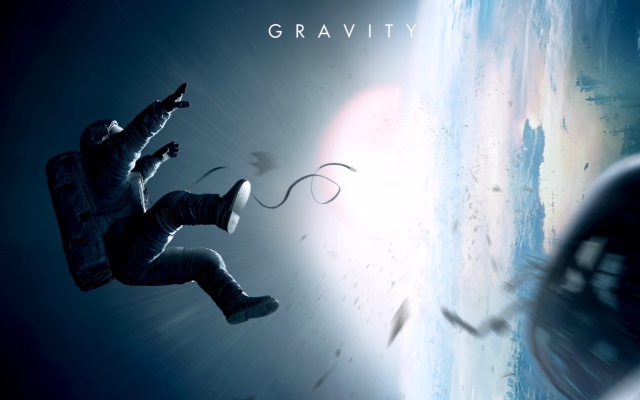
Brock and I watched the movie Gravity several months ago.

Unusually for me, it gave me nightmares. Recurring nightmares.

Several times a month, I would wake up after dreaming of myself in Sandra Bullock’s position – untethered, floating freely through space. Although my body was safely on the bed, my heart would be racing as though I was in mortal danger and it took several minutes for my brain to accept the idea that I was not alone and unmoored.

And that’s really the root of the nightmare, isn’t it?

My fears have nothing at all to do with being lost in space and everything to do with being lost in life.

In those early days, I struggled to find the words to explain how I was feeling. Nothing seemed strong enough. Encompassing enough. But one word kept floating to the surface.

Unmoored.

With the receipt of that text, my ties to most everything in my life had been severed. Those things that defined me, anchored me, were gone and I felt like I was floating uncontrollably away from myself. It was a panicky helpless feeling as my attempts to get back to myself seemed to occur in the dead space of a vacuum. I felt detached with a limited life support system and my oxygen quickly running out.

And in so many ways, that feeling of being unmoored was the scariest of all of the post-divorce emotions.

Because you have to fully let go of what you know in order to grasp on to your future.

I wasn’t free-floating for long. I started to feel anchored once my clothes were placed in the dresser in my friend’s spare bedroom, where I would spend the next year. Another tie came when my mom purchased a gym membership for me and that facility became my home away from my-home-for-a-year. School started up again and even though it was a stressful year due to administration, if felt reassuring to be back in the classroom, even as I answered to a name I no longer identified with. Yoga reconnected body and mind and I learned how to breathe again on a soft carpet on a therapist’s floor. Pen went to paper, and I started to explore the emotions that were within, the anger especially giving me purpose.

I realized only recently that some of the unmoored feeling persisted for quite some time. It was only this past spring, when I tucked plants into the soil in my yard (in an area that feels like home) with a ring again on my finger that I realized I felt anchored again. Not settled, but relaxed into where I want to be with anchors of my choosing.

After divorce, some people find they enjoy the freedom that comes from being unmoored; they design their new life with minimal ties and restraints to allow maximum flexibility. Others crave the feeling that comes from multiple ties to people and places, giving a sense of security and belonging.

Being unmoored alters you. It helps to build your confidence in your ability to survive. It carries a freedom that may frighten or awaken. It confirms who your true friends are and alerts you to the ones that need to be jettisoned. It whispers truths about you and your desires, uncluttered by the wishes of your ex. It’s a moment in time. A flash of clarity with clutter removed.

Because in free fall, you have no limits.

Related: Take Me to the Other Side

Only possibility.

Waiting for the Other Shoe

The hardest part about the way my marriage ended is trying to live without always waiting for the other shoe to drop.

I mean, things are great now. Really great.

But things were great before.

Sometimes I wish that my ex had been a jerk to me. I hear about these spouses that put on a good show in public and then belittle and guilt-trip their partners behind closed doors. I read about growing tension in discussions and growing distance in the bedroom. I see couples at dinner barely containing their contempt for each other and eyeing the door for escape. Whenever I used to see or hear about those behaviors, I grew ever more grateful for my husband, who was always gentle, generous, patient and attentive towards me.

But now I feel otherwise.

Because while I was happily wrapped in his arms, he was sliding the blade of betrayal through my ribs. Between intimate conversations, he was spreading horrific tales about me to others. And apparently the attention turned towards me only lasted as long as I was in the room.

If he had been a jerk to me, it would be so much easier now. I would know what to avoid and what warned of a problem. But a covert jerk is difficult to spot.

And that’s what makes me wary about that other shoe.

My rational brain works to calm me. Brock is not my ex. He is direct and faces problems head-on instead of trying to tuck them away. He is naturally loyal and reviles deception. I grow closer to him every day and can now, with certainty, say that I trust him. Plus, he knows if he screwed me over, I’d have to write about it:)

Apart from him, I now trust myself to recognize similar patterns or behaviors that may hint at trouble brewing beneath the surface. I will never be so naive again.

But the rational brain isn’t always the one holding the reigns. And my emotional self keeps looking up, ready to dodge the flying boot.