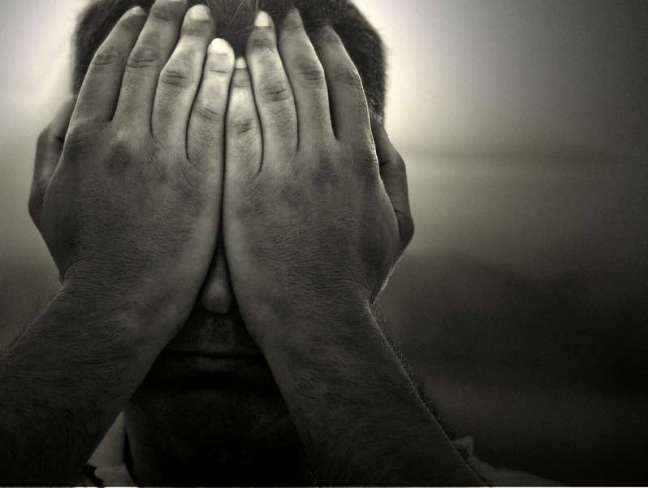
Feel Like A Man

One of the moments when I loved my now-husband the most is when I witnessed him slide a BB gun into a man’s hands, propping the barrel on the porch railing where it was aimed for some cans.

Although no words were spoken, I understood his motivation.

He wanted his friend, weak and shaky from a degenerative neurological condition, to again feel like a man. And that was an importance I was only just beginning to understand.

My now-husband is a man’s man. He wears his masculinity on his sleeve and is both astute at identifying the characteristics of manhood and at communicating them.

And from him, I’m starting to understand the importance of feeling like a man. And how damaging it can be when that feeling is taken away.

Feeling like a man means that you feel powerful in your own domain. It means that you have control over many aspects of your life and that you receive respect and recognition for your strengths.

Feeling like a man means that you are able to take care of your family. Most often this is financially motivated, but it can also manifest in creating and maintaining a home.

Feeling like a man means that you take seriously the charge of protecting your family. It means that if harm befalls one of your own, you interpret it as a personal failing.

Feeling like a man means trying to find a balance between the very real and powerful emotions that arise within and the cultural message that “big boys don’t cry.”

We ask a lot of our men.

And they ask a lot of themselves.

And sometimes life doesn’t cooperate, stealing away the very things that allow a man to feel like a man.

Health crises rob the body of its strength. Turning a once-strong man into a weak and dependent form. The one whose broad shoulders used to carry others is now reduced to the one being carried.

Jobs are lost and with them, the confidence that comes from respect for position and knowledge. Lost as well is the knowledge that the family is being provided for.

Appreciation and recognition is withheld, perhaps replaced with nagging for what is not done instead of seeing what is done.

Someone in the family is harmed or is unhappy and the situation is internalized, a personal short-coming even when the cause is outside of anyone’s control.

Vulnerability is encouraged, yet that very trait can be turned against him when he is seen as weak or incapable.

I’m learning that all men, not just the alpha, masculinity-on-the-sleeve types, have these basic needs. These primal motivations.

And when a man doesn’t feel like a man, it is all too easy for him to feel like a failure. Depression seeps in, displacing any remaining confidence. He is prone to withdrawal as he questions his value. Addiction can become a welcoming refuge from the shame. It’s a vicious cycle – the less he feels like a man, the less he engages in the actions that make him feel like a man. And that’s the very cycle that consumed my first husband. Only I didn’t see it at the time.

As I watch my husband with his ever-weakening friend, I am grateful for the insight into what it mean to feel like a man.

And I’m careful to not take that feeling away.
What Goes Around

Five years ago today, I went through the Atlanta airport on my way to Seattle to see my father for the first time in years. I was anxious about seeing my dad and had no idea it was the last time I would ever see my husband.

Today, I am going through the Atlanta airport on my way to Seattle to see my father for the first time in months. I am ecstatic about seeing him and my new husband is joining me on this trip.

I worried I would always dread this week in the year.

But there’s nothing to dread.

It may have been the week that ended my old life.

But it was also the start of my new and better one.

It’s Nice to Be Important

Not long after we started dating, I accompanied my teenage boyfriend to his grandfather’s funeral. I had never met nor heard anything about the deceased; my first impression came from the pastor’s opening lines:

“It’s important to be nice, but it’s more important to be important.”

Surprised at the mutilation of the common quote, I turned quizzically to my boyfriend.

“He messed up,” he confirmed in a whisper, “But it’s accurate in this case.”

I spent the remainder of the service wondering about the life and priorities of a man who left his family with that impression.

You can read the rest over at The Good Men Project, where I am now a contributing writer:)

Dishonorable Mention

“What’s your biggest fear?” I asked my teenage boyfriend as we lay side by side on the top of a picnic table, looking up at the night sky ablaze with unmolested stars.

His body, once subtle and molded to mine, became firm, rigid even with anger and intent, as he replied,

“Turning into my father.”

His father was a man who was once successful but squandered it away. His father was a man feared by many but respected by few. His father was an alcoholic who courted drink at night rather than his wife. His father was a man who went from top billing in his career to collecting unemployment. His father was a man who was unreachable to his son, there but not there.

I looked over at my boyfriend, recalling his openness, his resolve, his capacity for intimacy and couldn’t imagine him turning into his father.They were polar opposites in my view and I assured him as such.

I should have listened.

Fast forward a few years and that boy became my husband. He worked hard and found success. He created a life he could be proud of, a life worlds apart from his father.

And then something happened.

I’ve had to make educated guesses about this part, since this is where the lies began. It may not be entirely accurate, but it certainly feels right.

His company closed. He lost his job. He couldn’t find another. This happened when those around him were finding success. He probably saw echoes of his father’s fall from grace when he plummeted from the tops of the working ranks.

He let his job tell him what he was worth. So when he had no job, he had no value.

He felt ashamed. And scared.

As before, he worked doggedly to carve out a path different than his father. Only this time he was desperate. Blinded by fear and shame.

And his desperation led him along a path parallel to that of his old man.

He lied about employment, using credit to create “income” where there was none.

And the shame grew.

He began to drink, turning to alcohol to try to hide from the truth.

And the shame grew.

He created an alternate persona and introduced him to people that didn’t know his past. That persona never faced failure. Never felt fear. Never experienced shame.

But the real man was buried deeper. Each action making it harder for him to ever come out of the hole in which he found himself.

Shame told him he was broken. Worthless. Unworthy as he truly was.

And he listened.

And his greatest fear came true.

Because he was too ashamed to look vulnerable.

Too ashamed to ask for help.

Too ashamed to face his choices.

He gave up the fight.

He gave up himself.

A dishonorable dischange from his own life.

When he left, some of that shame latched on to me. I felt a fool for being blind. I felt like I failed by not stopping the descent. I felt stupid for trusting.

These mantras wrapped through my mind like the stock updates in Times Square.

That was bad enough.

But it was private shame. Bearable.

But when I had to face others with financial reality of it all?

It still stops me in my tracks.

Every time I have to act on a bill from him or face the reality of my piss poor credit, I cower. I tremble. I feel sick, my insides churning.

I feel unworthy.

I feel dirty, broken.

I feel ashamed.

I allow the numbers on the accounts to dictate my value and I feel judged for their balances.

It should be improving. I have a house (even though it’s not in my name) and the debt from him that I’m still paying is down to an amount that feels doable. By 2015, I should be free.

It should be improving.

But it’s not.

I still let money, or the lack thereof, tell me what I’m worth.

I’m listening to shame.

And she lies.

She tells me to hide rather than face.

Conceal rather than reveal.

Which is precisely why I share.

Shame is like a vampire, exposure to the sun can weaken or even kill it.

I know her tricks. The fear she uses to try to bury her victims.

And I won’t be one of them.

You Win Some When You Lose Some: A Father’s Day Tribute

Ice skating with dad

Four years ago next month, I lost my husband. Four years ago next month, I gained a father.

My parent’s divorce occurred when I was in elementary school. My dad then relocated across the country shortly after I turned 11. We did not see much of each other for the rest of my childhood or throughout my twenties. In fact, we didn’t really know each other.

Four years ago next month, I went to visit my dad for the first time in several years. I think we were both a little nervous, as were trying to learn the choreography of our adult relationship. I was with him when I received the text that ended my marriage. In that instant, I gained a father in the truest sense of the word.

With no hesitation, I became his little girl again. He moved into action immediately, doing what he could . He held my hand for the endless trip back to Atlanta, not even letting go when he drifted off to sleep on the plane. He made the phone calls I couldn’t and stayed in the house with the dogs when I wasn’t able. He cried with me and cursed with me. He hurt with me and he healed with me.

Four years ago next month, I gained a father. A guide. A cheerleader. A mentor. A friend.

Sometimes, it takes a loss to realize what you have. You win some when you lose some. Dad, I’m glad I won you:)

Related: Daddy Issues

Tiger is excited to see you!