Are You Setting Healthy Boundaries or Hiding Behind Walls?

healthy boundaries

I thought I was setting boundaries.

But in reality I was also building walls.

It’s easy to do. To get so carried away with a line in the sand that it becomes the beginning of a foundation of a fortress. A stronghold intended to keep you safe. But that really holds you prisoner.

Do you know the difference between setting healthy boundaries and constructing isolating walls?

Boundaries

tennis-court-443267_1280Boundaries are rational and deliberate lines that define what is and is not allowed to be done to you. They are communicated and consistent and are less about keeping others out than keeping yourself intact.

Boundaries allow others to see you. Be with you. But they don’t allow others to use you.

Boundaries say, “I’m not letting anyone abuse me” and “You can come in as long as you abide by the rules.”

Healthy boundaries are anchored in awareness and self-respect. When in place by both partners, boundaries allow for a deeper connection because both people don’t feel as though they are threatened by an increase in vulnerability.  Although you may be hurt, your self will remain intact.

Examples of boundaries include not tolerating abusive actions or language, refusing to accept the responsibility for another’s happiness or choices and not acting in opposition to your own values and ethics.
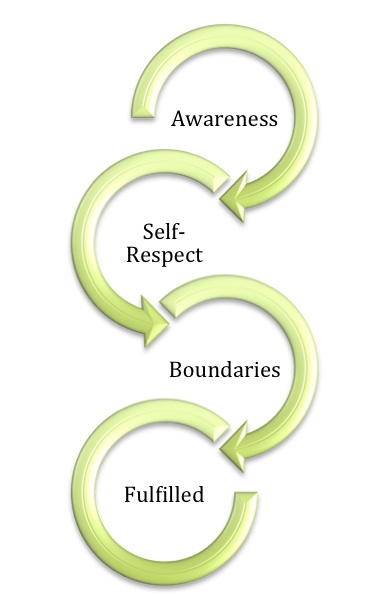
boundaries

Walls

brick-293507_1280Emotional walls are bricks of self-protection mortared with fear. They are erected as a result of being wounded. They are rarely acknowledged and their existence is often only discovered when somebody runs head-first into one. Unlike boundaries, which only keep out those who misbehave, walls do not discriminate – they hold everyone back.

Walls say, “I will never allow myself to be hurt again” and “I’m not letting anyone get close to me.”

Walls are built upon fear. When one or both partners in a relationship is hiding behind walls, a deeper connection forged through vulnerability is impossible. As a result, the partner(s) hiding behind the walls may feel safe, but he or she will also feel empty and disconnected because the true self is not being seen. The wall keeps others out. And it also holds you prisoner.

Examples of walls include never letting your emotions show, deliberately withholding important information from a potential partner and isolating out of a fear of being hurt again.
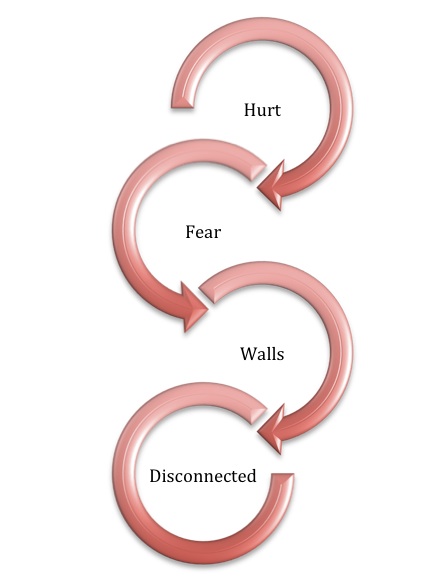
wallsWhich are you building? Walls? Or boundaries?

How to Deal With Sh*tty People

how to deal

They’re out there.

The sh*tty people.

Those that pull others down. Act without regard for others. Use and abuse those around them.

They come in almost endless varieties, from the loud insults of the overt jerks to the subtle undermining of the covert abusers. But regardless of their particular guise and preferred delivery, sh*tty people have one trait in common – wherever they go, they spread negativity, leaving the world worse for having encountered them.

At some point, you’re going to meet one. Or maybe even marry one.

And it’s good to know how to deal.

And how not to become one yourself.

Call The Behavior Out

When someone is acting sh*tty, tell them.

For those of us that are conflict-averse, it can be all too easy to bite the tongue and hold it all back in the interest of keeping the peace. When it comes to sh*tty people (as opposed to good people simply having a sh*tty day), keeping your mouth shut is a tacit sign of approval. And if you hold it in too long, you’re only going to allow your own internal pressure to build.

Be clear. Be specific. And be safe. Sh*tty people can react strongly when called out.

Clarify, If Needed

Explain why the behavior is not acceptable. Define the boundaries. Provide examples if asked.

Learn how boundaries and compassion can work together.

Limit Repetition

They’ve heard you. You’ve clarified until they understand you. And yet the behaviors continue. That means one of two things:

They know that they are acting sh*tty. They feel badly. And they are struggling with changing.

Or, they know they are acting sh*tty and they don’t care.

In either case, what good can come from continually berating them for their behavior?

Stuck in a Bad Marriage? These Are Your Three Choices

Wear a Raincoat or Get Out of the Storm

Do you have to allow this person in your life? If they are continually acting sh*tty without regard for others, sometimes it is best to walk away.

If this person is somebody you have to deal with, figure out how to shield yourself from their assaults. Perhaps you keep your distance or limit the interactions. Don’t worry about being nice in this case, worry about making sure you’re okay.IMG_5937

Don’t Track the Dirt

Just because you’re surrounded by sh*t, doesn’t mean you have to step in it.  Don’t allow yourself to become a vector for negative transmission. Make sure you maintain perspective and don’t allow the sh*tty person to convince you that you are worthless or defective. Counteract the negative influence with positivity wherever you can.

Dealing With the Entitled Ones

Dealing with sh*tty people is never easy. It is never fun. It forces us to take a stand and push back or take a step back and let go. And even though it is an experience that nobody ever wishes to have, it can lead to amazing personal growth as you become stronger and wiser.

After all, isn’t compost really just sh*t?

IMG_5948

How to Love And Be Loved After Divorce

I’ve always hated the term “baggage.”


It implies that that some people are more trouble than they’re worth because of what has happened in their pasts. That those of us who have had the misfortune of cheating exes or tumultuous divorces are somehow doomed by our experiences. It assumes that our histories are our destinies and that we carry our traumas like an anchor around the neck.


Yet the dismissive term of “baggage” ignores the fact that those who have experienced relationship trauma can often make wonderful partners that are more attuned and adept at monitoring and using emotions. That rather than just “getting over it,” many choose to “learn from it,” becoming better and stronger than ever before.


Life is not about what happened to us. It’s about how we choose to respond to what happens.

It’s not the baggage that matters. It’s all in how you carry it.


My now-husband had every right to run when he first heard my story. At the time we met, I was at the tail end of a very difficult divorce and taking the first shaky steps into my new life. I was no longer shock raw from my ex’s abandonment and betrayals, but I was nowhere near healed. Triggers would lie in wait, ready to pounce when I least expected it. I was overly sensitive in some areas and still numb in others. I wanted to be healed and was making active progress, but the finish line was still far in the distance.


And yet even with all of that, my now-husband didn’t run.


Instead, he helped me find my way to healed. He didn’t take the steps for me, but he cheered me. Pushed me. Rendered aide when needed. And waited patiently while I journeyed the course.


If you are in a partnership with someone who is still healing from a past relationship, you need to know the following:

Read read the rest on The Good Men Project.