Feels Like I’ve Been Here Before

I keep getting the strange sense of deja vu.

Feeling like I’ve been here before.

Which is crazy on the surface of things. After all, this is a global pandemic, the likes of which have not been seen for 100 years.

None of us have been here before.

Yet, for those of us who have been through one or more of those life-altering moments – the discovery of infidelity, abandonment, sudden and profound loss – this may feel strangely familiar. After all, we know what it’s like to wake one morning to discover that the world we knew, the world which we trusted to ground us, no longer exists.

We are familiar with the grief that sneaks up and tugs at our guts when we’re not paying attention. And we are no longer surprised when we grieve the small things as much as the big ones.

We’ve experienced that strange sense of disbelief, of thinking that somehow this is all just a tragic mistake and that the reality we knew simply needs to be recovered.

We know the fear that comes with the uncertainty and the deep craving to return to a sense of safety. And we know that over time the belief things will return to normal is replaced with an acceptance that a sense of peace only comes once we’ve adapted to the new situation.

We’ve lived through that life turned upside-down, where the normally innocuous things have become threats hidden around every corner.

We’ve endured those long nights wishing things could be different before we dry our tears and pledge to focus on what we can control. And we learn both how small our influence is and also how powerful it can be.

We’ve tried to run away from our pain in the hope that we can distract our way out of it only to find that it cannot be outrun.

We’ve been through those moments of utter defeat when we feel like we’re not strong enough to get through this, only somehow we manage to make it through that day. And then the next.

This may be new. You haven’t been through this challenge yet.

But you’ve made it through others.

You know what to do.


I Don’t Know How You Do It

When people hear about my story of tsunami divorce and contrast the sudden trauma with where I am now, I often hear the response, “I don’t know how you did it.” And sometimes when I reflect back on those early days, I feel the same way.

But I also have a different perspective now, coming from over a decade of hearing other people’s divorce stories. Mine may have made a good story, but it many ways, it made for an easy recovery – a sudden and absolute ending, easy to achieve “no contact,” no children and an affair partner that was another victim instead of an additional person that betrayed me.

The more stories I hear from all of you, the more in awe I am of the strength you have in persevering despite seemingly impossible circumstances.


Those of you wrestling with the difficult and multi-faceted decision to end a marriage, I don’t know how you do it.

In some cases, the decision to end a marriage is clear-cut. There’s abuse, abandonment, prolonged and untreated addictions and one partner is unwilling to put in the effort to make a change.

But many marriages exist in a more nebulous realm, where it’s not terrible, but it’s also not good. And that’s a hard place to be – a place filled with so much unhappiness but also so much doubt. And many of you are in that place or have come through there, wondering what decision is best for your family and questioning yourself even as you initiate the dreaded conversations.

I’m in awe of you. It takes courage to make a change, to be willing to jettison the known okay in pursuit of the better. It’s easy to allow a fear of being alone keep you where you are; it takes some serious backbone to see your worth and decide that you would rather have nobody than settle for the wrong one.


Those of you staying strong and raising children through your own heartbreak, I don’t know how you do it.

In many ways, I reverted back to a child after my divorce. I counted on people to remind me to eat. I struggled to make any decisions, much less responsible ones. And I had a toddler’s ability to control my emotional state (i.e. none). But I COULD do that. The only other creature dependent upon me at that time was a cat, and I was able to manage buying kibble and dispensing it at regular intervals.

Yet for those of you with kids, you don’t have the freedom to fall apart. You have to find a way to pretend to be entertained by a discussion of the latest Disney characters when all you want to do is cry and curse the world. You have to hold your tongue because even if they’re the worst ex on earth, they are still your children’s other parent.

And that’s not even the hardest part.

I love the quote about having a child is like your heart walking around outside your body. Yet now, that heart – that you feel such an immense need to protect – is breaking. And you have to watch, knowing that although you can be there for them, you cannot keep them from the pain.

I am in awe of you. How you get up every morning determined to stay motivated and positive. How you set your own feelings aside for the benefit of your kids. And you sacrifice your own needs in order to create a better future for your children.


Those of you making the decision to stay with an unfaithful spouse in an attempt to repair the marriage, I don’t know how you do it.

Infidelity is such a thorny topic. It’s more common than we like to admit and those that commit it do all fall into the category of unforgivable and unredeemable. And for some of you, you and your unfaithful partner view the infidelity as a turning point, an opportunity to address what led up to it and to learn how to do better going forward.

Yet even when that decision is made to try to make it work and even when your partner accepts full responsibility and is doing all the right things, it’s hard. You have to be vulnerable with the same person that took advantage of your vulnerability. You have to learn to trust the same person that broke your trust. And then from outside the home, you face judgment from those that deem the ones who choose to stay as weak. Even though the reality is that it takes great strength and courage to stay and face this.

I am in awe of you. It’s easy to dismiss people who make egregious mistakes, to stay in a place of anger and outrage and victimhood. It takes true grace and character to see beyond somebody’s actions – and the hurt you’re still feeling – and be willing to give them a chance to make a change.

Those of you who have to see – or even have a working relationship with – the affair partner, I don’t know how you do it.

I remember the first time I saw a picture of my husband’s other wife. I felt a strange sort of gutted as I scanned this image of a strange woman who had been intimate with my husband while I was kept in the dark. She was unknown to me, yet still played such a major role in my life. And I was lucky  –  she had no connections to my life and I would likely not have to any unwanted with her.

Many of you are not so lucky. The affair partner is a neighbor, a coworker, a friend (or former friend) or even a family member. You are forced to interact with them or even coparent with them. Every time you leave the house, you have a little tinge of apprehension, knowing that you could bump into them at any time. Or, you dread upcoming events because you know you’ll be trust into the same room as them.

I am in awe of you. You continually resist the temptation to hide away behind closed doors or curse the affair partner when you see them. You find a way to separate your feelings about what happened from your interactions with this person now with the goal of keeping the peace. And you establish boundaries that keep you safe but that also acknowledge their existence in your life.


I am in awe of you, you badass survivors. You amaze me every day!

After the Affair: The Dreaded Doctor’s Appointment

It took a few days for the realization to dawn on me.

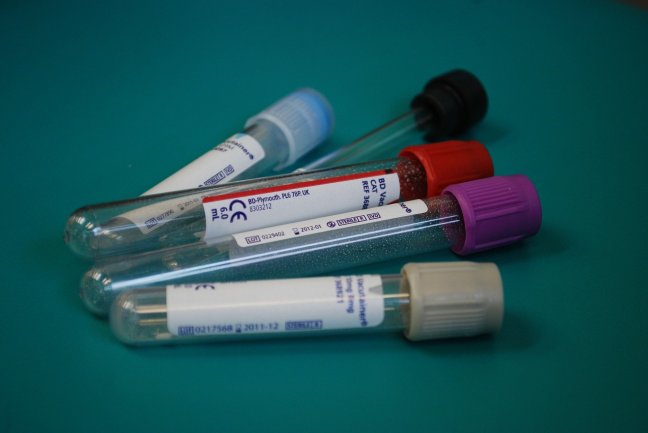
“I need to make a doctor’s appointment,” I muttered half to myself and half to my mom, who was helping me sift through the rubble of my life. “I need to make sure that on top of everything else, he didn’t infect me with anything.”

The thought was horrifying. Mortifying. Infuriating.

I had only been with one man my entire life. This was not something I ever thought I would have to face.

Yet there I was.

Two weeks after the collapse, I walked into my doctor’s office. I was lucky. My provider, technically a nurse-midwife, had taken care of my annual visits for years. She knew me and I felt comfortable with her. It helped a little to counteract the immense humiliation I was feeling at being thrown into this situation without my knowledge or permission.

When she saw my drawn face, my trembling limbs and my emaciated figure, her mothering instinct took over. “Oh Lisa,” she sighed, pulling me in for a hug. Then, mother to mother, she hugged my mom, who (by my request) had accompanied me to a pelvic exam for the first time since middle school.

While my parts were checked and my blood was drawn, my provider kept talking to me in a soothing voice and kept a comforting hand on my arm or hand the entire time.

And then the waiting game really began. And along with it, the anger. Because it was easier to feel than the fear. Finally, I got the call.

“Everything looks good,” she said.

I felt relieved. At least my body would be okay. If only my heart could be cleared so quickly.


The dreaded doctor’s appointment is one more thing in an endless list of what is unfair about being cheated on. It’s yet one more way that we are left to clean up the mess they made.

The emotions involved run the gamut from confused (after all, if you’ve been monogamous for awhile, you tend to lose touch with what diseases are out there and what the implications are) to anger (how could they act with such reckless abandon when it comes to my health?!?). In between are often shame (because for some reason, we feel humiliated by their actions even when they don’t) and fear (are they going to curse me with a lasting physical reminder on top of everything else?). I know I also felt violated. This was not something I had consented to.

It’s a lonely feeling. An isolating one.

Yet it’s familiar to everyone who has ever discovered an unfaithful spouse.

It’s not fair. But it’s a necessary step.

Even though your partner didn’t take care of you, YOU need to take care of you.

I hope that your medical providers are as compassionate as mine were.

The Many Faces of the Affair Partner

I saw a question posed on Twitter yesterday asking if anyone had written to the affair partner and, if so, what the outcome was.

The responses were interesting and quite diverse. It soon became clear that the type of communication (not to mention its aftereffects) with the affair partner were very much dependent on the relationship that person had to the wayward spouse prior to the affair and their role in the infidelity.


The Relationship of the Affair Partner Prior to the Infidelity


The Stranger

This is definitely the easiest of the horrible options to stomach. When the affair partner is a stranger, they become a blank canvas where you can easily project your own insecurities. However, there is little betrayal felt from them; after all, you’re a stranger to them as well. Additionally, if there is an attempt to salvage the marriage, this is the easiest relationship to cease all contact with and there are not likely many ties that make the disentanglement difficult.

The Acquaintance

We’re venturing into more difficult territory here. You’re likely to replay countless encounters with this person, wondering what was simmering beneath the surface that you failed to notice. There is probably an additional level of betrayal since this person knows who you are and knows who they were hurting in the process. As an acquaintance, it’s more likely that you’ll run into them and there may be mutual connections that lead to difficult or awkward situations.


The Coworker

This relationship is especially difficult if you’re trying to save the marriage. After all, your spouse can go “no contact” with a former friend, but generally bosses don’t look too kindly on that. They have to navigate the transition back to a professional relationship (which may be next-to-impossible if the affair partner has other ideas) and you have to fight the feelings of panic every day when they begin their morning commute.


The Friend

Your spouse and your confidant have been playing you. What a devastating discovery that throws your whole world into question. Who can you trust? The fractures caused by this type of infidelity travel far and wide, splintering friend groups and causing people to take sides. If you decide to try to salvage one or both relationships, building trust again will be especially difficult because everybody seems like a potential threat.


The Family Member

It doesn’t get any worse. We expect that family will always be there for us. And so the betrayal by a family member is equal to or even greater than the betrayal by a partner. You may be facing divorce and family estrangement at the same time, leaving you feeling orphaned and adrift.


The Role of the Affair Partner in the Infidelity


The Victim

They didn’t know that they were having an affair. They were told their partner was single, divorced or in the process of divorcing. Although they may not have been married, they are feeling betrayed as well once they learned that you were still very much in the picture.


The Willing Participant

This affair partner knows about your marriage, although they may have been incorrectly informed that your marriage is awful and that a divorce is inevitable. They may be married themselves or they may be attracted to those that cannot fully commit. In order to justify the affair, they may downplay its importance, minimize the marriage or compartmentalize the areas of their life.


The Instigator

This person set their sights on your spouse and then deliberately set out to win their attentions. They were not afraid to manipulate or lie in order to get what they want. If your spouse tried to set boundaries, this affair partner would attempt to bulldoze them over. They are unlikely to end the affair themselves and may make it difficult for your spouse to end it as well.


The Saboteur

Have you received disturbing messages from the affair partner? If so, this may be what you’re dealing with. These are the people that will not rest until they have left a path of destruction in their wake.


So What Does This Mean?


No matter the role of the affair partner, it’s natural to want to reach out – either to scream or to question. Or perhaps both. You want your pain to be heard and you want your questions answered.

Keep in mind who you’re dealing with. You can have a conversation with a victim, but not with a saboteur. The questions you’re going to pose to a stranger are very different than those you may ask a friend.

In my case, the affair partner was a stranger and a victim. I spoke to her on the phone for several hours while my (actually, our) husband was in jail. I wanted to warn her, protect her. She was never somebody that I had ill will towards. In fact, I desperately hope that she is okay. However, if she had been in a different role, I cannot promise that I would feel the same.

If you do attempt contact, wait until your emotional state is out of the red zone. By all means, scream or write those words you need to release, but release them into a safe space that will not have repercussions. Also, be aware of your expectations going into the contact. You most likely will not receive the response or answers you crave. There is no magic balm that comes from confrontation. No answers that illuminate everything. You’re not going to find healing from them.

So have your say. Ask your questions. Set your boundaries. And then let it go.

What You Don’t Understand About Being Cheated On Until You’ve Lived Through It