I used to let my story tell me. I was the first wife of the bigamist. I was the woman whose husband left with a text message. I was the runner who could barely walk after my world was washed away with a tsunami divorce. I used to let my story tell me. Until I learned how to tell my story. Click to read the rest of the post on All Things Healing and learn about the workshop that caused my perspective to shift.
Most people probably think of The Breakfast Club or Sixteen Candles when Molly Ringwald’s name is mentioned. I am not most people. My strongest association with Molly’s name is a certain this-is-what-happens-to-your-body-during-puberty movie I saw in my elementary school cafeteria in 1985 with all of the other 4th grade girls. I remember being somewhat embarrassed for Ms. Molly as she informed us about body hair and menarche. It seemed so far removed from the somewhat sanitized world of Hollywood, where puberty only happens to advance the plot as an ugly duckling discovers her hidden swan.
Molly’s new book, When It Happens to You, attempts to be as raw and messy as real life off the silver screen. The story is told through short tales that weave together moments to paint a bigger picture of love, loss, and betrayal. Greta and Phillip’s troubled marriage is the centerpiece. Greta discovers that her daughter’s violin teacher has also been playing Phillip’s strings. The various tales speak of their separation and tenuous relationships with others as they journey through self discovery. Many of these relationships speak of real life. They are temporary and undefinable. They grasp at one another not out of true love but out of loneliness and a search for acceptance and companionship. They highlight the fact that no life occupies a bubble; decisions and connections ripple outward ensnaring others as well as ourselves.
There are lessons of acceptance in Marina’s story of loving her crossdressing son and warnings of what happens when we fight reality from the widow Betty. We learn from Phillip that happiness is not as simple as a young lover and we realize that betraying yourself is worse than being betrayed by another.
I only wish this book was not afraid to reveal the depth of anger and loss that accompanies the discovery of a betrayal. You see, it happened to me. I know the feeling of the tremors that shake your body and soul when you discover the deceptions. I remember the rage so powerful I was afraid it would tear me asunder. I recall the muscles torn from bone as the sobs wracked my frame. Greta speaks of this pain in a removed fashion. She speaks of it, yet does not seem to experience it.
I guess betrayal is like puberty in that we tend to sanitize it when we talk about it. We talk in platitudes and metaphors, tiptoeing around its ugly realities as though we can deny its existence and hold it at bay. We like to think that we could be like Greta, rational and collected. But, in reality, when it happens to you, the truth is much uglier than fiction can ever be.
In my old house, I strove for perfection. My ex and I were constantly laying tile, painting walls, building furniture, and then repainting walls. We looked for furniture, dishware, and accessories that would give a Pottery Barn look on a Target budget. I once spent over 30 hours looking for just the right throw pillows for the couch after we repainted the living room. We both had a similar level of neatness, so the carefully selected objects in the carefully crafted house were not obscured by clutter. Perfection always seemed attainable, although slightly out of reach.
In my new home, perfection is laughable. My boyfriend’s talents do not extend to homemaking; in fact, as far as the house is concerned, I feel like I live with a scattered 16 year old boy. Our furnishings are a compilation of his twenty years of bachelorhood and my on-a-very-tight-budget IKEA run to furnish the apartment I was in for year 2 of my new life. The cupboards are filled with an odd assortment of dishes and glasses, many of them chipped from being carelessly loaded into the dishwasher. The couch, a remnant of bachelorhood, is stained from spilled drinks and muddy paws. It is topped with throw pillows that don’t match much of anything. Even the house itself is a rental, so we have done the bare minimum to improve its aesthetics.
Sometimes, when I visit other people’s homes and I see their perfect serving dishes and their matched accessories, I feel inadequate. I think about hitting the stores and upgrading some of our things. But then I realize that I don’t want to travel that road again. I don’t want to feel the pressure to create a perfect home. In my old life, I took pride in my surroundings, yet I was also a slave to them. I like living in a home where I do not have to be worried about a spill on the rug or a chip in the wood. I like not being owned by my home.
So, if you ever make it over for dinner, I can promise you a mean Mexican lasagna on a chipped IKEA plate, plenty of wine (although it may not be served in a wine glass), and lots of laughter and good company (oh, and pit bull kisses too). That’s my idea of perfection.
I don’t know about your life, but in mine everything seems to break down at once. It’s as though everything in my surroundings has been woven into a complex Rube Goldberg machine and once one part breaks, the rest inevitably follow. This past week was one of those times when everything seemed to break around me. As I struggled to stay positive and centered in my busy schedule, I realized that all breaks are not the same and do not require the same approach.
Adapt to It
The domino run started with the garage door. The motor burned out a couple of weeks ago. As we are currently in a rental, we had to wait for the landlord and are now waiting on an appointment with Home Depot to have the mechanism replaced. Considering that I don’t park in the garage (or even next to the garage, as that would require going downhill), you would think that this would not be a major inconvenience for me. You’d be wrong, however. No garage door means that I have to navigate the front door with my hands full of bags and beverages several times a day. The front door that has a sticky lock and a companion screen door whose jaws snap shut faster than my pit bull’s. Then, in the dark of the early morning, I have to navigate a poorly-laid stone pathway in my heels without spilling my coffee on my work clothes.
My first few times with this new routine were a disaster. Coffee was spilled or left on the front porch. The keys would somehow become glued in the lock and require archaic incantations to be released. The screen door snatched groceries out my hands and attempted to amputate my legs as I wrestled with my bulky gym bag. Over a few days, however, I learned how to prop the screen door open just so and I mastered the precise twist of the key that unlocks the door. I’ve developed a hopscotch dance around the loose stones on the path and I’ve even managed to get the coffee to the car without spilling.
I have adapted to the situation as it is. Its repair is out of my hands, so complaining about the current state of the garage door is worthless. The discomfort is temporary and I am now much more appreciative of how much a simple door makes it easier to come and go from the home. I’m still looking forward to Home Depot’s visit tomorrow, though!
Work Around It
My classroom is pretty high-tech. I have a mounted projector and an interactive whiteboard that I use for instruction. This means that I need digital copies of documents and answer keys in order to show them to the class. As a math teacher in the era where physical textbooks are obsolete, this is something that I do several times a day. I have a desktop scanner in my room that is connected to one of the student computers. This scanner worked reasonably well last year, but was very slow and cumbersome. This year, it decided not to work at all.
For the first couple weeks of school, this was a major stressor for me. Something that should only take a few moments (the scanning of an answer key, for example) could take over an hour as I sought a functioning and available scanner. Not a good use of time.
The tech guy finally made it around to my room but he didn’t sound very hopeful about the chances of a full resurrection of my scanner. But he offered an alternative – an iPhone app called TurboScan that would allow me to take a photo of the page using my personal phone, convert it to a PDF, and email it to my work address all within a couple minutes. I no longer cared about the slumbering desktop scanner taking up space in my room. It became obsolete with the $1.99 purchase price of the app.
Sometimes a breakdown requires looking for a novel solution to a problem. It can be the push we need to move beyond the status quo and figure out a new way of doing something.
Fix It
I’ve written before about my car. Maybe I shouldn’t have, because as soon as I wrote that post, my car has demanded attention in the form of a new timing belt and water pump (planned), new brakes (unplanned), and a new power steering pump (unplanned). After that expensive summer, I thought I was home free for a while. Apparently my car did not receive the message. While on the interstate at 6:30 am on Tuesday, the temperature gauge sprinted to the right, burying itself in the red. A stressful situation for anyone, but especially so for a teacher at the beginning of the school year. Repair shops open after I am at work and close before I leave. I have no lunch break and cannot take time off without a sub. My boyfriend, who usually helps in situations like this, was out of town. Luckily, through the assistance of several people and a mad dash to a nearby shop, the issue was temporarily fixed (water added directly to the radiator), diagnosed (bad water pump – yup, the one that was just replaced), and will be repaired tomorrow with the help of the boyfriend (if you’re keeping track, that’s the same day as the new garage door).
In the midst of all of this, I began to bad-mouth my car, wondering if it was time to let her go. But then, I suddenly realized, that including the original purchase price and all of the repairs and maintenance over the life of the car, I have spent an average of $1,500 per year on the vehicle. Even if I spend several hundred dollars on her now, that ratio will probably only improve over the next 100,000 miles everyone says she’ll last. Sometimes it’s best just to fix what is broken and realize the value that is still inherent within.
Rest It
Break downs can happen apart from the objects in our lives. By Friday, my body decided to join this great damaged party as it fell prey to the new pathogens arriving on the hands of the students. Instead of running 20 miles yesterday as prescribed by my marathon training program, I took 20 naps. Experience has taught me that these August bugs are viral, meaning there is no “fix,” as antibiotics are useless. Instead, the only prudent course is to rest.
I was able to alleviate some of the frustration over a “wasted” weekend when I learned that my library (finally!) has books available on Kindle. I never thought I would get used to ebooks, but I love the ease on my wrists (those heavy books hurt after a while), the lack of clutter around the house, and the built-in nightlight for reading in bed. Although the selection is still somewhat anemic, I was able to download and read three books yesterday (Sh*t My Dad Says, The Help, and Juliet Naked) without a trip to the library. Heaven for a sick bookworm.
On a side note, I have noticed that since I added green smoothies to my daily diet, my illnesses are greatly reduced in frequency and severity. Since receiving a Vitamix from my boyfriend as a recent birthday gift, I am now pretty much living on smoothies:) As long as the Vitamix doesn’t break…
Let It Go
I’ve talked before about Maddy, my cat. My ex and I got her in the early years of our relationship. She has been with me through everything and is now happier than ever with her new daddy and her pit bull snuggle-buddy. Unfortunately, her age is beginning to show and she is demonstrating signs of kidney failure. This is a break that cannot be fixed. Her body is simply wearing out. At this time, she is still happy and hungry and does not appear to be in any discomfort. We are addressing her needs – more water and more absorbent litter – as we watch her for signs that it’s time to make a decision. This is the hardest kind of break of all. I cannot fix her. Only recognize when it is time to let go.
It is natural for things to break. We only become more stressed when we fight that reality. Accept the break and recognize what path is indicated in each situation. Use the breakdowns to highlight the blessings within your life and to find novel solutions. Just because it’s broke, does not mean it’s over.
photos from Wikipedia (door and car), Flickr (scanner), and Amazon (book cover)
The proof copy of the book came in the mail today! 🙂
It’s a bit strange. I’ve gone from being completely ignorant about self-publishing to being to go-to person amongst my friends in the span of two months. I’ve already explored the early stages of the process here and now I will share some of the other hits, suggestions, frustrations and random thoughts about the process now that I am a whole month wiser (I need a sarcasm font!) and I have a couple more iterations of my book under my belt.
Because endless formatting and the start of the school year have left me unable to assemble sentences coherently, I’m going to present this in a series of rambling bullet points.
– ebooks are da bomb! Both programs were easy to work with and the formatting took a minimum of hassle. After I got my head around how certain styles and formatting options looked in html (the file type used for e-readers), it was pretty simple. The main difference between the two programs is that Kindle wants page breaks and PubIt! want section breaks (the latter is also used in CreateSpace so starting from a PubIt! formatted file saves some time).
-For the initial digital cover, I first tried using Fiverr, but I wasn’t happy with what came back. I ended up using Clipart (the online library is pretty good these days) to create my own image in the specified dimensions, saved it as a PDF, and then converted it into a JPEG. It was pretty simple. The main criteria to keep in mind is that the cover needs to look good as a thumbnail.
-I’m not sure about PubIt!, but Kindle offers formatting for a fee (under $100) if you don’t want to tackle it yourself. Otherwise, it’s free. Honestly, it was simple enough, I wouldn’t pay for this service.
-Another benefit of the ebook format is that you can update your file at any time. The turnaround seems to be a few days for the old file to be replaced with the new.
-I was planning on delaying the release of the print book for several months, mainly to give myself a break and to allow time to collapse after the early days of the school year. Alas, it was not to be:) I was surprised how many people not only preferred tangible books, but did not have access to an e-reader, smart phone, or iPad. So, I quickly got to work reformatting.
-Print books are another animal entirely. With an e-reader, you don’t have to worry about where the text breaks because it is different on every device and changes with the user settings. A paperback is static. You have to get that spacing right. CreateSpace walks you through the process. After I selected my book size (6″x9″), I downloaded a free MS Word template in which to paste my text. This is where I made mistake #1. I assumed that the template was already sized for the format I selected since it came after I was prompted to choose a size. Wrong. The template was for a standard size page. So, I formatted (and numbered!) the whole thing incorrectly on the first pass. Grrr. Unlike me, you should change the paper size (under page formatting) first. The template is a bit strange to get used to – it looks like an open book but the odd pages are on the left, not the right as it will be in print. Have fun with that one.
-I decided to purchase an ISBN number ($99) through Bowker so that I have options regarding distribution. CreateSpace gives you information on all of your options. As a side note, if you purchase your own ISBN, you are technically opening your own publishing house. I’m having fun with that one.
“What did you do this summer?”
“Oh, I just wrote a book and opened my own publishing house.”
Giggle:) I don’t tell them it was as easy as providing my address and credit card number.
-Next, set your margins. For most books, set the outer margins to .50 and the inner to .75. If your book ends up greater than 400 pages, your gutter will need to be increased.
-At this point, I recommend uploading your file to CreateSpace so that it can scan for errors and you can view the document in their mock-up program. This way you can fix any margin or gutter issues before you spend time on fonts and spacing. And, yes, this would be mistake #2. You can upload Word or PDF files. I had better luck with PDF holding true to format.
-Now it’s time to start working with the text. Make sure all of the text is the font and size you desire. I’m not going into all of that here – Google it for more information on fonts than you ever wanted to know. Size everything the way you want it before you begin monkeying around with spacing. Yup, you guessed it. That was my mistake #3.
-Okay, you’re margined and sized? Now you have the delightful task of playing with spacing and section breaks. If you need to change entire paragraphs, select the entire document and play around with Word’s paragraph settings. You can specify where they break, if words are hyphened, and the amount of space between paragraphs. Once the basic settings are where you want, go page by page and make sure that paragraphs are where you want. Remember that new chapters should always begin on odd numbered pages (left side in the template). If you need to add a blank page to make that happen, use a section break. One quirk to be aware of – you are not allowed more than three blanks in a row, including at the beginning and end of the book.
-A brief interlude: Save multiple copies of your file as you move through the process. My file became corrupted as I was putting on the finishing touches. I had been saving versions of it at various points, which ended up saving me. I still had to redo all of the formatting, but I could dig through several versions to find the most recent, yet uncorrupted, file.
-The final step is to insert headers (usually title or title/author) and footers (page numbers). I used the directions on this site. Once you get the hang of it, the page numbers aren’t too bad. Until you get the hang of it, you want to throw your computer out the window.
-Speaking of computers…I have a cute little 11″ MacBook Air. I love the thing. It’s small enough to slip into my purse or a backpack and take to the park or a coffee shop. The battery lasts long enough that I rarely have to worry about bringing along a charger. During the formatting process, however, my computer was not my friend. Its screen was simply too small to be efficient. If you have access to a large monitor, use it for this process!
-I thought I was home free after I finished the interior of the book. I was planning on using the image from my thumbnail in the cover template from CreateSpace. Yeah, not so much. First, the cover creator in CreateSpace is pretty (read: very) limited. There are only a handful of templates to choose from and they offer little in terms of customization. After discovering that the pixel count wasn’t high enough in my original image (they suggest 300 dpi), I had to start over from scratch. I was frustrated with the lack of choice, but I didn’t want to spend the time or money to create a cover (much harder to do for a physical book) without the template. If you use their program, try to enter the process with only a general idea of what you want so that you are not frustrated with their (lack of) options. If you’re still counting, I would call that mistake #4.
-As with Kindle, you can pay CreateSpace (around $300) to do the formatting for you. This may be worth it, especially if you have images or other elements that make it difficult to format.
Overall, self-publishing is relatively easy and can be done for little to no money. It is a great option to get your book out to the world without relying on the whims of agents and publishers. So, what are you waiting for? Finish that book you’re always talking about writing!


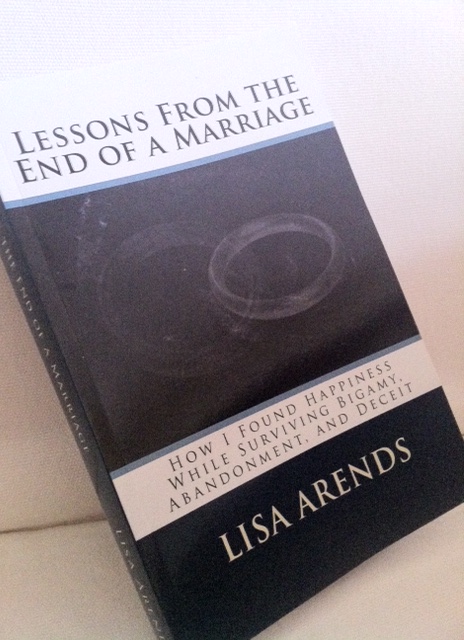
 Lessons From the End of a Marriage