Comparison

My ex and I were very compatible with the roommate stuff.

Brock and I? Not so much, especially at the beginning.

But even with that being said, I have never wished that Brock was more like my ex in this regard.

Because not only would that be pointless.

It would also be poisonous.

Rather than comparing the two men, I recognized that my experiences with the first made me skilled in some areas and deficient in others. I didn’t wish Brock kept house like my house; I realized that I had never learned to negotiate housekeeping with someone else.

So it was a challenge.

And challenges can be met.


It breaks my heart a little every year when I meet new students that have siblings that have passed through my classroom. The first words out of their nervous mouths are, “I’m nothing like my brother/sister.” I always reassure them that I don’t compare siblings and that I’m excited to get to know them for who they are, unclouded by the impressions left by their kin. I instruct them to tell their brother or sister “hi” for me, and then I intentionally push them out of my mind. Because when I’m getting to know the new student, the former ones don’t matter.


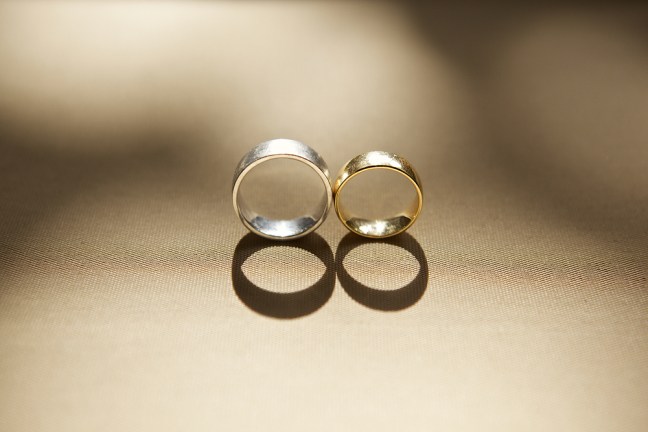
None of us like to be compared to others, especially when it’s rigged for us to come up short. But it can be difficult not to compare as you transition from one relationship to another. It’s so easy to place the partners side by side and measure the qualities of each. Easy, but also damaging to your new relationship, especially if your partner feels as though he or she can never measure up. It may feel like a party of two, but if you’re always comparing, there’s a third person in your partnership.


Find yourself comparing? Try this.

Be intentional and mindful about the traits and characteristics you want in a partner before you begin dating and work to refine your desires as you meet people. If you choose an apple, don’t complain that it doesn’t taste like an orange.

Focus on your new partner’s strengths, especially those that were not shared by your ex. Celebrate what is now compatible or easy where before there was stress or strain. We all have gifts we bring to table. Don’t be so focused on what is lacking that you neglect to see the riches.

When you find your ex in your thoughts in a comparing way, remind yourself why you are glad they are your ex. Maybe they were better at small engine repair than your new partner, but that seems pretty silly when you consider they slept with your best friend.

Accept that you cannot change your partner no matter how much you compare. Rather, work to adapt yourself to meet the new challenges present in any emerging relationship. Comparing cuts. Try growing instead.

When you find the partners side by side in your head, picture them side by side in front of you. Pretty uncomfortable, huh? Exactly. Kick one of them out. Preferably the ex.



It’s Not You, It’s Me

One of the unexpected gifts that I gained with a tsunami divorce is that I didn’t have my ex around to target. I mean, sure I blamed him, but that only took me so far and eventually I had to focus on what I could impact – myself. I’ve carried that perspective into my new marriage; when something in the relationship needs tweaking, I adjust myself rather than looking to change my partner.

This article on Psychology Today presents some great ways to shift your focus in a way that can help you improve, whether you’re in a relationship or in the fallout of a relationship.  Because the best part of accepting your responsibility is that you have the power to change it.


Use Your Words

I like to read advice columns and forums where people seek guidance and direction. It’s interesting to find where people struggle and comforting to find the universal life themes interwoven in many of the dilemmas.

But there is one common theme I don’t quite understand – asking a stranger a question that you really need to ask your partner.


“Would my partner be okay with…”

“Would my partner be upset if I…”

“How will my partner react if…”

“How will my partner feel…”


Now, I get it. Some conversations are difficult to have. It is scary to ask your partner an emotionally-charged question when you may not like the answer. It’s a leap of faith that your bond is greater than your bombshell. It’s trust that you can survive opening your mouth and exposing your heart. It’s courage to say what needs to be said even if the fallout causes pain.

For some people, initiating a conversation, even a difficult one, is no big deal.

I’m not one of those people.

I don’t like conflict.

I don’t like to disappoint.

And I don’t like to stir the pot.

But sometimes, that pot needs to be stirred.

Even overturned.

Here are some of the strategies I have developed over the years to make those difficult conversations just a little bit easier:

Test the Waters

It’s okay to put a toe in first. There’s no rule that says a conversation has to entered with a full-on cannonball. Rather than laying out the whole ordeal, reveal just a snippet. Or express the scenario as happening to someone else. Gauge the reaction. Gather data. Back up and try again. Plan your approach better this time. You can initiate the conversation in drops rather than a deluge.

Write it Out

If you are fearful of your partner’s reaction (or your response to your partner’s reaction) or if you are concerned that you may not choose the right words in the moment, write your side of the conversation to your partner. Not a text. Or a Facebook message. But a letter. Or email. Be thoughtful in your word choice and in your timing. Your intent is to start a dialog, not a war.

Move Forward

There’s something about forward progress and lack of eye contact that makes discussion easier and less threatening. Plan your talk for a drive. Or a walk. Or a hike. Probably not a run though, unless you want to pass out from lack of oxygen.

Talk to Yourself

Have the conversation with yourself first. Practice. Refine your goal and your approach. Set a time limit for your rehearsal; if you take too long to contemplate before you speak, you’ll soon fall into rumination and only intensify your fear.

Table it For Now

It’s okay to start the conversation and then leave it for a while. Much like baking bread, sometimes a topic needs to rest to help it fully rise. Don’t let this be an excuse to ignore the difficult topic; make a commitment to revisit it in a day. A week. Or a month.

Bring Your E.Q.

That’s emotional intelligence for those of you that didn’t grow up surrounded by self-help books🙂 Bring an awareness of yourself and leave your defensiveness behind. Understand your triggers and be receptive to the idea that you may be reacting (or overreacting) to the past rather than the present.  Be mindful of your partner’s past and triggers and their impact on the now. Consider the possessing speed that both you and your partner have; it may take some time for the real responses to emerge.

Use a Candle

No, really.

Be Ready to Listen

It’s easy to get so caught up in thinking through what you want to say (especially if you’re nervous or emotional), that you forget to listen. It’s not all about you; be attentive to your partner’s responses.


Sometimes there’s a feeling that if we keep it inside, we keep it safe. But holding on to something you need you say only feeds it with your own fears and distress. And allows it to grow.

“We need to talk” isn’t an invitation to a torture chamber.

It’s part of a healthy, growing and evolving relationship.

Dear Abby may give good advice.

But she can’t have the conversation for you.

Use your words.


Mythical Thinking About Marriage

One of the more fun aspects of blogging is the record of what you were doing and thinking at various points in your past. Some of my posts can still make me smile or cry. Some are funny to read to see the progress in my writing and my mindset over the years. And some? Well, some are just plain embarrassing:)

I recently unearthed one of my first posts from January 2012. I was so new, I even approved an obvious spam comment on the original post just because I was so excited to have someone, even if it was a bot, comment on my page. Even though I was a neophyte at the time, I still find some good points in this post. See what you think.

Oh, and if you’re a spam bot, don’t waste your time trying to comment. I’m smarter now:)


Myths…or Mythical Thinking

The article, 3 Myths About Happy Marriages on PsychCentral introduced myths that are based on the work of John Gottman, Ph.D and his book, The Seven Principles for Making Marriage Work. I think these myths, although possessing some truth, are a bit of a slippery slope.

Myth 1: Better Communication Will Not Save Your Marriage

If the marriage is on rocky footing, talking will not bring in the rescue copters.  And, as the article states, it is difficult to remain calm and rational in the midst of a perceived attack (I know those “I” statements well, after growing up with a counselor for a mom, and even I can’t maintain that poise in a heated discussion).  My concern comes from the implication that communication is not important;  that a marriage can exist in the spaces between withheld information.  I cannot work well with a coworker when there is not adequate communication; I’m not sure how a marriage is supposed to thrive.

Myth 2: Avoiding Conflict Will Kill Your Marraige

Not every need can be expected to be met, and sometimes conflict is just because of a grouchy mood,but there is a danger to not addressing legitimate concerns.  In retrospect, I realize that my marriage was conflict-avoidant; I tended to shy away from problems due to anxiety and my ex-husband refrained from conflict in order to not trigger my anxiety.   As a result, the problems grew too large for anyone to face.

Myth 3: Reciprocity Underlies Happy Marriages

I once knew a couple who kept a scorecard on the fridge to keep track of the “he dids” and “she dids.”  I don’t think they were very happy!  However, I do think reciprocity is essential in a marriage  in terms of mutual respect, and that this respect takes the form of acts of service or kindness for the other person.  Tallies shouldn’t have to be drawn, but each person should be operating with the other in mind.

All marriages are different (my current relationship is quite unlike my marriage in many ways), but I think that each of these myths has a place in a healthy relationship.

Character Assassination

character assassination

I didn’t like reading how many of you relate to being gaslighted. It’s one of those areas that I know for me is still tender. There is much un-probed because it hurts too much to counter often-good memories with the knowledge of the duplicity and lies. And I finally realized that the daunting task of separating the strands of truth from the pot of lies is pointless. Even though I now know otherwise, I have chosen to find comfort in the fact that it was real enough to me at the time and that’s all that matters.

But that only works with the personal gaslighting, the stories told to me to keep me placid and distracted.


It doesn’t work with the external assault. The character assassination that carried nefarious seeds far and wide. That requires a different approach.


For much of our time in Atlanta, my then-husband and I were estranged from his parents by his choice. Over the years, we had many families “adopt” us for holidays and get-togethers, but one always stood out. The husband-wife owners of my husband’s company welcomed us into their family. We were at Christmas and birthdays. The kids and grandkids accepted us.  We knew them as friends as well as employers. I loved the time with them and always appreciated the inclusion.

A few months before he left, my then-husband took a job with another company. It made the relationship with the family a little strange but we still kept in touch.

In the immediate aftermath of his abandonment, I did not think of them. Until a few days in when I found a note from the wife on my mailbox with instructions to call.

I picked up the phone expecting to hear shock and horror – the emotions expressed by everyone else I knew when they tried to digest the news. Instead, I got a more distant and guarded message. Condolences mixed with a dash of “well, what did you expect?”

I was shocked. Almost speechless. I asked what she meant. And heard about stories that my then-husband told at work. Tales of my cheating exploits, complete with a vivid story of walking in on me in his office with a man. Claims of staying late at work to avoid me and my wrath.

He painted a picture of a horrible wife, a victimized husband and a marriage in peril.

This from the man that kissed me tenderly every night.

This from the man who knew where I was at all times because I was rarely anywhere but work, school or home.

This from the man that couldn’t keep his hands off me and bemoaned when work kept him away.

For years, I thought this family was my family.

But they never even knew me.

Because my monthly or so visits could never compete with his daily fictions.

I was too confused and surprised on the phone that day to try to defend myself. Defeated and wounded, I simply hung up after muttering something in response to her request to keep her in the loop and ask for help if I needed it.

I never did call her back.

And I never will.


There are so many tears that come from this. I’m horrified that he was intentionally darkening my character for years. It’s hard not to wonder for how long. I’m embarrassed that people thought I was unfaithful and shrewish. And I’m sad that I lost these friends and others, as I chose to simply cut off those he had access to rather than to try to vindicate myself against his stories. Although I was tempted to send them a copy of his mugshot:)

He was telling them stories to cover his tracks. He was creating a fiction in his mind to defend his actions, both past and future. Perhaps he was desperate to see himself as the good guy so that he could temper any guilt. I’ll never know.

Much like I chose to walk away and cut my losses from the financial deception, I made the decision to leave those friendships behind. Some damage is too great to repair.


So, what’s the lesson in all this?

I know I first started to trust Brock when he actually encouraged me to have time around his friends without him there. It made me realize how my ex carefully negotiated my encounters with his friends.

I know I’ve had to let go of the concern of what people may believe about me and focus on what I know about me.

I know that realizing how my ex lived one way with me and another with others helped me realize that he was not the man I loved.

And I know that I’ve made many, many new friends who know me. The real me.

And that in the end, the only character he assassinated was his own.