8 Truths You Have to Accept Before Your Second Marriage

second marriage

It’s easy to be carried away in love.

It’s easy to believe that a different spouse will make everything different.

It’s easy to think that the past always knows its place.

And it’s easy to get married again without accepting the truths from your first marriage.

If you want your second marriage to be better and more lasting than your first, it starts with accepting these 8 truths.

I’m Determined to Make Marriage Work: Valuable Lessons From Divorce

second marriage

“A second marriage is the triumph of hope over experience.” Oscar Wilde

“This is it, though.” I said to my then-boyfriend when he brought up the idea of marriage. “I want to be married again but this is it. I’m not going through another divorce.”

And with that vow, I decided to do some things differently in my second marriage. Because even though there is no such thing as divorce-proof, I can still make sure that I do everything I can to inoculate my second marriage from dissolution.

Choosing Differently

I based my choice of my first husband largely upon how he treated me. I chose my second husband more because of how he treated people other than me. It’s easy to treat somebody well when you’re in the sunshine-and-roses stage of a new relationship. That’s more a sign of hormones than character. But how somebody treats people in general? That’s telling.

I also looked for concrete signs in my second husband that he wasn’t afraid of imperfection and that he had a proclivity to repair rather than replace. My ex was concerned about appearances. How he was perceived. Weakness and flaws were to be feared and concealed. In contrast, my second husband sees cracks as an opportunity for creative problem-solving and reworking. I’m still learning from him on that one.

Awareness That Sustainability is Not Inevitable

I assumed that my first husband would always be there because he always had been there. I expected that marriage to last because I wanted it to. I thought that since we had been okay, that we would continue to be okay.

It was a naive view of marriage – seeing it like a Rube Goldberg design with it’s upfront work followed by effortless activity. I see more like a garden now. Yes, much of the work is concentrated in the beginning. But it takes constant monitoring and consistent attention to ensure its continuation. If it’s neglected for too long, the flowers will fall to weeds.

Never Take Anything For Granted (And Never Fail to Share Appreciation)

My ex husband was good to me. But I wasn’t always good to him. I transferred my work stress onto his shoulders, lessening my load but also burdening him. I would thank him for some kind deed, but then negate it with criticism about some detail. I expected him to help and grew accustomed to his willingness to do so.

Now, I allow myself to be surprised at every gesture of kindness or every offer of help. Not because it’s rare, but because I appreciate it every time. And I more generous with sharing that appreciation and keeping any disappointment in the details to myself. To say, “Thank you,” rather than “Thank you, but…”

Allow My Husband to Feel Like a Man

Perhaps because my first husband didn’t fit neatly into society’s stereotypes about being “a man,” or maybe because I went through my formative dating years without my dad around, I didn’t have an awareness of the importance of certain conditions and their impact on a man’s self-worth.

From my now-husband, I’ve learned about the importance of feeling like a man. Of feeling in control over his domain. Of being recognized for his contributions. Of feeling a need to protect his family. Of feeling a need to appear the strongest when at the most vulnerable. And of the shame and emptiness that can come from not feeling like a man.

Do My Own Thing (And Encourage Him to Do His)

My ex and I used to do most everything together. We enjoyed each other’s company and we enjoyed many of the same experiences. We even shared many of the same friends. It wasn’t necessarily a bad thing, but it meant that we grew to depend upon each other for much of our social, intellectual and entertainment needs. And that’s a lot to ask of one person.

Although I may sometimes grumble that I’m a Ju Jitsu widow, I’m glad that my now-husband has passions apart from me. And I make sure to engage in mine as well. Our separate interests keep us interesting to each other. It means that we get some of our needs met elsewhere, placing less demand on the marriage. I miss him sometimes, yet that also means that I’m always happy to see him.

Prioritize Self-Care and Extinguish Martyrdom

I can have an ugly tendency to do it all and expect empathy or recognition for my efforts. In my first marriage, I sacrificed my well-being for the financial health of the family, taking on every additional school and tutoring assignment that I could. Rather than doing it from a place of generosity, I often did it from a place of martyrdom – look how much I’m working for us.

Needless to say, that’s not a healthy approach. I now strive to recognize when I’m slipping into that mindset and when it’s noticed, I either shift to a place of giving or I switch to a period of self-care. I also work to be careful of my decisions. Rather than claiming I’m doing something because of someone else, I recognize that I’m choosing to do (or not so) that thing. The other person may be a factor, but they are not the causal factor.

Manage My State of Arousal and Anxiety

I can get pretty worked up. My emotions and anxieties can build until they feel like soda bubbles beneath my skin. In my first marriage, my ex became the expert at talking me down. All he had to do was wrap me in his arms, skin to skin, and my heart rate would quickly slide back down to normal. I grew dependent upon that power. And he abused that power.

When my anxiety is spiking, I can’t reason well. I can’t engage meaningfully and fairly in a difficult conversation. And I can’t listen fully because the fears are screaming too loudly. I’ve spent the past almost seven years (wow – has it actually been that long?!?) learning to recognize and tame my anxiety. I’m not always successful. But I’m always working to be better. And it’s my responsibility.

Have Patience With Problems and Openness With Solutions

I’m impatient when it comes to…well, just about anything. And problems (or perceived problems) in my marriage are not exempt. When I used to be upset at my ex for something, I would bring it up right away and expect an immediate solution. That led to a lot of bandaids, I figure, hiding the bleeding fatal wounds beneath.

I’m now more patient (sometimes too patient – always learning!) with bringing up issues. And I try to pose them as questions to be answered, not as problems with solutions I’ve already devised (which, let’s face it, usually consists of the other person needing to change). I try to be open to solutions that I haven’t thought of and be accepting of the fact that they may take time to work out. Curiosity and a sense a teamwork go a long way in negotiating life with another.

Be Willing to Confront and Challenge

When my ex was laid off yet again and had trouble locating a new company in his limited field, he elected to go solo. I supported him completely, surrounding him with pep talks and agreeing with all his decisions. But underneath, I had doubts. Both in his business model and in his justifications of money spent on equipment and software. Instead of just nodding along, I should have challenged his decisions. But I was afraid to.

When I have concerns now, I voice them. Not in an effort to shoot my husband down, but with the goal of helping him – and helping us – make better and more informed decisions. I’m not afraid to stand up to him, even if it means my toes get stepped on. A little bruising of the feelings is better than standing back and letting someone veer off course.

Trust But Verify

My avoidance of verification got me into real trouble in my first marriage. I took his word way too easily because it’s what it seemed on the surface and what I wanted it to be deep down. In my second marriage, I trust my husband. But it’s not blind trust.

I am also more aware of the importance of trusting myself. To see what’s there and to be okay even if I don’t like what I find. I’m better at checking in with my intuition and making sure it agrees with what I’m being told.

—–

It’s sad how many of us don’t really learn how to do marriage until we’ve buried one. I guess it’s one of those areas where we have to experience it to really learn it. I’m just determined to not need a repeat of the lessons. Because that’s a class no one ever wants to take again!


Why A Prenup May Increase the Chances of Divorce

We often make decisions based upon anticipated results.

And these decisions often have unintended consequences.

We often act to limit risk.

And sometimes these actions actually increase what we’re trying to avoid.

———-

As the awareness of the long-term impact of head injuries on mental and brain health has increased, there has been a corresponding increase in the amount of padding and protection surrounding the head of football players. On the surface, it makes sense.

Damage due to excessive forces on the skull that are transferred to the brain? Simply pad the skull and brain better so that the forces are transferred elsewhere and the damage is mitigated.

But that’s not what seems to be happening. Even as the equipment improves, the incidence and severity of head injuries in football remains high.

And some people are responding by calling for additional safety equipment.

But others are taking the opposite stance and advocating for the removal of the helmets, at least during practice.

They point to the disparity in head injuries between the NFL (where players are shielded behind lots of protection) and rugby (just as brutal yet with minimal protection). And it turns out that those vulnerable-seeming rugby players have fewer and less severe head injuries.

Because when we feel invulnerable, we change our behavior.

The NFL players, feeling safe and feeling no pain behind their layers of padding and shielding, show little hesitancy to lead with their heads. Over time, they develop a confidence in their helmets and no longer engage in instinctive self-protective behaviors meant to guard the vulnerable brain.

In contrast, the relatively exposed rugby players never feel safe. They never grow complacent upon their safety gear. When they use too much force, they feel it, getting the immediate feedback that tells them to let up or suffer the consequences. And they learn if they want to keep their head safe, they better keep it out of the way. Some studies are currently being carried out on HS football players in the U.S. and preliminary results are indicating that students that refrain from wearing helmets in practices suffer fewer and less severe head injuries in play.

This unanticipated change in behavior doesn’t only occur on the football field. As cars have become safer and more automated, people take more risks on the road because of a perceived sense of safety. The increased padding in running shoes encourages a new runner to tackle more miles than he or she is ready for as the discomfort to the feet is lessened. Even credit lines that promise no interest for a period of time encourage people to take more risks because the impact occurs at a later time.

Because when we feel invulnerable, we change our behavior.

———-

So what do padded helmets on football players, airbags in cars and credit card offers have to do with prenups and divorce?

A prenuptial agreement is essentially a piece of safety equipment secured to a marriage. It gives a sense of security. Of invulnerability.

And when people feel invulnerable, they change their behavior.

Risks that were once deemed too risky now seem perfectly acceptable.

And when we’re assured we’re safe, we no longer worry about protection. 

There is a benefit to feeling and fearing the pain of impact. To carefully weighing risks and rewards. And when that impact of an action is softened, the actions may only become even more intense.

In other words, if you believe that your prenup will protect you from the fallout of divorce, you may not act to protect the marriage from divorce.

By no means am I advocating that you refrain from seeking a prenuptial agreement.

Only that you realize its limitations.

And the potential unintended consequences.

Because even though it may help to protect your bank account from the impact of divorce, it cannot soften the other effects.

And they are often much more damaging in the long run.

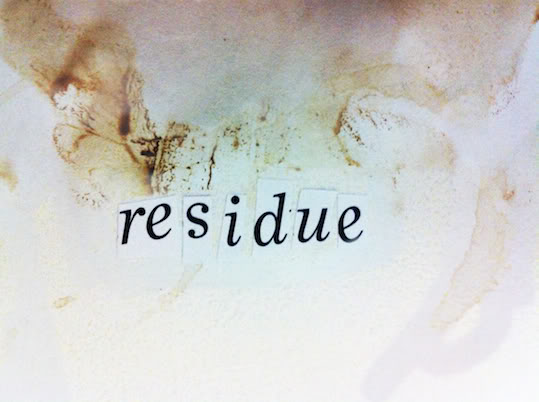
Divorce Leaves a Residue

My ex husband’s parents were smokers. Entering their house always felt like walking into a parking garage on a warm and still day, the smoke forming clouds along the ceiling and tendriled wisps climbing the walls. The rooms felt dark as the haze filtered the sunlight and the once-white ceilings felt oppressive with their tar-stained varnish.

My ex used to seal his room from the smoke, employing towels and blankets in an effort to barricade his belongings against the nicotine attack. And, while he was there, we thought it was a successful endeavor. After all, compared to the rest of the house, his room smelled clean and his furniture looked unadulterated.

Until it came time to move. We pulled his sofa, that we had intended to use in our first apartment, into the garage. Hopeful, we peeled off the sheet that had been covering the fabric. We were horrified. Not only did the couch smell like the upholstery in a pool hall, the exposed surfaces were stained brown in contrast with the untanned underbellies of the cushions.

And no matter how hard we scrubbed, the stains and the smell would not fully release. There was a residue left behind.

We left that tarnished sofa behind that day and spent money we didn’t have on an unsullied replica from Montgomery Ward, determined to start our lives together fresh unburdened from the remains of the past.


In a moment of unedited honesty the other day, Brock turned to me and said, “Sometimes I wish you would give up writing about all of this and it wouldn’t be a part of your life anymore.”

And sometimes I wish that too.

That I could have escaped from the past with no residue, as clean and unspoiled as that new sofa. Because the truth is that divorce leaves a residue. A film that no matter how hard you scrub, you can never fully remove. It’s not something that disappears just because you take yourself out of the environment. It resists fading and clings tenaciously to every roughed-over surface.

You can try to cover the damage, hiding it beneath a slipcover of smiling perfection. You can scrub at it until your hands are raw and your the very fabric of your being becomes worn and thin. You can perceive the disfigurement as terminal, and live your life as an abandoned piece of furniture cast off in an unheated garage.

Or, you can see the stains as battle scars. Signs of a life once lived and a love once loved. You can learn how to find peace with the residue, viewing it as the reminder of your past while weaving into the fabric of your future.

Divorce leaves a residue.

And what you do with it is up to you.

7 Reasons People Withdraw in Relationships

withdraw

We’ve all felt it.

That certain chill in the air. The posture slightly too rigid and closed off. The tone that is just a little too clipped. The words may be right, but something is off.

A disconnection.

It’s like the plug that charges the relationship is only partly plugged in.

It happens in every relationship. It can be as minor as one partner withdrawing for a few moments or hours. Or, it can also prove fatal to the marriage when withdrawal becomes the default position.

So why do people withdraw from their partners? What makes the connection faulty and the charge intermittent?

Fear of Intimacy

It’s scary to allow someone in to your innermost thoughts, dreams and fears. As relationships progress into ever-deepening levels, it’s common to pause and even retreat for a bit to acclimate to the new level of connection must like a deep sea diver has to take breaks on the return to the surface. This type of withdrawal, when short-lived, is nothing to worry about. It’s simply time spent adjusting and processing before the next level is reached. If, however, the retreat from intimacy occurs early and often, it may be a sign that someone is not yet ready to be vulnerable and open.

Fear of Rejection

This withdrawal type can lead to a sad self-feeding loop. One partner is afraid of rejection and decides that he or she would rather retreat than risk approach. The other partner can then easily feel rejected by their partner pulling back. You can have a situation where both people crave connection yet are too afraid to risk asking for it. If you find that you are afraid of rejection, work to address your own needs that allow this worry to grow. If your partner makes a bid for attention, work to respond in a way that is accepting rather than rejecting.

Flooding

Some people are more sensitive than others; an amount of emotion that may feel perfectly tepid to one person may be scalding to another. When somebody floods, their emotions are overwhelming them. And even though their surface may remain placid, inside they are a tantruming toddler. When someone is flooded, they are unable to respond rationally and struggle to normalize their emotional balance. When something is too intense, it’s natural to retreat for a time. Flooding is often a sign of some unresolved trauma, the emotions triggered having more to do with the past than the present.  If your partner is easily triggered, work to be supportive and patient while encouraging him or her to address the underlying issues. If you find that you are easily overwhelmed, make resolving your trauma a priority.

Anger

Some people wear their anger on their sleeves, leaving no doubt as to the emotion at the helm. Others are more covert, either because they have been trained to hide anger or because they are afraid of addressing the underlying problem face on. And furtive anger can often lead to withdrawal when one partner steams in silence. When anger is at a peak, it is often advisable to retreat for a time to calm down and think more rationally. That respite should be followed by approach, communicating the anger and working together to resolve the broken boundaries. If one (or both) partners consistently fume from afar, the anger will only mutate into resentment, causing a more permanent rift in the relationship.

Introversion

Some people simply require more solitude than others. It’s easy for an extrovert to sense a disconnect from their introverted partner when the latter is retreating in order to refuel his or her energy. If you are the more introverted partner, it is your responsibility to communicate your need for alone time to your spouse and make connection and intimacy a priority when you are together. If you are feeling left out by an introvert, learn how to establish connection without overwhelming their senses.

Outside Pressures

Marriages do not exist in a vacuum. We all have demands placed (okay, sometimes heaped) upon us from outside the relationship. Withdrawal can occur anytime someone is feeling overwhelmed and overworked. It’s a method of survival, cutting off blood flow to some areas in order to focus on what is critical in the moment. A marriage can survive a short-term starvation of attention and energy. Yet leave the tourniquet on too long, and there will be no marriage to return to. If your spouse is in survival mode, strive to be compassionate yet also persistent about maintaining connection. If you are the drowning one, don’t neglect to ask your spouse for a hand.

Pursuer/Withdrawal Dance

This is one of the fatal relationship patterns often described by Gottman. Understand that your partner’s withdrawal has more to do with them then with you. Don’t take it personally. But at the same time, take it seriously, because a habit of withdrawal can initiate a catastrophic domino effect. The initial withdrawal can occur for any of the above reasons. If it is then followed by a desperate grab for attention by a panicking spouse, it sets up the choreography for a dance where one partner is always retreating and the other is always grasping.


All relationships have an ebb and flow of intimacy. The challenge is learn how to ride it out rather than allow any periods of withdrawal to slide into a downward spiral of disconnection. For the partner sensing the distance and craving connection, the key is to relax and not push away or flood the more reserved partner. And for the attachment to return, the retreating partner must be aware of his or her own patterns and make a sustained effort to maintain the intimacy.