Be What You Want to Attract

We have a friend who is recently back in the dating scene. When asked what he is looking for, he describes a woman who is motivated, smart, stable and successful. Sounds great, doesn’t it? His problem is that what he attracts doesn’t tick off all four of those desires. She may be smart, but unmotivated, content with the status quo. Or maybe she is successful but also unstable, acting as a drama conduit into the relationship. He knows that these women exist; he sees them every day. He just can’t understand why he does not seem to attract them.

Relationships are not like magnets. With dating, like attracts like. In other words, be what you want to attract.

The reason that he is not finding what he desires is that he does not yet fulfill all of those listed categories himself. Before he can find the woman of his dreams, he has to first turn himself into the man of her dreams.

One of the biggest mistakes people make is entering relationships with the intent of changing the other person. Relationships always require change and compromise. But not for your partner. For yourself.

In the best relationships, your partner does not try to change you. Rather, you want to change yourself in order to be better for your partner.

The first step in dating is deciding what you want and then taking an honest look at yourself to see if you are what you want to attract. If you want motivated, do you continually work to improve yourself? If you want stable, do you avoid needless drama and have your life together? If you want happy, are you happy? If you want trustworthy, do you act with integrity? If you want fit, are you able to turn away from the doughnut table?

If you’re having trouble attracting the men or women you would like, look at the commonalities of those you do attract. There are clues there that will alert you to your own areas of need. Do you repeatedly draw people who always seem to be in crisis? If so, you may have an intensity set point that is too high. Are you attracted to people that always seem to need to be taken care of? Perhaps your own well-being is based on being needed and your own sense of self-worth needs some work.

The partners in a relationship should not complete each other; they should complement each other.

If you want a healthy relationship, the first step is making yourself a healthy individual. Remember – like attracts like. When you’re awesome, that’s what you’ll find.


Footprints on My Heart

The following was one of the responses to my most recent piece on The Good Men Project about how to love someone who is dealing with issues from past relationships:


“I however chose to heal alone and become complete and empowered before seeking a new love. The newly divorced me and the three years divorced me are two very different people and I choose different men also. My baggage was quite a weight to carry, but has made me stronger and I’m more skilled in moving through my life with it. I dont think I would be as adept had I dove into seeking assistance with it.”


In some respects, I completely agree with her. I was also significantly altered by my divorce and my interests and attractions changed as a result. I also fully support the idea that it is important to address your trauma and that it is necessary to be whole and happy on your own before you’re even ready to contemplate the idea of a new relationship. And, contrary to how she seems to view my situation, I certainly don’t support diving into a new relationship with the goal of being “saved.”


But from there, our opinions diverge.


It is not possible to completely heal alone.

Yes, you can learn how to be okay on your own. You can address any triggers or trauma that intrude upon your single life.

But as soon as a relationship enters the picture, new issues, related to the past, will emerge that were unnoticed while alone.

And you learn and adapt.

And then the relationship moves to another level, requiring additional vulnerability and trust. And again, the past will whisper.

So you learn and adapt again.


Healing is much more about experiences than time. And some of those experiences can only be done with another.


I find that each “first…since” is another trigger potential and another opportunity for healing –

The first time living with a man since my ex.

The first time trusting someone since my ex.

The first time buying a house since my ex.

The first basement-finishing project since my ex.

The first (and last!) time marrying since my ex.

And, soon, the first cruise since my ex (yippee!!!).


None of those are a sign that I am not healed enough to be in a relationship again. They are simply a sign that the past left its footprints on my heart.

And just like steps, they have to be taken one at a time.


How to Love And Be Loved After Divorce

I’ve always hated the term “baggage.”


It implies that that some people are more trouble than they’re worth because of what has happened in their pasts. That those of us who have had the misfortune of cheating exes or tumultuous divorces are somehow doomed by our experiences. It assumes that our histories are our destinies and that we carry our traumas like an anchor around the neck.


Yet the dismissive term of “baggage” ignores the fact that those who have experienced relationship trauma can often make wonderful partners that are more attuned and adept at monitoring and using emotions. That rather than just “getting over it,” many choose to “learn from it,” becoming better and stronger than ever before.


Life is not about what happened to us. It’s about how we choose to respond to what happens.

It’s not the baggage that matters. It’s all in how you carry it.


My now-husband had every right to run when he first heard my story. At the time we met, I was at the tail end of a very difficult divorce and taking the first shaky steps into my new life. I was no longer shock raw from my ex’s abandonment and betrayals, but I was nowhere near healed. Triggers would lie in wait, ready to pounce when I least expected it. I was overly sensitive in some areas and still numb in others. I wanted to be healed and was making active progress, but the finish line was still far in the distance.


And yet even with all of that, my now-husband didn’t run.


Instead, he helped me find my way to healed. He didn’t take the steps for me, but he cheered me. Pushed me. Rendered aide when needed. And waited patiently while I journeyed the course.


If you are in a partnership with someone who is still healing from a past relationship, you need to know the following:

Read read the rest on The Good Men Project.

Infrastructure

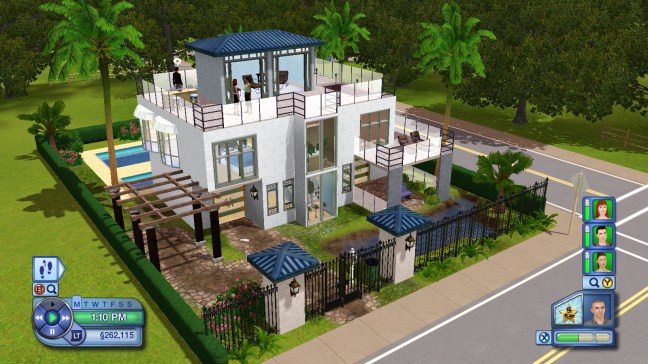
Back in the mid to late 90s, I went through a period where I was obsessed with the SIMS games. I was enamored of being able to build and create and then sit back and watch my creation live. Basically, it was like introducing Dr. Frankenstein to my childhood legos.

My first few attempts at computer-based world domination weren’t too successful. You see, I would get too excited about building the cool stuff – the big houses, the parks, the casinos and I would neglect to pay the same sort of attention to the boring infrastructure – the roads, utilities, the water treatment plants. The cities would look amazing and would run beautifully for a time.

But then the lack of underlying support would inevitably catch up and everything would start to fall apart.

So I would jump into action, scrambling to build roads to ease the traffic and make enough water and power available to my citizens. Yet, no matter how quickly I worked, those panicked attempts always failed. It was like trying to frame a house after the roof had already been put on.

So I changed my approach. At the start of a new game, I began to focus first on the underlying needs. I built roads that seemingly went nowhere. I carefully planned the conduits for water and power. I prioritized hospital and fire station locations.

Those cities had a slower start-up than my earlier attempts; in fact, they were somewhat boring at the beginning. But soon, as I started to layer the more elaborate elements atop the carefully laid scaffolding, they would bloom into amazing worlds. And, unlike the first attempts, these worlds would last.


As I watch relationships form, collapse and build around me, I often think back to those SIMS days. You can start a relationship without the infrastructure of emotional stability and well-being in place, but like my early cities, collapse is inevitable. Take the time to build yourself before you layer on a relationship. It may not be as exciting, but the after-effects are worth it.

8 Things I Wish I Had Known During Divorce

wish I had known

Experience is quite a teacher, isn’t she? No matter how many books we read or how many pieces of advice we receive, there are certain matters you only truly understand after you have lived through them.

And, for roughly half of us, that life experience includes divorce.

The following are the lessons from divorce that I wish I had known before living it:

1) There is nothing that the courts can do to make it okay.

During the legal proceedings, I was obsessed with finding justice. I wanted consequences for his actions and validation of my innocence. I spent countless hours and even more countless dollars assembling a case. It worked. On paper, at least. But the reality was disappointing. The ordered payments never came and the impact of the words on the decree lessened every day. Family courts are just not set up to punish individual misdeeds; they punish the entire class. Justice doesn’t come from the gavel. It comes from proceeding with integrity and living the best life you can. It’s not up to courts to make it okay. It’s up to you.

Read the other 7 lessons I wish I had known during divorce.