Use Your Words

I like to read advice columns and forums where people seek guidance and direction. It’s interesting to find where people struggle and comforting to find the universal life themes interwoven in many of the dilemmas.

But there is one common theme I don’t quite understand – asking a stranger a question that you really need to ask your partner.


“Would my partner be okay with…”

“Would my partner be upset if I…”

“How will my partner react if…”

“How will my partner feel…”


Now, I get it. Some conversations are difficult to have. It is scary to ask your partner an emotionally-charged question when you may not like the answer. It’s a leap of faith that your bond is greater than your bombshell. It’s trust that you can survive opening your mouth and exposing your heart. It’s courage to say what needs to be said even if the fallout causes pain.

For some people, initiating a conversation, even a difficult one, is no big deal.

I’m not one of those people.

I don’t like conflict.

I don’t like to disappoint.

And I don’t like to stir the pot.

But sometimes, that pot needs to be stirred.

Even overturned.

Here are some of the strategies I have developed over the years to make those difficult conversations just a little bit easier:

Test the Waters

It’s okay to put a toe in first. There’s no rule that says a conversation has to entered with a full-on cannonball. Rather than laying out the whole ordeal, reveal just a snippet. Or express the scenario as happening to someone else. Gauge the reaction. Gather data. Back up and try again. Plan your approach better this time. You can initiate the conversation in drops rather than a deluge.

Write it Out

If you are fearful of your partner’s reaction (or your response to your partner’s reaction) or if you are concerned that you may not choose the right words in the moment, write your side of the conversation to your partner. Not a text. Or a Facebook message. But a letter. Or email. Be thoughtful in your word choice and in your timing. Your intent is to start a dialog, not a war.

Move Forward

There’s something about forward progress and lack of eye contact that makes discussion easier and less threatening. Plan your talk for a drive. Or a walk. Or a hike. Probably not a run though, unless you want to pass out from lack of oxygen.

Talk to Yourself

Have the conversation with yourself first. Practice. Refine your goal and your approach. Set a time limit for your rehearsal; if you take too long to contemplate before you speak, you’ll soon fall into rumination and only intensify your fear.

Table it For Now

It’s okay to start the conversation and then leave it for a while. Much like baking bread, sometimes a topic needs to rest to help it fully rise. Don’t let this be an excuse to ignore the difficult topic; make a commitment to revisit it in a day. A week. Or a month.

Bring Your E.Q.

That’s emotional intelligence for those of you that didn’t grow up surrounded by self-help books🙂 Bring an awareness of yourself and leave your defensiveness behind. Understand your triggers and be receptive to the idea that you may be reacting (or overreacting) to the past rather than the present.  Be mindful of your partner’s past and triggers and their impact on the now. Consider the possessing speed that both you and your partner have; it may take some time for the real responses to emerge.

Use a Candle

No, really.

Be Ready to Listen

It’s easy to get so caught up in thinking through what you want to say (especially if you’re nervous or emotional), that you forget to listen. It’s not all about you; be attentive to your partner’s responses.


Sometimes there’s a feeling that if we keep it inside, we keep it safe. But holding on to something you need you say only feeds it with your own fears and distress. And allows it to grow.

“We need to talk” isn’t an invitation to a torture chamber.

It’s part of a healthy, growing and evolving relationship.

Dear Abby may give good advice.

But she can’t have the conversation for you.

Use your words.


Mythical Thinking About Marriage

One of the more fun aspects of blogging is the record of what you were doing and thinking at various points in your past. Some of my posts can still make me smile or cry. Some are funny to read to see the progress in my writing and my mindset over the years. And some? Well, some are just plain embarrassing:)

I recently unearthed one of my first posts from January 2012. I was so new, I even approved an obvious spam comment on the original post just because I was so excited to have someone, even if it was a bot, comment on my page. Even though I was a neophyte at the time, I still find some good points in this post. See what you think.

Oh, and if you’re a spam bot, don’t waste your time trying to comment. I’m smarter now:)


Myths…or Mythical Thinking

The article, 3 Myths About Happy Marriages on PsychCentral introduced myths that are based on the work of John Gottman, Ph.D and his book, The Seven Principles for Making Marriage Work. I think these myths, although possessing some truth, are a bit of a slippery slope.

Myth 1: Better Communication Will Not Save Your Marriage

If the marriage is on rocky footing, talking will not bring in the rescue copters.  And, as the article states, it is difficult to remain calm and rational in the midst of a perceived attack (I know those “I” statements well, after growing up with a counselor for a mom, and even I can’t maintain that poise in a heated discussion).  My concern comes from the implication that communication is not important;  that a marriage can exist in the spaces between withheld information.  I cannot work well with a coworker when there is not adequate communication; I’m not sure how a marriage is supposed to thrive.

Myth 2: Avoiding Conflict Will Kill Your Marraige

Not every need can be expected to be met, and sometimes conflict is just because of a grouchy mood,but there is a danger to not addressing legitimate concerns.  In retrospect, I realize that my marriage was conflict-avoidant; I tended to shy away from problems due to anxiety and my ex-husband refrained from conflict in order to not trigger my anxiety.   As a result, the problems grew too large for anyone to face.

Myth 3: Reciprocity Underlies Happy Marriages

I once knew a couple who kept a scorecard on the fridge to keep track of the “he dids” and “she dids.”  I don’t think they were very happy!  However, I do think reciprocity is essential in a marriage  in terms of mutual respect, and that this respect takes the form of acts of service or kindness for the other person.  Tallies shouldn’t have to be drawn, but each person should be operating with the other in mind.

All marriages are different (my current relationship is quite unlike my marriage in many ways), but I think that each of these myths has a place in a healthy relationship.

I Want You to Want Me

My kids this year are great – happy, funny and generous. Unfortunately, they’re also generous with their germs. Thursday night, those lovely little bugs finally got the best of me and led to a feverish Friday on the couch. My mind was too scrambled to focus on a book, so I ended up reading through the thousands of posts backlogged on my Feedly reader. And, as so often happens on the internets, one click led to another and another.

Until I ended up here on Penelope Trunk’s blog (possible trigger warning – domestic violence).

I’ve subscribed to her blog for years through my RSS reader, but only read the occasional post. I thought she was all about business and start-ups.

She’s not.

The post in question made me very uncomfortable. In it, she displays a picture with a bruise on her hip and tells an accompanying story about her husband shoving her into the bedpost. She is writing from a hotel room with her two kids, where she has sought refuge for the night.

But she doesn’t want to leave him. In fact, she claims in another post that domestic violence is a question of boundaries and that the abused can alter the dynamic alone. Like with so many inflammatory statements, there is a sliver of truth. There are patterns that tend to be in play that lead someone into an abusive relationship. And those (usually childhood) issues have to be addressed for that person to be in a healthy relationship. But, and here’s where my view differs, the first boundary that has to be enforced is getting away from the abuser. And then work on yourself. Get safe first (and get your kids safe) and then get healthy.

Her last sentence in the bruise post seemed to explain it all:

“That’s why I can’t leave. I want someone to miss me.”

Ah, now that’s a sentiment I think we all can understand in some form.

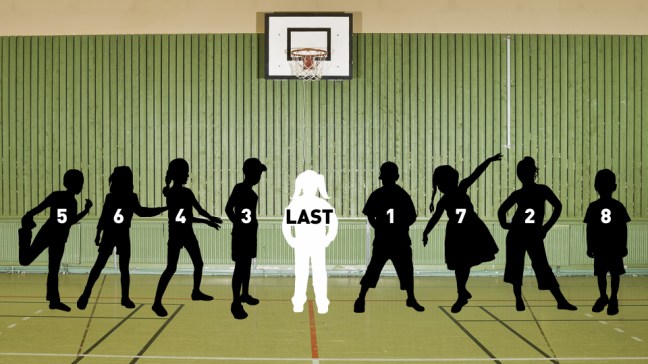
It’s human nature to want to be wanted. From being an early pick for the kickball game in elementary school to being tagged on Facebook from a friend, we all get a little thrill when we are chosen and feel the sting of rejection when we are not.

It’s natural. We’ve evolved to thrive in a community and, at the most basic evolutionary level, those that are not included are less likely to thrive as they struggle alone on the outskirts.

But as is so often the case, a basic drive can also go haywire. We can be so focused on being wanted that we ignore our basic safety and our own boundaries and beliefs. We can twist ourselves into parodies, subvert our true nature or ignore red flags just to save our spot as a chosen one.

The pain of rejection is real. And it is powerful.

But sometimes the pain incurred by avoiding rejection may be even worse.

Especially when you’re rejecting yourself in hopes of being accepted and desired by another.


We all want to be wanted.

But don’t compromise yourself just to be picked.

And make sure you’re wanted for who you are.

Because who you are is enough.

I’d pick you for my team any day:)


An Open Letter to Extroverts: What the Introverts in Your Life Want You to Know

introvert

I’m not an extrovert, but I play one in real life.

Most people would probably be shocked to discover than I am a true introvert – that  social situations and crowds exhaust me and I seek balance by being alone. After all, I have chosen to be a teacher. I am outspoken in meetings and not shy to speak in front of a group. On top of that, I have intentionally cultivated a large group of friends and I enjoy spending time with them and having them in my space. I have developed countless online relationships and enjoy time with my online family. Surprisingly, I can be loud. I rarely slow down. And I once rocked a shirt that said, “Sweet Talker in Action” as a kid because I never shut up.

photo-42

But behind all of that is a woman who feels most at home in her office, a “safe” space of solitude. A woman who would be more comfortable in solitary confinement than in a cell with multiple roommates (not that I ever intend to try out either!). I need my alone time in order to be the public me. In a way, I put on an act every day. It’s still me, but it’s the “on” me. It’s the real me with a booster rocket of extroversion. And if I play the role too long, the tank runs dry.

I was looking for a concise article that would explain characteristics of introverts for my very extroverted husband after feeling overwhelmed by the demands of the beginning of the school year.

I drew a blank.

So I decided to write it instead.

Not all of these characteristics will apply to every introvert. After all, that is simply one label and we are all represented by more than a single word. But I think many introverts will recognize themselves here and I hope that extroverts will find some compassion and understanding for their more reserved brethren.

Dear Extroverts,

I envy you sometimes. The way you seem at ease in a crowd. How you seem to know how to initiate and carry on a conversation with no apparent effort. When I’m at the periphery of a crowd, I see you in its center, pulling energy from those around you, like some kind of emotional fusion reactor. And I’m jealous as I feel my own energy waning as the event progresses.

But then, when I’m tucked away in a quiet nook or nose-deep in my latest book, I’m at ease with myself and pleased with my nature. You see, it’s not always easy living as an introvert in an extrovert’s world. We must learn to adapt. To play-act. Or run the risk of being overlooked.

There are more of us out here then you may imagine (usually thought to be somewhere between 25-33% of the population). Some, at the extreme, are obvious – they rarely talk, have a few select friends and work at jobs where the interactions are minimal. But the rest of us? We can be found anywhere – in classrooms and boardrooms, in media and marketing and even in your own home. You see, we’re good at blending in. But sometimes we pay a price.

The following characteristics can help you identify and support the introverts in your life:

1) Shyness and Introversion Are Not the Same

I used to be shy. Painfully so. But that’s a learned response and can be changed. Introversion is a character trait found in shy and more outgoing people. You can learn to work with it but it is a fundamental piece of who you are. Many introverts have no problem approaching new people. And then they will retreat to recharge.

2) Introverts Are Not Always Quiet

The stereotypical introvert is quiet. Bookish. Reserved. Yes, that person is probably an introvert but they are not the only ones. Although I prefer to express my ideas in writing, I frequently find I am the leader and spokesperson for groups. I talk fast and often. I gravitate towards heavy metal and intensity in my activities. Only those close to me know about my need for quiet and solitude. Introversion isn’t worn on my sleeve; it’s carried inside.

Continue to read the rest.

Love Is Only Blind When Your Head Is In the Sand

Do you ever look back at a former relationship and wonder what you saw in your one-time flame?

Or do you ever question a friend or family member’s choice in partners?

It’s easy when you’re outside of a relationship to view the bigger picture, the distance providing perspective while damping emotions.

But when you’re in it?

It’s all too easy to bury your head in the sand.


We stick our heads in the sand in relationships for a variety of reasons:

Avoidance

A wife sees a suggestive text on her husband’s phone from an unknown female. Her heart begins to race and panic floods her system. The hint of an affair is overwhelming to her; she cannot face the thought that her marriage is in trouble and that she may lose her husband. She turns away from the text and tries to pretend that she never saw it. That it didn’t happen.

When we see something that frightens us, we have two choices: approach or hide. In a relationship, the latter can cause problems as the truth is not faced because of the anxiety of losing the partnership. Of course, the fear persists even when the truth is not faced head-on. This state is usually temporary when either the truth becomes too big to avoid or the anxiety becomes too high to tolerate and the evidence is finally challenged. Burying your head out of fear may make you blind but it leaves you even more vulnerable to attack.

Mindlessness

A husband is busy at work, long hours and stressful clients have kept him away from home both physically and emotionally. He prides himself on providing for his family and doesn’t really have the time or energy to consider the status of the marriage as a whole. His wife, meanwhile, appreciates his efforts but feels isolated and lonely as her partner has become a husband in name only.

Heads can end up in the sand even without intentional digging. Stay still long enough and the tides will conspire to bury you. This is a blindness born of inattentiveness and busyness rather than willful evasion. Regardless of the motivation, the outcome is still a relationship in danger due to a lack of clarity and communication.

Willful Ignorance

A wife is pretty sure that her husband has a mistress. She intentionally chooses to turn a blind eye to his affair because he is a good father and stable husband. So she decides not to confront him and, even more, chooses to avoid situations that may reveal evidence of the infidelity. She knows something is there but chooses not to look.

This blindness is born more of pragmatism than fear. The reality is known to an extent and even quietly accepted. It’s a desire to pretend that life isn’t messy and emotions can be subjugated to reason. It’s a carefully edited and narrated form of the relationship. Although often dismissed, there is a sadness in this buried head that comes from lack of vulnerability and associated intimacy.

Bargaining

Prior to the marriage, a husband knows that his wife has problems with anger. He is uncomfortable with her temper and it raises red flags for him. However, he wagers her temperament against her other qualities and decides that the good outweigh the bad. When others bring up her outbursts out of concern, the husband responds by dismissing the concerns and tallying the pros that she brings to the table.

This is a common approach when a partner has issues with violence and/or substance abuse. There may be several very good qualities that are only occasionally accompanied by the bad. It’s a dangerous game; however, as the blinded partner slides into enabling the poor behaviors and choices.


A healthy relationship is one where both partners have their heads tall, looking out for problems on the horizon and addressing them as they approach. Burying your head may make you feel safe for a time but it’s no way to live.

Have the courage to lift your head.

Trust that you can handle whatever you see.

True love isn’t blind.