Check In – How Have You Proved Yourself Wrong?

Back at the beginning of the year, I proposed a challenge for 2015 – Prove yourself wrong:

I’ve never been much of a fan of resolutions. Perhaps it’s because I see the bodies flock to the gym every January only to be back on their respective couches by Valentine’s Day. Or I see the impassioned declarations about eating clean shared publicly on Facebook and I spy a doughnut in the poster’s hand before the month is out. I get it. Change is hard. And in order for change to occur, you have to be ready. And that may not correspond neatly with the dawning of the new year.

Which is why I like to offer up a little twist on the traditional resolutions.

Here is my offering from last year: Celebration, Enhancement, Intention.

This year is a little different. This year I propose a challenge. To be completed by December 31, 2015. And, yes, I will be holding you accountable.

Nervous yet?

Don’t be.

Here it is – over the year, I want you to prove yourself wrong.

That’s it.

No calories to count or reps to complete (unless of course, that’s how you’re proving yourself wrong).

All you have to do is find one belief you currently hold and change your mind about it.

Confused? I’ll give you some ideas:

-Start by thinking of the things you say you “can’t” do. Pick one and do it.

-Examine your thoughts for traces of “always” or “never;” those words usually indicate an underlying stereotype or assumption. Find a counterexample.

-Sift through your responses to people and claims. Look for those topics that make you defensive. That’s a sign that you think you can’t handle some truth. Prove that you can.

It’s so easy to operate within a prison of possibilities built by our own limiting thoughts.

This is your year to break through.

Prove yourself wrong.

Remember, I’ll be checking up on you:)

Now here we are. Six weeks later. Over forty days and countless opportunities to prove yourself wrong.

So have you?

I proved myself wrong just yesterday. I’m probably the world’s worst napper (just ask my mother, who had to survive my infancy). When I was tired and sluggish yesterday afternoon, the idea of a nap sounded appealing, but then I shut down the idea with the though, “You know you can never manage to nap.”

And I became determined to prove myself wrong. To tell that internal limiting voice to shove it so that I could sleep.

And sleep I did.

With only the slightest amount of guilt for “wasting” part of a Sunday afternoon.

It felt wonderful not only to rest, but also to prove myself wrong.

What have you done in the past 6 weeks that you thought you could not do?

How have you proved yourself wrong?

Telling Stories: The Lesson in the Brian Williams’ Scandal

I never watch television news.

So I had no idea who Brian Williams was until the news about his false claims about his time in Iraq. All of the tidbits I read online or heard on the radio took the position that he intentionally and willfully fabricated these stories.

Until I came across this one.

It explores the universal truth of fallible and malleable memory, citing studies where false memories have been intentionally implanted and summarizing the results of interviews with memory scientists.

The data is unambiguous – our memories are not.

The article doesn’t absolve Brian Williams of any guilt. It simply asks us to consider the alternative – that perhaps what we are interpreting as an intentional manipulation of truth may in fact be a distortion of memory.

The problem is that from an outside perspective, they are indistinguishable. And according to a study a referenced in the article, people overwhelmingly assume that someone’s twisted truth has been purposely shaped for their gain (while also assuming that their own memory is somehow immune to the errors that may influence others). And the comments in the article support that research; they alternate between people claiming that they have infallible memories and people (often aggressively) concluding that Brian Williams set out to deceive.

And maybe he was. I certainly have no idea. But I do find it strange that somebody in a prominent position in media would choose to publicly tell falsehoods that could easily be disproved. It seems not only irresponsible, but dumb.

It certainly seems plausible that he believed his stories and failed to fact-check before sharing them with the world.

Perhaps it’s because we spend so much time in a digital world, but we seem to have this idea that memory acts like a recorder, filing away experiences as they happen so that they can be retrieved later with a neural click and replayed like a video on a screen.

But it’s not that simple.

If our memories are computer files, then they are filled with encoding errors, corrupt files and sketchy rewrites. Tidbits of original code may remain and the brain borrows from other memories to fill in the gaps.

Many errors in memory happen without us ever knowing. These are the unintentional changes in memory:

Fading

I no longer remember what my ex husband really looked like. The primary image I have of him is more a caricature of the facial hair he had the past few years of our marriage rather than any true visage. Time has softened the memories, faded the edges. I could probably still pick him out of a line up, but a police artist’s rendering based upon my description would probably contain some inaccuracies.

Our memories are more like cassette tapes than digital imprints; time and use damage the recordings. They’re still there, but faded and under a layer of static.

Rewriting

The Brian William’s article compares the way memories change with the retelling of a story to the childhood game of “telephone.” When we have a major event in our lives, we assume that the intensity of the memory leads to its preservation. Yet, the frequent retelling of the story often changes the memory over time. It mutates.

Another way we rewrite our memories reminds me of a documentary I saw about the making of the first season of The Real World. They collected countless hours of authentic and raw footage. Then, the show’s writers were tasked with watching the tapes, sketching out the storylines and editing the footage to match the story.

Our brains do that too. We naturally create “stories” out of our experiences. And then we select the memories that fit and discard the ones that don’t. And just like with reality television, all of that happens behind the scenes.

I’ve seen this happen with my own divorce story. As it is repeated, small errors in memory replicate and carry through. I have to edit and summarize to get the gist across and so some details are left out. It all “feels” true because it’s been repeated, but it’s not quite right. I make a habit of returning to my primary documents – texts, emails, journal entries – of that time period to refresh my memory before any interview or post which requires details from that episode.

And I’m always a bit surprised at what I read.

Because I am no longer the same woman that had those experiences.

Change in Perspective

There was a hill in my childhood neighborhood that was enormous. Until I went back after several years away. I have to assume that the neighborhood pooled their resources to have that mountain shaved down to a molehill. It’s the only reasonable explanation:)

Have you ever read a book or watched a movie and revisited it 5, 10 or 20 years later? Was it the same as you remembered? Probably not. Because you’re not the same person either. We see the world through the filter of our own perceptions and we see our memories in the same way.

No memory can ever completely reflect the moment it happened because you see it through the knowledge of today. That hill in my old neighborhood is both huge and daunting (according to my early memories) and insignificant (as I see it now). Neither recollection is necessarily wrong. My perspective has shifted.

Not all manipulations of memory are unintentional. Here are the ways that memories are deliberately changed:

To Deceive

This is your standard lie. Deliberate. Intentional. Twisting the truth for your own gain or protection. In this post, I dig down into the different types and motivations for deceptions.

Now here’s where things can get interesting. A “fact” can begin as a lie, but as it is repeated, that falsehood becomes the truth to the person reciting it. This is how researchers, therapists or others in trusted positions can either intentionally or unintentionally “plant” a false memory that grows into “truth” for the subject.

My ex stated in a text to my mother that he “started to believe his own bullshit.” It seems like he may have planted and nurtured false memories in his own mind.

To Find Peace

I stumbled across this application of deliberately changing memories accidentally. I changed the names of the people and places involved in my story to protect the identities of the innocent and not-so-innocent. Over time, I found that the fake names felt more real to me than the real ones. The shaped memories slowly suffocating the actual ones.

Once I realized the power of taking ownership of my story, I deliberately shaped other memories. These have no impact on anyone else, so their rewriting was not intended to mislead or deceive. Rather, I deliberately chose to reframe certain moments, delete others and filter some of the most painful experiences through a lens of compassion, even if it’s not fully accurate, because it brings peace to my current life and has no bearing on anyone or anything else.

When I do revisit the primary documents, this intentional rewriting is temporarily stripped away as I face the brutal reality of that period. Yet even though that is the “real” memory captured in those texts and emails, I don’t allow it to take up permanent residence in my mind. Read more about how to separate your memories from your suffering. 

As for Brian Williams, we may never know if his stories originated from an intent to deceive or if his memories mutated over time. He certainly was irresponsible for widely sharing stories that impact others without verifying the facts from other sources.

Because, as science has shown, our memories may be true to us even when they are not true.

We are not mere recorders of our experiences. We are storytellers.

Is It Better to Know the Pain Is Coming?

I have a rerun of a medical procedure scheduled for next week. The first time I had it done, the medical professions assured me ahead of time that it would be no big deal and so that’s what I planned for. I went to the doctor’s after work (even though it meant seeing someone other than my usual provider). I planned to go to the gym after (What? They said it was no big deal!) and I had not arranged for a sub the next day at work.

Except it was a big deal. I didn’t get back home until late. Not because of the gym, but because I had to keep pulling over to vomit from the pain. I ended up teaching from a rolling chair for the next week, kicking myself every day for not arranging a sub the night before. I was still on the meds prescribed to me post-divorce, but even those weren’t enough to provide decent slumber for a few nights.

It was a terrible few days.

I learned from that experience (especially after reading that it’s a common one). This time is different. I will take Advil before the appointment. I couldn’t secure a ride, but the office is now closer to home and I’ll make sure my stomach is empty. I have already arranged for a sub on the next day and I have a few pain pills left over just in case.

So, I’m ready. But I’m also anxious.

The first time, all of the agony was on the back-end once the pain hit.

This time, I’ve transferred the agony to the front-end. Which means I’m ready. But I may be stressing over pain that won’t be as bad as I fear.

So is it better to know the pain is coming so that you can prepare even though the anticipation of the pain is often worse that the pain itself?

Or is it better to be blindsided, caught unprepared and bowled over by the pain yet blissfully unaware before?

I’m not sure about the answer. But right now, in the pre-anxiety, I’d happily trade for happily ignorant.

Related:

I Was Lucky

Pros and Cons of a Disappearing Act

A Picture Is Worth…

I’ve been collecting some random pictures recently that I was hoping to spin into full-fledged blog entries. But the pictures seem to be piling up and the posts don’t seem to be happening. So I decided to let the pictures (pretty much) speak for themselves.

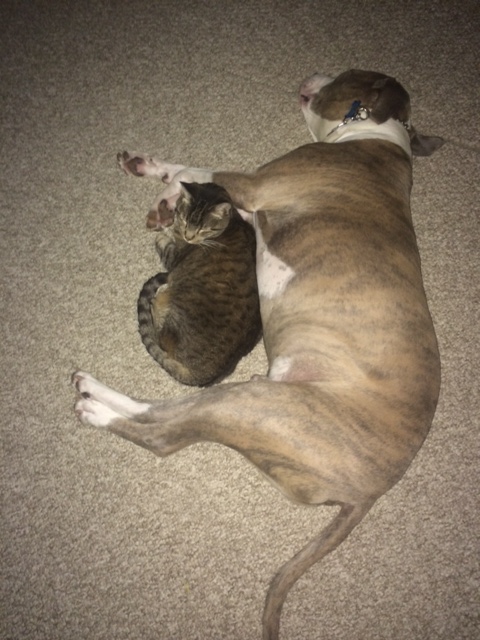
photo 2-111At the dog park, Tiger’s favorite activity is to hang out in the baby pool and attempt to drown a tennis ball. Be like the tennis ball, no matter how frequently life pushes you down, refuse to stay under for long.

photo-142I look at this picture sometimes as a reminder that slow and steady can still get the job done.

photo-143I had these sweatpants for 16 years. I finally trashed them and replaced them (for a whole $5). How often do we hold onto things long past their usefulness?

photo-144I’m officially an Atlantan now that I’ve made it to the Margaret Mitchell house. I learned that the manuscript for Gone With the Wind was on unnumbered pages stuffed into separate envelopes that had to be edited and sorted. I need to shut up about being overwhelmed.

photo-141When we have assumptions, we don’t allow things to unfold in their own way and time. Stand back and be surprised.

photo-145I started treating myself to blooming bulbs next to my computer during the month of February. It’s a beautiful reminder that spring follows every winter.

Opinion

I realized something last night.

Brock asked for my opinion. It was about something where I have no expertise and that ultimately comes down to his personal decision.

But he still asked for and valued my opinion.

He does this frequently. In fact, often enough that I sometimes get annoyed.

“Why do you want to know what I think? It’s your decision. It comes down to what you want.”

But last night, I realized something.

That him asking for my opinion (even and maybe especially in areas where I have no particular insight) is a sign of respect. Of openness. Of equality.

And the reason that I get annoyed is that I’m not used to that from my husband. At least not the first one.

There were decisions we made together – options that impacted us both. And then there were decisions he made on his own. And he never wanted my input on those one way or another.

I was used to that independent streak, especially because I carry quite a strong one myself. When we weren’t involved in a joint venture (which was often, including the weekly grocery trip), we were usually operating solo.

So that means when I hear, “Lisa, can you come give me your opinion on something?” when I’m in the middle of my own project, I can get a little irritated at the interruption.

Until last night’s realization.

He’s not asking me because he really needs my input; he’s perfectly capable of making decisions on his own (and often better than I am in the midst of a crisis).

He’s not interrupting me because he either doesn’t value my current project or with any intention of annoying (not even remotely part of his character).

He’s asking for my opinion because he cares about my opinion. Even when it’s about something that is his own decision to make.

And that’s worth an interruption any day.

On a related note, I called my mom for her opinion about a project I am working on. She was thrilled:)