One Event Does Not Define You

It was parent conference week at my school this past week. It’s a week I always look forward to (even while I dread the long hours required). I love getting a chance to talk with the parents after I have been able to see their child’s strengths, weaknesses, celebrations and struggles. Most of the conversations and strategies are pretty run-of-the-mill. Helping middle schoolers learn to prioritize, time-manage and organize is an on-going and ever-present task.

But every year since my first in the classroom, I have had a handful of conferences that are anything but run-of-the-mill. Some of the kids that come through my classroom have been through tragedy. Loss. Trauma. And as the teachers sit around the table and learn the information, the missing assignments suddenly become less important than the missing childhood. The focus shifts from succeeding in school to creating a support system to help the child succeed in living.

Once I learn of the background, there is one talk I always make sure to have with any student that went through too much far too soon.

I call it my “defining speech.” And it goes something like this:

———-

“Make a line through this point,” I ask, drawing a dark mark in the center of a blank white sheet of paper.

point“Where should I make the line?,” some students inquire, while others simply follow my command and draw a line on the paper. The perfectionists make themselves known by insisting upon a ruler.

line

“Is that the only line you can make through that point?” I ask.

“Well, no. I could make a bunch of different lines.” I gesture for them to show me.

linesssI then turn the paper over and draw two points.

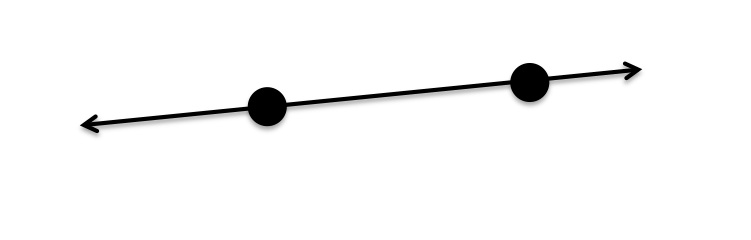
pointsss“Make a line through these.”

line2“Is that the only line you can make through these two points?”

I usually get a “Is my teacher crazy?” look at about this point.

“Well, yeah? I mean, two points make a line, right?”

“True. If it’s straight,” I say with a slight smile. “Try connecting them with something that isn’t linear.”

This is where I can tell who is willing to take risks. But they all manage to create some sort of nonlinear path through the two points.
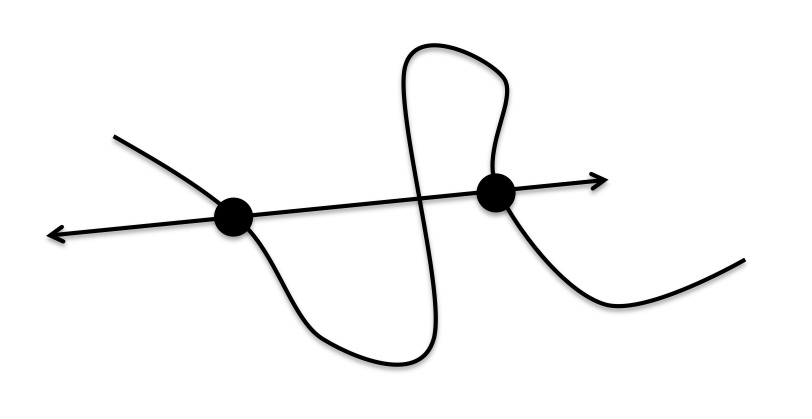
curve“Is that the only curve you can make that can connect these two points?” I continue.

“No. Do you want me to draw more? I mean, there are infinite ways!”

“No, it’s okay. I just want you to see that there are multiple paths to get from one of those points to the next.”

The shoulders relax as the brow rises, wondering about the point of this exercise.

“Almost done. I just have one more for you.”

scatter“Connect ALL of these points any way you want to.” If I do this after our lessons on scatter plots, it drives them crazy not to simply draw a line of best fit πŸ™‚

Once they’ve completed the task, I bring the point home. Yes, pun intended.

“I want you to think of these points as events that happen in life. When you have a single point or event, it does not define your path. There were many routes you could take. When there were two points, there was only one way if you chose to see it that way. If you were more creative, you could find many more. But life doesn’t consist of just one or two events, even though certain ones may stand out more than others. Life is a series of events. And it is your choice how you move through them. Look at how you connected your points here on your last picture. You had to include the outliers, but it didn’t completely change the general shape of the graph.”

“I know you’ve had some stuff in your past that makes you feel like you’re stuck on a predetermined path. But you’re not. You had to walk through that point. That event or series of events. And now you decide what direction you go.”

“One event does not define you. YOU define you by the choices you make and the path you choose.”

Okay, class dismissed πŸ™‚

What Makes a Marriage Successful? (And Why Divorce Does Not Mean Failure)

marriage successful

What REALLY makes a marriage successful? I’ve always found it funny/sad how we classify marital success purely by its duration. I mean, imagine if we applied this same metric to other areas of our lives –

She was a really great student – she was in school for fifty years!

He was an amazing dog, but he was a failure as a pet because he died before he turned ten.

It was a wonderful dinner. The service was so slow that the meal lasted for hours!

I’m afraid I have to give the book only one star because it ended.

Pretty crazy, huh?

So why do we then so easily apply this faulty logic to marriages? Classifying them as failures if they end and successes if they persist?

I think we all have seen (either from within or from the outside looking in), marriages that go the duration yet are filled with contempt, isolation and misery.

And we have all witnessed relationships that were once strong and fulfilling come to a premature end as the individuals or the circumstances changed.

Yet in our cultural lexicon, the first couple is heralded as a success (and sometimes even asked for their marital wisdom) while the latter is written off as a failure.

IMG_4361

Perhaps it’s time to reevaluate what makes a successful marriage.

Because it is certainly both more complex and more challenging than simply managing to hold on to one another for a lifetime of journeys around the sun.

In a successful marriage,

You both play for the same team. You know that there will be disagreements about how things should be done. But rather than view your spouse as your opponent in these arguments, you see him or her as your ally in life.

The good interactions outweigh the bad. There will be rolled eyes and hurt feelings. And they will be smothered by hugs and positive words.

You share common goals and values. Even when you take different paths to get there.

IMG_4359

Support is given freely and challenges are presented. You don’t seek to change your partner; you want to enhance the best parts of your partner.

A growth mindset is present. Both for the marriage and for the individuals that comprise the union. Each person learns and grows in response to struggle and success.

Mistakes are perceived as opportunities. And the actions are condemned. Not the person.

There is a balance of independence and interdependence.

IMG_4360

The difficult conversations happen. And problems are perceived as a challenge to overcome together.

Each person takes responsibility for his or her own stuff. And each person is willing to carry more than his or her share when the situation demands. Because there will be days when the commitment to the marriage is greater than your commitment to your spouse.

A legacy is left, either by the children born from the union or the others inspired or influenced by the couple. A successful marriage is greater than itself.

And here’s the hard part –

A successful marriage accepts when it is no longer successful. It is willing to make the agonizing decision to pull the plug rather than condemning both people to live in the diminished world of a marriage on life support.

IMG_4362

Now it is true that no good marriages end in divorce.

But it is also true that the marriage that ended may not be the same marriage that existed for some time before.

It’s not just about the number of years.

It’s more about what you do with those years.

And if that marriage brought a smile to your face and eased your burden,

If that marriage challenged you to learn and grow,

If that marriage taught you what it was like to share a common dream and common goals,

If that marriage opened your heart and made you feel seen and understood,

If that marriage made an impact on others,

If that marriage pushed you and tested you,

If that marriage made you realize that nobody else can make you happy,

If that marriage taught you what you don’t want,

If that marriage inspired you to never again allow anyone else to reduce your worth,

If that marriage taught you how strong you are,

Then that marriage was successful.

No matter how long it lasted.

Or how it ended.

Take the lessons and move on.

Because the only failed marriage is one that you refuse to learn from.

Related:

Why I Don’t Want a Perfect Marriage

10 Contradictory Qualities of a Good Marriage

Every Season Has Its Blessings

My plants look tired. The once-green foliage has become yellowed from the demands of growth amidst the heat of the summer. Many of the blooms have gone, leaving only the bare stalks as a reminder of the previous bounty. Even the trees look weary, their spotted and pock-marked leaves dulled before they take on the brilliant hues of autumn.

I always feel a restlessness along with a surge of energy around the changing of the seasons. In my area of the country, each chapter in our trip around the sun overstays its welcome by just a few short weeks. And then it bows out, leaving the door open for the next visitor.

Of all these shifts, the slide into fall is perhaps my favorite. I love the crispness in the air, at first only hinted at through early morning breezes before the heat yet again dominates the day. I delight in those few days where a cold wind rustles the changed leaves, blowing them around like the bills in a money-grabbing booth at a fair, all under the still-warm sun.

I love the turning inward that naturally occurs as the temperatures drop and the days shorten. It’s a season where we cast aside the grand gestures and events of summer for more intimate and cozy affairs. It is a time of open windows with roaring fires. Of goosebumps over still-exposed skin with a warm mug nestled between the hands.

I see fall not as a shutting down, but as a necessary slowing down. A time to exhale the pace of summer and breathe in the richness of the season. It’s a time for gathering and preparing. For taking stock and making plans to survive the winter and celebrate the upcoming spring.

Every season has its blessings.

And that is true in our lives as well.

Divorce often heralds in the onset of a sudden and harsh winter. There is a dearth of shelter and the ice threatens to permanently encase your heart. The nights seem to grow until they touch each other, leaving only the barest glimpse of light between.

But what of the blessings?

From Winter Does Not Have to Mean Discontent:

The end of a marriage reminds me of a winter landscape.Β  All is laid bare.Β  The adornments and filigree are gone, leaving the structure exposed to the biting wind.Β  Its beauty is found in perspective.Β  In appreciating the rough nature of the bark, showing its scars and wear.Β  In gazing at the complexity of the interconnected branches in wonder.Β  In seeing the potential in every limb, every bud.Β  In imagining the new growth, just barely hidden below the surface, that will be revealed by the touch of the warm sun.

The winter of a marriage is also a time for viewing the underneath, what is left when all the distractions are stripped away.Β  It is a time to see yourself, your marriage, as it is, not as it may appear.Β  It is also a time to daydream about what can be and what can grow.

It’s so easy to become impatient with where we are and gaze longingly at where we want to be. There is nothing wrong of dreaming about spring even as winter sets in. Yet peace comes from accepting where you are and recognizing the blessings found within the season you find yourself.

Every season has its blessings.

Pushing the Reset Button On Stress – Five Steps to Help You Unwind

I’m no stranger to stress. As a Type-A+ person geared towards anxiety in a fast-paced and often stressful job, I’ve had to get adept at taking my body and brain from “Argh!” to “Ahhh” in the most efficient way possible.

Over the years, I’ve played around with various strategies for downshifting after a long day or a long week. Some (like venting to a spouse or coworker) might feel good in the moment but don’t contribute to a release of stress in the long term. Others (like meditation) are awesome tools, but are ineffective when used at the wrong time.

I became more aware of my stress and intensity level at the end of the workday when Brock and I instituted a new procedure last year. Before driving home, I would text him my “number,” a digit from 1 to 10 where 1 is napping in a hammock and 10 is performing CPR. He then sends me his number. My goal is to try to be no higher than a 4 as soon as possible after the final bell.

This system has motivated me to get more efficient at ramping down my stress. Below is the stress-busting system I have implemented over the last few months. I have found that these steps in this order effectively take me from a higher level of intensity to a lower level. They’re flexible, filling the time you have and adapting to your particular situation. On a really rough day, you may need all five steps. On an easier day, maybe you reach “Ahhh” much sooner.

Take a look. Give it a whirl. And let me know what you think πŸ™‚

One – Move

feet-538245_1280The first step in releasing stress is getting out of your brain and into your body while starting to let go of any stored and stuck energy. This can be as complex as structured exercise or as simple as a walk down the hallway.

Bonus Points – Exercise Outside

Much of stress comes from a feeling of being confined, boxed into whatever circumstances surround us. So get out. Literally. Feel how small and inconsequential your concerns are against nature’s backdrop.

Two – Escape

kindle-381242_1280Get away from your stress and into another world. Play (and sing along!) to music on your commute. Watch a favorite show (we’re currently bingeing on Game of Thrones). Read a book. Complete a crossword or play some Angry Birds. If you have a tendency to escape too long, set a timer and give yourself a limit. The escape is a break, not continual avoidance.

Bonus Points – Write

Writing not only acts as an escape, it also allows you to purge and process. This is especially important if your source of stress is ongoing or requires that you change something.

Three – Release

runner-690265_1280Let it go. Massage your shoulders and roll them back down into place. Stretch your arms and work out the knots. Do some yoga, whether it be a full class or just holding a pose for a few moments. Try some version of a backbend; they’re delicious when you’re stressed.

Bonus Points – Sex

Whatever sex means for you. It not only serves as a physical release, it also releases hormones that relaxes the body and it is great at resetting the mind.

Four – Breathe

sky-114446_1280Focus on your breath and work to both slow it down and deepen it. If you’re still holding on, inhale through your nose and exhale loudly through your mouth. Aim to complete at least 10 focused breaths.

Bonus Points – Meditate

I often find that when I’m stressed, it can be difficult to do my usual meditation and that guided ones seem to be more effective. I especially like short ones that include body scanning as it helps to release any residual tension.

Five – Play

beach-863139_1280Play simply mean allowing yourself some unstructured time. Follow your instincts. Ideally, this play should be disconnected from technology, as too much stimulation and information keeps the stress going. If you have kids, play with them.

Bonus Points – Create

Allow your creative side to flow. It taps in to your core self and reconnects you with you as you let go of the day. If you have kids, create with them. It’s a gift for all of you.

I know this might sound overwhelming (which is the last thing you need when you’re stressed!), but it can really be quite streamlined on typical days. Here’s how it might look on a normal day for me:

Move – I usually do a bigger workout later in the evening, but I’ll do a few squats before I leave my classroom (during rough years, I’ve even kept a kettlebell in my room) and then I’m mindful of taking advantage of my walk to my car, paying special attention to the feel of the sun (unless it’s the winter!) and fresh air once I leave the building.

Escape – I listen to something either engaging (NPR or a digital book) or funny on the way home.

Release – Once home, I lay on my back with my legs up a wall for a few minutes and let the aches of the day start to fade.

Breathe – While my legs are up the wall, I focus on slowing my breathing. I often will turn on a chant on my meditation app that gives me a cadence to aim for.

Play – I pick up the tennis ball and throw it around for Tiger for a few minutes.

Total time invested? 40 minutes, 30 of which is my commute.

Value to quality of life? Priceless.

I’m Not Strong Enough

Every year I have some kids who break my heart.

It happens as soon as I task them with completing some assignment and they whisper to me with down-turned eyes, “I’m not smart enough.”

And my heart breaks for the broken spirit of the child.

Because the truth is, there are very few kids that are truly not smart enough to understand the math I teach and those are never even in my class.

But I can see how some may conclude they are not smart enough. After all, they see some of their classmates tearing through assignments like a kid at Disney World. They hear others volunteer answers before they have even processed the question. They feel their struggle while they see others’ successes.

But the problem is not that they aren’t smart enough.

Maybe they are not skilled enough, having missed earlier important concepts.

Maybe they are not present enough, excessive absences interfering with their ability to comprehend the material.

Maybe they are not supported enough, missing out on the help needed at home or at school.

Maybe they are not focused enough, allowing in outside distractions that make it difficult to think clearly.

Maybe they are not disciplined enough, forgoing homework for the call of video games and not participating in the needed practice.

Maybe they are not understanding enough, ignorant of their own ways of learning and demonstrating knowledge.

Or maybe they are not confident enough, perceiving themselves as lacking in some fundamental way that is fixed and rigid.

None of those things have anything to do with smart.

And all of those things can be addressed.

And overcome.

To expose the smart kid that was there all along.

Hiding behind those limiting beliefs.

———-

With adults, I rarely hear, “I’m not smart enough.” Yet I often hear, “I’m not strong enough.”

And it breaks my heart to hear the broken spirit.

Because the truth is, there are very few adults that are truly not strong enough to overcome the challenges that fall into their path.

But I can see how some may conclude they are not strong enough. After all, they see others speak and write and sing about their own journey and the conquering of it. They see others reach the finish line of their trauma before they have even finished processing their own. And they feel their struggle while they see others’ successes.

But the problem is not that they aren’t strong enough.

Maybe they are not skilled enough, having missed earlier opportunities to practice struggle and the overcoming of it.

Maybe they are not present enough, not able to put the time into healing that it requires because of other demands.

Maybe they are not supported enough, lacking the buttressing effect of family, friends and professionals.

Maybe they are not focused enough, allowing in outside distractions that make it difficult to think clearly.

Maybe they are not disciplined enough, electing to avoid the pain rather than face it and move through it.

Maybe they are not understanding enough, unaware of their own needs and what tools are effective for them.

Or maybe they are not confident enough, judging themselves as broken and somehow less than others.

None of those things have anything to do with strong.

And all of those things can be addressed.

And overcome.

To expose the strong person that was there all along.

Hiding behind those limiting beliefs.

———-

In the classroom, I work to help figure out what needs each kid has and then we work together to discover what methods and tools best meet those needs. I act as a cheerleader when they’re discouraged and a butt-kicker when they’re trying to avoid. I reveal my own struggles to them and help them to see their own strengths. I give them opportunities to shine when the quick-to-get-it kids often falter and I praise the effort that moves them forward. I highlight their progress, comparing them to themselves rather than to anybody else.

We talk about how everybody has some things that come easy and some things that don’t. And how often those that struggle become the better for it. They laugh when I tell them that math was my worst subject and that I almost failed Algebra II. They laugh, and then they smile because it gives them hope.

In the adult world, I do much of the same. I help people figure out their own needs and what tools will best match those needs. I encourage when the spirit is down and kick some butt when it is dragging. I share my own struggles (and the struggles that others have made public) and I help them to see their own strength. I look for opportunities for them to shine when maybe the quick-to-heal folks still stumble. I highlight their progress, comparing them to their earlier version rather than to somebody else.

We talk about how some people seem to move through trauma easier than others due to a blessing of biology, support, environment or prior experience. And that some may have to struggle more to get there.

And that struggle can make you better.

I had one client that had a life relatively free of trauma until a big one that sent her to me. She knew that it was harder for her to deal with the situation than others because as she was processing the pain, she was also doing the hard work of identifying her own strengths, weaknesses, needs and tools of best fit.

And she appreciated that effort even as it wore at her.

“I know this won’t be the only thing I have to go through in my life. If I do it well, it will serve me going forward and if I don’t do it well, it will become the thing that holds me back.”

And she’s right.

At the beginning, she wasn’t strong enough to reach the summit.

But she was strong enough to take the first step.

And then the next.

And each step built her strength.

Her confidence.

Her resolve.

YOU are strong enough.

I see it.

I want you to see it too.

And you don’t have to do it alone. Learn more.